


Gilded Arched Frame Mirror
A gilded arched frame mirror brings weight and nineteenth-century presence to a room, functioning primarily as a large overmantel or wall piece.
Gilded Arched Frame Mirror
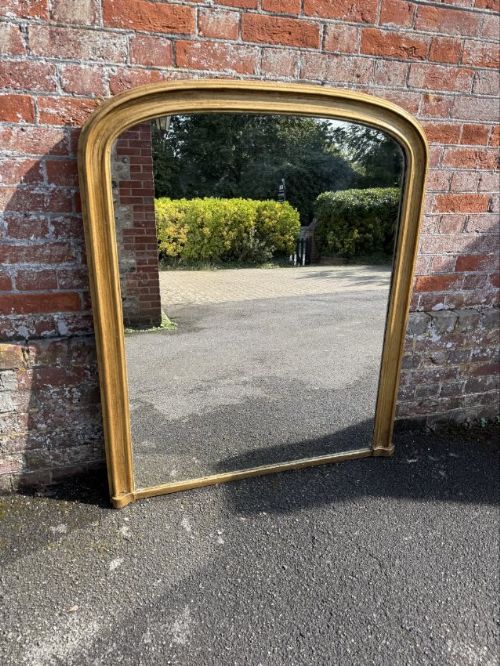
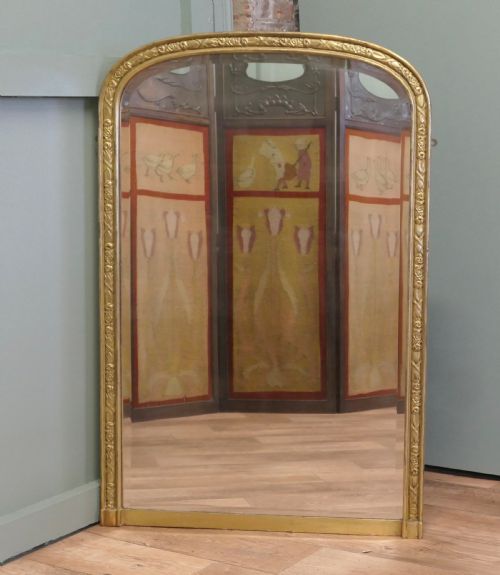
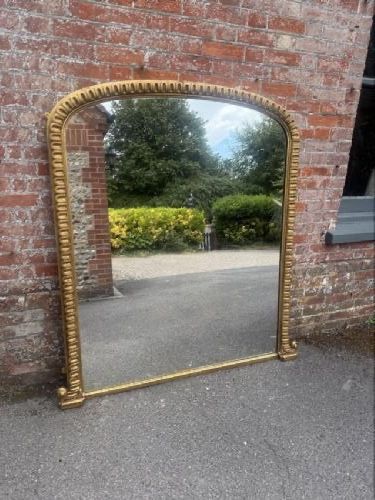
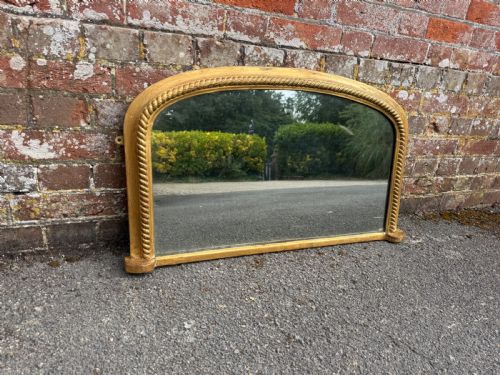
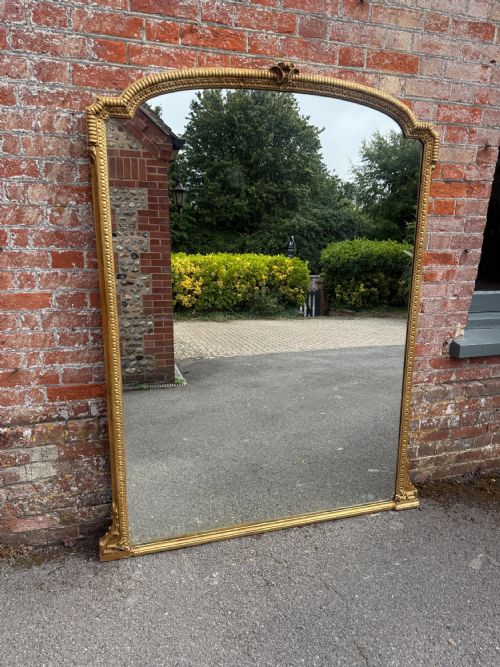
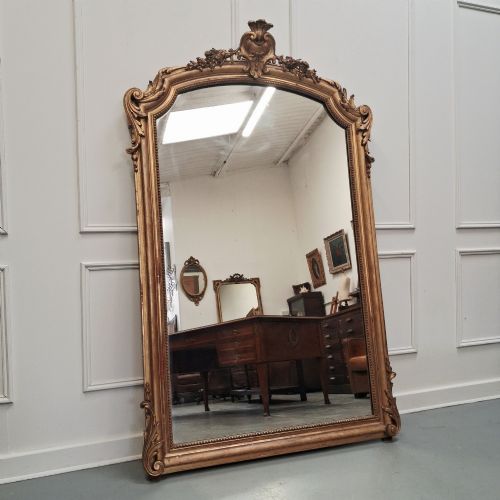
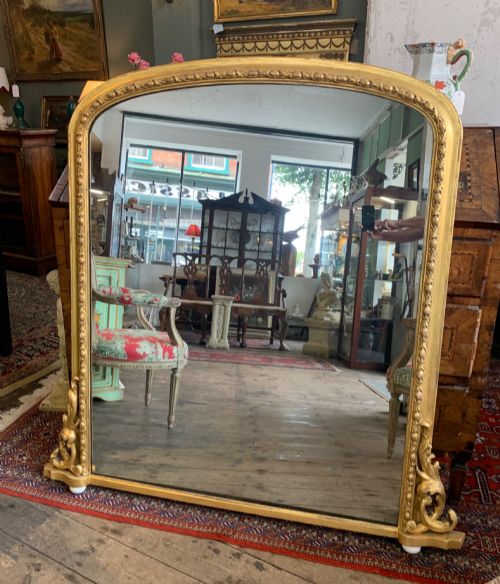
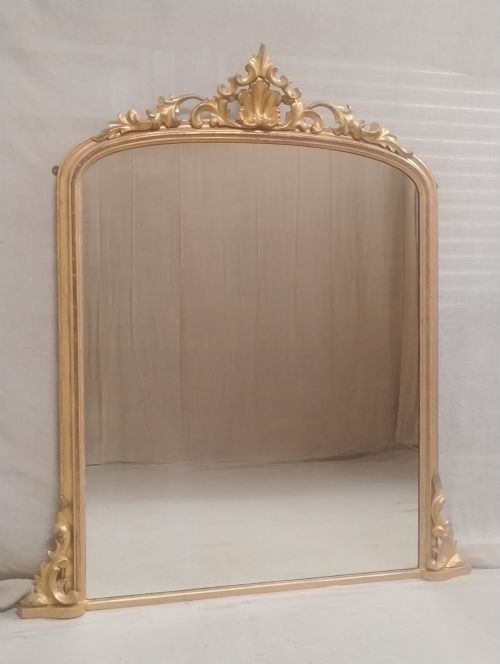
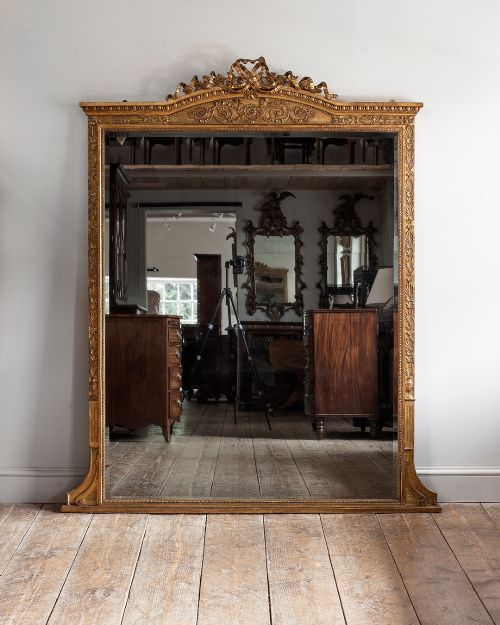
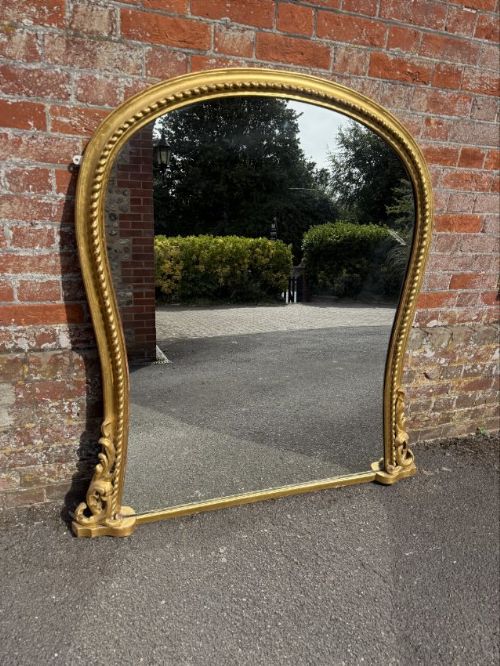
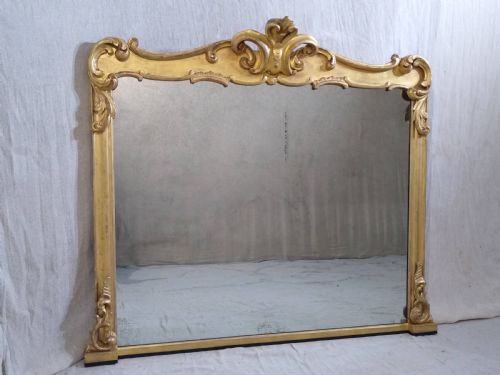
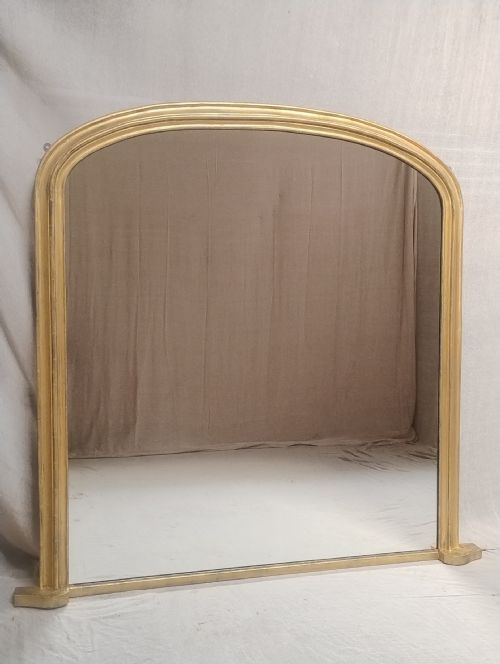
A gilded arched frame mirror is defined by its curved upper section and gilded surface, predominantly appearing on this page in nineteenth-century English and French formats. These pieces typically take the form of large overmantel mirrors designed to sit above a fireplace, alongside tall wall mirrors and pier mirrors.
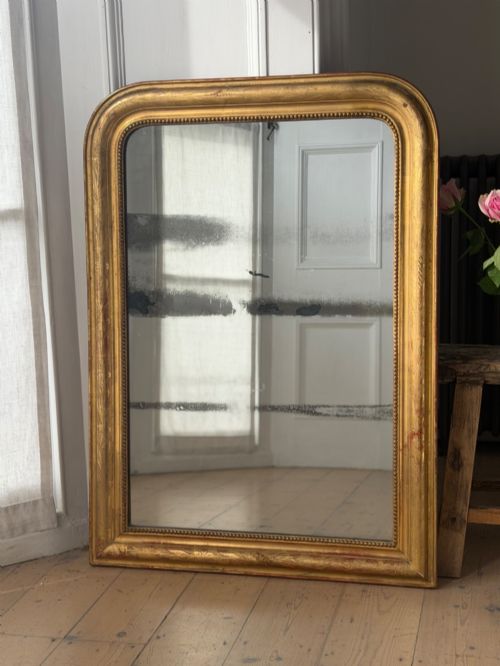
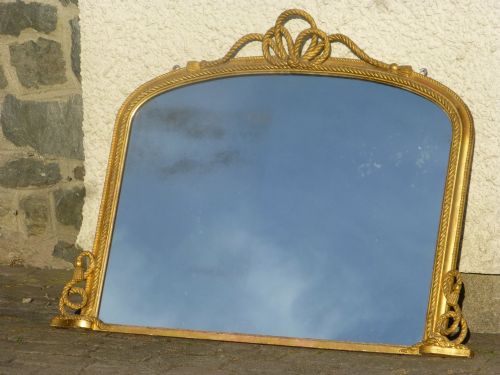
English examples from this era frequently combine carved wood and gesso with ribbed or rope-twist frames, whilst French counterparts lean towards the simpler lines associated with the Louis Philippe style. Sizes range from neat domestic proportions to exceptionally large architectural pieces intended to anchor a principal reception room.
How they were made
Construction relies upon a wooden base frame, often layered with plaster and gesso to build up decorative mouldings and relief details before gilding takes place. Gold leaf or applied gilt provides the metallic finish that catches the light across these surfaces.
Mirror glass is set within the rebated frame, with period examples occasionally displaying mercury silvering or natural foxing accumulated over the decades.
Several mirrors include rope twist and hour glass ribbed framing, demonstrating how makers turned basic geometry into nautical decoration.
What varies in quality
Quality shows in the crispness of the carved wood and gesso ornamentation, where deeper relief and sharper detail distinguish finer workshop output from simpler commercial pieces. The application and retention of the gold leaf also dictate visual depth, separating items with rich surface patination from those with flat or heavily renewed finishes.
Structural integrity of the heavy wooden carcase and the original depth of the rebate determine how well the mirror plate has been held secure over time.
The Gilded Arched Frame Mirror Glossary
- Gesso
- A plaster-based mixture applied to the wooden frame to create a smooth surface for carving and gilding. It allows for intricate relief decoration around the arch.
- Giltwood
- Timber that has been covered with gold leaf or metallic powder. It provides the characteristic warm reflective finish seen on nineteenth-century frames.
- Overmantel mirror
- A large mirror specifically proportioned to hang on the wall directly above a fireplace mantelpiece. These pieces often feature an arched top to echo architectural niches.
- Foxing
- Small dark spots and patches that develop within the mirror glass plate over time as the backing degrades. Collectors often value this aged appearance as proof of age.
- Pier mirror
- A tall, narrow mirror designed to be hung on the strip of wall between windows. They share many decorative characteristics with larger overmantel variants.
Gilded Arched Frame Mirror: Frequently Asked Questions
Where should I hang an overmantel mirror?
These pieces are traditionally positioned directly above a fireplace mantelpiece to reflect light and anchor the hearth within the room. Their generous scale allows them to function as the primary visual focus on a chimney breast.
Alternatively, they can be mounted lower down as leaner mirrors against a principal wall, provided the wall construction supports their considerable weight.
How do I identify a French Louis Philippe mirror?
French Louis Philippe mirrors are typically characterised by cleaner architectural lines, subtle rounded upper corners, and restrained ornamentation compared to heavily carved English overmantels. The frames often feature simple beaded or channelled mouldings rather than elaborate gesso foliage.
They offer a more understated aesthetic whilst retaining the characteristic arched profile and generous proportions.
What is foxed glass?
Foxed glass refers to the natural speckling, clouding, and dark spots that occur on older mirror plates as the reflective backing oxidises over long periods. This chemical ageing process is entirely natural and helps confirm the antique status of the glass.
Many collectors prefer foxed plates because they impart a softer reflection and historic character that modern glass cannot replicate.
How heavy are nineteenth-century gilt mirrors?
Nineteenth-century gilt mirrors are exceptionally heavy due to their dense wooden carcases, thick plaster gesso layers, and large glass plates. Proper installation requires heavy-duty fixings secured directly into wall studs or masonry.
Professional hanging is strongly advised to support the substantial combined weight of the wood, glass, and frame.