





German Wall Clock
A german wall clock brings architectural timber and precise movement into a room, offering the mechanical rhythm that collectors prize.
What a German wall clock is
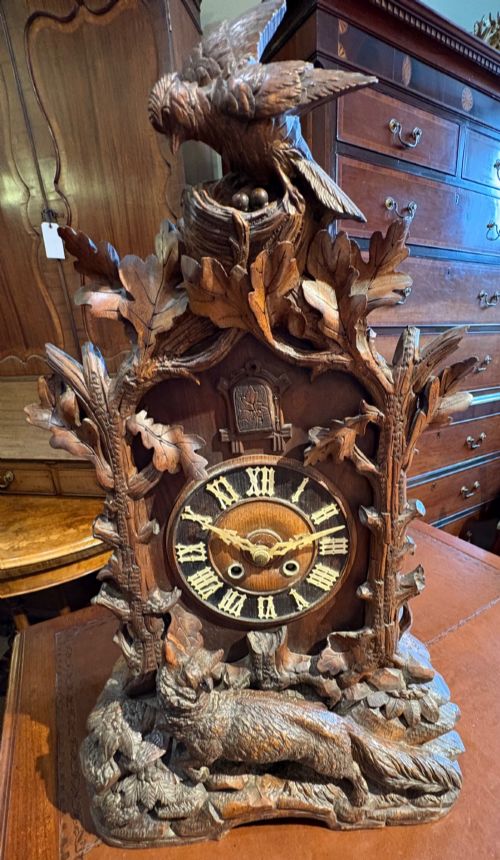
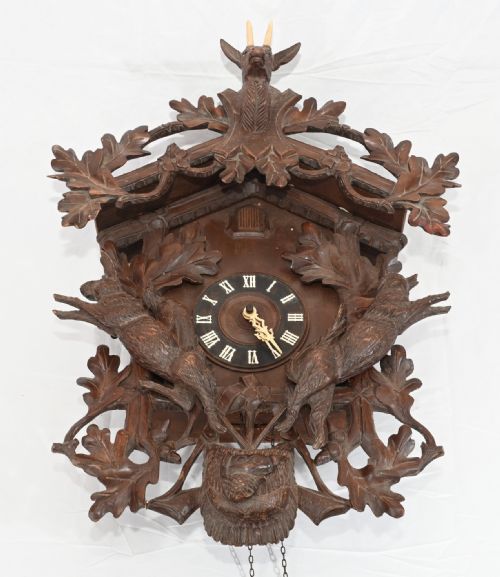
A german wall clock combines functional timekeeping with domestic architecture, originating from workshops across Germany and the Black Forest region. The pieces on this page span from the late nineteenth century into the twentieth century, covering styles from the Victorian period through to Art Nouveau and Art Deco. Buyers look for these clocks to anchor a hallway or reception room with substantial timber cases and clear dial faces.
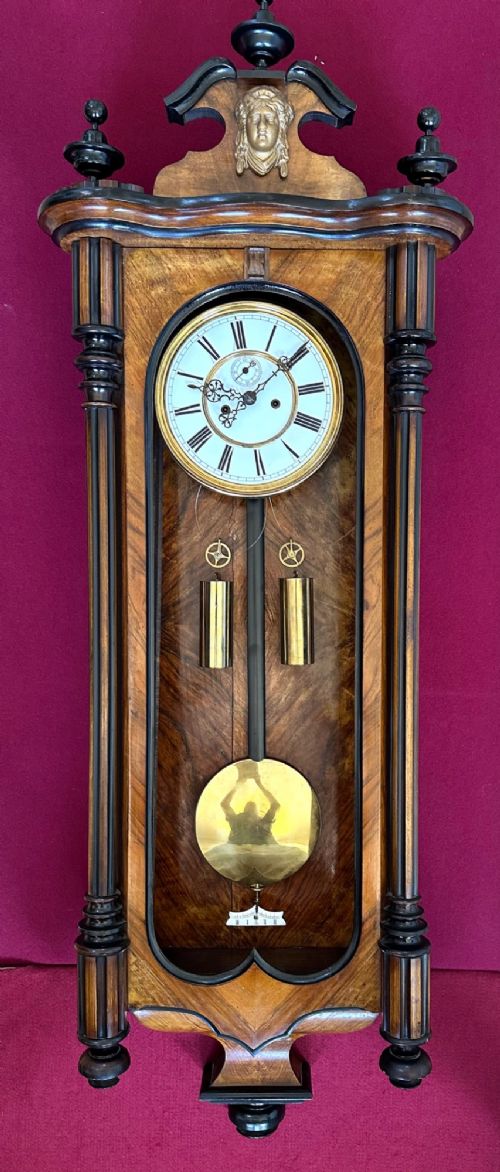
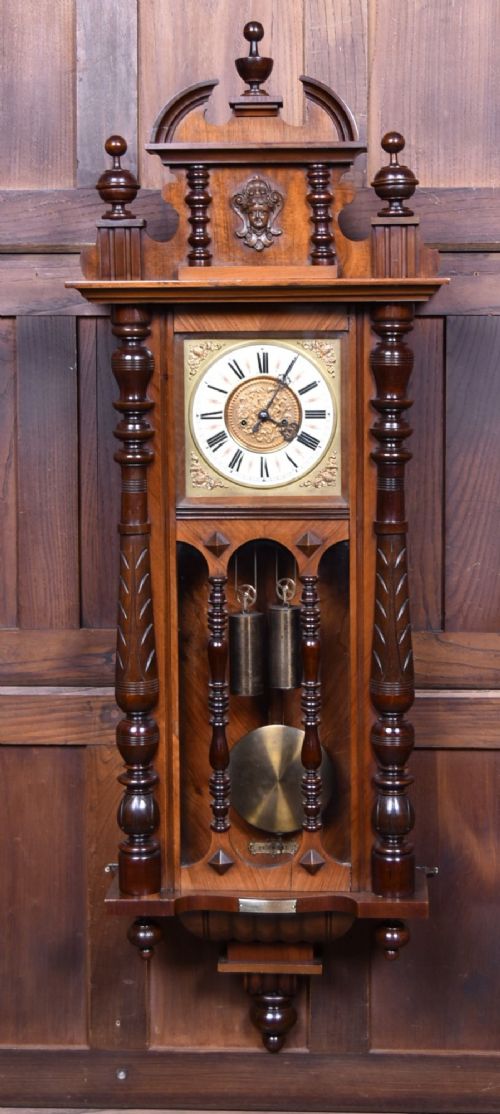
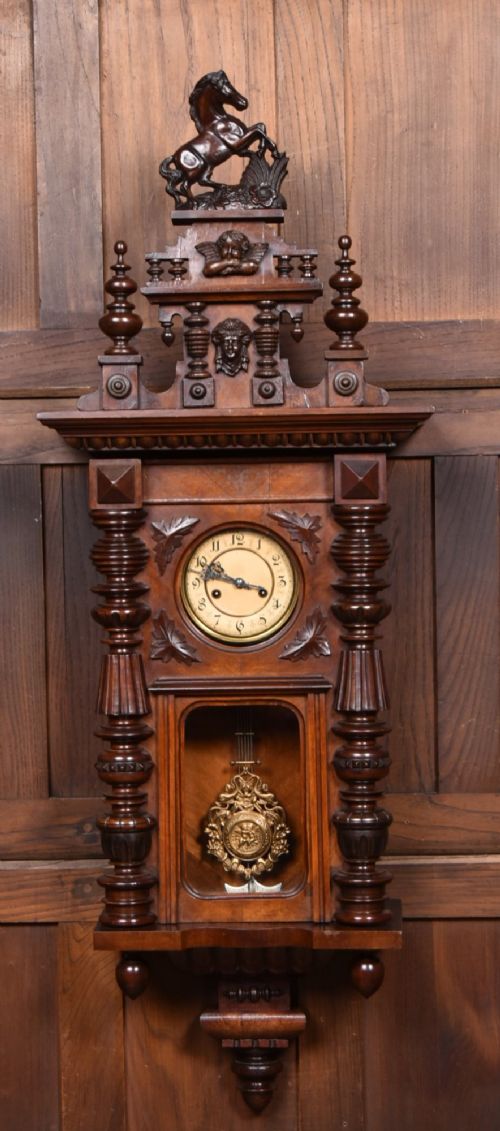
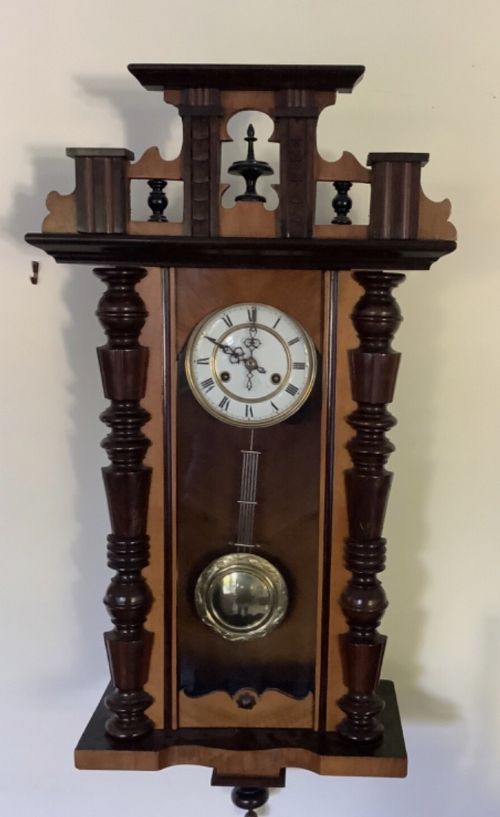
The most common forms on this page include walnut and oak regulator clocks alongside eight-day spring-driven models. Earlier examples often feature architectural walnut or ebonised wood cases, while later items embrace the organic curves of Art Nouveau or the clean geometries of Bauhaus design. Each variant reflects the changing interior tastes of German horology across several decades of production.
How they were made
Makers built these clock cases using solid timbers and veneers such as walnut, oak, mahogany, and burr maple. Ebonised wood and brass accents frequently appear to frame the dial and pendulum window, providing contrast against the warm grain of the primary timber.
The movements rely on brass gear trains and steel arbors housed within timber framing, driven by hanging weights or internal springs. Dials combine white enamel plates with painted Roman or Arabic numerals, protected behind hinged glass doors set into the wooden case.
Listings on this site feature walnut, oak, and mahogany cases housing brass movements across Victorian, Art Nouveau, and Art Deco periods.
What varies in quality
Quality rests in the precision of the case joinery and the complexity of the clockwork movement. Finer examples display carefully matched timber veneers, crisply carved wooden ornament, and substantial brass plates that hold the gear train securely.
The level of detail in the dial work and the sophistication of the striking mechanism distinguish standard production from superior pieces. Workshop signatures on the backplate or dial indicate higher tier manufacturing by established makers.
Philipp Haas·AG Lenzkirch·Gustof Becker
The German Wall Clock Glossary
- Vienna Regulator
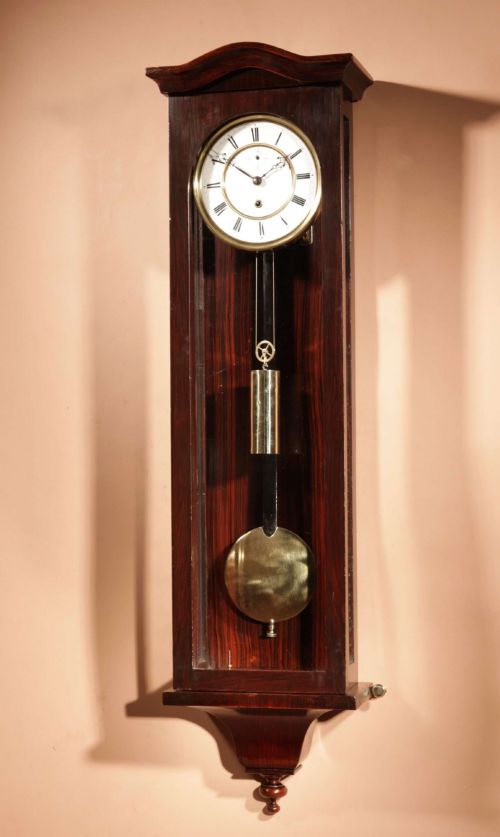
- A high-precision wall clock featuring a long glazed case designed to showcase the swinging pendulum and weight drops. These pieces developed from strict timekeeping standards in nineteenth-century Austria and Germany.
- Art Nouveau
- A design style spanning the turn of the twentieth century characterised by sinuous natural lines and floral motifs. In these clocks, the aesthetic appears in carved oak cases and stylised dial numerals.
- Eight Day Movement
- A mechanical clockwork system requiring winding once every week to maintain continuous operation. This gear configuration allowed domestic clocks to run reliably without daily attention.
- Westminster Chime
- A melodic quarter-hour chime sequence played on multiple gongs or rods within the clock case. This acoustic feature adds depth to the daily operation of the piece.
- Enamel Dial
- A metal clock face coated in fused powdered glass to create a smooth, durable white surface. Numerals are fired directly into the glaze for lasting legibility.
Frequently Asked Questions
How do I wind a german wall clock?
Use the provided key to turn the winding arbors on the dial face until you feel firm resistance, taking care not to overwind the spring. Ensure the pendulum hangs straight before setting the minute hand to the correct time.
Allow the pendulum to settle into an even tick after starting it gently by hand. If the beat sounds uneven, adjust the case position on the wall slightly until the rhythm balances.
Where should I hang a wall clock?
Choose an interior wall that remains free from excessive vibration, direct sunlight, and moisture fluctuations. A sturdy fixing into brickwork or a timber stud supports the weight of the heavier wooden cases safely.
Leave sufficient clearance below the case for the pendulum to swing without obstruction. Position the dial at eye level so you can read the time and access the winding holes easily.
How do I date a german wall clock?
Examine the timber selection, case style, and dial construction to establish the primary period of manufacture. Victorian and late nineteenth-century pieces tend to use heavy walnut cases with architectural mouldings, while 1920s examples show Art Deco geometric lines.
Look for maker marks or serial numbers stamped on the brass movement backplate. These factory stamps often connect directly to known production dates for firms like Lenzkirch or Gustof Becker.
What is an eight day movement?
An eight day movement is a spring-driven or weight-driven clock mechanism designed to run continuously for roughly a week between windings. This capacity offered domestic users convenience by reducing the frequency of maintenance.
These movements require larger mainsprings or longer drop distances for the weights compared to daily clocks. The heavier gear trains demand sturdy wooden cases to maintain proper alignment of the arbors.