



German Ceramic Vase
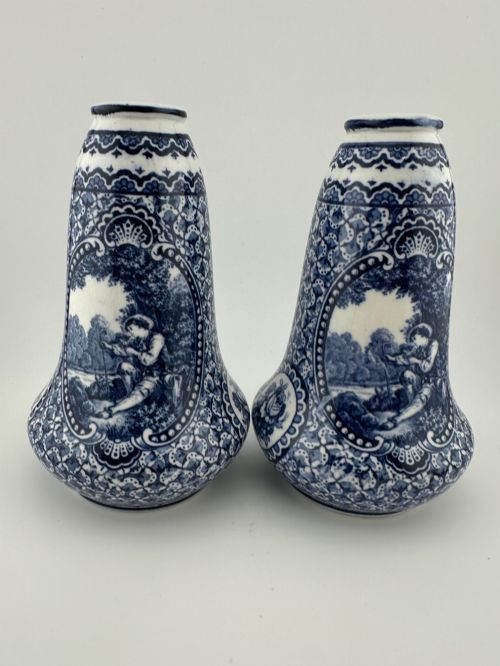
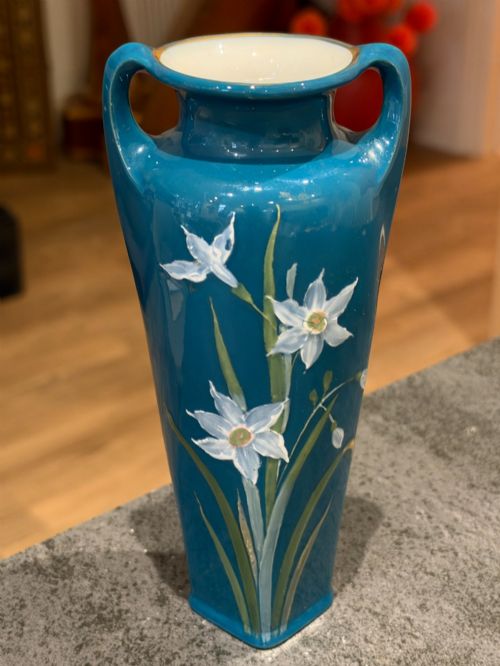
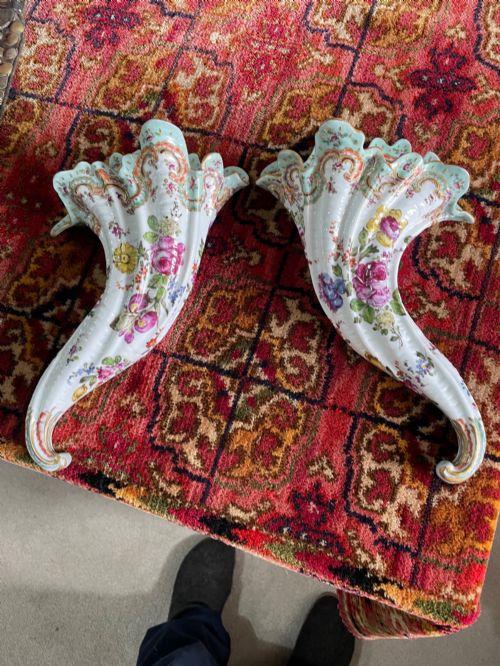
A german ceramic vase brings together intricate hand-painted floral scenes and classical forms from the late nineteenth and early twentieth centuries.
German Ceramic Vase
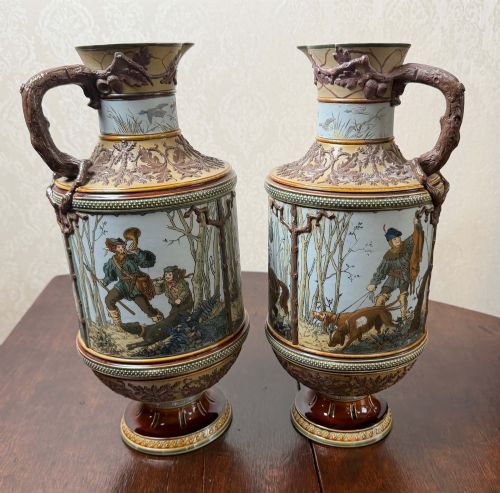
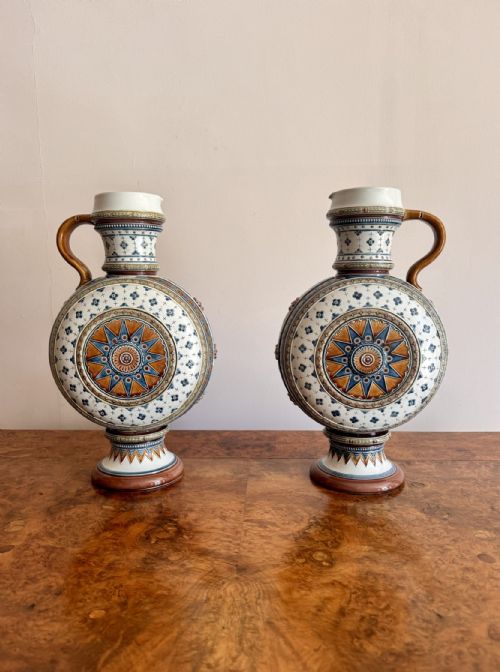
A german ceramic vase encompasses a wide variety of nineteenth-century and Edwardian vessels, ranging from bulbous lidded jars to tall urns and delicate posy holders. The pieces encountered on this page frequently display historical revivals, including Rococo, Neoclassical, and Louis XVI styles.
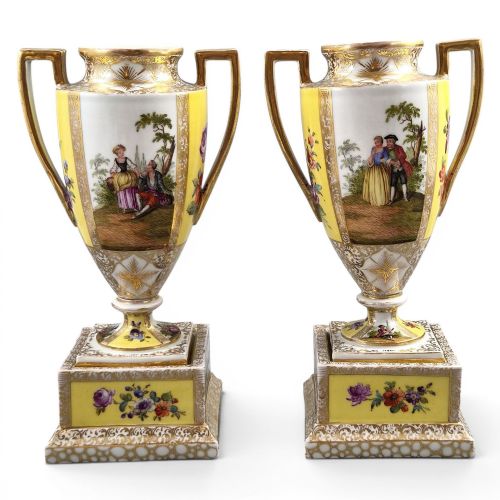
Makers utilised porcelain, hard-paste porcelain, glazed earthenware, and stoneware to shape these decorative objects. Many items arrive in matched pairs, often featuring hand-painted floral decoration or pastoral scenes reminiscent of eighteenth-century Meissen work.
How they were made
Potters shaped hard-paste porcelain and glazed earthenware into bulbous forms, lidded ginger jars, and twin-handled urns. Artisans then applied intricate hand-painted floral motifs and pastoral scenes directly onto the ceramic body.
Gilding, gold leaf, and enamel work were frequently added to highlight handles, rims, and panels. Firing techniques achieved smooth white grounds as well as rich blue and yellow backgrounds.
German Ceramic Vase Retail Price Guide 2026
Typical asking prices for german ceramic vase among the pieces listed under this phrase on Sellingantiques today, from the lower quarter to the upper quarter. They describe what is for sale here now, not the wider market.
Listings feature hard-paste porcelain, glazed earthenware, and stoneware across the nineteenth century and the Edwardian period.
What varies in quality
The refinement of hand-painted floral decoration and figural scenes distinguishes the finer examples from simpler production pieces. Crisp definition in moulded details, such as rococo scrolls and handles, marks out superior craftsmanship.
The application of gold leaf, gilding, and enamel work shows considerable variation across different factories and periods. Heavier, more substantial lidded forms and balanced pairs generally indicate greater ambition in the original manufacture.
Royal Bonn Franz Anton Mehlem·Sitzendorf·Helena Wolfsohn Dresden·Meissen·Mettlach Pottery·Krister KPM Waldenburg·Berlin
The German Ceramic Vase Glossary
- Hard-Paste Porcelain
- A durable ceramic material composed of kaolin and petuntse fired at high temperatures. It forms the dense white body characteristic of many nineteenth-century German decorative vessels.
- Glazed Earthenware
- A porous ceramic body covered with a liquid glass coating and fired to seal the surface. This technique provides a smooth base for hand-painted decoration.
- Posy Holder
- A small ceramic vessel designed specifically to display short-stemmed bunches of flowers. These often take whimsical forms, such as figures pushing wheelbarrows.
- Bisque
- Unglazed ceramic fired only once, resulting in a matte, chalky white surface that highlights sculptural detail. Figures and small ornamental objects frequently utilise this finish.
- Stoneware
- A robust, vitrified ceramic material fired at high heat until impervious to liquids. It appears in utilitarian and decorative nineteenth-century German vessels.
German Ceramic Vase: Frequently Asked Questions
How do I date a German ceramic vase?
Dating relies on stylistic clues like Rococo Revival or Art Nouveau shaping, alongside factory marks stamped or painted on the base. Comparing the hand-painted decoration to known periods helps narrow the decade of production.
Twentieth-century pieces often show different glaze textures and colour palettes compared to nineteenth-century examples. Examining the base for impressed numbers or initials provides further chronological context.
Are these vases functional or decorative?
Most pieces function primarily as decorative objects, urns, or lidded ginger jars meant for display on mantelpieces and side tables. Posy holders and specific vase forms can hold water, though many collectors choose to display them dry.
Heavily gilt or hand-painted surfaces require careful handling to preserve the enamel and gold leaf. Using them as ornament rather than everyday utility protects the historical finish.
What is the difference between porcelain and earthenware?
Porcelain is fired at much higher temperatures, creating a vitrified, non-porous material that rings slightly when struck. Earthenware remains more porous and requires a glazed surface to seal the clay body.
German factories utilised both materials depending on the desired shape and decorative style. Porcelain allowed for finer, crisper mouldings and translucent white grounds.
How should I display a pair of urns?
Matched pairs look best balanced symmetrically on large pieces of furniture, such as sideboards or console tables. Keeping them away from direct sunlight protects the enamel and hand-painted colours from fading.
Allowing sufficient space around lidded vases and urns lets the detailed painting and gilding remain the focal point. Placing them on stable surfaces prevents accidental tipping.