





German Carved Table Clock
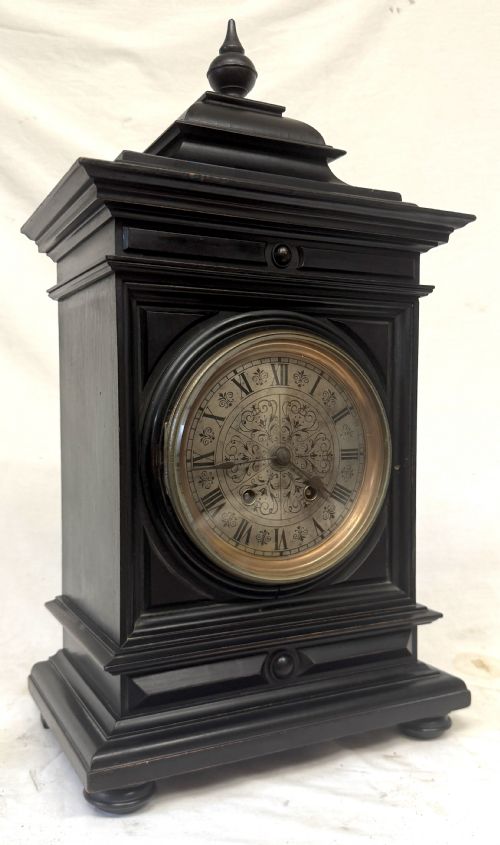
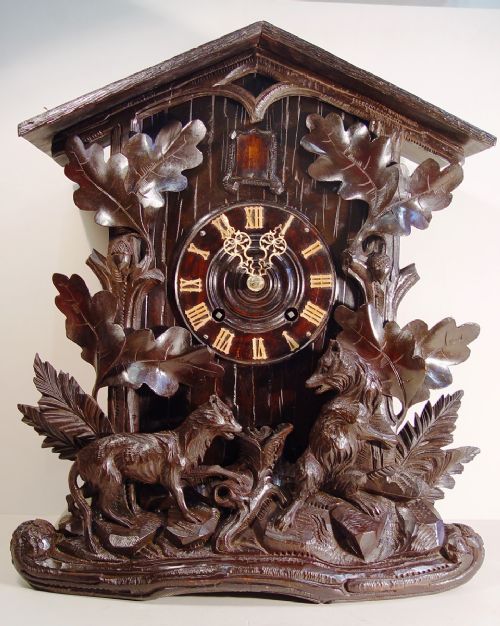
A german carved table clock brings architectural presence and mechanical mastery into a room, combining deep-grained timber with intricate foliage and reliable movement.
German Carved Table Clock
A german carved table clock represents an intersection of Black Forest craftsmanship and refined cabinetmaking from the nineteenth century. These pieces appear as mantel clocks, bracket clocks, and table-standing designs housed in substantial wooden cases.
The aesthetic vocabulary spans Victorian, Gothic Revival, and French Rococo styles, executed by makers across Germany and the border regions. Walnut, oak, and ebonised wood form the primary chassis for elaborate vegetal carvings and architectural mouldings.
Most examples date between the mid and late nineteenth century, reflecting the industrial output of notable Black Forest and Black Forest-adjacent workshops. Buyers encounter everything from simple 8-day timepieces to complex 14-day striking mechanisms and musical movements.
Construction and Materials
Cabinetmakers utilised seasoned hardwoods, principally walnut and oak, selecting timber with strong grain patterns to withstand deep hand-carving. Ebonised wood offered a contrasting dark finish that highlighted gilt bronze mounts and silvered brass dials.
Movements relied on heavy brass plates and intricate gear trains, often driven by twin fusee setups or multiple trains for striking and chiming. Glass panels protected the enamel or metal dials while allowing view of the oscillating pendulums and escapements.
German Carved Table Clock Retail Price Guide 2026
Typical asking prices for german carved table clock among the pieces listed under this phrase on Sellingantiques today, from the lower quarter to the upper quarter. They describe what is for sale here now, not the wider market.
A good cuckoo clock reminds you it is alive every sixty minutes, whether you wanted the company or not.
Judging Quality
The depth and crispness of the hand-carving dictate the artistic merit of the case, separating mechanised production from skilled artisan output. Deeply undercut foliage and well-proportioned figures demonstrate superior wood-working proficiency.
Movement complexity and signature marks define the horological value, with signed brass backplates from established houses commanding attention. The integration of musical cylinders or Westminster chime trains adds mechanical sophistication to the piece.
H.A.C.·Lenzkirch·Winterhalder & Hofmeier·Beha
The German Carved Table Clock Glossary
- Bracket clock
- A portable clock designed to sit on a table, shelf, or dedicated wall bracket. They typically feature carrying handles and glazed side panels.
- Fusee
- A conical pulley used in spring-driven clocks to equalise the torque of the mainspring as it unwinds. This mechanism ensures more accurate timekeeping throughout the running period.
- Twin fusee
- A movement incorporating two separate fusee cones, one for the timekeeping train and one for the striking train. This setup maintains consistent power across both functions.
- Silvered dial
- A brass or metal clock face treated with a silver solution to create a matte, reflective surface. Numerals and markings are typically engraved and filled with dark wax.
- Striking train
- The secondary gear mechanism within a clock that powers the hour or quarter-hour bell strikes. It operates independently from the time-recording gear train.
German Carved Table Clock: Frequently Asked Questions
Where should I place a heavy wooden mantel clock?
Position the piece on a stable, level surface such as a heavy sideboard, mantelpiece, or dedicated wall bracket away from direct sunlight and dampness. A level foundation is essential for the escapement to maintain an even tick and keep accurate time.
Avoid placing the clock near exterior doors or drafty hallways where vibrations might disturb the pendulum swing. Solid support prevents the heavy timber case from warping over time.
What does a three train movement do?
A three train movement powers the timekeeping train, the hour strike, and the musical chimes or quarter-hour melodies independently. Each train connects to its own spring barrel or weight system within the brass movement.
This complexity allows the clock to play tunes like Westminster chimes alongside traditional hour strikes. Such movements represent higher levels of nineteenth-century horological engineering.
How do I identify a Black Forest clock?
Black Forest pieces are characterised by deep, naturalistic wood carvings featuring leaves, birds, animals, and rustic motifs. The wooden cases often show regional German or Swiss stylistic influences from the nineteenth century.
Many of these clocks utilise table-standing formats or incorporate cuckoo mechanisms alongside traditional dial layouts. The emphasis rests heavily on sculptural woodwork combined with durable brass movements.