
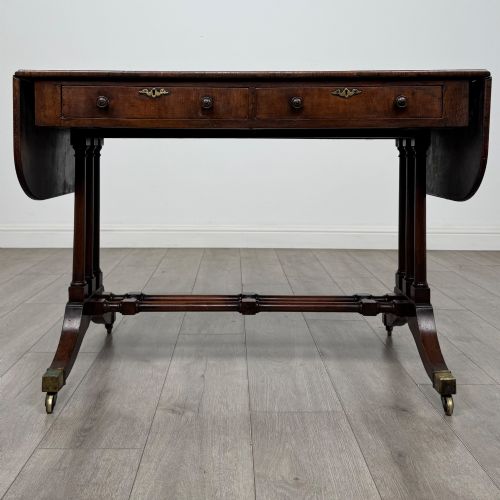
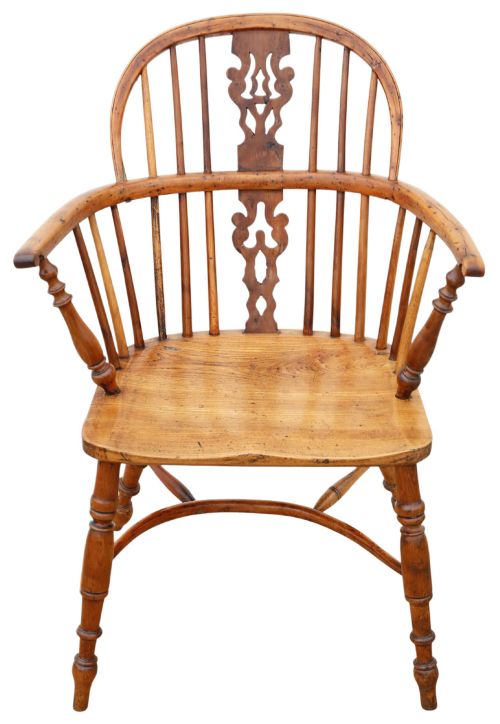


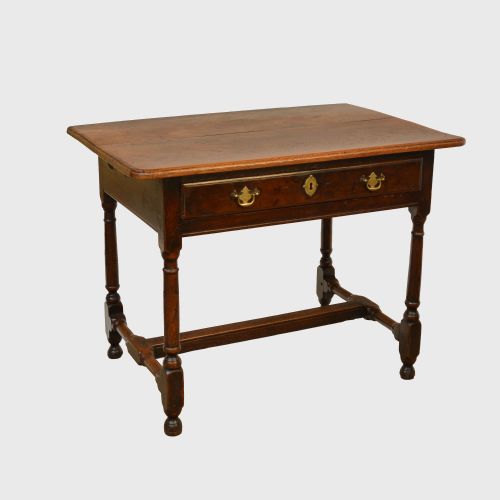
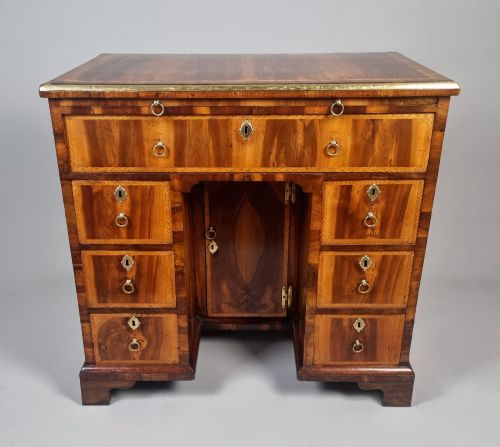
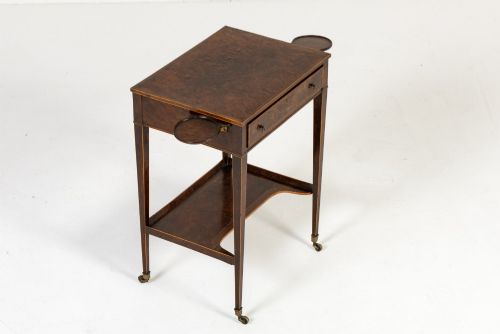
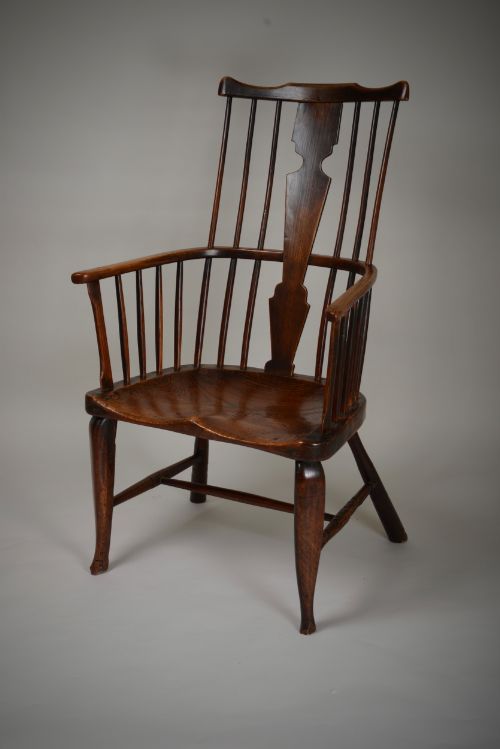
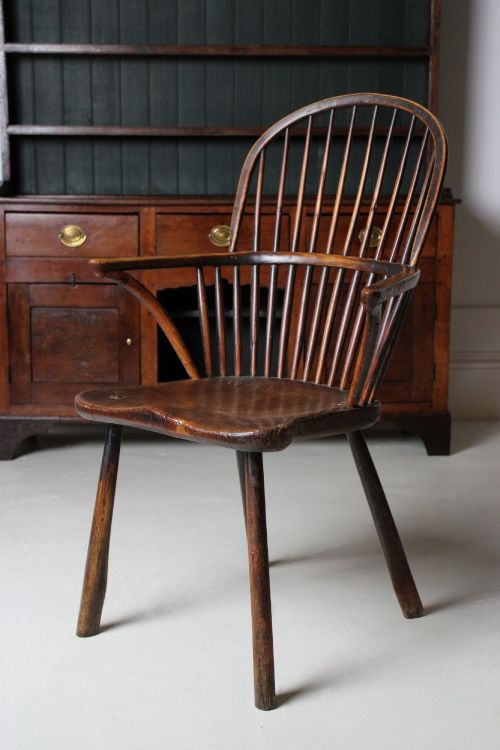
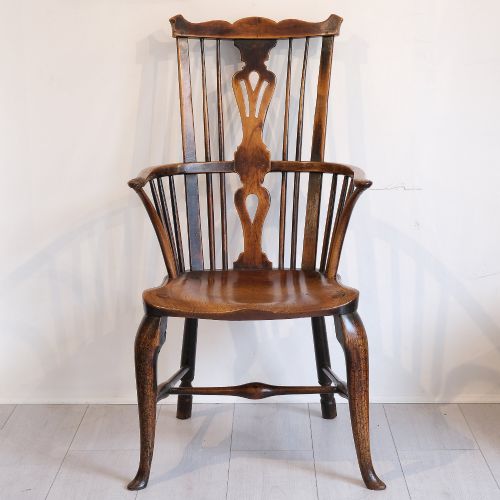
Georgian Yew Desk
A georgian yew desk brings together rich timber and traditional vernacular forms for a functional workspace with genuine character.
Georgian Yew Desk
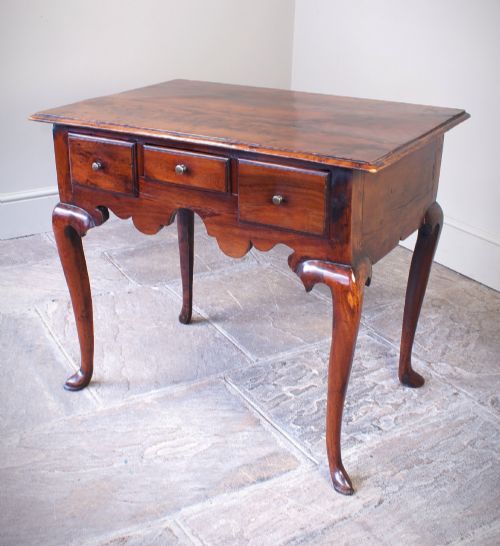
When buyers search for a georgian yew desk, they encounter regional writing tables, bureau bookcases, and occasional dressing tables constructed from native British timbers during the eighteenth and nineteenth centuries.
The material itself often dictates the form, appearing alongside elm, ash, and beech in English country pieces that range from formal George II dressing tables to regional side tables and bureau stands.
Surviving examples span the Georgian era into the Victorian period, reflecting both sophisticated cabinet-making and robust vernacular traditions across English workshops.
Materials and Construction
Cabinet-makers relied heavily on native yew wood, often selecting highly figured burr sections for writing surfaces and drawer fronts to create deep visual warmth.
Secondary timbers such as elm, oak, and beech provided structural integrity for frames and drawer linings, while original brass handles and escutcheons completed the construction.
Yew trees were historically planted in churchyards to supply resilient wood for longbows before finding their way into country furniture.
Distinguishing Quality
The grade of timber selection separates standard pieces from exceptional ones, with dense burr figuring and well-matched grain patterns commanding greater attention.
Original brass hardware, sound structural joinery, and the preservation of a deep natural patina determine the overall integrity and standing of an individual piece.
John Brand of Sleaford·Rockley Maker
The Georgian Yew Desk Glossary
- Burr yew
- A growth deformity in the yew tree that produces highly twisted, knotty grain patterns prized for decorative veneering and solid tops.
- Lowboy
- A small side table or dressing table fitted with one or more tiers of drawers, standing on relatively tall slender legs.
- Bureau
- A sloping fall-front desk enclosing a fitted interior of small drawers and pigeonholes, often resting on a stand or chest base.
- Crinoline stretcher
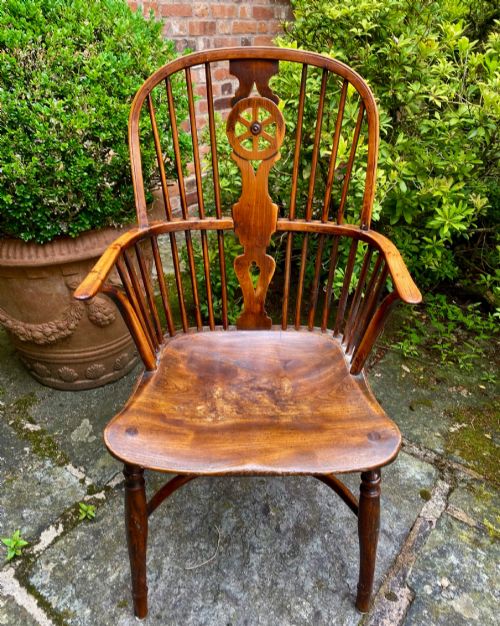
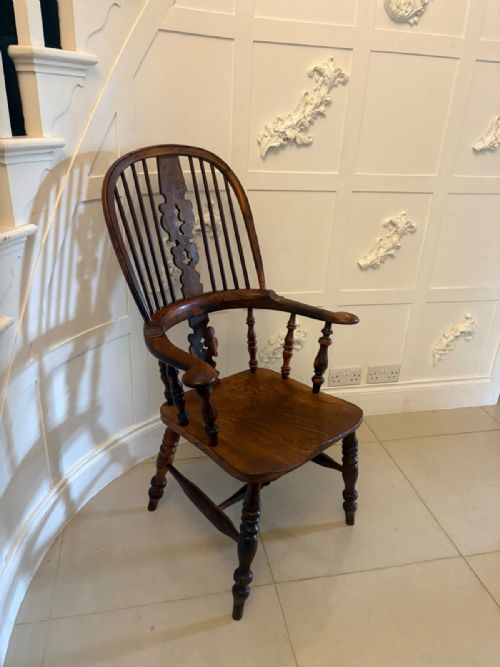
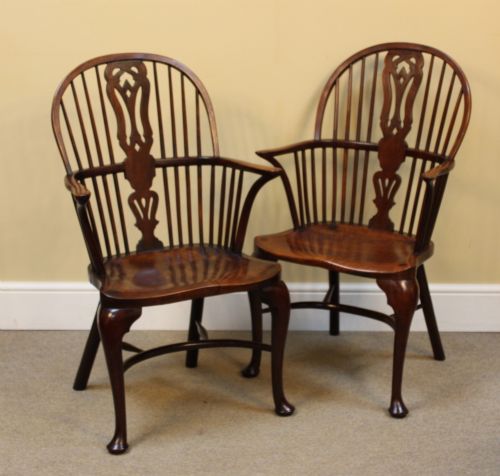
- A bowed horseshoe-shaped wooden brace connecting the legs of a Windsor chair to provide extra rigidity.
- Patina
- The surface sheen and mellowing developed by wood over centuries of handling, exposure, and polishing.
Georgian Yew Desk: Frequently Asked Questions
What defines a yew wood desk?
These pieces utilise native British yew timber, often featuring distinctive grain patterns and warm amber tones.
They appear in various regional forms, from compact writing tables to bureau stands.
How do I date a yew desk?
Dating relies on construction methods, timber preparation, and stylistic cues ranging from George II to Victorian periods.
Secondary woods like elm and oak also offer clues to the regional workshop origin.
Are yew desks sturdy for daily use?
Yew is a remarkably hard and durable native wood well-suited to the demands of a writing surface.
Traditional joinery ensures these tables remain stable and practical in a modern interior.
Where were these desks made?
Most pieces originate from English country workshops and regional cabinet-makers working outside major metropolitan centres.
Local timber availability heavily influenced the choice of yew and complementary woods.