
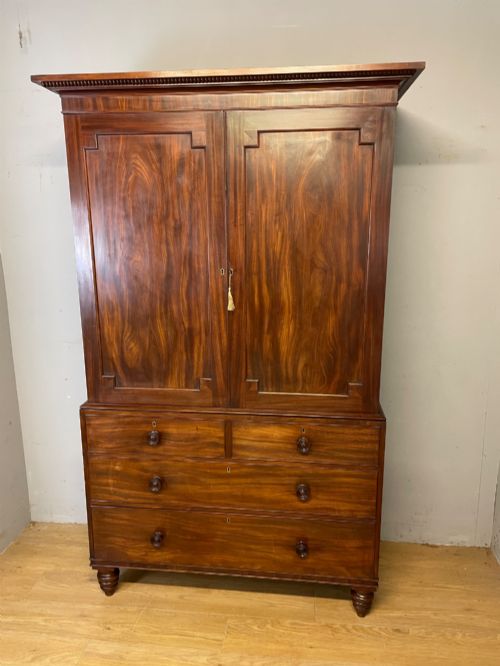
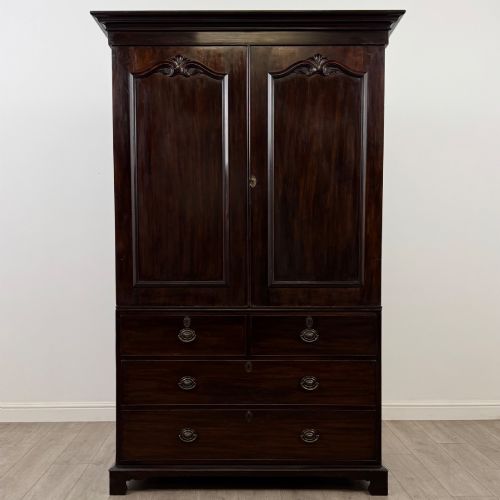
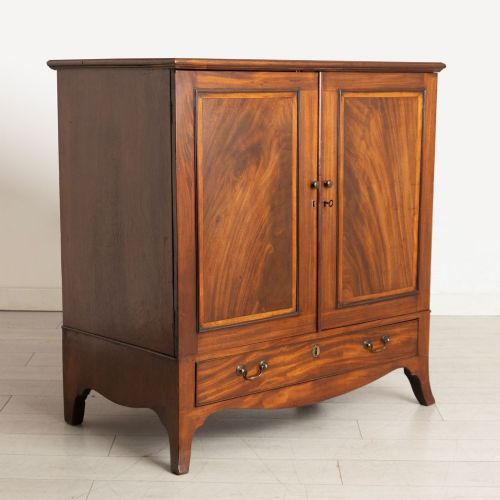
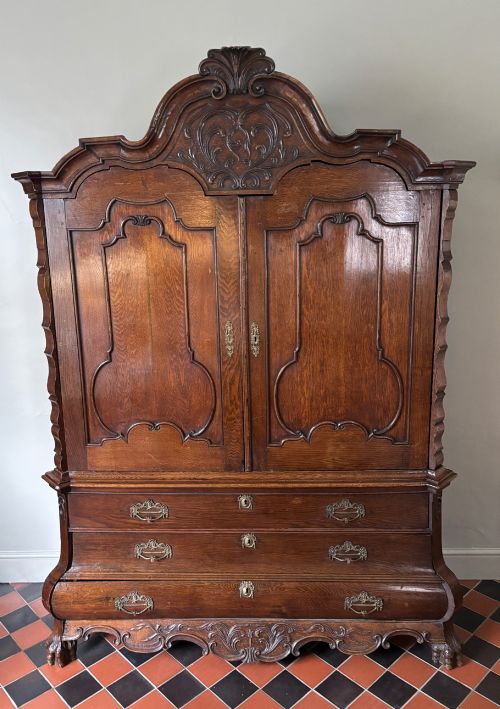
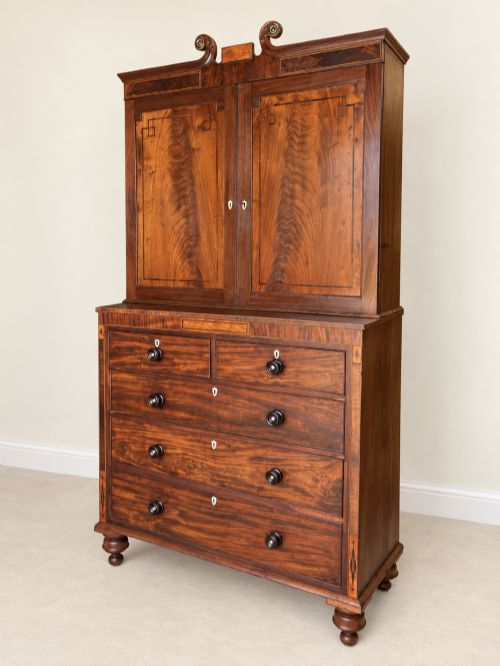
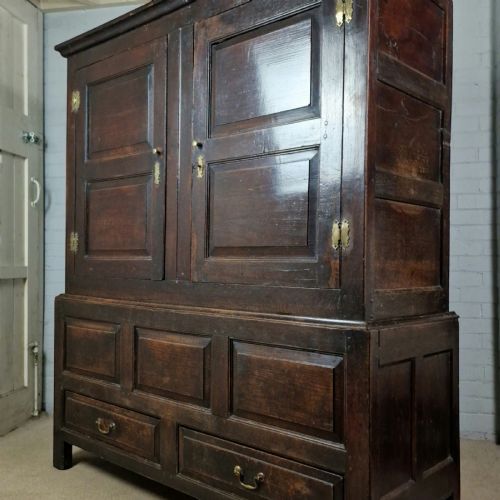
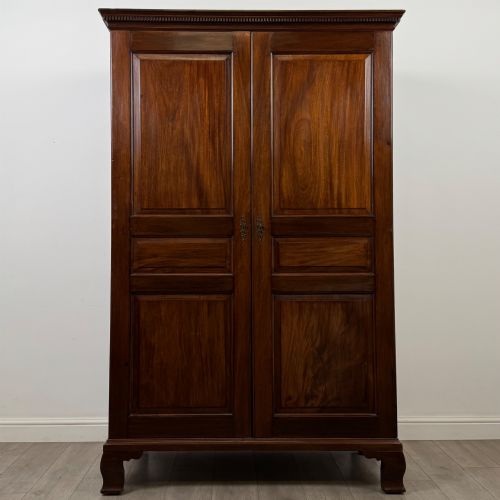
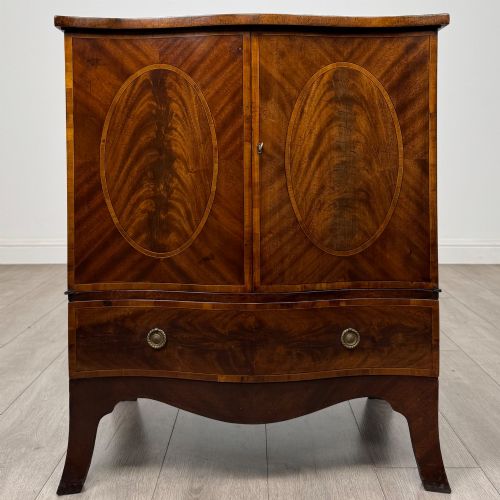
Georgian Wooden Press Cupboard
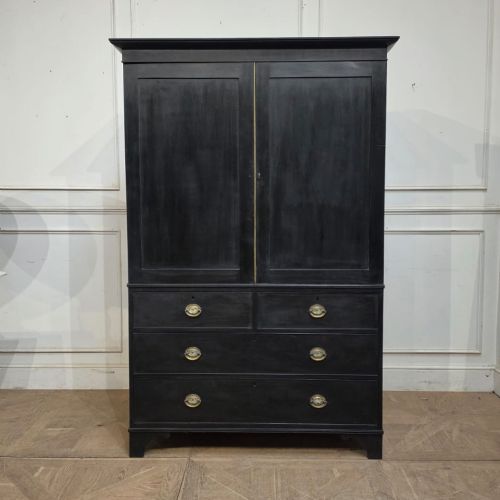
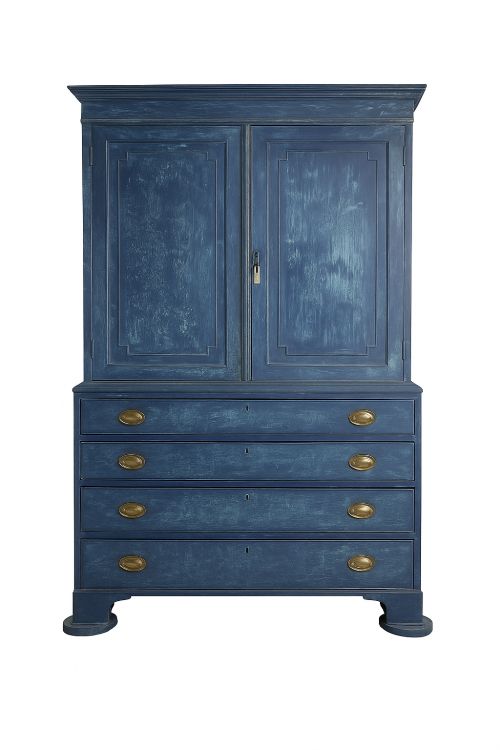
A georgian wooden press cupboard provides substantial historic storage, combining an upper linen press with lower drawer space.
Georgian Wooden Press Cupboard
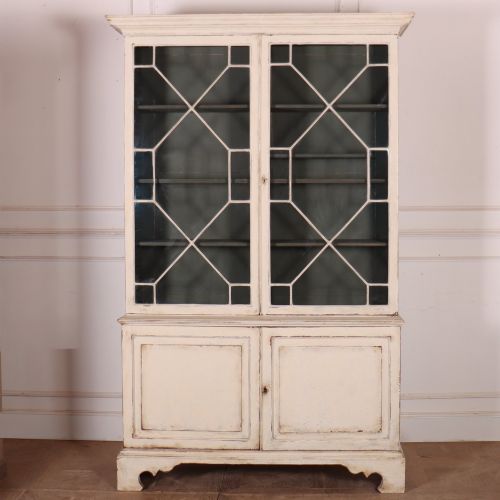
A georgian wooden press cupboard is a large storage furniture piece designed for household linens and garments, originating primarily from the eighteenth and nineteenth centuries. These items combine upper cupboard sections with lower chests of drawers, offering robust capacity for domestic organisation. Most examples met on this page date from the Georgian period, the Regency era, or later nineteenth century revivals.
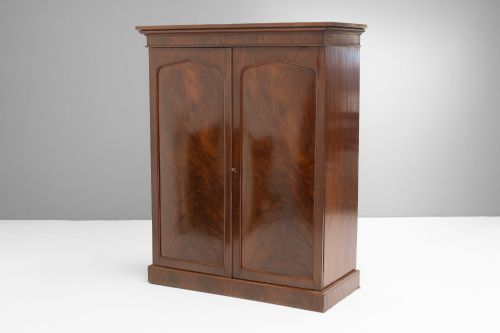
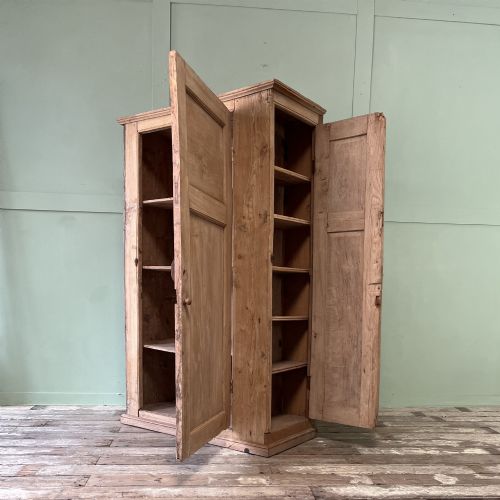
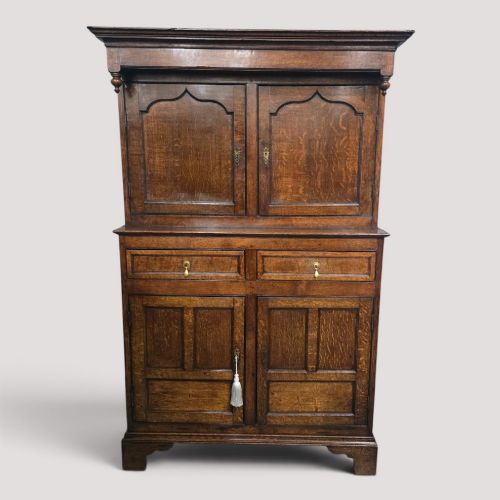
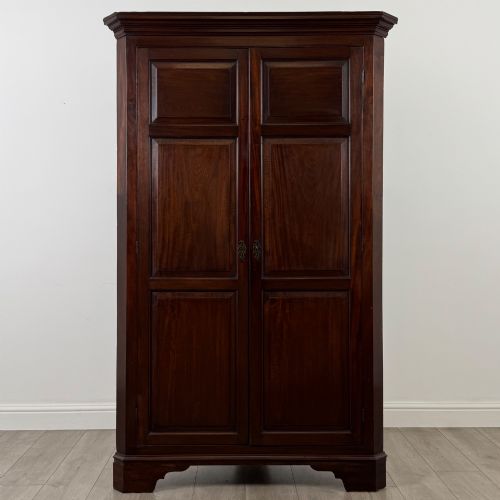
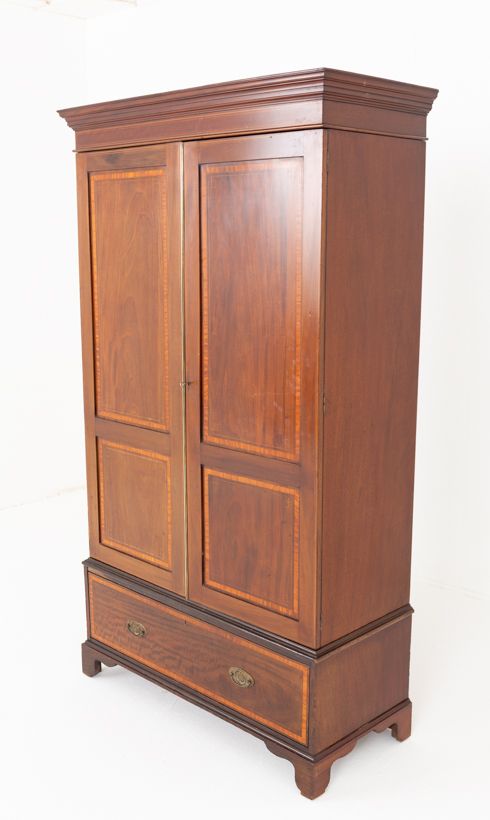
The construction typically utilises hardwoods like mahogany and oak, alongside regional variants in pine, elm, and walnut. Forms range from low linen cupboards to tall breakfront wardrobes and inlaid linen presses featuring two-door configurations. Buyers encounter both formal cabinetwork in polished mahogany and simpler country pieces in native oak or painted finishes.
What varies in quality
The grade of timber and sophistication of surface ornamentation separate standard utility pieces from exceptional cabinetwork. Superior examples display carefully selected figured mahogany or intricate marquetry inlay, whereas simpler iterations rely on plain oak or pine.
Proportion and architectural detailing dictate the visual balance of the piece, from modest country cupboards to large breakfront wardrobes with carved mouldings. Original brass hardware, intact interior sliding trays, and well-preserved timber patination indicate higher cabinetmaking standards.
Early primitive oak cupboards occasionally retain their original blacksmith-forged iron locks and heavy hinges, designed to secure household provisions.
The Georgian Wooden Press Cupboard Glossary
- Press
- A piece of furniture designed for storing folded clothes or linen, typically containing sliding trays behind upper doors.
- Breakfront
- A cabinet design where the central section projects forward from the flanking wings.
- Marquetry
- Decorative veneer work formed by fitted pieces of different coloured woods or materials to create pictorial patterns.
- Escutcheon
- A protective plate surrounding a keyhole, usually cast in brass.
- Flame mahogany
- Timber sliced from the fork of a mahogany tree to produce a distinctive flickering flame-like grain pattern.
Georgian Wooden Press Cupboard: Frequently Asked Questions
How do I use a press cupboard today?
These large pieces serve as bedroom wardrobes or living room linen storage, accommodating modern clothes hangers with internal rail adaptation or utilising the original sliding trays for folded garments.
The deep lower drawers provide substantial space for blankets, shoes, or seasonal items, functioning as practical freestanding furniture in contemporary homes.
Are these cupboards easy to dismantle?
Many eighteenth and nineteenth-century press cupboards were constructed as knockdown wardrobes, meaning the cornice, sides, base, and internal press sections separate into flat panels for easier transport.
Buyers should check specific construction details, as larger mahogany and oak examples can be extremely heavy and require professional assembly upon delivery.
How do I tell a Georgian press from a Victorian copy?
Genuine Georgian pieces exhibit eighteenth-century construction traits such as hand-cut dovetails, secondary softwood linings, and aged timber patination developed over centuries of domestic use.
Later nineteenth-century and Edwardian revivals often display standardised machine-sawn components, different interior depths, or revival styling cues like Sheraton or Queen Anne motifs.