



Georgian Wooden Casket
A georgian wooden casket brings orderly beauty to domestic spaces, holding tea, documents, or jewellery with refined historical craft.
Georgian Wooden Casket
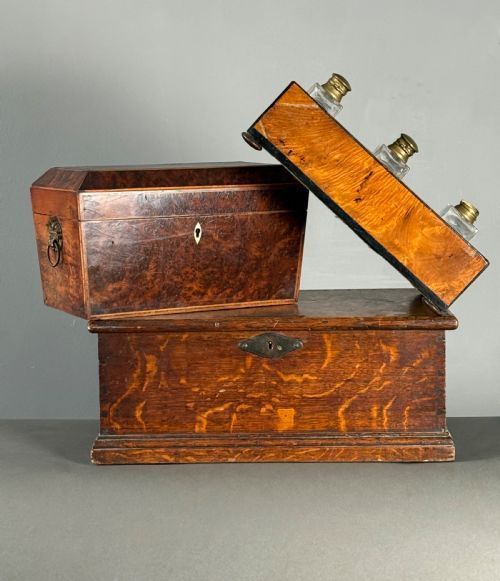
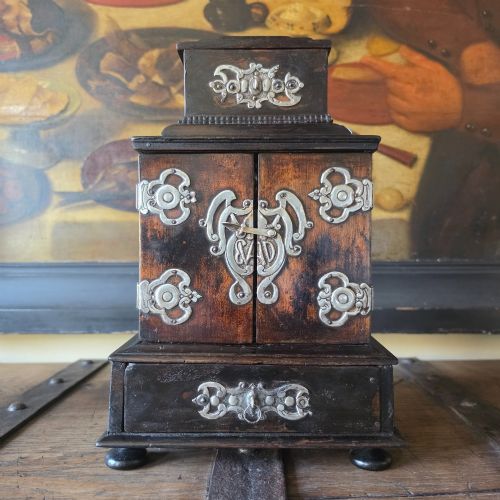
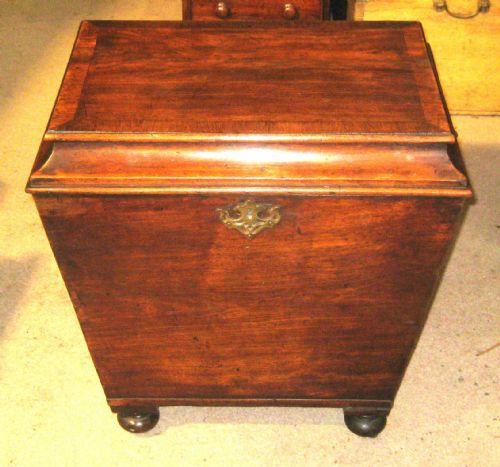
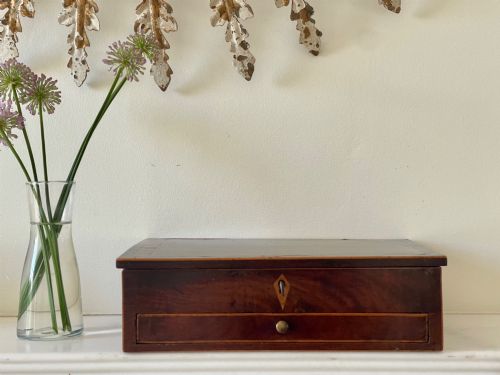
A georgian wooden casket encompasses a varied domestic inventory ranging from tea caddies and cellarettes to jewellery cabinets, document boxes, and sewing chests. These containers emerge from the Georgian and Regency periods, spanning the eighteenth and early nineteenth centuries.
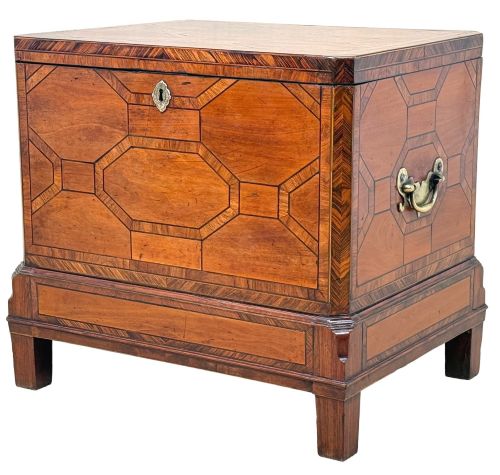
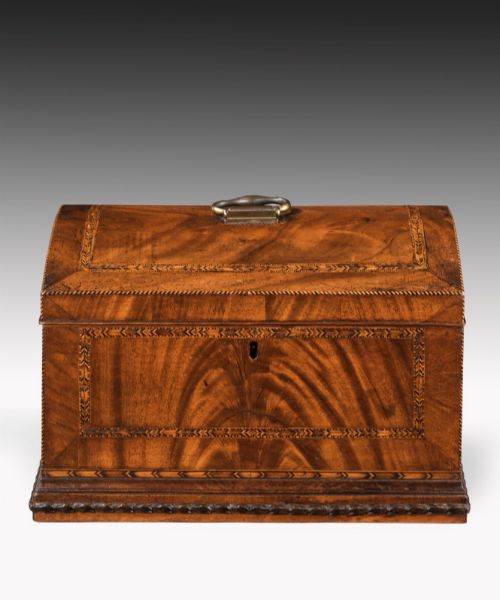
The selections on this page appear most frequently in mahogany, rosewood, and satinwood, taking forms such as sarcophagus wine coolers, domed boxes, and octagonal cellarettes. Makers shaped these pieces for specific utilitarian purposes within wealthy households, creating secure repositories for valuable consumables and personal effects.
Materials and Technique
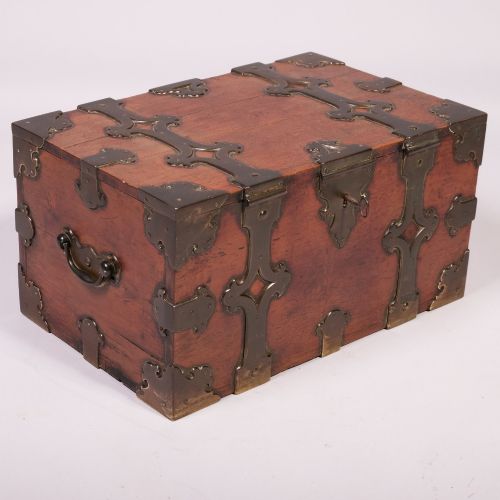
Cabinet makers utilised dense native and exotic timbers including flame mahogany, yew, burr yew, coromandel, and kingwood, often applying intricate veneers over solid secondary woods. Surface enrichment frequently involved brass mounts, penwork, mother of pearl inlay, and painted Chinoiserie decoration.
Construction techniques relied on precise joinery to house delicate contents, incorporating fitted interior compartments for tea canisters, mixing glasses, stationery, and artist materials. Leather binding, brass banding, and parquetry further reinforced the structural integrity while elevating the visual finish.
Georgian Wooden Casket Retail Price Guide 2026
Typical asking prices for georgian wooden casket among the pieces listed under this phrase on Sellingantiques today, from the lower quarter to the upper quarter. They describe what is for sale here now, not the wider market.
Some nineteenth-century caskets doubled as artist boxes, ensuring one could paint landscapes while keeping the tea safely locked away.
Distinctions in Execution
The calibre of a georgian wooden casket rests upon the selection of timber figures, such as the depth of flame mahogany or the striking grain of burr yew and satinwood. Superior examples display meticulous alignment in parquetry, brass inlay, and penwork details.
Internal architecture dictates upper tiers of execution, where fitted compartments, original canisters, and working locks demonstrate comprehensive original craftsmanship. The integrity of the polish and the subtlety of decorative mounts separate standard utilitarian containers from masterwork items.
The Georgian Wooden Casket Glossary
- Cellarette
- A lockable container designed for storing bottles of wine or spirits, often lined and positioned near the dining table during the Georgian era.
- Tea Caddy
- A small box constructed to hold loose tea leaves securely, frequently featuring internal lidded canisters and mixing bowls.
- Penwork
- A decorative technique utilising fine ink drawings on wood surfaces, popular during the Regency period for intricate motifs and topographical scenes.
- Sarcophagus
- A distinct burial-chest form adopted by Regency cabinet makers for wine coolers and large boxes, characterised by a rounded or faceted lid and substantial proportions.
- Parquetry
- Geometric mosaic woodwork formed by small veneer tiles arranged in repeating patterns across the exterior surface of boxes and games tables.
Georgian Wooden Casket: Frequently Asked Questions
What did people store inside a georgian wooden casket?
These boxes served diverse domestic functions, holding valuable commodities like tea leaves, wine bottles, and spirits.
Owners also utilised smaller caskets for personal items including jewellery, sewing supplies, stationery, documents, and painting equipment.
How do I distinguish a Regency box from an earlier Georgian piece?
Georgian pieces often feature richer carved mahogany and classical proportions, including architectural mouldings and brass carrying handles.
Regency examples tend to embrace exotic timbers like rosewood and calamander, alongside brass inlay, penwork, and sarcophagus silhouettes.
Were these caskets meant to be locked?
Many examples incorporate functioning brass locks and keys because their contents held significant monetary and social value.
Tea, sugar, wine, and personal correspondence required physical security within busy households employing numerous staff.
How should I care for antique wooden boxes at home?
Keep these items away from direct sunlight and steady heat sources to prevent timber shrinkage and veneer lifting.
Apply gentle wax polish sparingly to maintain the finish and preserve the natural lustre of the historical wood.