


Georgian Wooden Accent Chair
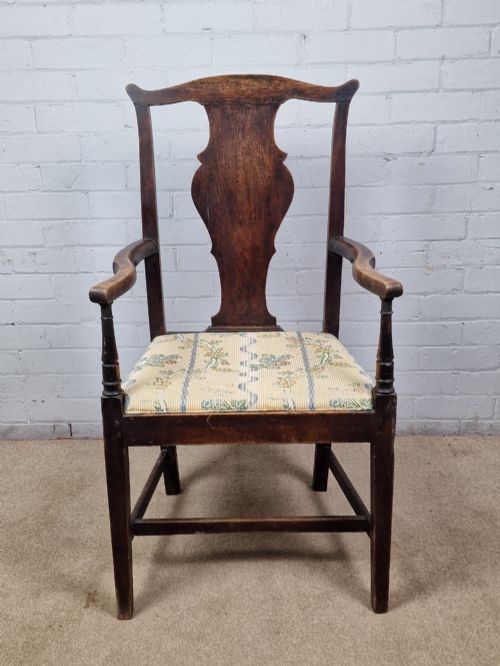
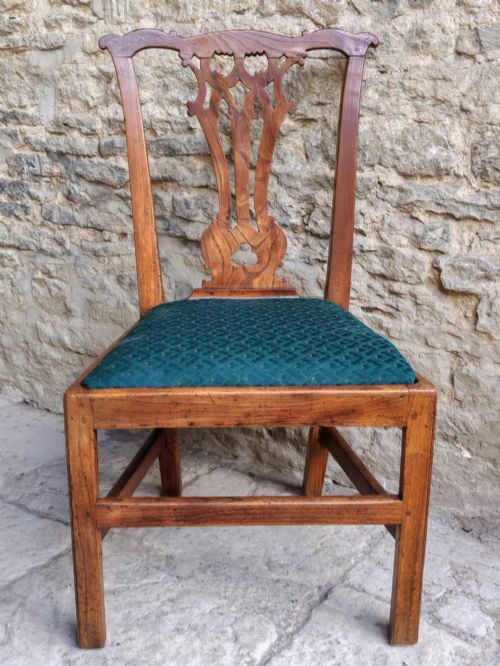
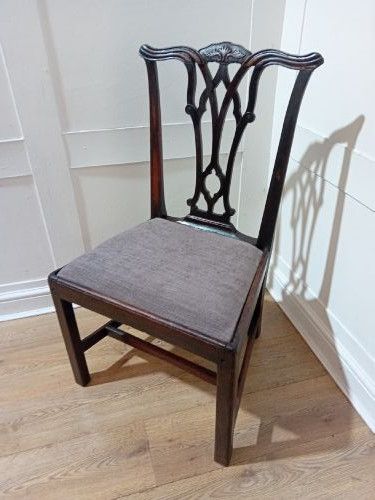
A georgian wooden accent chair brings solid mahogany, oak, elm and walnut timber into a room with traditional seating forms.
Georgian Wooden Accent Chair
A georgian wooden accent chair encompasses various seating forms designed during the eighteenth century and subsequent revival periods.
Most examples originate from English and Scottish workshops, spanning the reigns of George I, George II, and George III, alongside later nineteenth century interpretations.
Materials and Construction
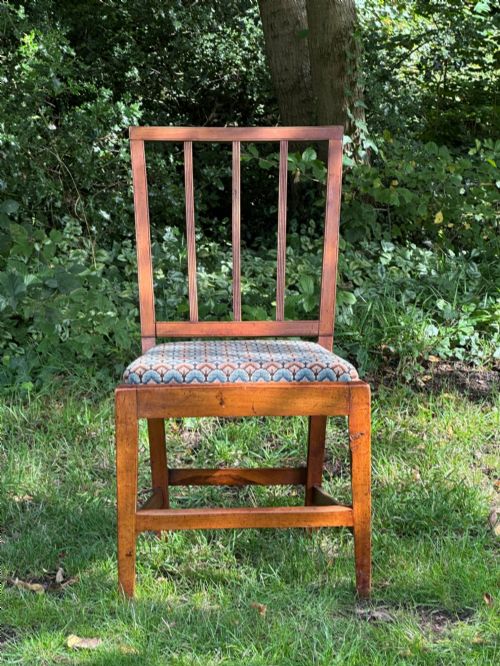
Cabinetmakers utilised dense hardwoods such as mahogany, oak, elm, ash, beech, yew, birch, and walnut to construct sturdy frames using traditional joinery.
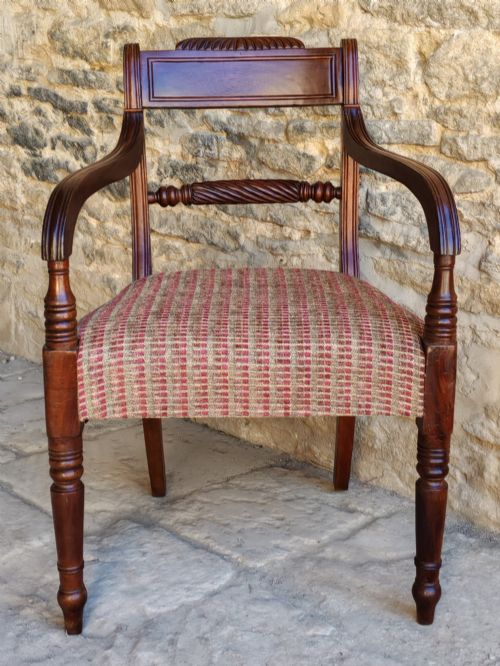
Turned elements, carved shield backs, ropebacks, and comb backs demonstrate provincial craftsmanship alongside refined urban joinery techniques.
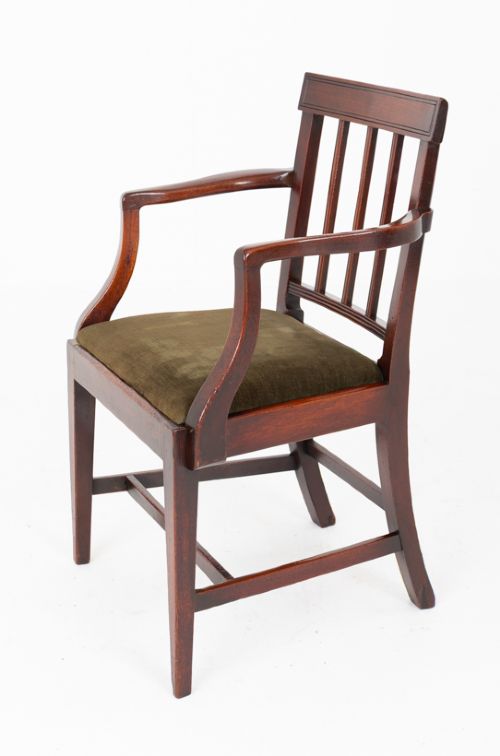
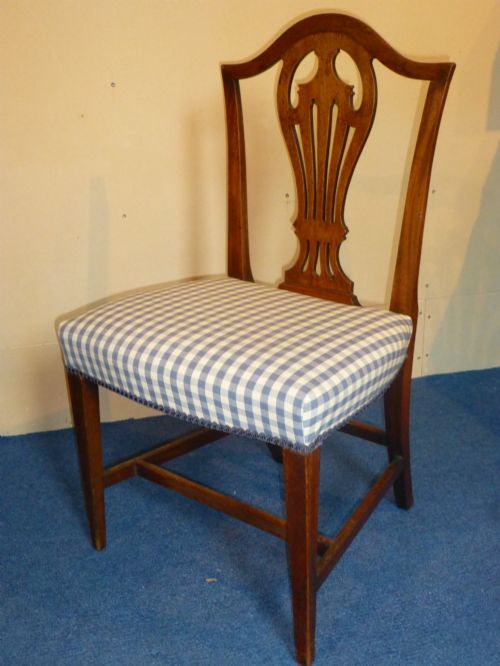
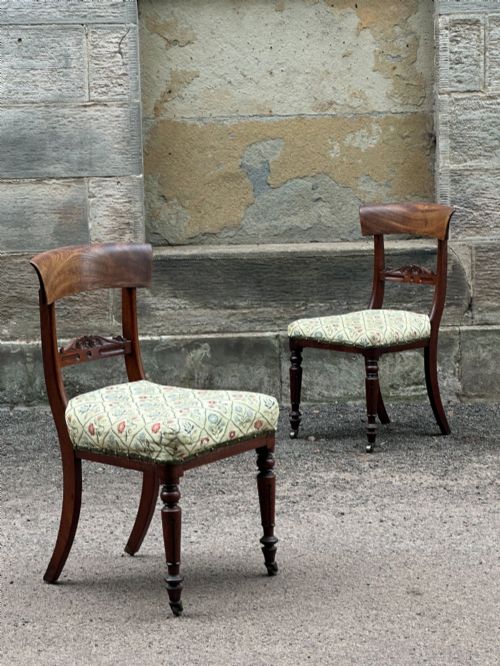
Seating areas consist of solid timber boards, woven cane, or drop-in frames upholstered in diverse fabrics and textiles.
Drury drunkards chairs offered eighteenth-century drinkers stability through deep seats and low armrests designed for leaning.
Evaluating Construction and Timber
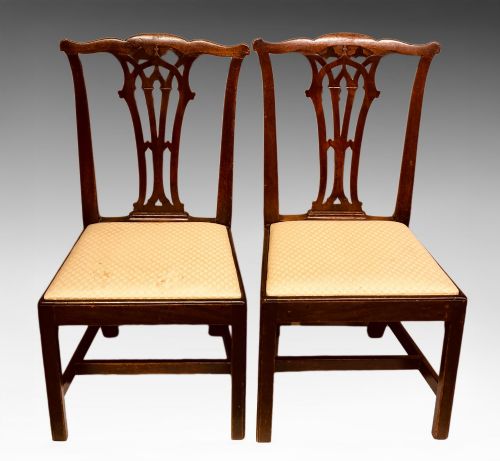
The standard of a georgian wooden accent chair depends upon the selection of timber grain, the crispness of carved details like fan backs or interlaced splats, and the integrity of the frame construction.
Pieces retaining original surfaces, undisturbed joints, and authentic cane or timber seats command greater regard than heavily restored examples.
The Georgian Wooden Accent Chair Glossary
- Windsor chair
- A timber seating form featuring a solid wooden saddle seat into which turned legs and spindle backs are wedged directly. These country chairs utilise mixed woods like elm, ash, and yew.
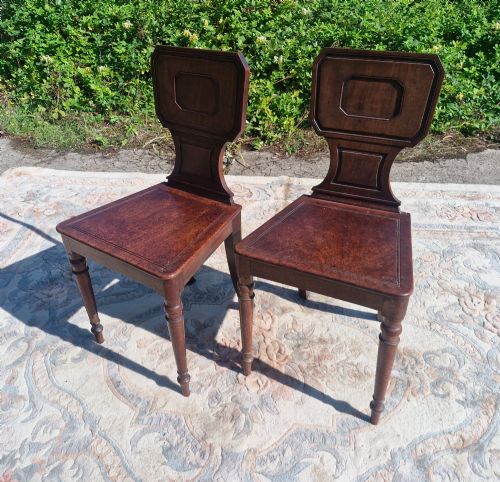
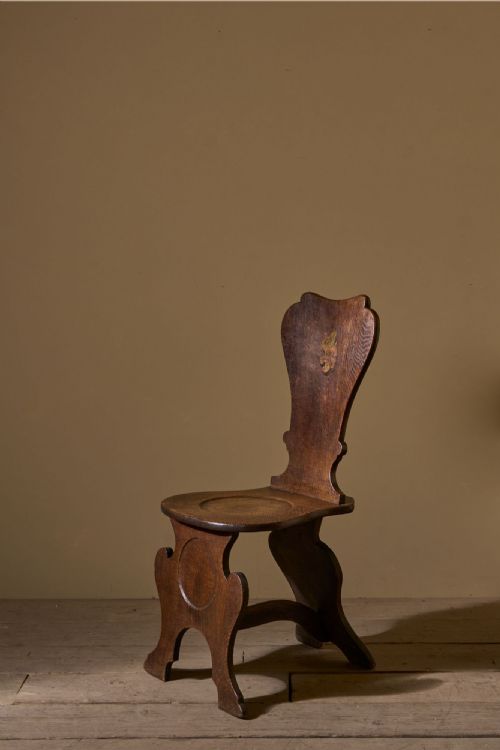
- Hall chair
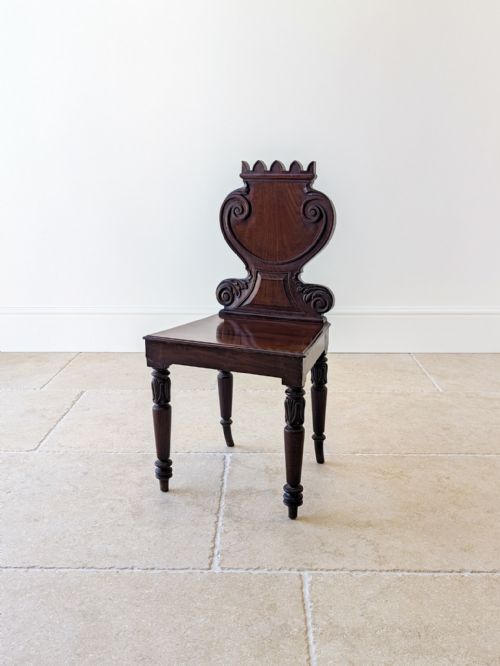
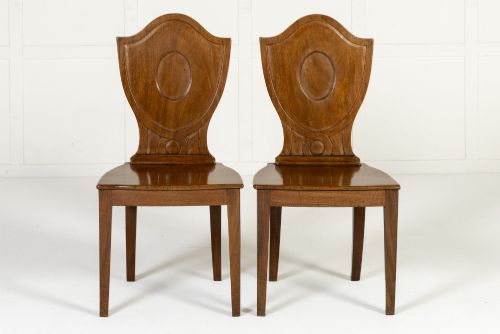
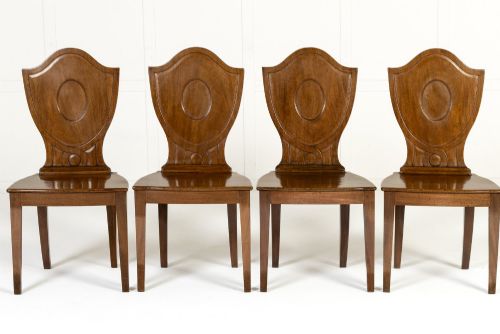
- A rigid wooden seat designed primarily for hallways rather than prolonged sitting, often featuring a carved or painted solid timber back displaying crests or shields.
- Carver
- An armchair, typically designed to match a set of smaller dining or side chairs, positioned at the head of a table.
- Shield back
- A chair back design shaped in the outline of a heraldic shield, popularised by cabinetmakers during the late eighteenth century.
- Bobbin turned
- Furniture legs and stretchers shaped on a lathe to resemble a series of wooden bobbins or spools linked end to end.
Georgian Wooden Accent Chair: Frequently Asked Questions
How do I identify a genuine period piece?
Examine the construction methods, tool marks, and timber shrinkage visible beneath the frame. Eighteenth-century joinery typically relies on hand-cut mortise and tenon joints secured with wooden pegs.
Compare the timber patina and wear patterns on the seat and foot rails against known examples from the same period to verify authenticity.
Where should I place an accent chair?
These wooden chairs suit hallways, bedrooms, and reception spaces where a single statement piece adds architectural interest. Hall chairs work well against plain walls as decorative elements.
Windsor and armchair variants function effectively in corners or beside reading tables where their timber frames remain visible.
Are these chairs comfortable for daily use?
Period wooden seating was constructed with upright postures in mind, differing significantly from modern upholstered lounge furniture. Solid timber and cane seats provide firm support.
Adding a loose textile cushion can soften the seat without altering the historical appearance of the chair frame.