

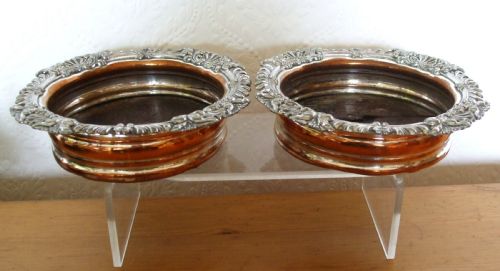


Georgian Wine Bottle Slides
Georgian wine bottle slides are table coasters designed to glide smoothly across mahogany dining surfaces while protecting the wood from condensation and rings.
Georgian Wine Bottle Slides
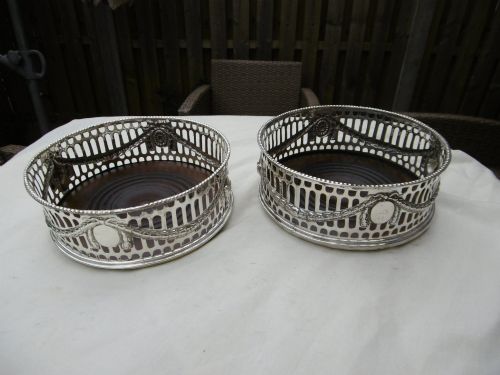
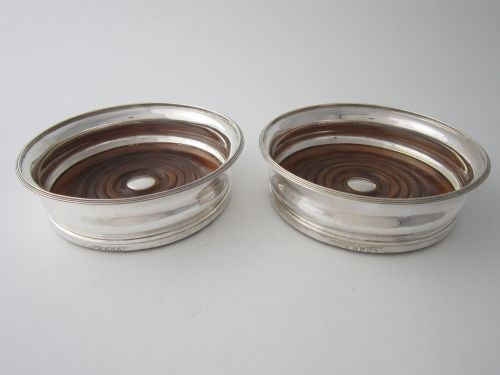
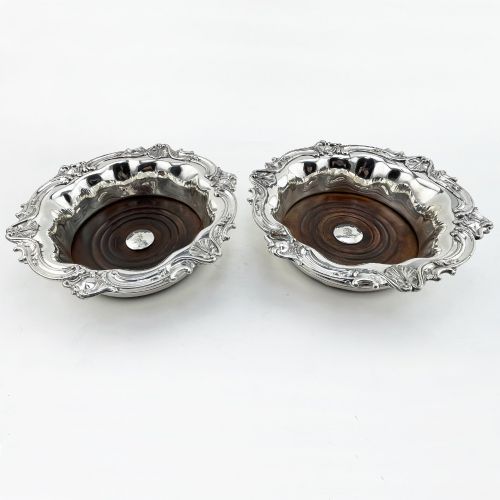
When buyers search for Georgian wine bottle slides, they encounter circular table accessories intended to hold single wine bottles or decanters during dining. The pieces seen here span the Georgian, Regency, and Victorian eras, alongside later George V items.
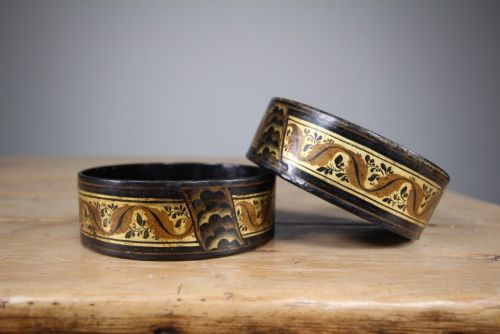
Origins represented on this page extend from early George III silver pieces to mid-nineteenth-century Old Sheffield Plate and papier-mâché items.
How they were made
Makers utilised dense timbers such as mahogany and rosewood, often turning the wood on a lathe to form circular galleries. Metal examples employ sterling silver or Old Sheffield Plate, fusing silver sheet to a copper base.
Papier-mâché and lacquer techniques appear alongside wood and metal, offering alternative moulded bodies. Silver-mounted designs combine turned oak bases with pierced or gadrooned metal rims.
Georgian Wine Bottle Slides Retail Price Guide 2026
Typical asking prices for georgian wine bottle slides among the pieces listed under this phrase on Sellingantiques today, from the lower quarter to the upper quarter. They describe what is for sale here now, not the wider market.
Mein of Kelso appears here as a named maker, offering a solid Scottish provenance for a magnum-sized bottle container.
What varies in quality
The standard of a slide depends on the crispness of its metal piercing and the weight of the silver or plate used in the rim. Finer specimens display detailed maker marks and well-preserved turning on the wooden bases.
Construction methods also separate ordinary items from superior examples, particularly where silver mounts join timber bodies or where Sheffield plating reveals the underlying copper edge through genuine wear rather than heavy loss.
The Georgian Wine Bottle Slides Glossary
- Old Sheffield Plate
- A composite material made by fusing a thin sheet of silver to a copper ingot. This technique was widely utilised before the invention of electroplating.
- Gadroon
- A decorative, embossed or carved band of repeated rounded moulding often found along the rims of metal coasters. It adds texture and weight to the upper edge.
- Papier-mâché
- A composite material consisting of paper pulp or sheets of paper mixed with glue and resin, then pressed and dried. It provided a stable base for lacquer finishes during the Regency period.
- Sterling Silver
- An alloy consisting of silver and other metals, usually copper, to increase durability while maintaining a high purity standard. Items made to this standard frequently bear hallmark stamps.
- Magnum Coaster
- An oversized version of a standard bottle slide designed to accommodate larger wine or champagne bottles. These wider frames appear less frequently than standard sizes.
Georgian Wine Bottle Slides: Frequently Asked Questions
What are Georgian wine bottle slides?
These pieces are circular table stands designed to hold wine bottles and protect polished dining tables from moisture and rings. They circulate around the table during dessert courses.
Most examples feature low walls made from silver, silver plate, or turned timbers like mahogany and rosewood.
How were bottle slides used?
Diners passed bottles around the table along the polished surface using the sliding or rolling action of the coasters. The protective bases kept wet glass from touching the wood.
They remained on the table after the meal for port and Madeira service.
How do I tell periods apart?
Early pieces from the George III period often feature pierced sterling silver galleries or plain Old Sheffield Plate. Regency examples introduce papier-mâché and bolder moulded decoration.
Victorian and later items frequently show heavier silver plating or turn-of-the-century revival styles.
What materials are common?
Wood and silver plate dominate the selection, with mahogany and rosewood providing sturdy turned frames. Sterling silver and Old Sheffield Plate appear frequently on metal rims.
Papier-mâché and oak combinations represent alternative construction methods from the nineteenth century.