


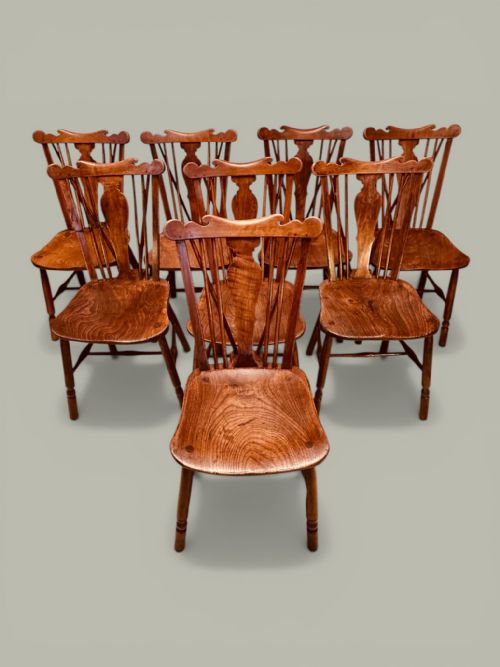


Georgian Windsor Dining Chairs
Georgian windsor dining chairs bring vernacular craft to the table, offering sturdy wooden seats shaped for daily use.
Georgian Windsor Dining Chairs
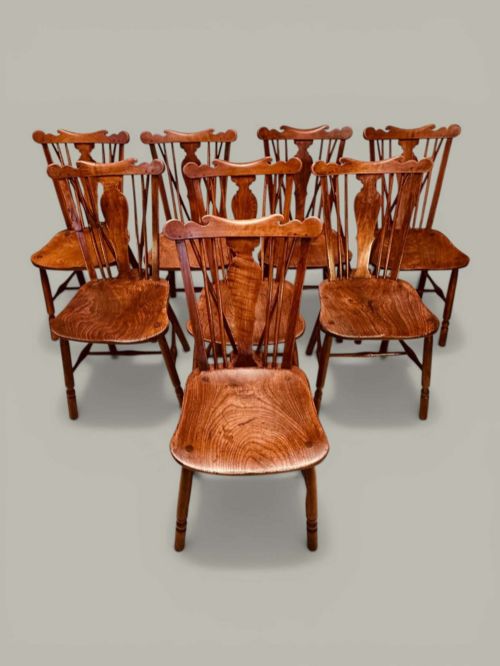
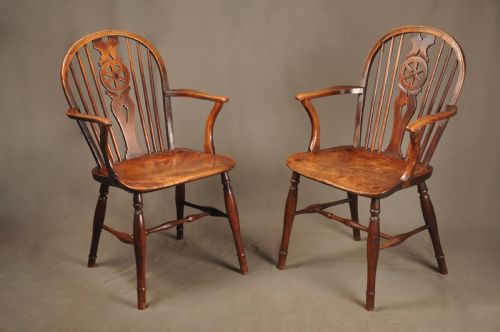
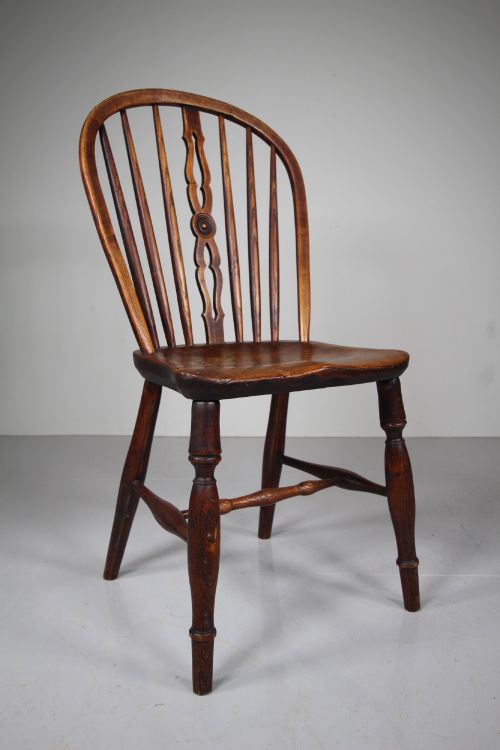
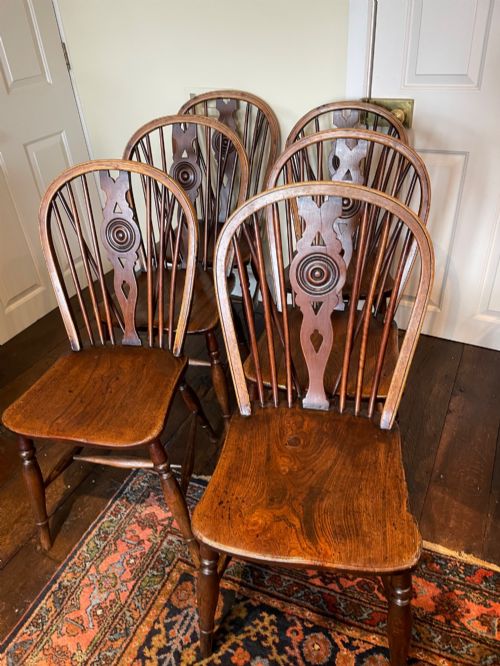
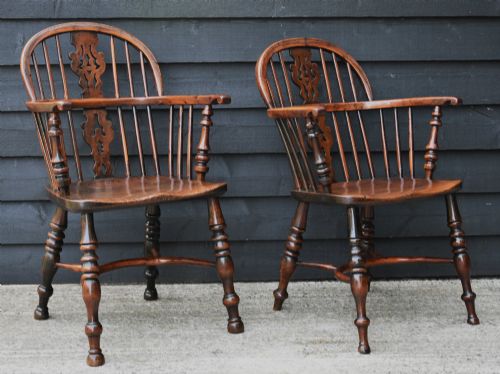
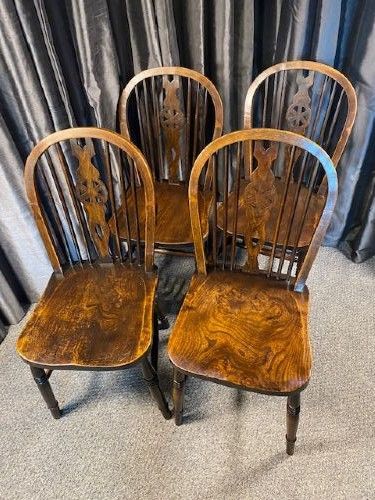
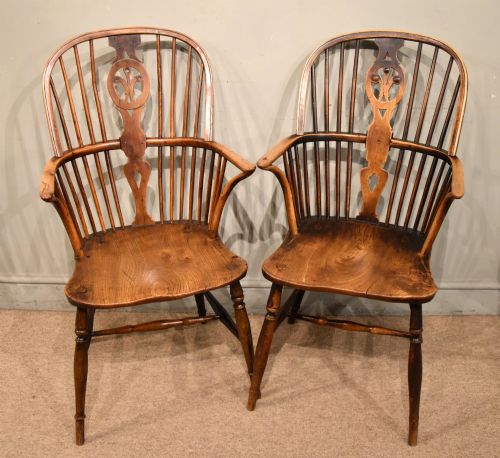
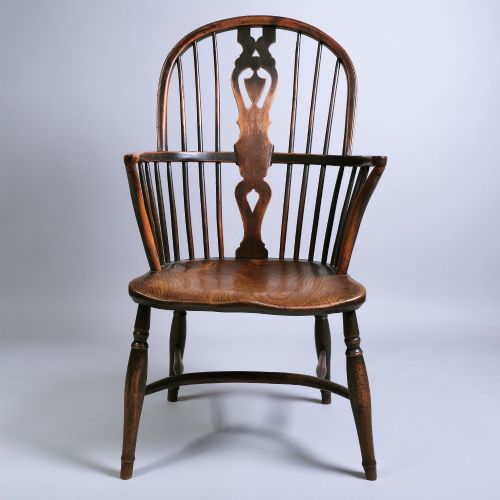
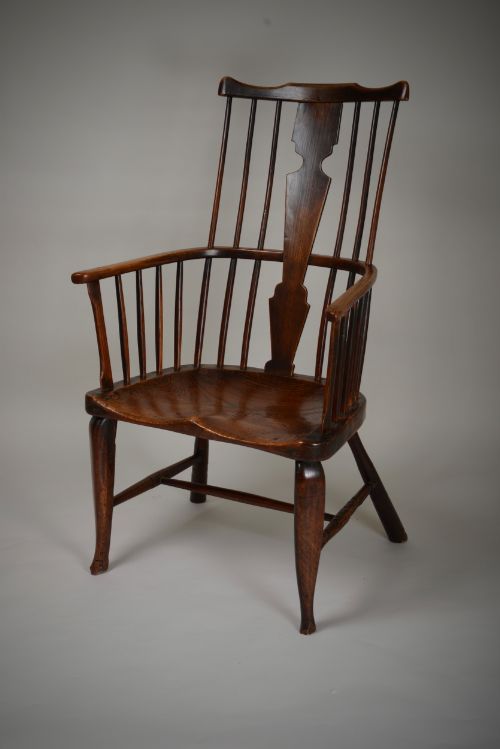
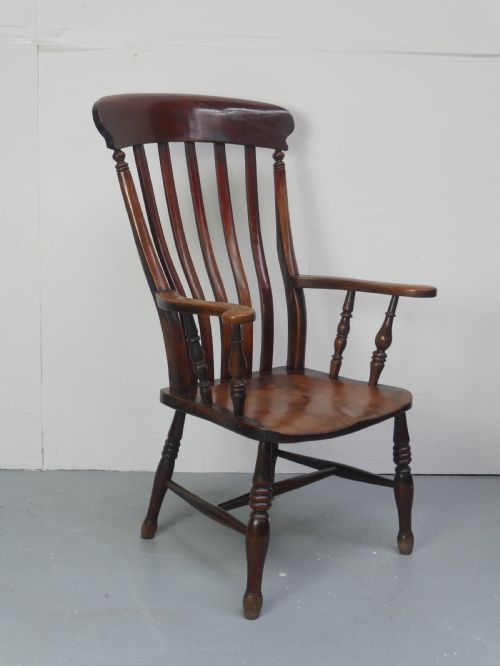
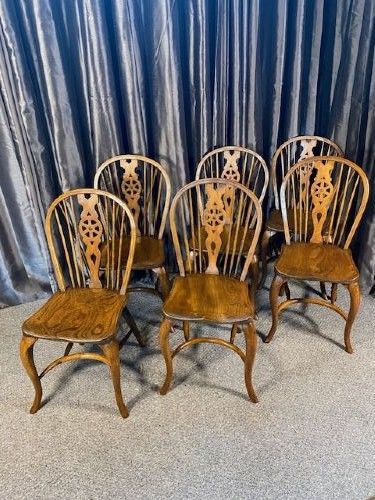
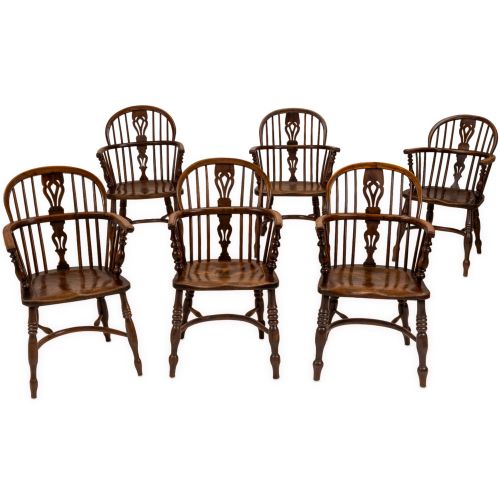
Georgian windsor dining chairs combine a solid carved wooden seat with spindled backs and legs wedged directly into the plank. These sturdy seats belong to the wider world of English country and vernacular furniture production, appearing in variations from low backs to high combs and wheel backs.
The selections available here span single pieces, matched pairs, and larger sets originating across the eighteenth and nineteenth centuries. Buyers frequently encounter armchairs, carvers, and dining chairs fashioned from native timbers that reflect distinct regional traditions.
Materials and construction
Maker's workshops relied on a combination of contrasting native woods to build structural strength into each frame. Seats are typically carved from thick elm, while spindles, arms, and bows utilise ash, beech, fruitwood, cherrywood, or rich yew wood.
Turned components fit into bored holes within the solid seat plank, often secured with wedges from above. Stretchers, including crinoline variants, brace the legs underneath to withstand centuries of shifting weight.
Georgian Windsor Dining Chairs Retail Price Guide 2026
Typical asking prices for georgian windsor dining chairs among the pieces listed under this phrase on Sellingantiques today, from the lower quarter to the upper quarter. They describe what is for sale here now, not the wider market.
Listings feature periods spanning from the eighteenth century through the Victorian era, executed in elm, ash, yew, beech, and fruitwood.
Discerning quality
Quality rests in the harmony of the timber selection and the elegance of the spindle turning. Rich grain figures in yew wood and well-matched elm seats elevate certain examples above simpler ash and beech iterations.
Proportion and comfort dictate the standing of a chair, visible in the sweep of the arm bow and the grace of the back splat or wheel motif. Subtleties in the saddle shape of the seat plank separate standard utilitarian seating from refined workshop output.
Benjamin Gilling·Rockley Maker
The Georgian Windsor Dining Chairs Glossary
- Comb back
- A Windsor chair back design where vertical spindles rise to meet a horizontal top rail, resembling the teeth of a comb.
- Crinoline stretcher
- An arched under-bracing connecting the legs of a chair in a curved loop, providing structural stability.
- Wheel back
- A Windsor chair style featuring a pierced wooden splat carved in the shape of a spoked carriage wheel.
- Vernacular
- Objects designed by regional craftspeople for practical local use rather than following rigid metropolitan court styles.
Georgian Windsor Dining Chairs: Frequently Asked Questions
How do I identify a true windsor chair?
True windsor chairs are built around a solid thick wooden seat into which the legs and back spindles are tenoned directly, rather than constructed around an independent frame.
Traditional examples rely on turned wooden components and steam-bent bows to form the upper back support.
What woods were used for these chairs?
Coopers and chair makers utilised native British hardwoods, frequently pairing elm for the carved seats with ash, beech, or cherrywood for the legs and spindles.
Highly prized examples incorporate richly figured yew wood across the arms and bow.
Can I mix these chairs around a dining table?
Mixing individual chairs or small pairs works well because country vernacular seating was rarely produced in identical large sets originally.
Matching similar heights and timber tones helps unify a collection gathered around a dining table.
What is the difference between a high back and low back?
High back variants provide upper back and head support, often incorporating comb or wheel back designs intended for comfort during longer periods of sitting.
Low back versions feature a continuous arm bow set lower to the seat, offering a more compact profile.