




Georgian Wheelback Chair
A georgian wheelback chair offers sturdy regional seating crafted from native timbers like elm, ash, and yew.
Georgian Wheelback Chair
The georgian wheelback chair sits firmly within the English country seating tradition, encompassing robust dining chairs, broad armchairs, and sets designed for everyday use. When searching for a georgian wheelback chair, buyers encounter pieces originating from the eighteenth and nineteenth centuries, including Regency and George III periods alongside later nineteenth-century interpretations.
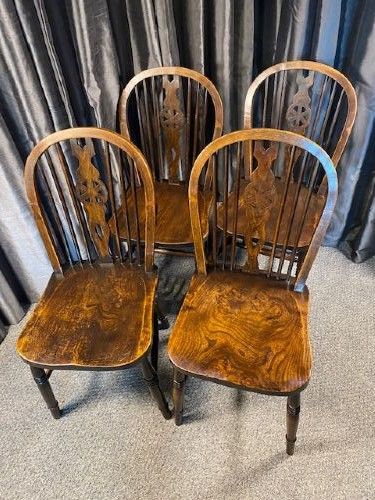
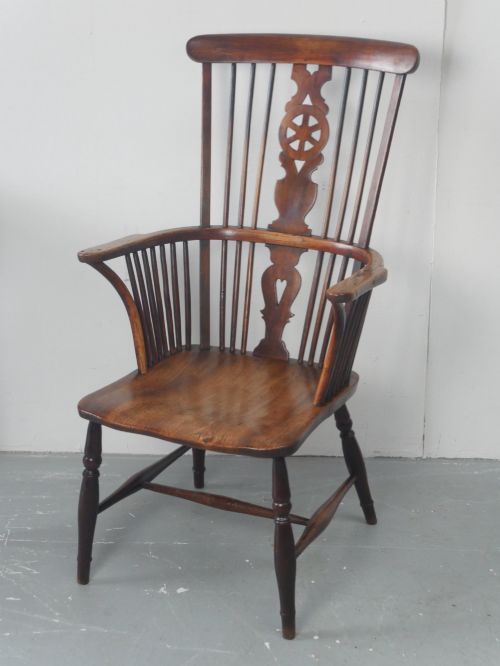
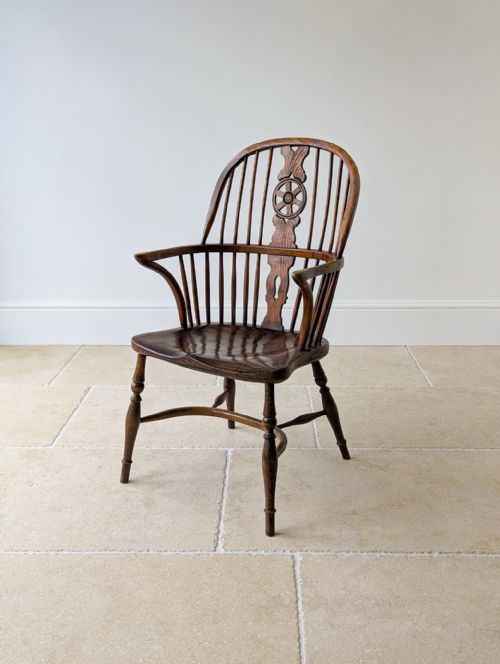
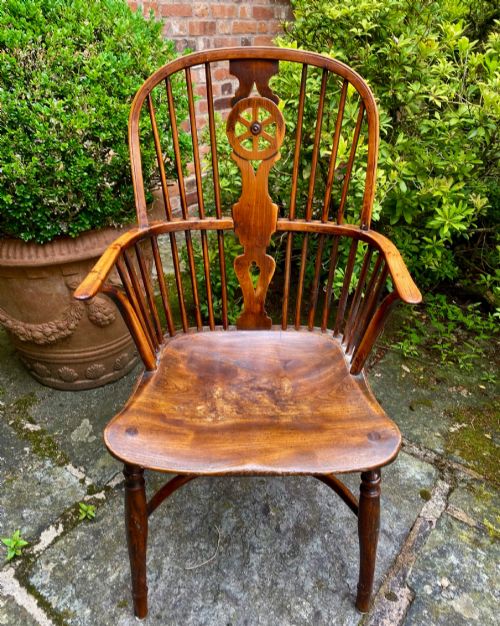
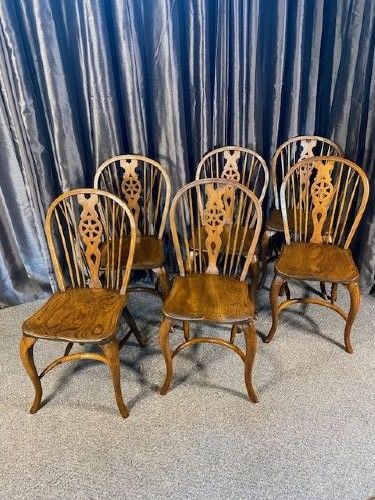
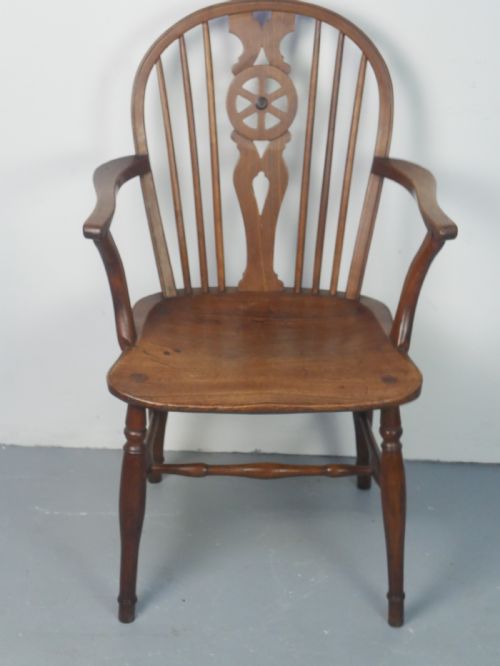
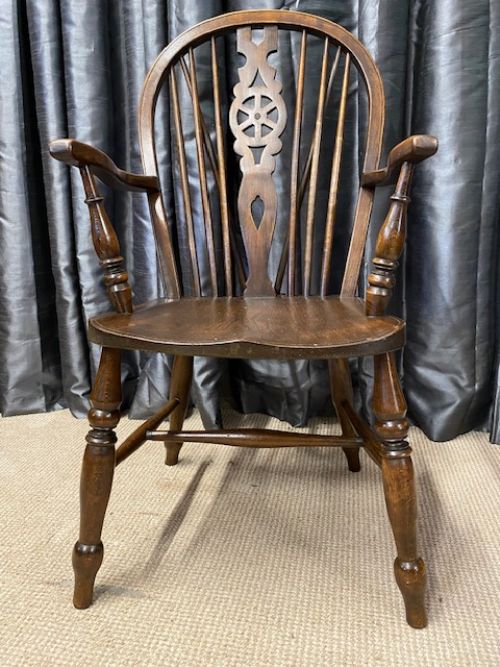
Most examples appearing on this page take the form of Windsor chairs, constructed with a central pierced splat shaped like a wheel set into the backrest. These items range from single farmhouse armchairs to matched sets of dining chairs originating from regional centres like the Thames Valley.
Makers working within the English country style utilised vernacular joinery methods to build seating that combined durability with refined timber turning. Buyers will find variations from simple kitchen chairs in elm to sophisticated Sheraton Revival elbow chairs incorporating fruitwood and mahogany.
Materials and construction
Makers built these chairs using a combination of native timbers, pairing elm seats with bent ash or yew for the spindles and steam-bent hoops. Yew wood frequently appears in high-status examples from the Thames Valley, valued for its rich grain and warm tone alongside contrasting fruitwood and beech components.
The distinct wheel back feature relies on a central carved disc, often framed by radiating spindles slotted directly into a solid wooden seat. Traditional Windsor construction methods involved turning legs on a lathe and wedging them into bored holes beneath the seat rather than using conventional frame joinery.
Every wheel back holds a tiny wooden hub that makes you wonder which village turner spent his Tuesday afternoon cutting miniature spokes.
Assessing quality in country seating
Quality in a georgian wheelback chair depends heavily on the choice of timber and the complexity of the turning work on the legs and arm supports. Pieces featuring highly figured yew wood or contrasting elm and ash demonstrate a more deliberate selection of materials by the maker.
The proportion of the wheel back splat and the comfort of the saddle-shaped wooden seat separate standard utility chairs from finer regional workshop productions. Sets matching six chairs display greater consistency in craftsmanship than single farmhouse armchairs assembled from mixed origins.
The Georgian Wheelback Chair Glossary
- Windsor chair
- A wooden chair constructed with a solid shaped seat into which the legs and back spindles are separately inserted. This structural method gives the furniture its characteristic lightweight yet robust frame.
- Wheelback
- A style of wooden chair back featuring a central pierced circular motif resembling a spoked wheel. It became a popular decorative development in nineteenth-century country seating.
- Thames Valley
- A geographical region associated with distinctive regional furniture production. Pieces from this area frequently utilise high-grade yew wood and exhibit refined turning.
- Elm
- A tough, interlocking-grained native timber commonly used for the solid seats of country chairs. Its fibrous nature prevented splitting under the stress of daily domestic use.
- Sheraton Revival
- A late nineteenth-century design movement inspired by late eighteenth-century neoclassical styles. It reinterprets earlier forms with lighter proportions and decorative detailing.
Georgian Wheelback Chair: Frequently Asked Questions
How do I date a wheelback chair?
Dating relies on examining the construction methods, timber selection, and overall proportions of the piece. Earlier examples from the eighteenth and early nineteenth centuries often exhibit deep saddle seats and rich grain patination.
Later nineteenth-century interpretations and Sheraton Revival pieces show lighter turning work and standardised components reflecting industrial improvements in workshop production.
Were these chairs used for dining?
Dining chairs formed a substantial part of country workshop production, often created in sets of six for farmhouse and kitchen use. Single armchairs served as fireside or desk seating due to their broader proportions.
Matched sets from the period remain functional for modern dining tables while retaining their original vernacular character.
Which woods were used to build them?
Makers relied on locally sourced native hardwoods suited to steam-bending and turning. Elm provided a stable, split-resistant material for the solid saddle seats.
Ash and beech formed strong spindles and bentwood hoops, while premium pieces incorporated highly figured yew wood or rich fruitwood.