




Georgian Weather Instrument
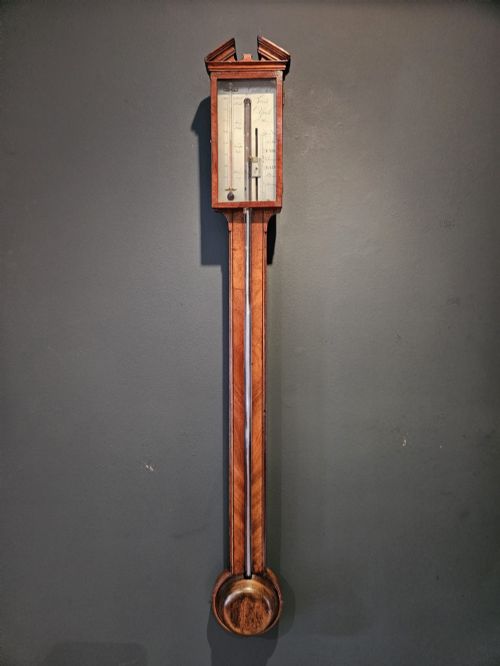
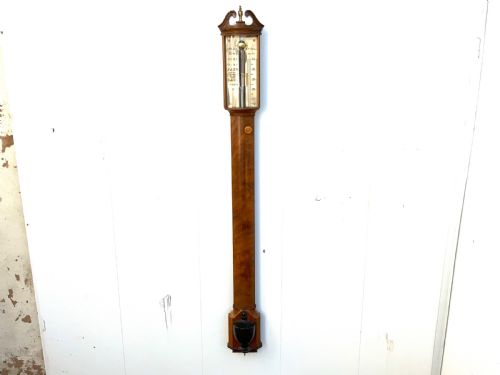
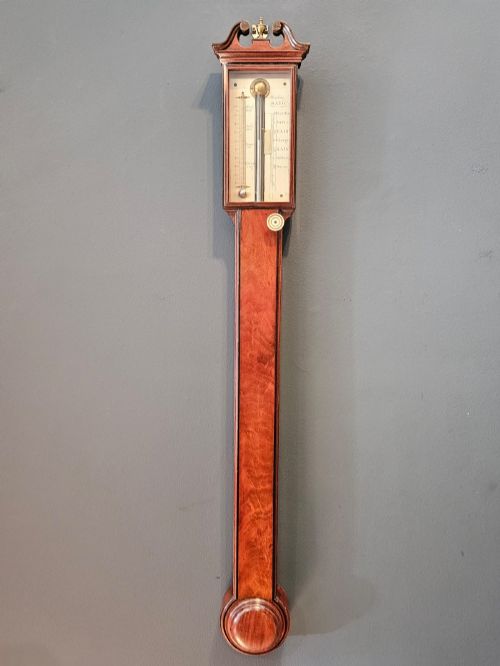
A georgian weather instrument is a precision device for reading atmospheric pressure, prized for combining domestic utility with cabinet-making skill.
Georgian Weather Instrument
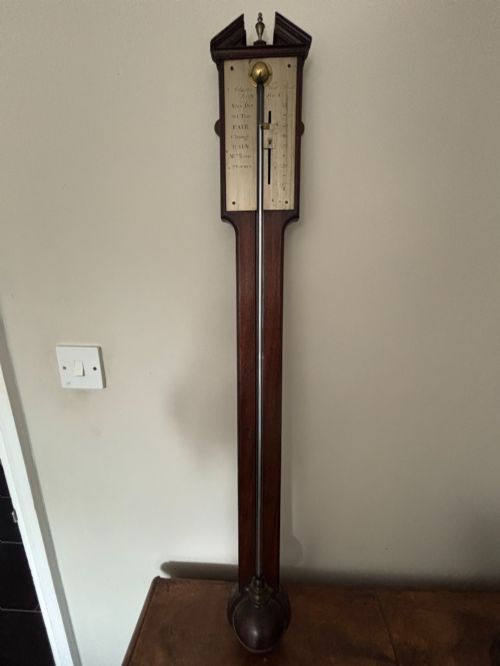
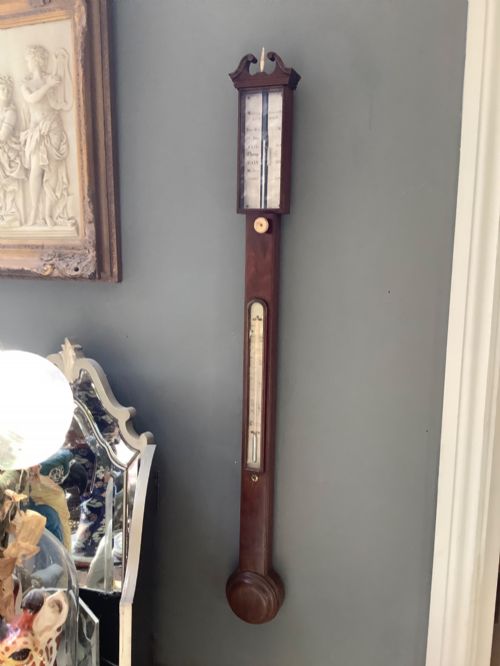
A buyer examining a georgian weather instrument encounters stick barometers and wheel barometers housed in architectural wooden cases. These instruments record atmospheric pressure changes to help predict local weather conditions.
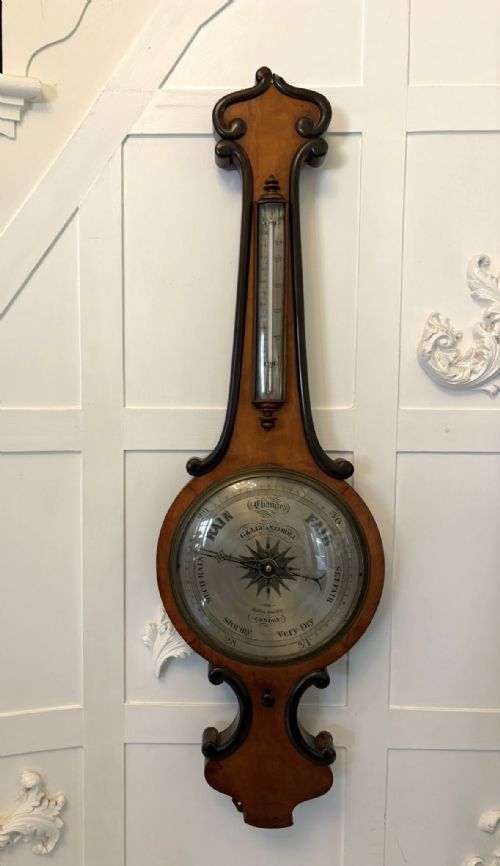
The stick barometer format dominates the selection, featuring long vertical trunks designed to display a mercurial column alongside a vernier scale. Wheel barometers and banjo formats provide an alternative display where the pressure drives a pointer around a circular dial.
Makers construct these pieces from timber frames incorporating brass fittings, silvered metal dials, and protective glass plates. Examples often originate from London workshops alongside regional makers across England.
Materials and Technique
Cabinet makers utilise dense hardwoods such as mahogany and rosewood to form the structural trunks and banjo frames, occasionally adding boxwood stringing or marquetry panels. These timbers resist warping, protecting the delicate internal mercurial glass tube fixed to the backing board.
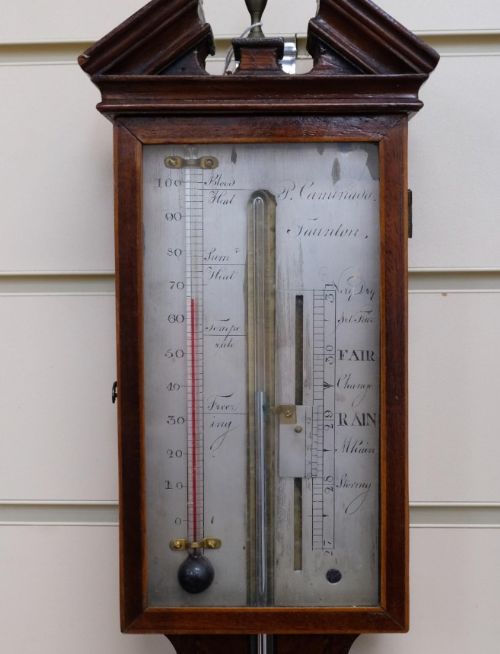
Dials employ silvered brass or silvered metal engraved with atmospheric graduations, paired with fine brass pointers and exposed bone adjustment roundels. Glass covers protect the register plates from dust while allowing clear observation of the mercury level.
Georgian Weather Instrument Retail Price Guide 2026
Typical asking prices for georgian weather instrument among the pieces listed under this phrase on Sellingantiques today, from the lower quarter to the upper quarter. They describe what is for sale here now, not the wider market.
Listings feature mahogany, rosewood, and boxwood cases housing mercurial barometers from the eighteenth and nineteenth centuries.
Gradations in Execution
The calibre of a georgian weather instrument rests upon the crispness of the cabinet work and the signature of the maker inscribed on the register plate. Selected pieces integrate floral marquetry, parquetry, or bow front profiles that demand advanced woodworking skill.
Signed examples by established instrument makers demonstrate superior dial engraving and more refined mechanical calibration. The integrity of the original wooden case and the legibility of the silvered brass scale determine the standing of each piece.
P Caminada Taunton·George Adams London·G & L Guanziroli·Dollond of London·Ganthony of London·Molton of Norwich·Luisetti of London·Fagioli of Clerkenwell·Bate of London·Ronchetti Of Holborn·L Casatelli Liverpool·Roncoroni·H Marks Bloomsbury·Sandrino of Liverpool·Vecchio & Co·Gilbert London·Bianchi Ipswich·Alexander Adie·J Groce York·Bassi·Charles Aiano London·Gowland London
The Georgian Weather Instrument Glossary
- Stick barometer
- A vertical instrument that measures atmospheric pressure using a long tube of mercury against a scale. The tall wooden trunk mounts directly to a wall.
- Wheel barometer
- A circular dial instrument where a float on the mercurial column connects to a silk thread and pulley. This mechanism turns a pointer to indicate pressure changes.
- Silvered brass
- A metal alloy treated with silver powder to create a bright, matte finish for engraved dials. This surface provides high contrast for legible reading.
- Vernier scale
- A small auxiliary sliding scale that allows precise readings down to fractions of an inch on the barometer column. It aids accurate atmospheric measurement.
- Banjo barometer
- A domestic wheel barometer housed in a distinctive symmetrical wooden case shaped like a banjo. The bulbous lower section encloses the main cistern.
Georgian Weather Instrument: Frequently Asked Questions
How do these barometers work?
A sealed glass tube filled with mercury responds directly to shifts in atmospheric pressure by rising or falling. A visible scale alongside the tube translates these movements into readable weather indicators.
In wheel instruments, the mercury acts upon an internal float attached to a delicate pulley system. This drives the pointer around the circular dial face.
Where were they placed originally?
Owners mounted these instruments in hallways, libraries, and principal reception rooms where household members could consult them daily. Their architectural wooden cases served both practical scientific functions and decorative interior roles.
Marine stick barometers also saw service aboard ships, where gimbal mountings kept the column vertical despite vessel movement.
How should I care for one?
Keep the instrument away from direct sunlight, central heating sources, and damp exterior walls to protect the timber case and internal mercury column. Dust the glass and brass components gently with a soft dry cloth.
When relocating the barometer, tilt it carefully to secure the mercury column and prevent air pockets from entering the glass tube.
Are signed instruments more desirable?
Signed register plates bearing the maker and trading address often indicate higher workshop standards and help date the piece accurately. Known makers invested greater skill in dial engraving and case construction.
Unsigned examples still offer fine cabinet work and reliable domestic utility, reflecting standard regional production of the period.