
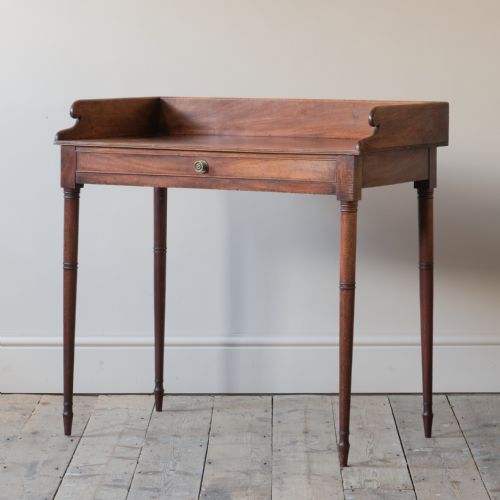
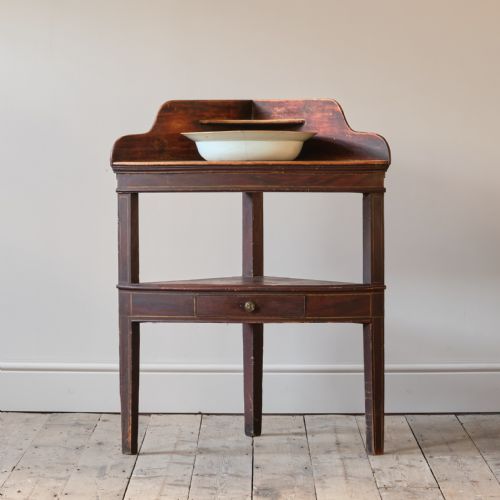
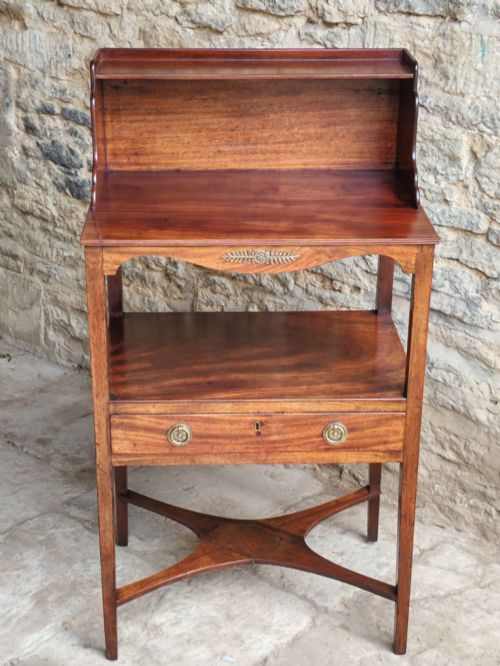
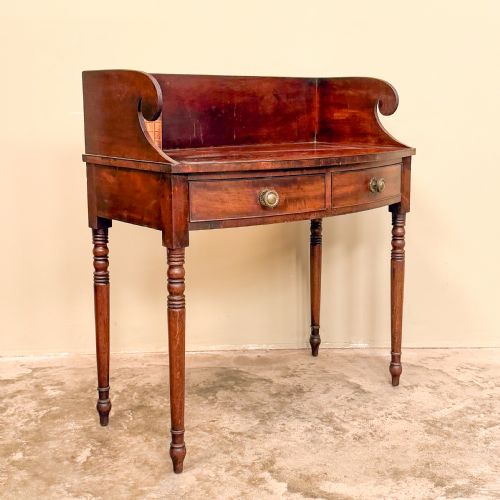


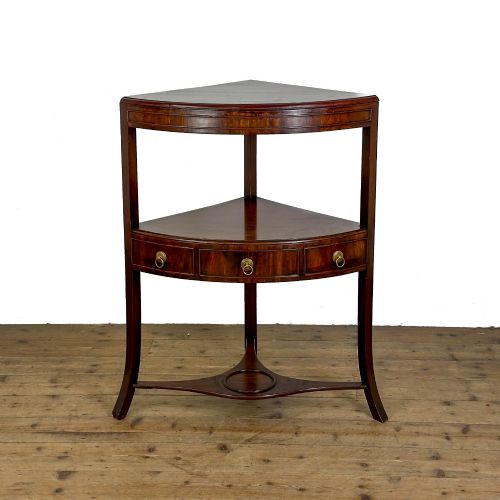
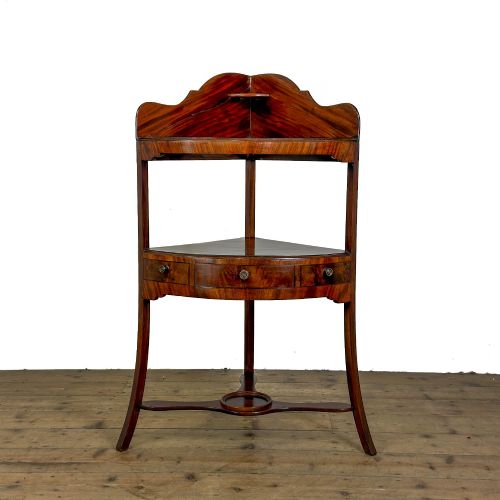
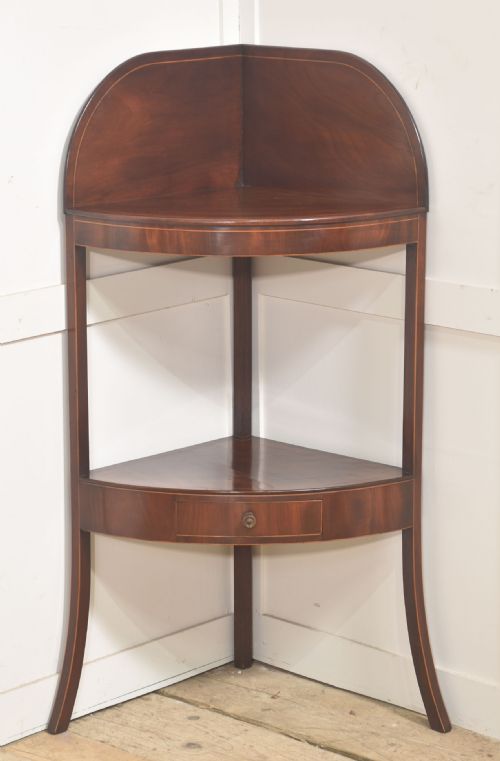
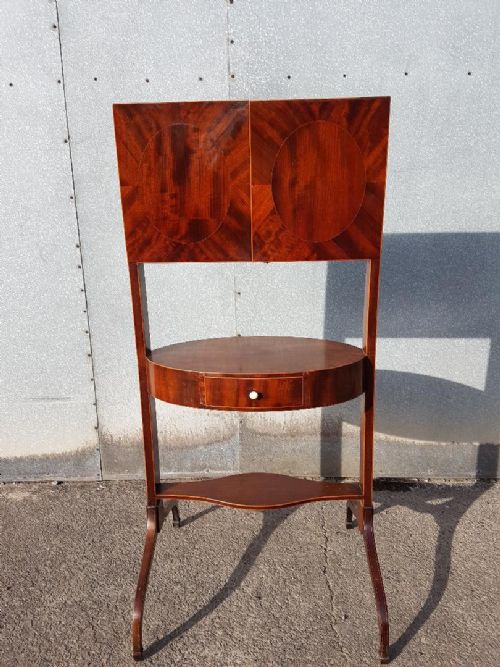


Georgian Washstand Table
A Georgian washstand table combines utilitarian daily grooming with the rich warmth of period timber, offering a practical anchor for a traditional bedroom.
Georgian Washstand Table
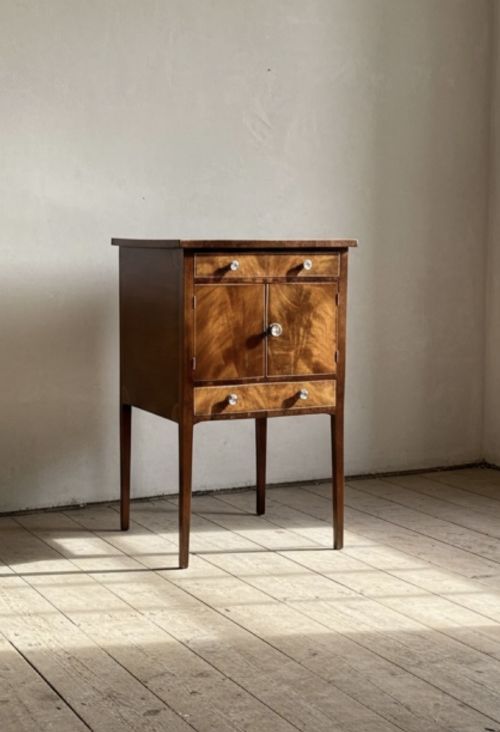
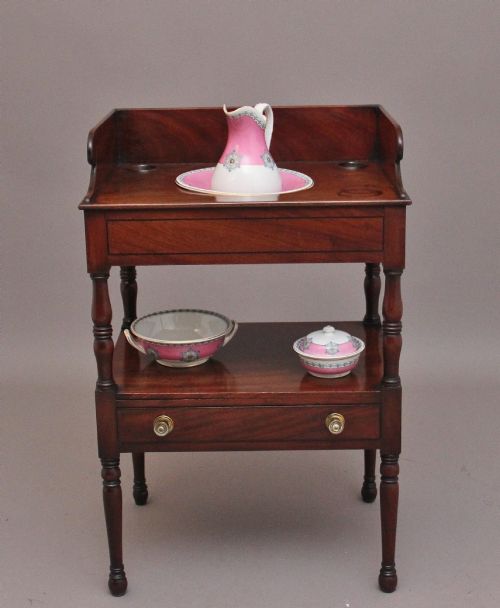
A georgian washstand table provides a dedicated surface for washing, dressing, and nocturnal storage, appearing in square, rectangular, and corner configurations designed to fit domestic spaces of the eighteenth and nineteenth centuries.
The pieces listed here span the Georgian, Regency, and Victorian periods, with standard washstands, bedside tables, and gentlemans dressing tables making up the core of the selection.
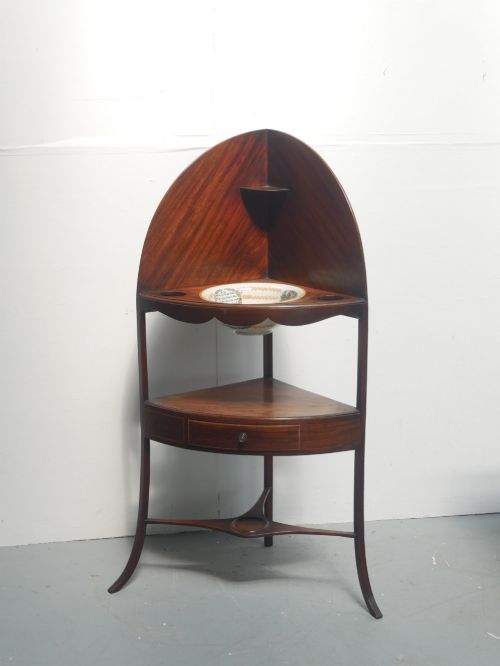
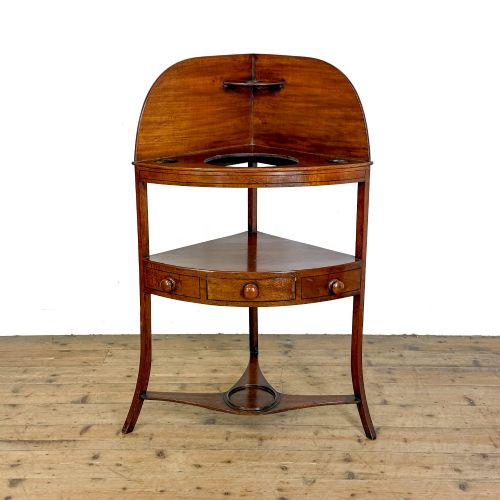
Corner washstands emerge frequently among these holdings, engineered to utilise neglected room junctions while concealing basins, ewers, and chamber pots behind panelled doors or within tiered galleries.
How they were made
Cabinet makers relied primarily on solid mahogany and flame mahogany veneer, augmented by secondary timbers such as pine for internal framing and drawer linings.
Decorative detailing on these pieces often incorporates boxwood inlay, satinwood inlay, and brass hardware, while certain examples retain their original paint or specialised tray tops and three-quarter galleries.
Mahogany is the dominant material across these listings, supplemented by pine, brass, glass, and boxwood inlay.
What varies in quality
Quality rests in the crispness of the timber selection, such as richly figured flame mahogany veneer, and the restraint or elegance of inlaid boxwood and satinwood details.
Structural integrity reveals itself in the joinery of the gallery upstands, the snug fit of panelled cupboard doors, and the original preservation of brass mountings or paint finishes.
Gillows Lancaster
The Georgian Washstand Table Glossary
- Washstand
- A piece of furniture designed to hold a wash basin and jug for morning ablutions. These often feature upper tiers with circular cut-outs and lower shelves.
- Pot cupboard
- A small bedside cabinet intended to house a chamber pot behind a closed door. They frequently share dimensions with square washstands.
- Gallery
- A raised wooden border surrounding the top of a table or washstand. This feature prevents wash jugs and shaving equipment from sliding off the surface.
- Night stand
- A compact bedside table used during the Georgian era for nocturnal necessities and lighting. They often incorporate a single drawer above a small cupboard.
- Wig stand
- A specialised variant of the washstand featuring small concentric upper rings designed to support powdered hairpieces. They represent a distinct sub-type within the broader category.
Georgian Washstand Table: Frequently Asked Questions
What is a georgian washstand table used for?
These tables served as functional washing and dressing stations in bedrooms before plumbed bathrooms existed. Cupboards and lower shelves held basins, water jugs, and chamber pots.
Today, collectors repurpose them as lamp tables, bedside cabinets, or occasional stands in hallways and living rooms.
How do I tell a corner washstand from a standard one?
Corner washstands are built with triangular or bow fronts specifically to fit into room angles. Standard washstands feature square or rectangular footprints designed to stand flat against a wall.
Both types often share multi-tiered designs with circular basin apertures in the top surface.
Did all georgian washstand table designs include cupboards?
Many examples feature enclosed storage space behind panelled doors beneath the basin surface, while others rely on open shelves or simple drawer configurations.
Open variants often functioned as wig stands or basin holders without auxiliary cabinet storage.
How do I distinguish a genuine period piece?
Examine the secondary timbers like pine, the hand-cut dovetails on drawers, and the natural wear patterns on the mahogany surfaces. Original hardware, such as brass pulls and hinges, also offers clues to authenticity.
Construction methods should align with eighteenth or nineteenth-century cabinet-making techniques rather than modern assembly.