

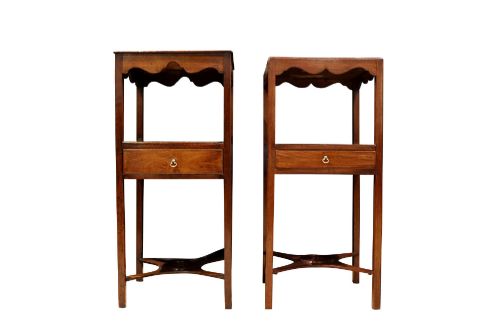
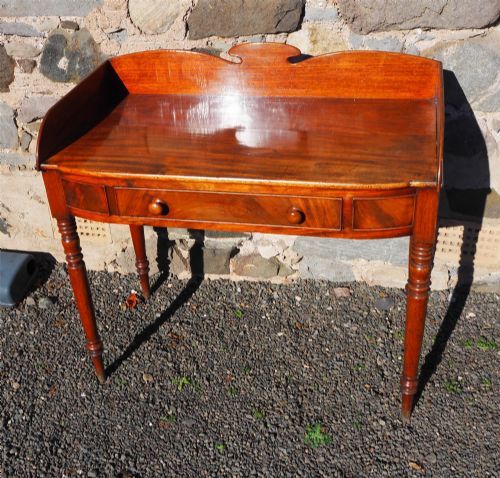
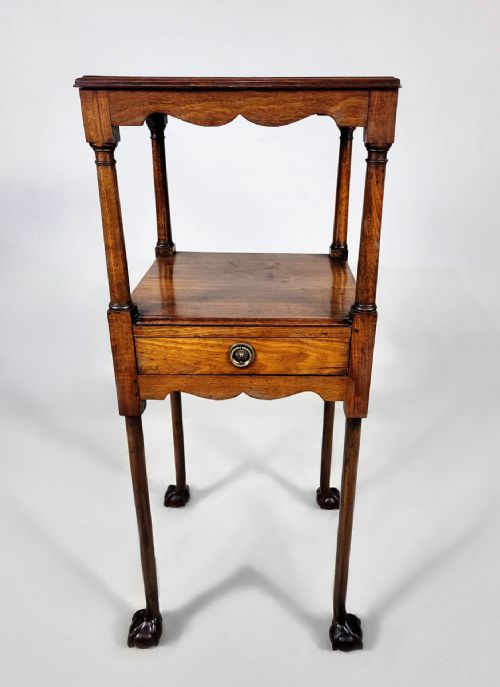
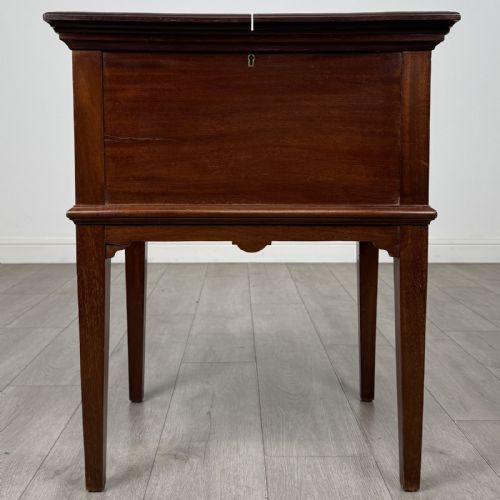
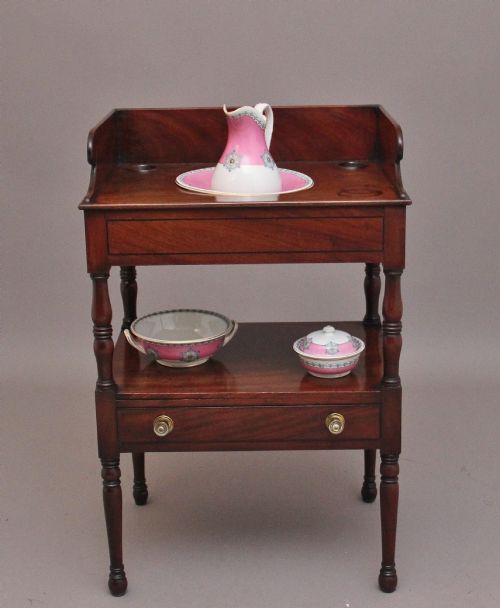


Georgian Washstand Side Table
A georgian washstand side table brings practical British history into a room through solid timber and clever folding tops.
Georgian Washstand Side Table
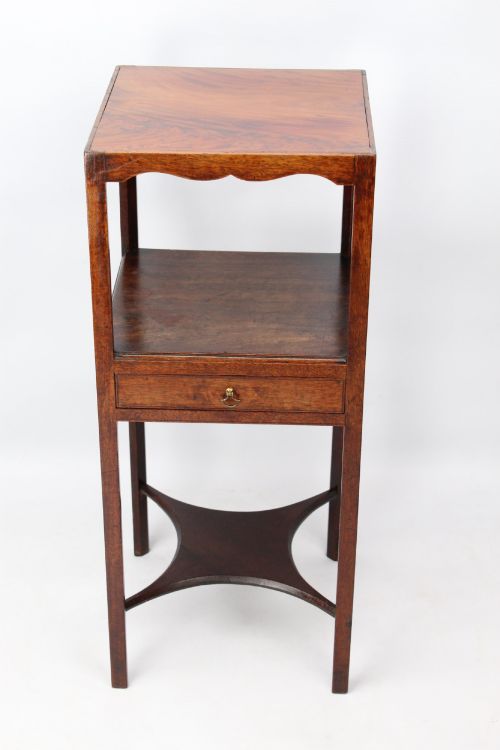
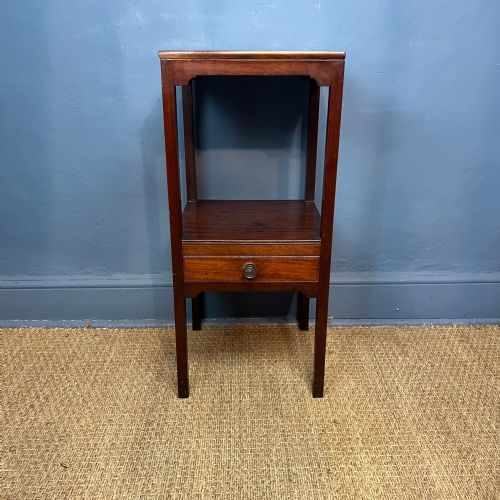
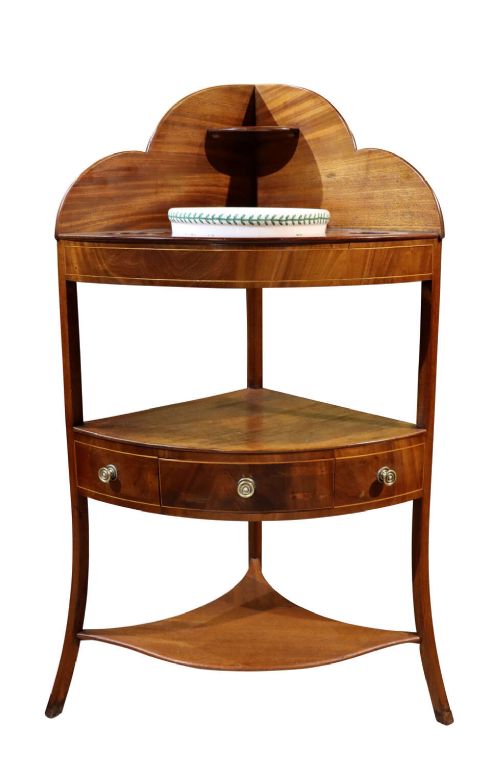
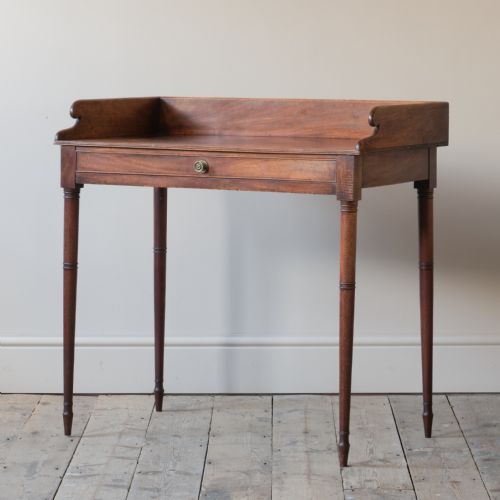
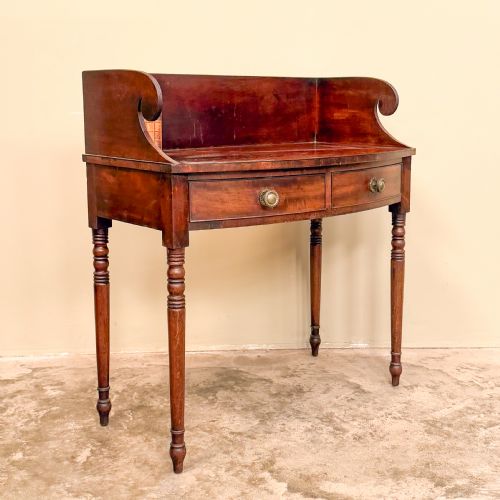
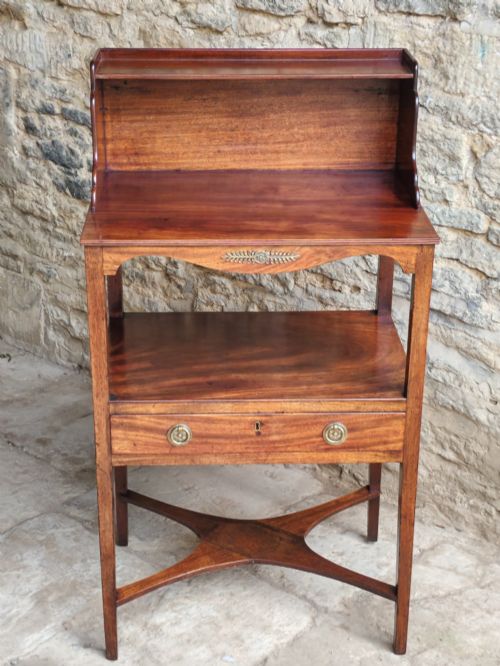
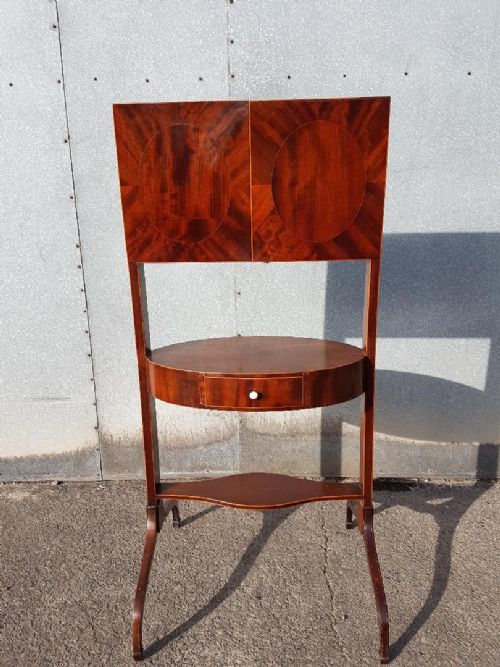
A georgian washstand side table combines domestic utility with the polished restraint of the eighteenth and nineteenth centuries, taking forms such as bedside tables, corner washstands, and dressing cabinets. These pieces served personal hygiene and bedroom storage before running water became common in every room.
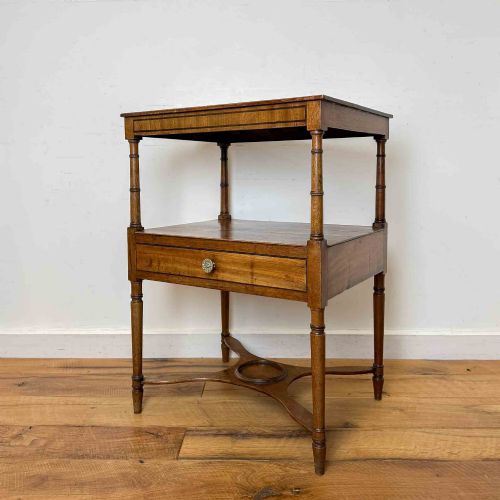
The version most commonly met on this page is the mahogany bedside table or washstand, often featuring ring turned legs, drawers, and lower tiers designed to hold bowls and jugs. They span the Georgian, Regency, and early Victorian periods, showing how bedroom furniture evolved from utilitarian washing stations to refined side tables.
How They Were Made
Cabinet makers built these pieces primarily using mahogany, selected for its rich grain and structural stability, often enhanced with boxwood inlay, satinwood inlay, and brass fittings. Timber selection dictated how well a washstand or side table would endure decades of daily use.
Joinery relied on sturdy drawers with hand-cut joints, ring turned legs, and folding top mechanisms designed to conceal hidden compartments or wash basins. Structural honesty governed the construction, where every support and shelf served a definite domestic purpose.
Georgian Washstand Side Table Retail Price Guide 2026
Typical asking prices for georgian washstand side table among the pieces listed under this phrase on Sellingantiques today, from the lower quarter to the upper quarter. They describe what is for sale here now, not the wider market.
Listings feature mahogany as the predominant timber, supplemented by boxwood and satinwood inlay.
What Varies in Quality
Quality rests in the selection of the timber and the crispness of the turning on the legs, distinguishing standard workshop output from exceptional cabinet work. Mahogany with strong figuring and precise inlay separates the finer items from simpler pieces.
The integrity of the internal compartments, folding mechanics, and original brass hardware determines the standing of a piece within its period. Finer examples maintain their original timber surfaces and structural hardware without intrusive modern repairs.
Gillows Lancaster
The Georgian Washstand Side Table Glossary
- Ring turned
- A lathe-worked decorative profile featuring a series of rounded ridges and grooves. This technique appears frequently on the legs of tables and washstands from the Regency period.
- Tray top
- A raised rim around the edge of a table or washstand designed to prevent items from rolling off. It proved particularly useful on pieces intended for holding ceramic basins and water jugs.
- Bidet
- A low basin-form piece of furniture designed for personal washing. In the Georgian and Regency periods, these were often enclosed within mahogany cabinets to resemble ordinary side tables.
- Boxwood inlay
- Contrasting pale wood inserted into the darker mahogany surface to create geometric lines or decorative motifs. It adds a subtle brightness to the darker timber typical of the era.
- Corner washstand
- A specialised form designed to fit neatly into a room angle, featuring tiered shelves for washing equipment. These pieces maximised floor space in smaller Georgian bedrooms.
Georgian Washstand Side Table: Frequently Asked Questions
What is a georgian washstand side table?
A georgian washstand side table is a piece of wooden bedroom furniture made during the eighteenth or early nineteenth centuries to hold washing equipment or serve as a bedside stand.
Many incorporate drawers, lower shelves, or folding tops designed to conceal basins and personal items.
Where were these tables used?
These tables were placed in bedrooms, dressing rooms, and chambers for morning washing routines and bedside storage.
Corner versions were designed to utilise awkward wall angles efficiently in period homes.
Are washstands practical today?
Today they function well as side tables, bedside cabinets, or lamp stands in living spaces and hallways.
Their enclosed compartments and flat tops offer convenient surface area and concealed storage for modern items.