

Georgian Wardrobe Armoire
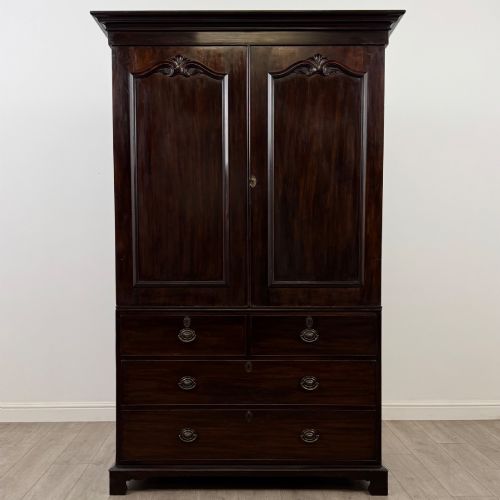
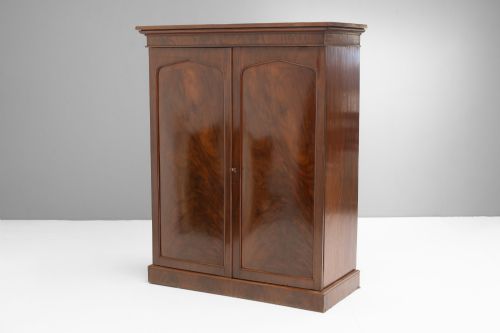
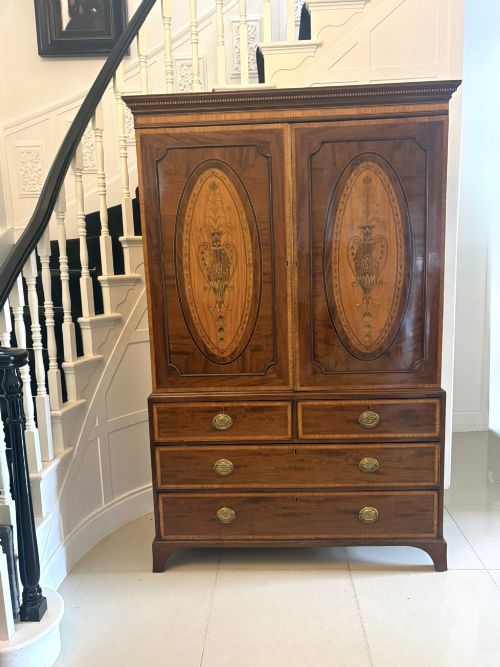
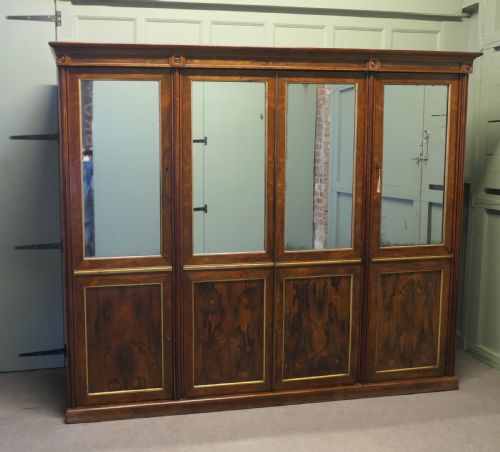
These large storage pieces known as a georgian wardrobe armoire offer deep hanging space and linen storage built from rich timber.
Georgian Wardrobe Armoire
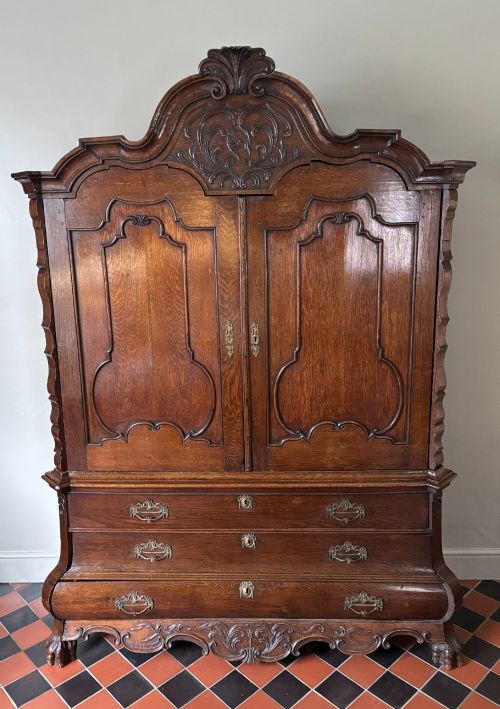
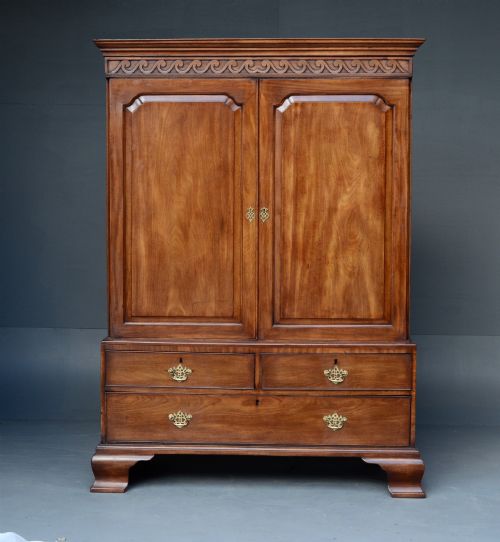
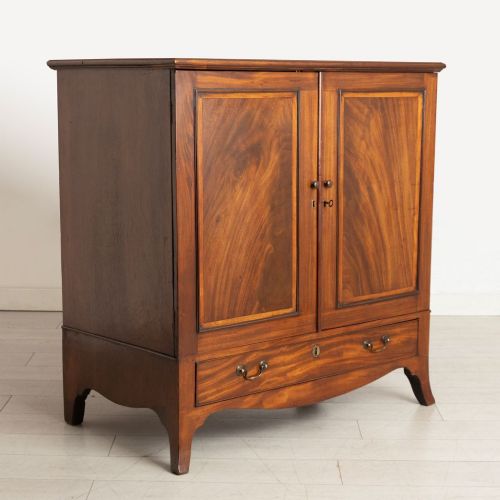
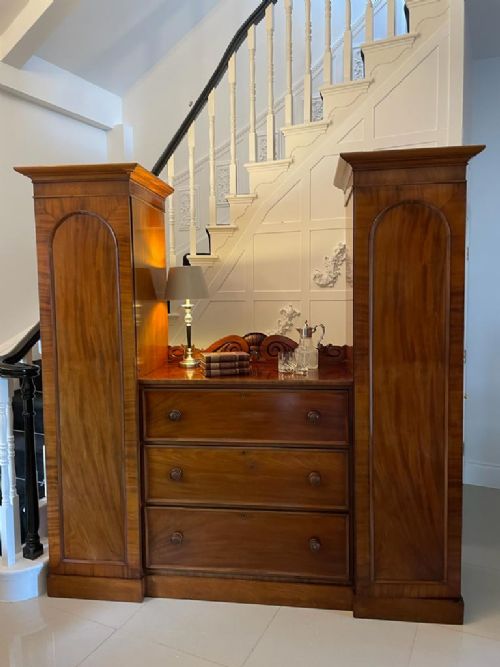
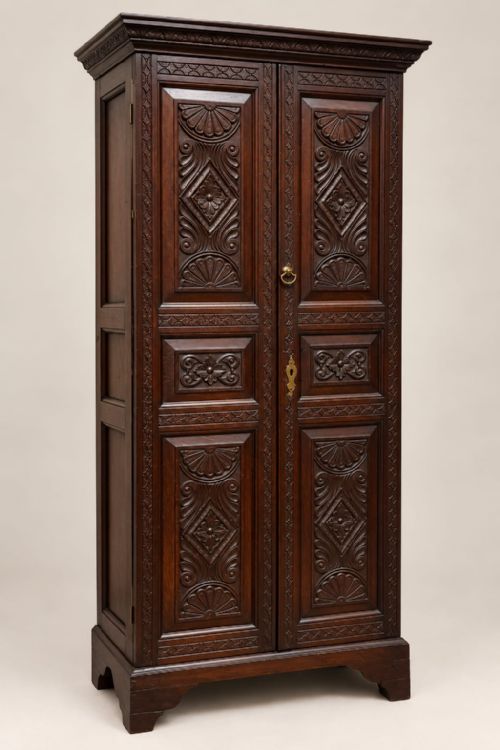
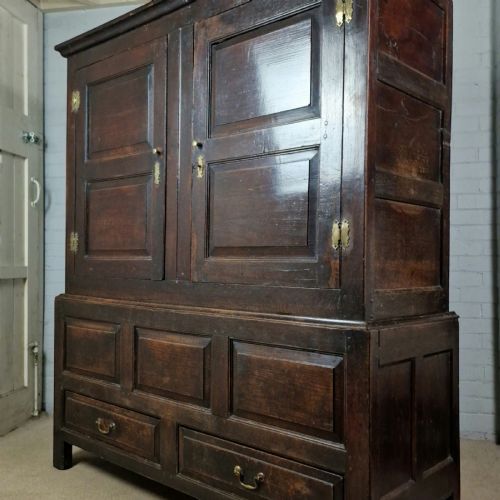
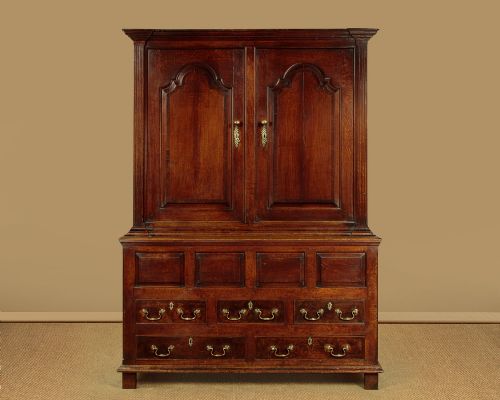
Buyers searching for a georgian wardrobe armoire encounter large storage furniture primarily from the Georgian, Regency, and Victorian periods, along with later revival pieces. The selection spans formal mahogany designs to robust oak country pieces, linen presses, and compactum cupboards.
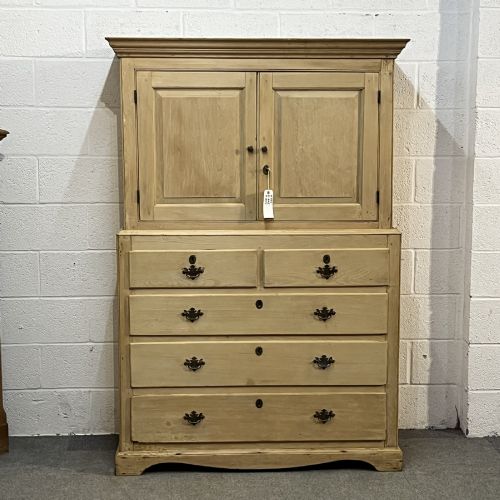
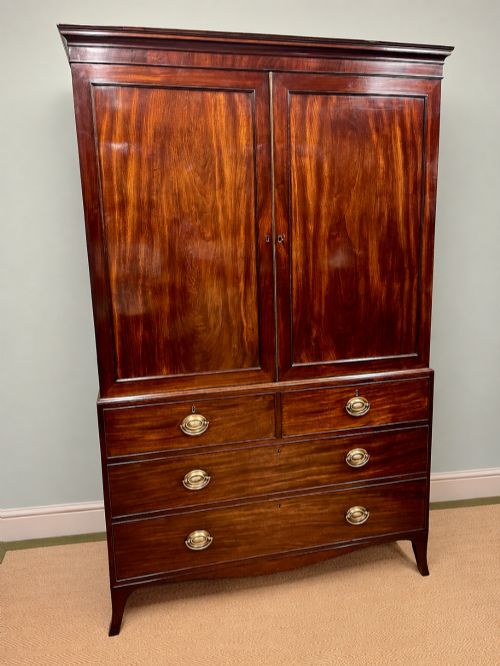
The primary forms on this page include tall double wardrobes, linen presses with sliding trays above drawers, and smaller hall or cloakroom cupboards. Oak and mahogany dominate the offerings, appearing alongside pine, walnut, and exotic veneers.
Materials and construction
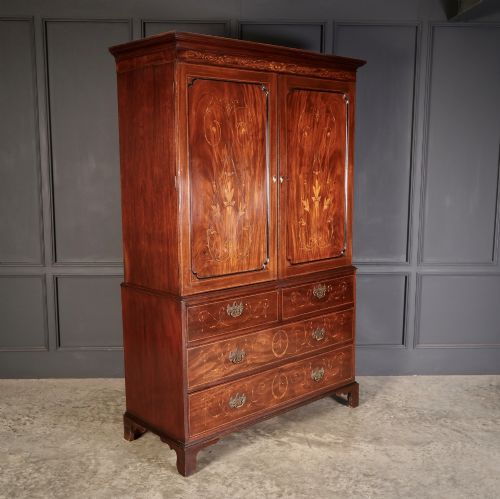
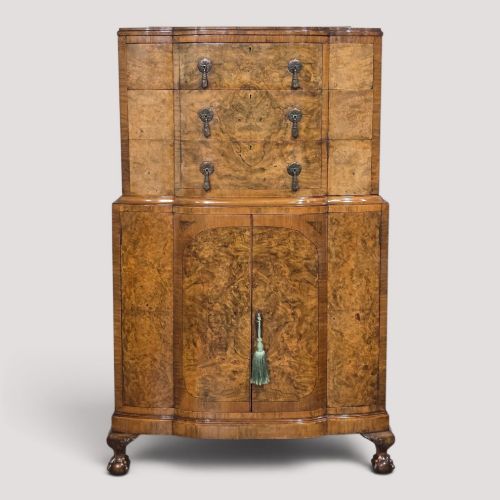
Cabinet makers utilised solid timbers like oak and mahogany for structural integrity, often applying flame mahogany veneer, satinwood inlay, or burr walnut to prominent exterior surfaces. Brass hardware such as escutcheons, handles, and hanging hooks provide functional and decorative contrast against the dark wood.
Joinery techniques ranged from pegged frame and panel construction in earlier oak pieces to fine cabinet work featuring blind fretwork cornices and inlaid stringing in later mahogany examples.
Georgian Wardrobe Armoire Retail Price Guide 2026
Typical asking prices for georgian wardrobe armoire among the pieces listed under this phrase on Sellingantiques today, from the lower quarter to the upper quarter. They describe what is for sale here now, not the wider market.
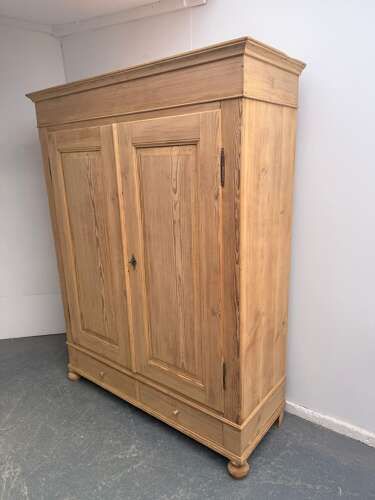
Some pine cupboards arrive ready to wax or paint, offering a blank canvas for modern interior schemes.
Separating quality across the range
Quality differences emerge in the choice of timber and the precision of decorative details, such as carved cornices, fine inlay work, and matched grain veneers. Superior pieces display thoughtful proportions and careful cabinetmaking that integrate functional drawers and hanging compartments seamlessly.
Simpler regional pieces and painted pine items offer utility with less complex ornamentation, whereas examples featuring detailed carving, fine brasses, and choice hardwoods sit at the higher end of the scale.
The Georgian Wardrobe Armoire Glossary
- Linen Press
- A dual-purpose storage piece featuring sliding trays or shelves in the upper section for folded textiles, positioned above a chest of drawers.
- Compactum
- A multi-functional wardrobe offering a combination of hanging space, shelves, and internal drawers within a single carcass.
- Livery Cupboard
- An antique storage cabinet traditionally used for storing food, clothing, or household goods, often constructed from heavy oak.
- Blind Fretwork
- Carved decorative geometric woodwork applied to a flat surface in low relief, often seen along the cornice of finer case pieces.
- Flame Mahogany Veneer
- A thin slice of mahogany timber cut from the fork of the tree, displaying a distinctive wavy, flame-like grain pattern.
Georgian Wardrobe Armoire: Frequently Asked Questions
What is the difference between a wardrobe and a linen press?
A wardrobe is designed primarily for hanging garments vertically on rails or hooks within a tall compartment.
A linen press combines hanging or shelf space with internal sliding trays specifically intended for storing folded linens and bedding flat.
How do I identify a Georgian period piece?
Georgian pieces often display classic proportions, honest construction in solid mahogany or oak, and restrained decorative elements like bracket feet or simple cornices.
Looking closer at the secondary timbers inside drawers and the hand-cut dovetail joints helps confirm the 18th or early 19th-century origin.
Will these large cupboards dismantle for moving?
Many larger antique wardrobes and presses were constructed as knockdown or flat-pack pieces using pegged frames or bolts to allow easier transport between rooms.
It is wise to check the specific listing details or ask the dealer whether a particular cabinet separates into sections.
How should I care for antique mahogany and oak furniture?
Keep these timber pieces away from direct heat sources and strong sunlight to prevent the wood from drying out or the veneer from lifting.
Regular application of traditional beeswax and gentle dusting will maintain the natural lustre of the polished surface over time.