


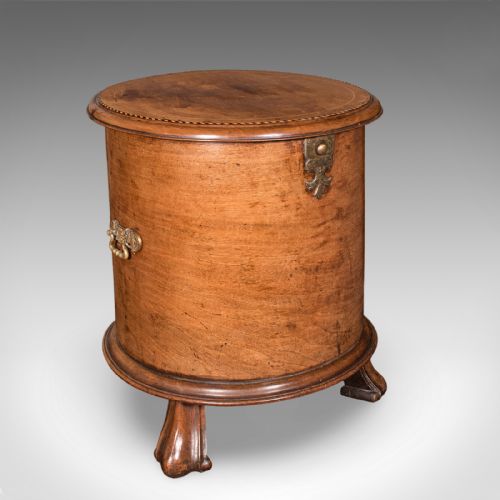


Georgian Walnut Chest Stand
A georgian walnut chest stand combines architectural presence with useful drawer storage, rising on legs that lift heavy timber off the floor.
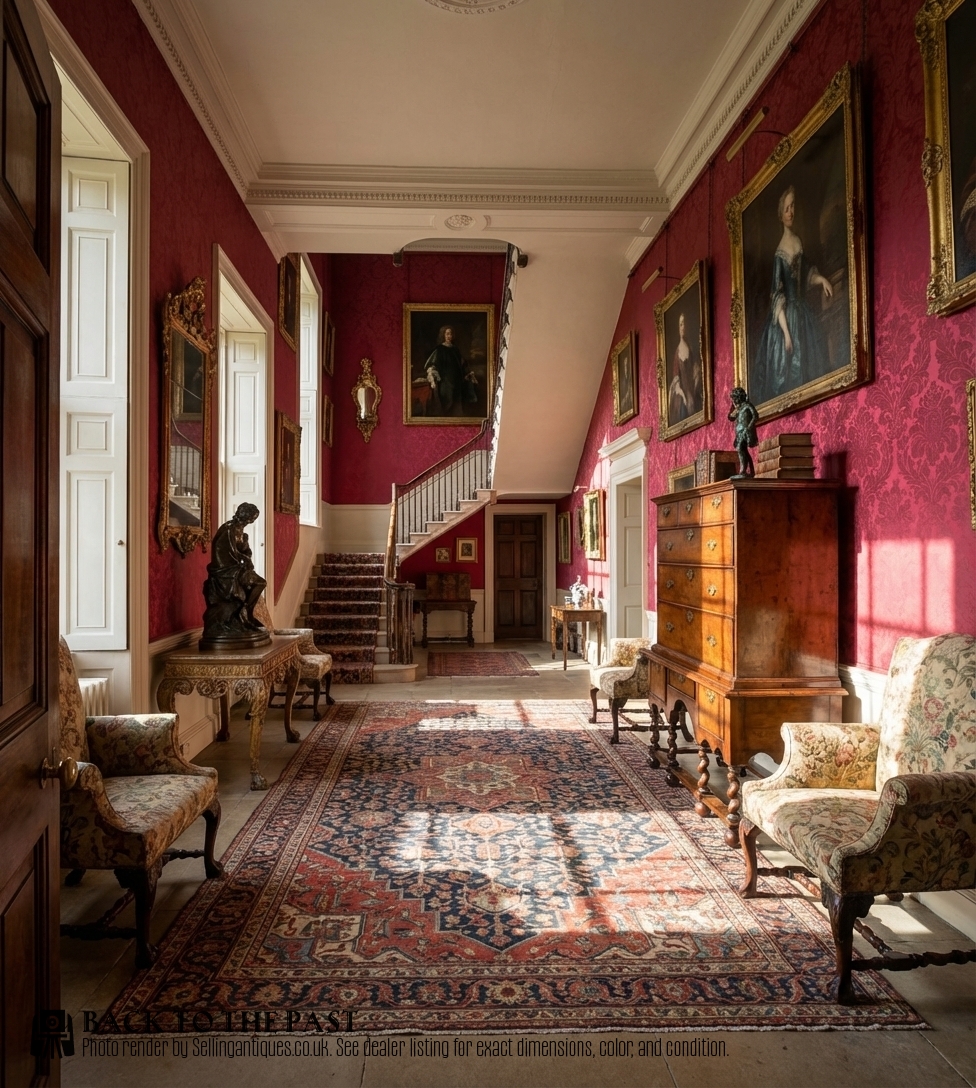
Georgian Walnut Chest Stand
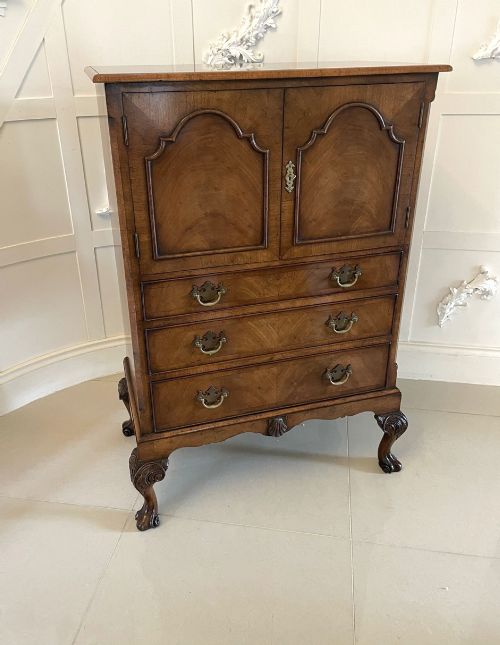
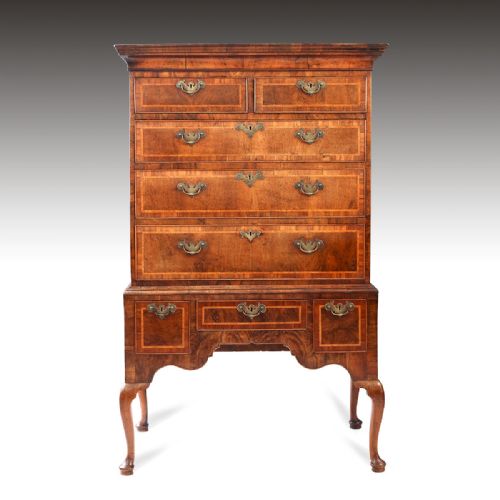
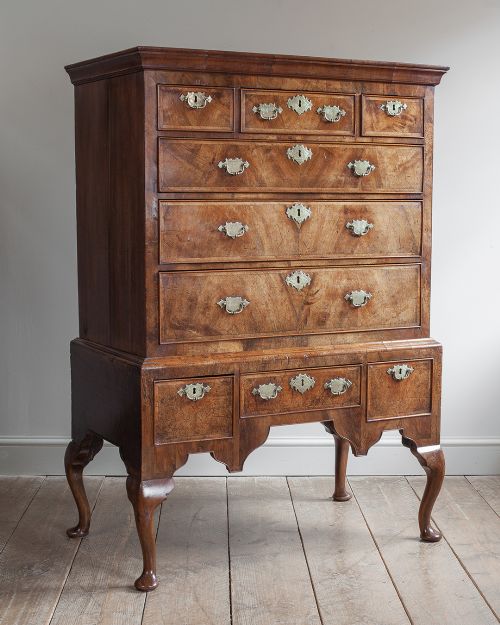
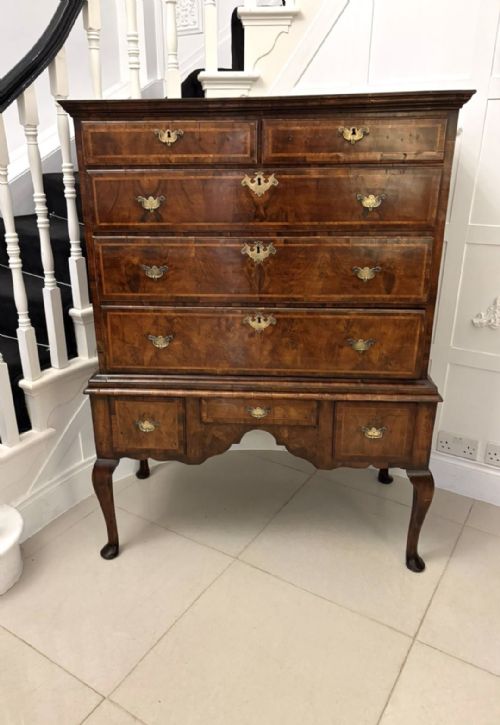
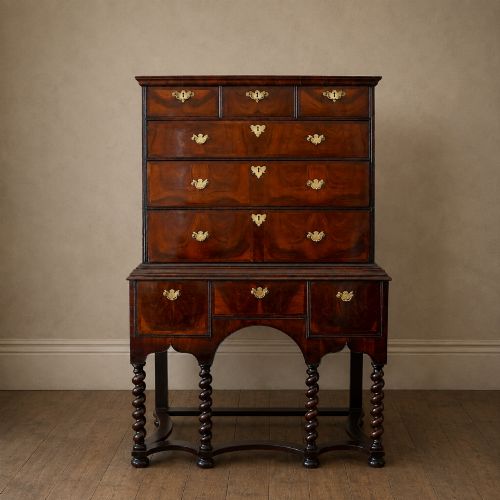
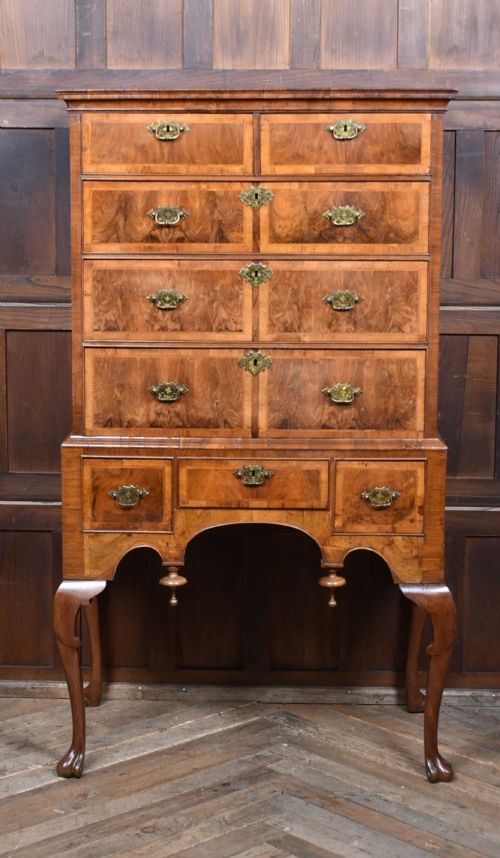
A georgian walnut chest stand brings together a lower support frame, often fitted with cabriole legs, and an upper section containing multiple drawers for textiles or valuables. The forms seen here range from early eighteenth-century examples to later revivals from the twentieth century, reflecting enduring tastes for raised cabinetry.
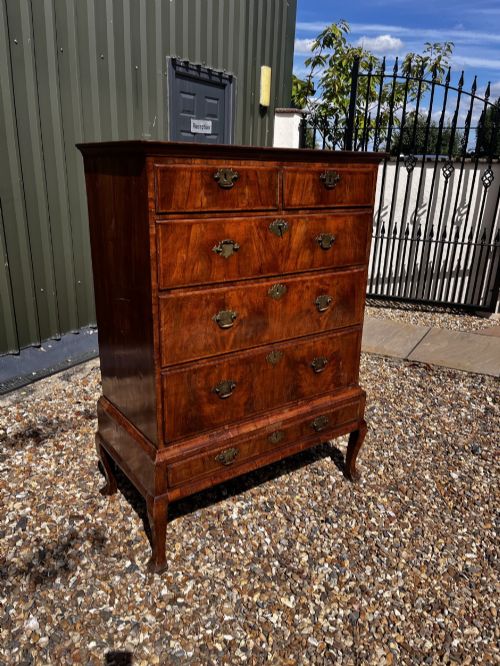
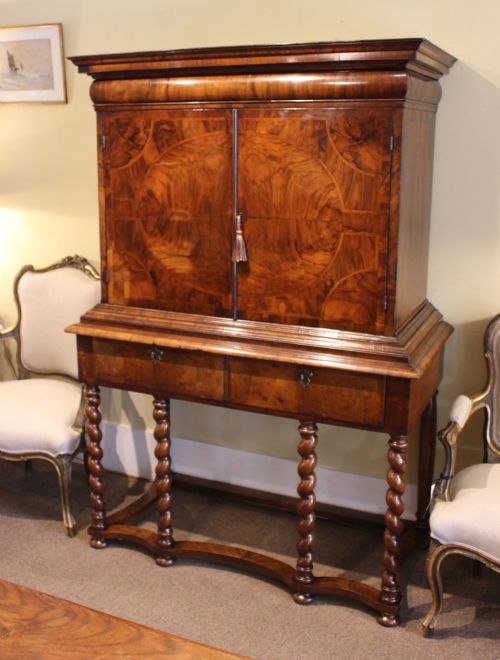
Makers produced these items in various configurations, including tallboys and cabinets on stands alongside traditional drawer formats. Walnut and burr walnut dominate the survivals, shaped during the Queen Anne, George I, and George II periods with occasional Regency interpretations.
Materials and technique
Cabinetmakers constructed these pieces using solid oak and pine for internal carcases, applying figured walnut and burr walnut veneers to external surfaces. Oyster veneers and crossbanding added geometric decoration to drawer fronts and top panels.
Brass drop handles and escutcheons secured drawer contents, while cabriole legs provided structural support for the heavy timber boxes above.
Listings feature walnut, burr walnut, oak, and brass across periods spanning the early eighteenth century to the twentieth-century revival eras.
What varies in quality
The choice of timber creates the primary distinction between standard examples and the finest survivals, with heavily figured burr walnut commanding greater visual depth. The precision of the veneer matching across drawer fronts indicates the skill applied during construction.
Proportion and leg form dictate the grace of the stand, where slender cabriole legs and pad feet demonstrate superior design compared to heavier alternatives.
The Georgian Walnut Chest Stand Glossary
- Chest on stand
- A two-part furniture form comprising an upper drawer section raised upon a separate open leg base. This configuration lifted storage away from damp stone floors.
- Burr walnut
- A prized timber harvested from walnut tree growths, displaying swirling knot patterns. Cabinetmakers sliced this wood into thin veneers for decorative surfaces.
- Oyster veneer
- Circular cross-sections cut from small branches or roots, arranged closely to resemble oyster shells. This technique flourished during the late seventeenth and early eighteenth centuries.
- Cabriole leg
- An S-shaped furniture support curving outward at the knee and inward at the ankle. It often terminates in a pad or foot.
- Crossbanding
- A narrow strip of veneer laid around the border of a drawer front or tabletop so the grain runs perpendicular to the main panel. This frames the central wood.
Georgian Walnut Chest Stand: Frequently Asked Questions
What is a georgian walnut chest stand?
A georgian walnut chest stand is a raised storage unit featuring drawers set above an open frame with legs. These items served domestic spaces for holding garments and personal items.
They combine the storage capacity of a chest of drawers with the lighter visual profile of a table stand.
How do I date a walnut chest on stand?
Dating relies on observing construction methods, timber choices, and leg styles such as cabriole supports or bracket feet. Early eighteenth-century examples often display oyster veneers and walnut handles.
Later revival pieces from the twentieth century utilise similar forms but typically reveal different secondary timbers and modern joinery techniques inside.
Where were these placed in a home?
These pieces sat primarily in bedrooms, dressing rooms, or formal drawing rooms to store linens and valuables. Their elevated design kept contents away from floor drafts.
Their compact footprints allowed them to fit against walls in private chambers and reception spaces alike.
Are walnut chests fragile?
Walnut surfaces require stable indoor humidity to prevent veneer lifting or timber splitting over time. Regular polishing with traditional wax helps maintain the finish.
Careful placement away from direct heat sources ensures the timber and joints remain stable.