





Georgian Wall Mounted Barometer
A georgian wall mounted barometer brings the precision of nineteenth-century domestic science and rich timber grain directly to a hallway wall.
Georgian Wall Mounted Barometer
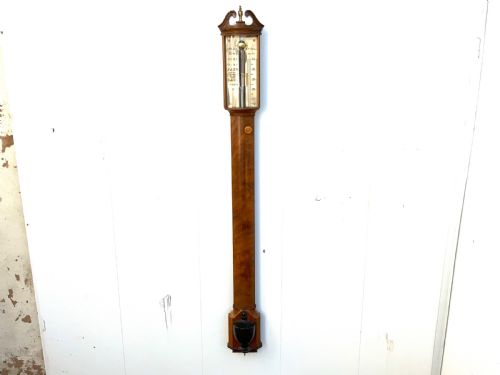
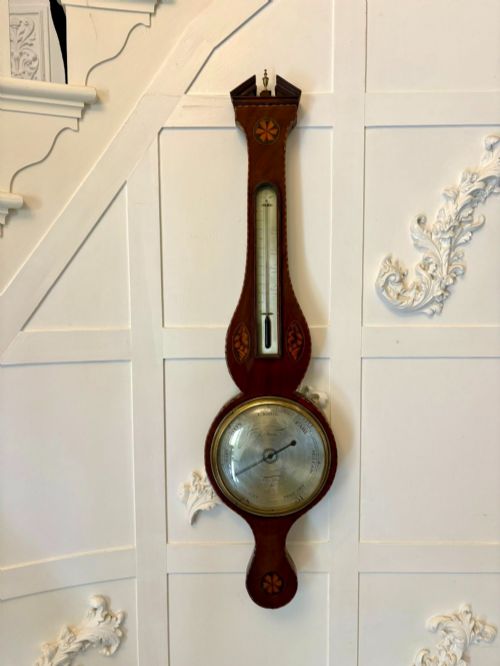
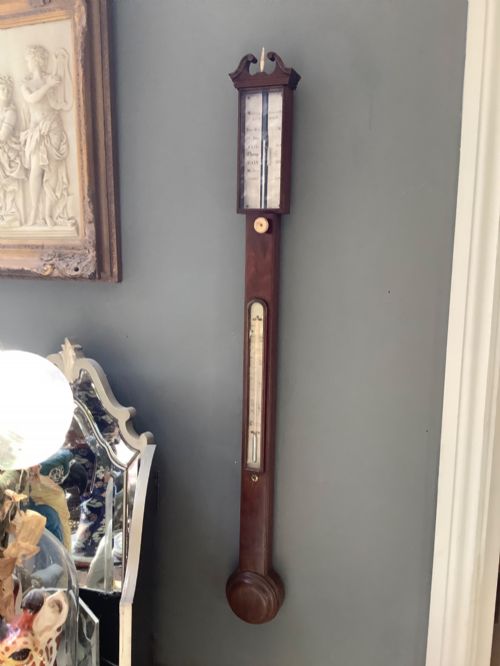
A georgian wall mounted barometer is a mercurial weather glass designed to hang securely in a domestic interior, combining practical atmospheric measurement with fine cabinet work. These instruments primarily take the form of stick barometers or wheel barometers, housed in handsome wooden cases that reflect the prevailing taste of their period.
The pieces on this page span the Georgian, Regency, and early Victorian eras, dating broadly from the mid-eighteenth century through to the nineteenth century. Stick barometers offer a slender, vertical profile, whereas wheel barometers feature a wider circular dial at the base to display weather indicators.
Makers housed these sensitive mechanisms in substantial timber enclosures intended for prominent display in entrance halls and parlours. Mahogany and rosewood dominate the selection, often enriched with contrasting stringing, shell inlay, or satinwood details.
How they were made
Cabinet makers constructed the wall cases using dense tropical hardwoods such as mahogany and rosewood, selected for their stability and rich surface grain. These timbers were shaped into slender trunks or expanded wheel frames, frequently embellished with brass cistern covers, bone scale indicators, and delicate inlay.
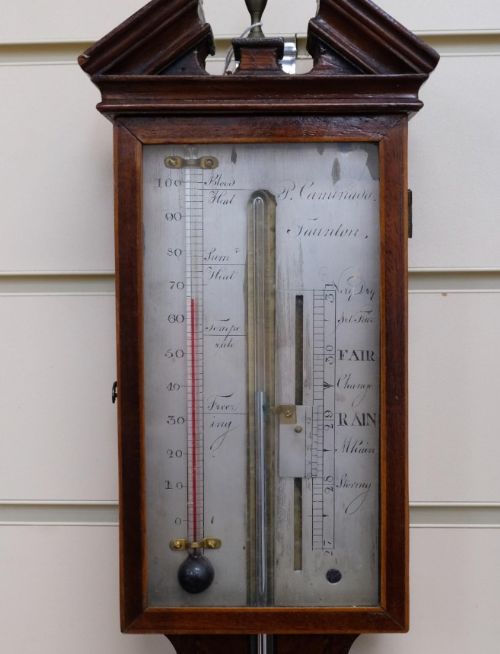
The functional heart of each instrument relies on silvered brass or silvered metal plates engraved with weather descriptors and barometric scales, paired with glass tubes containing mercury. Skilled opticians and instrument makers mounted these precision scales alongside vernier pointers to allow accurate reading of atmospheric pressure.
Georgian Wall Mounted Barometer Retail Price Guide 2026
Typical asking prices for georgian wall mounted barometer among the pieces listed under this phrase on Sellingantiques today, from the lower quarter to the upper quarter. They describe what is for sale here now, not the wider market.
Listings feature wall barometers housed in mahogany, rosewood, and satinwood, dating from the mid-eighteenth century through the nineteenth century.
What varies in quality
The standard of a georgian wall mounted barometer rests largely upon the crispness of the cabinet work and the reputation of the recording instrument maker. Signed dials by established makers such as London or provincial opticians elevate the standing of a piece compared to anonymous workshop output.
Material selection and decorative restraint also set finer examples apart, particularly where figured mahogany or rosewood is paired with subtle shell marquetry and well-preserved silvered metal dials. The survival of original glass tubes, mercury columns, and delicate brass fitments defines the preservation level across the range.
P. Caminada Taunton·Fagioli of Clerkenwell London·Bate of London·Sandrino of Liverpool·Hayward of Ashford·Gilbert London·Corti of Exeter·Malacrida of Dublin·George Dollond of London
The Georgian Wall Mounted Barometer Glossary
- Stick barometer
- A tall, narrow wall instrument where the mercury column rises and falls in a straight glass tube against a vertical scale. This form provides a direct and classic reading of atmospheric pressure.
- Wheel barometer
- A mercurial barometer featuring a circular dial face at the base connected to a float system within the tube. The pointer rotates around the dial to indicate weather changes.
- Silvered brass
- A metal alloy plate treated to achieve a bright, reflective silver finish before being finely engraved with numbers and weather text. It offers high legibility against the dark wood background.
- Vernier
- A small auxiliary sliding scale attached to the main barometer plate that allows fractional readings of the mercury level. It aids precision in domestic forecasting.
- Cistern
- The enclosed reservoir at the base of the barometer tube that holds the reserve mercury. It is frequently protected by a decorative brass or turned wood cover.
Georgian Wall Mounted Barometer: Frequently Asked Questions
How do I read a stick barometer?
Read the height of the mercury column against the engraved scale to determine current atmospheric pressure. Rising mercury generally indicates improving weather, while falling levels point towards approaching rain or wind.
Use the sliding vernier pointer to mark the existing pressure level so you can easily track upward or downward movement over the course of the day.
Where should I hang a wall barometer?
Mount the instrument on an interior wall away from direct sunlight, radiators, and heavy foot traffic doors. Consistent indoor temperatures ensure the metal mechanism and wood case remain stable.
Ensure the wall fixings are secure enough to support the full weight of the hardwood case and glass components safely.
How do I tell a Georgian barometer from a Victorian one?
Georgian barometers typically display restrained mahogany cases with simple architectural lines or subtle string inlay. Nineteenth-century and Victorian examples often introduce broader rosewood veneers and more elaborate scroll pediments.
Examine the style of the engraved lettering on the silvered dial, as Georgian scripts tend to feature distinct cursive or clean serif lettering compared to later Victorian variants.
Can these barometers still be used today?
Most surviving examples retain functional mercury tubes and can measure atmospheric pressure accurately if handled with care. Transporting them requires proper locking or tilting of the mercury column to prevent tube damage.
Many owners maintain them as working weather instruments while appreciating their presence as period furniture.