




Traditional English Barometer
A traditional English barometer measures atmospheric pressure, bringing historical craftsmanship and functional charm into any room.
Traditional English Barometer
When you search for a traditional english barometer, you encounter instruments originating from the Georgian, Victorian, and Edwardian eras. These pieces record atmospheric pressure to help forecast the weather using mechanical movements housed within timber cases.
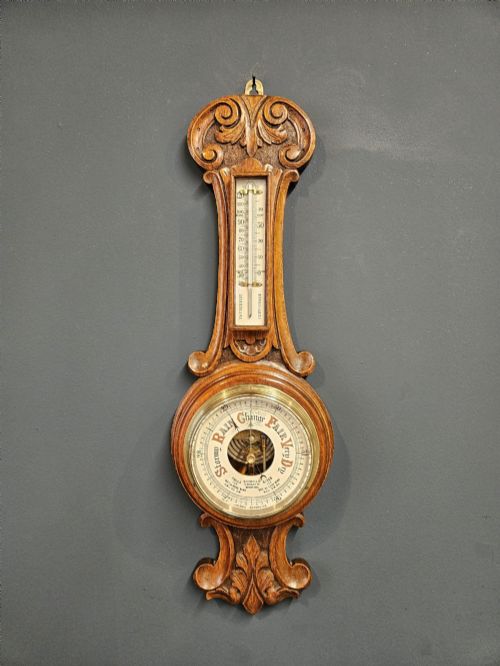
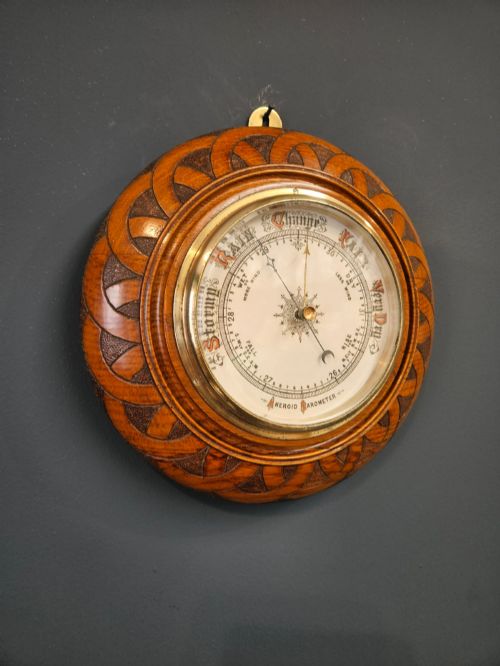
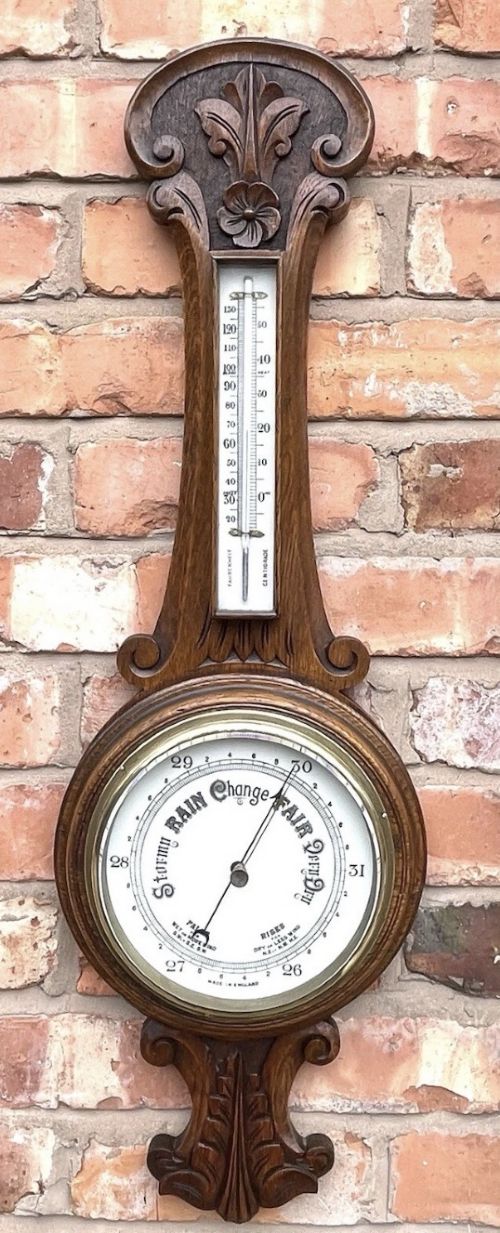
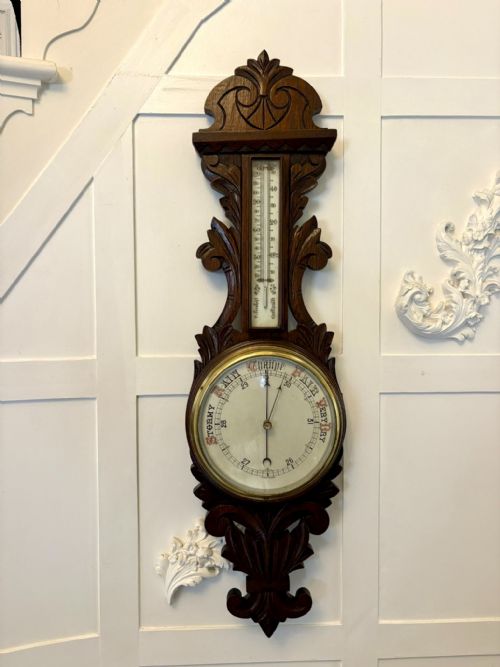
The versions most likely to appear on this page are wheel barometers and aneroid banjo barometers. Many examples incorporate thermometers, offering dual functionality within domestic spaces.
Makers and retailers such as Negretti & Zambra, George Dollond of London, Bianchi of Ipswich, and Giana of Shrewsbury appear among the pieces. The origins span provincial towns and capital workshops alike.
How they were made
Makers constructed the outer housings predominantly from oak, mahogany, and flame mahogany timber. Craftsmen shaped these woods using turning and carving techniques to form the distinct banjo and wheel silhouettes.
Glass protects the dial faces while brass components form bezels, indicators, and interior movement parts. These materials combine to create durable domestic scientific instruments.
Traditional English Barometer Retail Price Guide 2026
Typical asking prices for traditional english barometer among the pieces listed under this phrase on Sellingantiques today, from the lower quarter to the upper quarter. They describe what is for sale here now, not the wider market.
Some dials include old weather inscriptions spelling stormy with an extra vowel just to keep the weather guessing.
What varies in quality
The standard of timber selection and cabinet work separates examples across the range. Finer pieces display detailed carved ornamentation and carefully matched flame mahogany veneers.
The reputation of the maker and the precision of the dial signage also influence the standing of an instrument. Signed dials from established London makers distinguish specific pieces from provincial work.
Negretti & Zambra·George Dollond of London·Bianchi Ipswich·Giana Shrewsbury
The Traditional English Barometer Glossary
- Aneroid barometer
- An instrument that measures air pressure using a flexible metal box called an aneroid cell, without using liquid mercury. This design became common during the Victorian period.
- Wheel barometer
- A mercurial barometer housed in a large tall case where a float on the mercury column connects to a pulley and pointer on a circular dial. These often feature dampness and dryness indicators.
- Banjo barometer
- A barometer housed in a case shaped like a banjo, typically featuring a thermometer at the top and a large round dial at the bottom. This form gained popularity during the Georgian and Victorian eras.
- Thermometer
- An instrument measuring temperature, frequently mounted alongside the barometer dial in domestic weather glasses. They often share the same wooden backboard and glass protection.
Traditional English Barometer: Frequently Asked Questions
How do these barometers work?
Traditional barometers respond to changes in atmospheric pressure by moving internal mechanical linkages connected to a visible dial pointer. This movement indicates weather tendencies ranging from stormy to very dry.
Mercurial types use liquid columns, whereas aneroid versions rely on sealed metal capsules that expand or contract with pressure variations.
Where should I hang a barometer?
Hang your barometer on an interior wall away from direct sunlight, radiators, and draughty doorways to ensure stable temperature readings. Most pieces include a hanging loop or bracket on the reverse of the wooden case for secure mounting.
Placing the instrument at eye level in a hallway or principal room allows easy daily observation of the dial.
How do I date a barometer?
Examine the style of the timber case, the lettering on the dial, and any maker signatures to establish an approximate period. Georgian examples often feature wheel configurations, while aneroid movements frequently point to Victorian or Edwardian production.
Inscribed names of retailers or makers can sometimes be cross-referenced with trade directories from London or provincial towns.
Are these barometers still accurate?
Many surviving barometers retain functional movements, though historical instruments can require professional calibration against known local pressure readings. The internal mechanisms respond to current atmospheric shifts just as they did originally.
Minor discrepancies can occur due to age, but the primary pressure-sensing components frequently remain operational.