
Georgian Wall Hanging
A georgian wall hanging brings practical storage and architectural line to a room through centuries-old timber and glass.
Georgian Wall Hanging
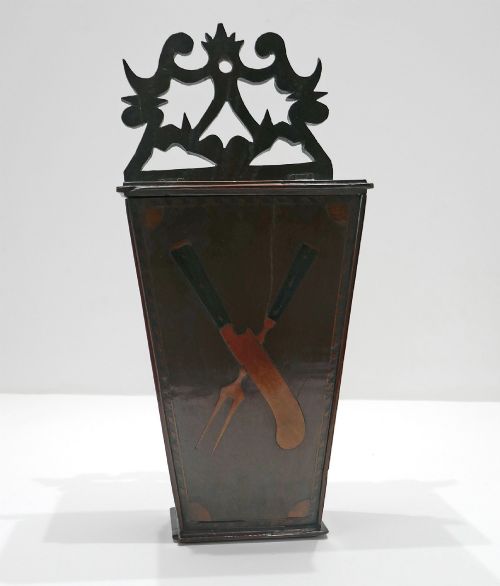
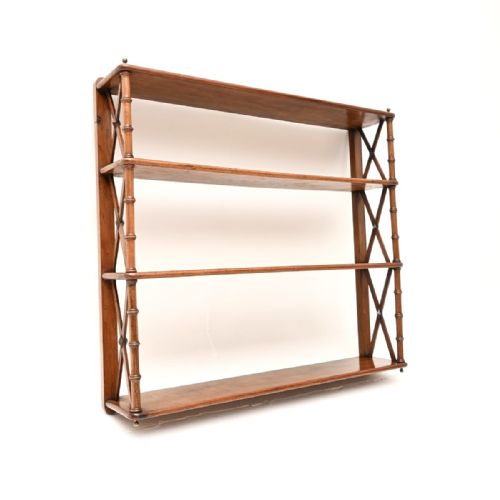
A georgian wall hanging encompasses a diverse group of domestic furnishings designed to be mounted above floor level, ranging from compact spice cupboards and candle boxes to corner cabinets and mirrors. These pieces span the eighteenth century into the regency period, reflecting the changing interior tastes of houses that required space-saving solutions.
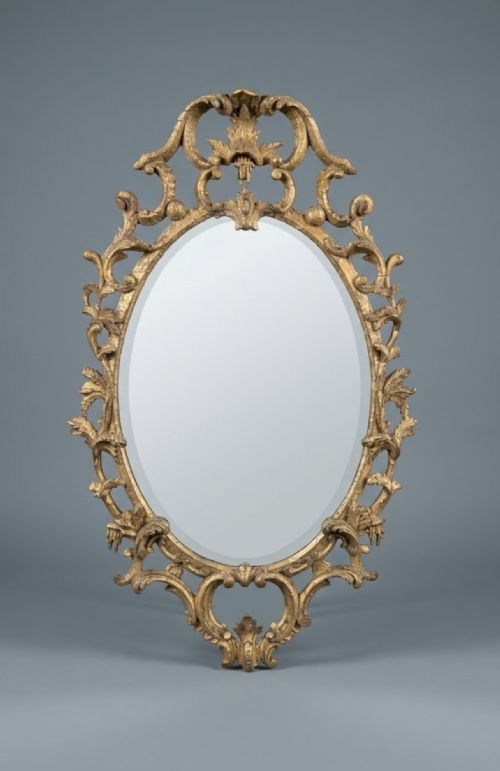
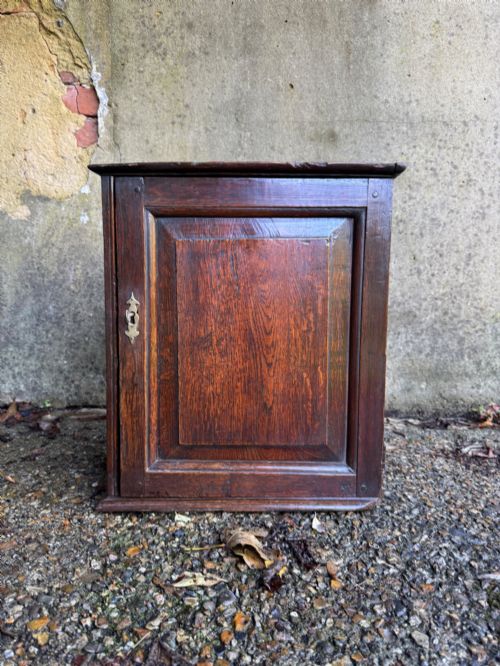
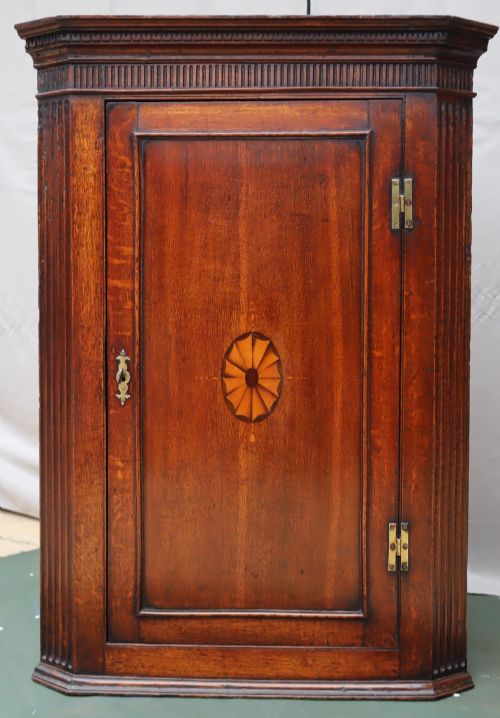
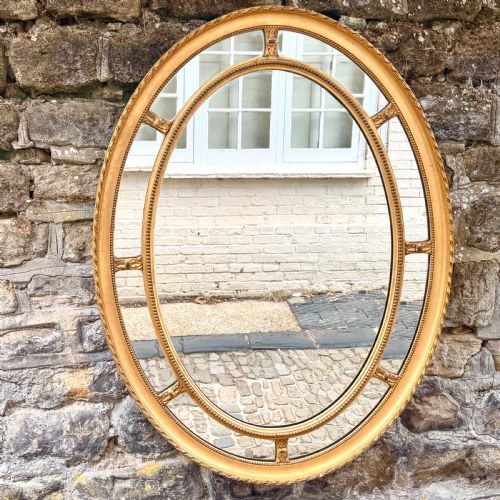
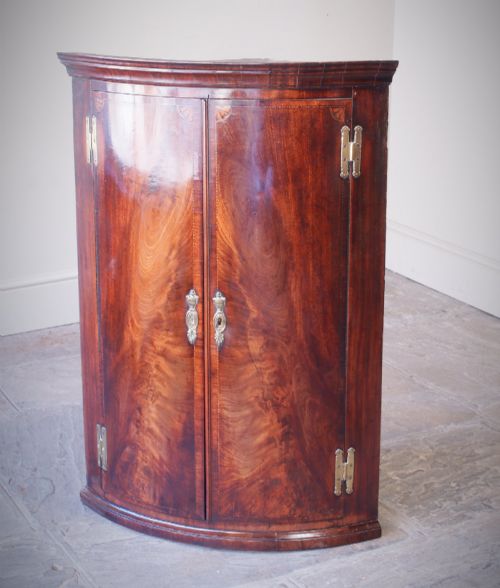
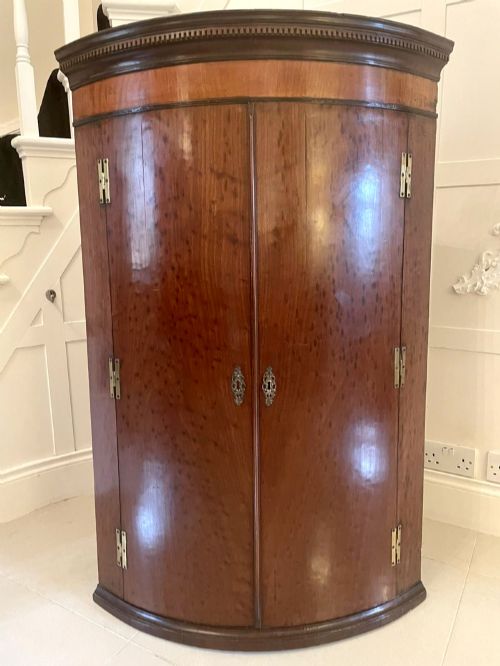
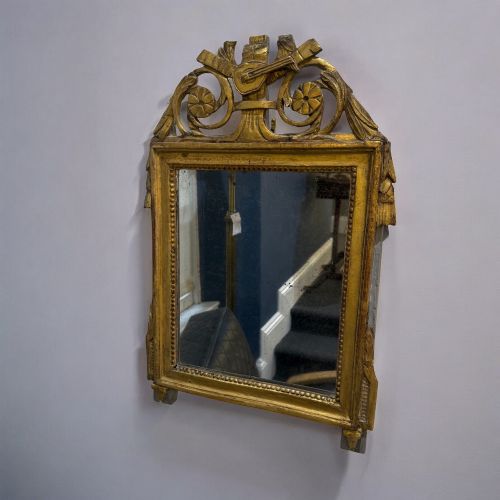
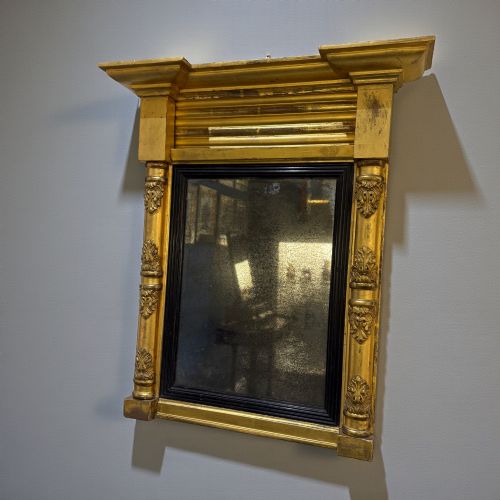
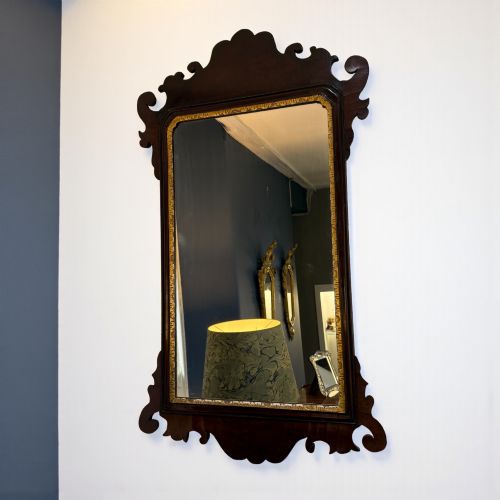
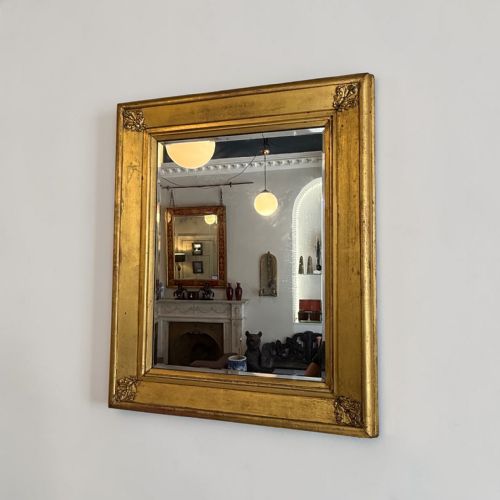
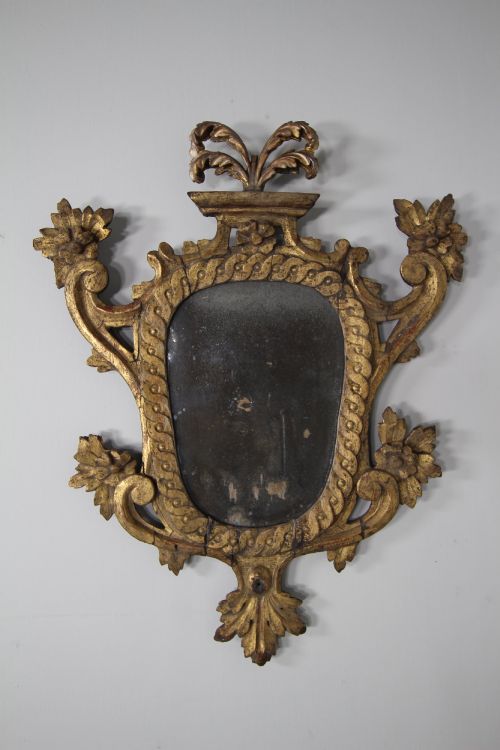
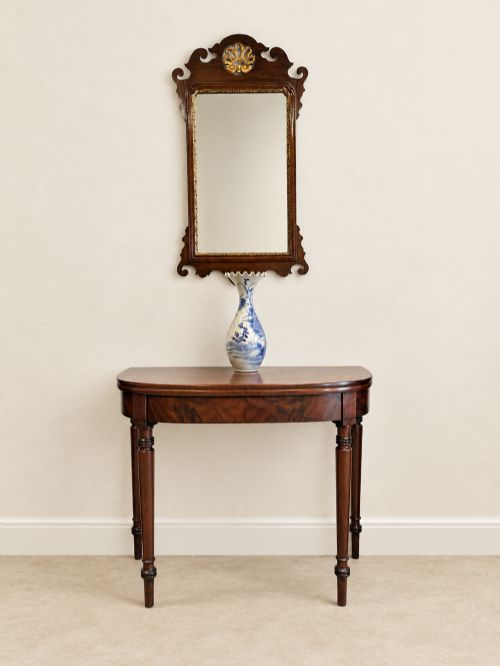
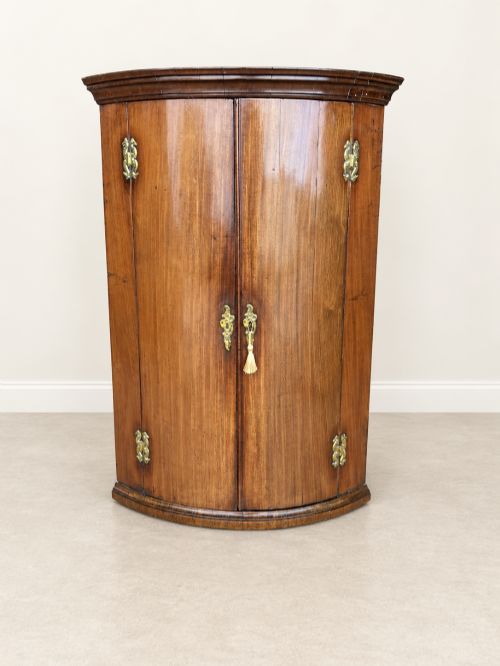
The most common examples on this page are mahogany corner cupboards and oak wall cupboards, often featuring bow fronts and inlaid patterns of boxwood and ebony. Alongside these cabinetry pieces, wall mirrors in carved giltwood and gesso appear frequently, bringing reflective light and decorative form to domestic spaces.
How they were made
Cabinet makers utilised dense hardwoods such as mahogany, oak, and walnut, frequently selecting figured grains like plum pudding mahogany or burr oak for primary display surfaces. Construction relied on traditional joinery methods, with doors, shelves, and hanging fixtures built to bear weight securely against plaster and lath walls.
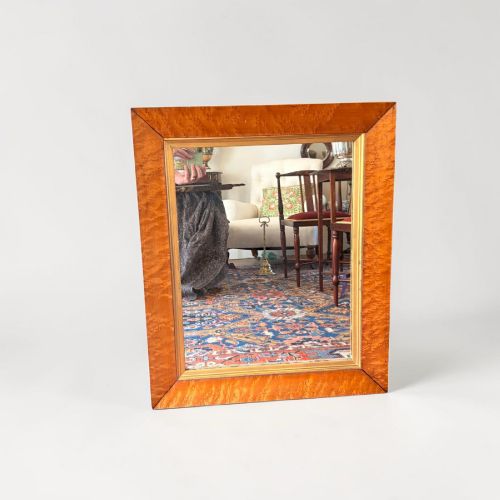
Decorative finishes involved carving directly into solid timber or applying gesso and gold leaf to intricately moulded frames, particularly on rococo and neoclassical wall mirrors. Inlaid details utilised contrasting veneers like boxwood and ebony, while mirrors employed sheet glass set into rebated wooden rabbets.
The listings show materials spanning brass, mahogany, glass, oak, giltwood, gesso, gold leaf, and walnut across multiple centuries.
What varies in quality
The standard of a georgian wall hanging rests upon the selection of timber and the crispness of its execution, from hand-carved giltwood ornamentation to finely fitted dovetail joints in cabinet drawers. Superior items demonstrate intentional grain matching and deliberate proportion, whereas simpler utility pieces prioritise sturdiness over ornamental refinement.
Surface preservation significantly alters the character of these items, separating pieces with undisturbed patination from those with heavily restored or replaced elements. The depth of gilding, the integrity of original mirror plates, and the subtlety of marquetry inlay all distinguish exceptional workshops from standard regional production.
The Georgian Wall Hanging Glossary
- Giltwood
- Wood that has been coated with a thin layer of gold leaf over a prepared gesso ground. This technique creates a luminous surface common on eighteenth-century decorative mirror frames.
- Bow front
- A convex, curved cabinet front that projects outward from the corners. This shape gained popularity in the georgian era to soften room angles.
- Parcel-gilt
- A method where only specific portions of a carved wooden object are highlighted with gold leaf while the rest shows the underlying wood or paint. It provides subtle contrast on mirrors and architectural mouldings.
- Gesso
- A plaster-like material applied to wood surfaces as a base for gilding or painting. It can be moulded into complex relief decorations before hardening.
- Marquetry
- The art of applying decorative veneer pieces to a structure to form geometric or pictorial designs. Craftsmen used contrasting timbers like ebony and boxwood for varied tones.
Georgian Wall Hanging: Frequently Asked Questions
How were corner cupboards used?
These cabinets occupied unused room angles to store table ceramics, glassware, or dry goods safely above floor level.
Their enclosed doors kept dust away from delicate tableware while making efficient use of compact eighteenth-century rooms.
Where should a wall hanging go?
Mirrors work best above mantelpieces or consoles to bounce natural light around sitting rooms and hallways.
Cabinets and shelves suit dining spaces or studies where they hold small collections or daily essentials without crowding floor space.
How do I identify a giltwood mirror?
Look for a carved wooden substrate beneath a layer of chalky gesso and gold leaf rather than modern metallic paint.
Age shows through fine craquelure in the surface and subtle wear where fingers touched the frame over generations.