
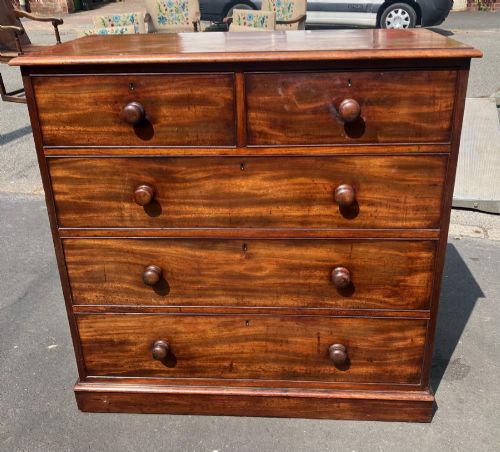
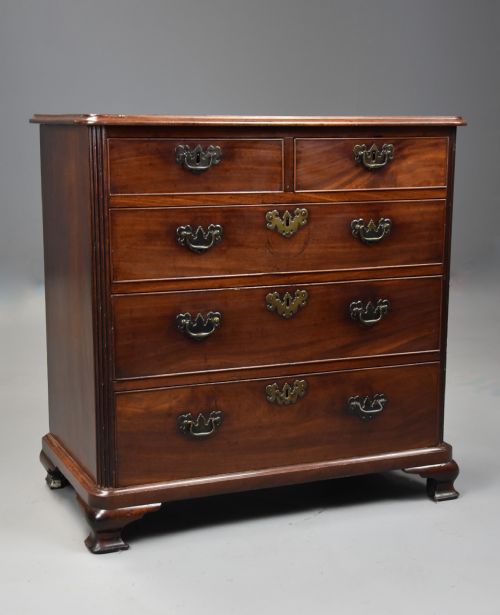
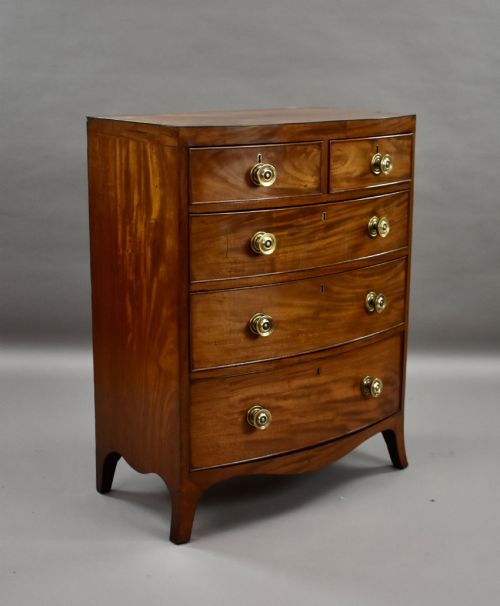
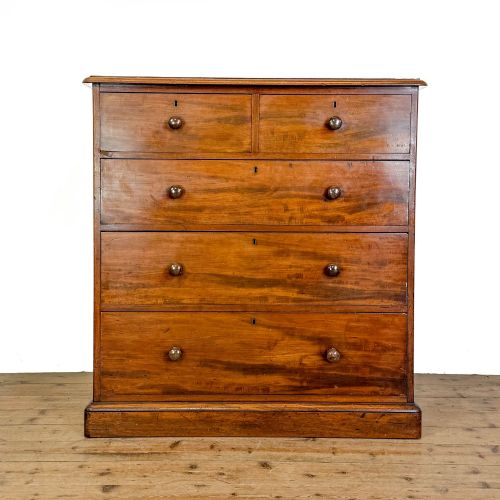
Georgian Two Over Three Chest
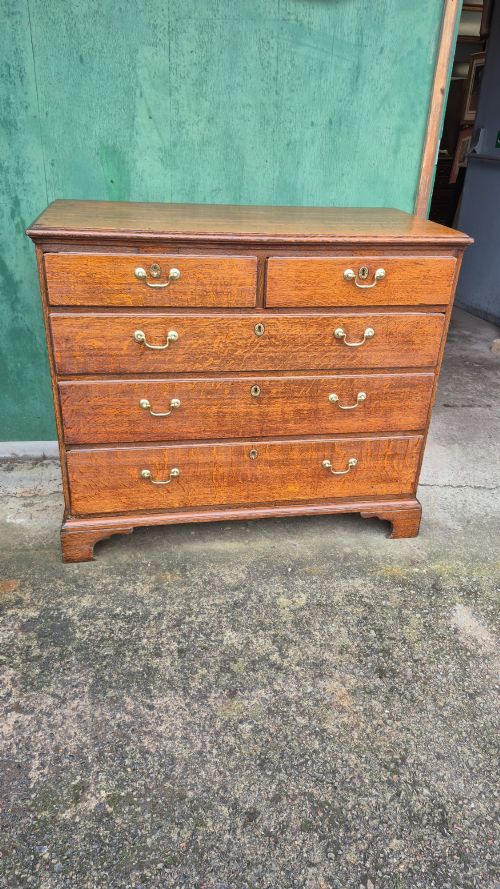
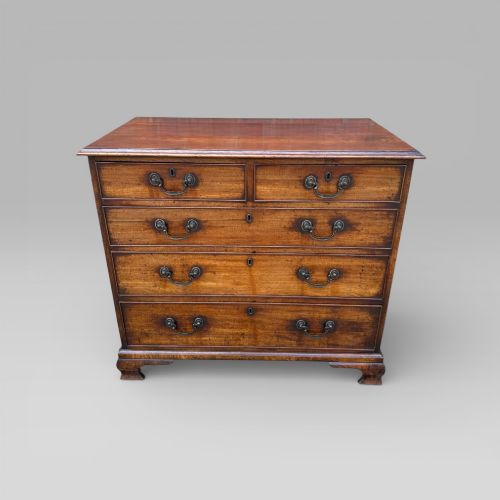
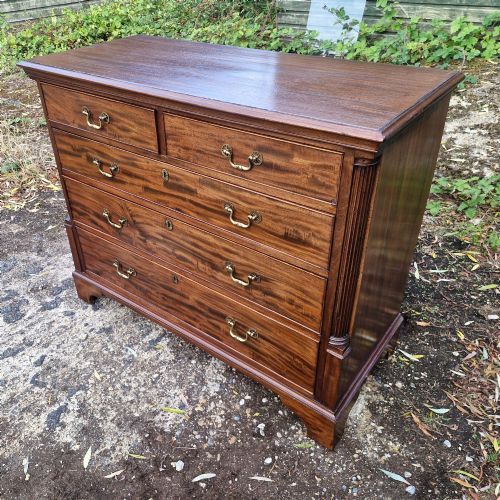
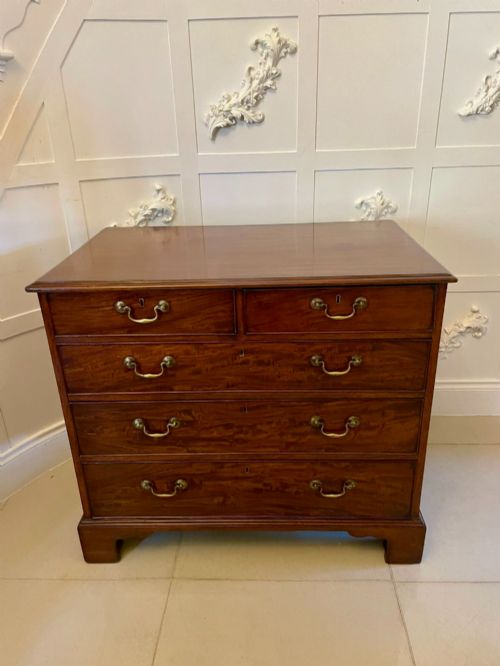
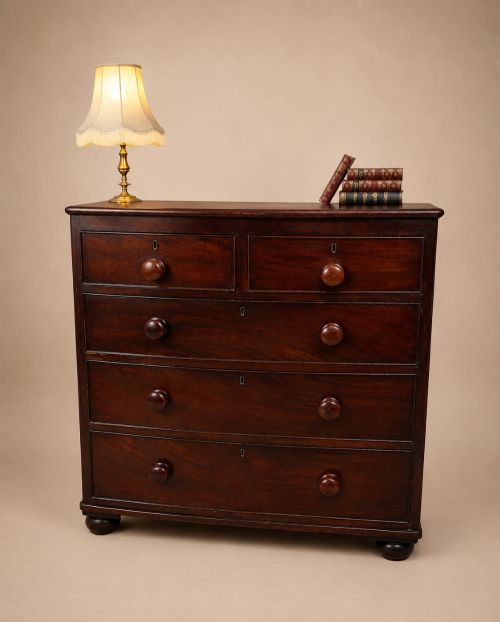
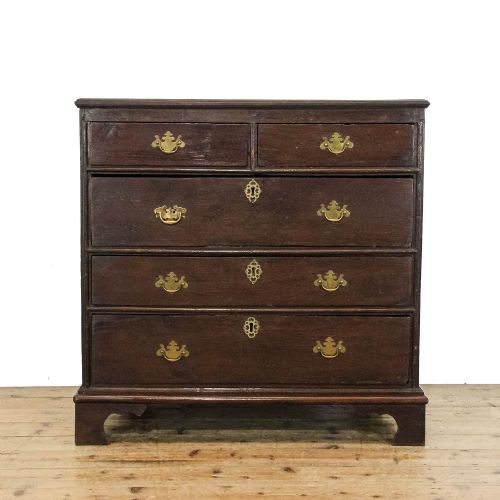
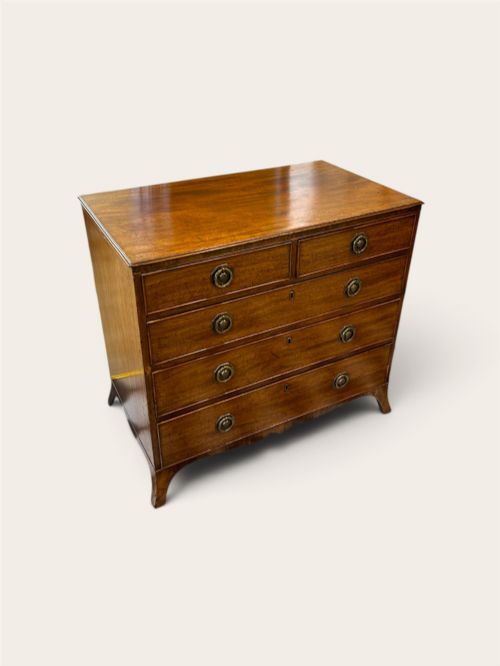
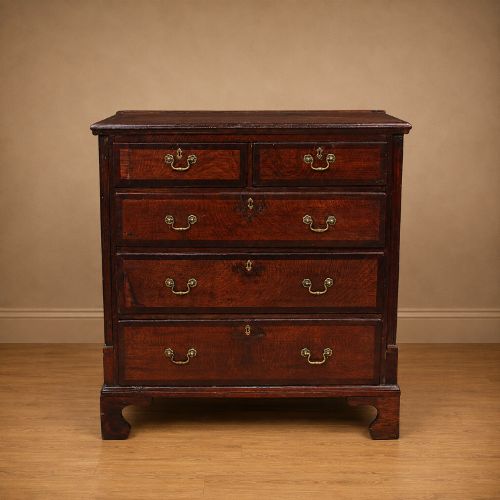
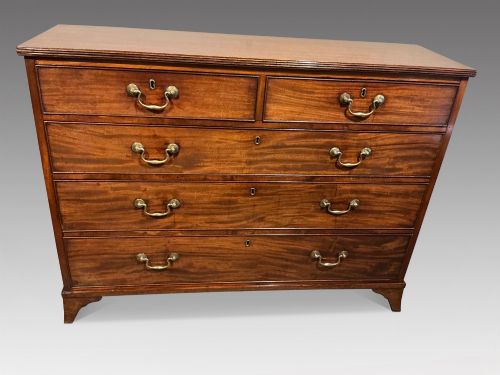
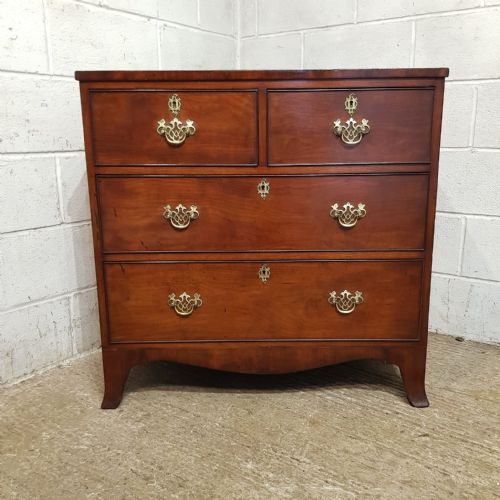
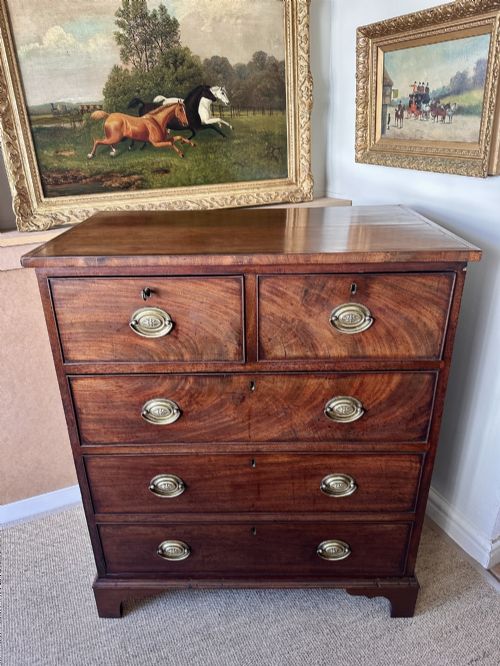
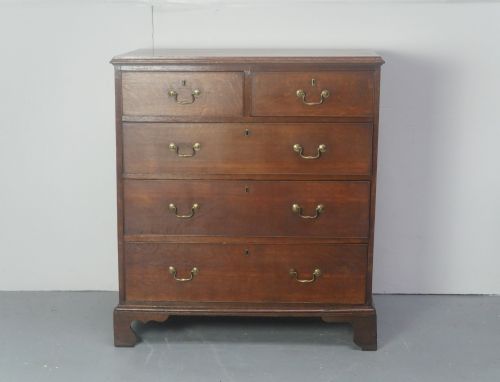
A georgian two over three chest brings orderly storage and rich timber grain to a room, pairing two small upper drawers above three wider graduated ones.
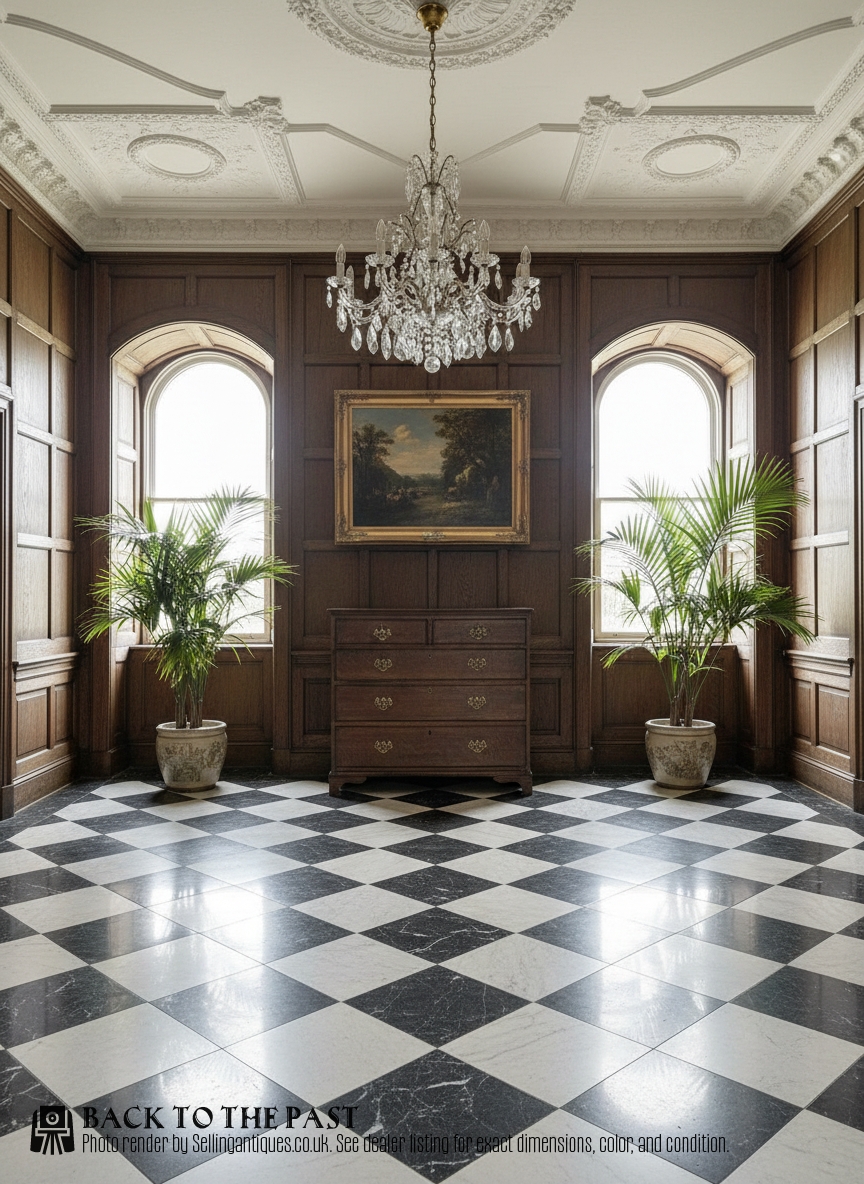
Georgian Two Over Three Chest
A georgian two over three chest typically organises storage through two smaller drawers placed above three longer, graduated drawers below. This arrangement forms a sturdy architectural proportion that defines domestic furniture from the eighteenth and early nineteenth centuries.
The pieces on this page span the Georgian period, the Regency era, and into the Victorian age. Mahogany and oak dominate the selection, appearing alongside walnut, elm, and painted pine.
Makers and workshops constructed these chests of drawers in various forms, including bowfront profiles, narrow proportions, and caddy tops. Buyers encounter straightforward country examples as well as refined urban pieces finished with crossbanding or satinwood inlay.
How They Were Made
Cabinetmakers built these chests using solid timbers such as oak, mahogany, and walnut, often applying flame mahogany or burr walnut veneers to primary display surfaces. Crossbanding in contrasting woods and subtle satinwood inlay frequently border the drawer fronts and top edges.
Drawer construction relied on hand-cut dovetails and sturdy linings of secondary woods like pine. Brass drop handles and backplates secure the fronts, while bracket feet or shaped aprons support the base.
Listings feature oak, mahogany, walnut, elm, and pine, reflecting diverse regional woodworking traditions.
What Varies in Quality
The selection of timber grain heavily influences visual impact, as highly figured flame mahogany or burr walnut elevates the presence of a chest. Subtle details like fine crossbanding and crisp inlay show greater workshop skill than plain board construction.
Proportions dictate refinement, with smaller proportions and narrower widths commanding attention for their delicate scale. The survival of original handles, bracket feet, and working locks adds substantial integrity to a piece.
J Moorcroft
The Georgian Two Over Three Chest Glossary
- Bowfront
- A curved front facade that swells outward in the centre. This shape gained popularity during the Regency period and softens the rectangular lines of a room.
- Crossbanding
- A narrow strip of veneer laid around the border of a drawer front or top so that the grain runs perpendicular to the main panel. It provides a neat, framed finish.
- Bracket foot
- A simple foot shape formed by two pieces of wood mitred together at the corner, often shaped with an ogee curve. It elevates the body of the chest neatly off the floor.
- Graduated drawers
- A series of drawers that increase in depth from top to bottom. This design creates a balanced visual weight and accommodates bulkier items below.
- Caddy top
- A tabletop style featuring a raised, moulded edge that resembles the lid of a tea caddy. It sits slightly above the main carcase frame.
Georgian Two Over Three Chest: Frequently Asked Questions
How do I tell Georgian from Regency?
Georgian pieces often display heavier architectural mouldings, bracket feet, and straight lines associated with the eighteenth century. Regency furniture tends toward cleaner classical lines, sometimes incorporating painted finishes or bolder grain patterns.
Both styles share robust timber construction and hand-cut joinery.
Where should I place this chest?
These chests suit bedrooms, hallways, or living spaces where surface area and drawer storage are both useful. Their moderate depths allow them to sit comfortably against walls without dominating a room.
Pair the top surface with a mirror or lighting to anchor it within your interior scheme.
Are original handles important?
Original brass handles and backplates contribute significantly to the historical integrity of an antique chest. Their presence indicates that the piece retains much of its early character.
Replacements are common due to centuries of daily use, but matching period brasses can restore a correct appearance.