

Georgian Tripod Furniture
Georgian tripod furniture gathers practical three-legged tables and stands designed to steady themselves on uneven floors.
Georgian Tripod Furniture
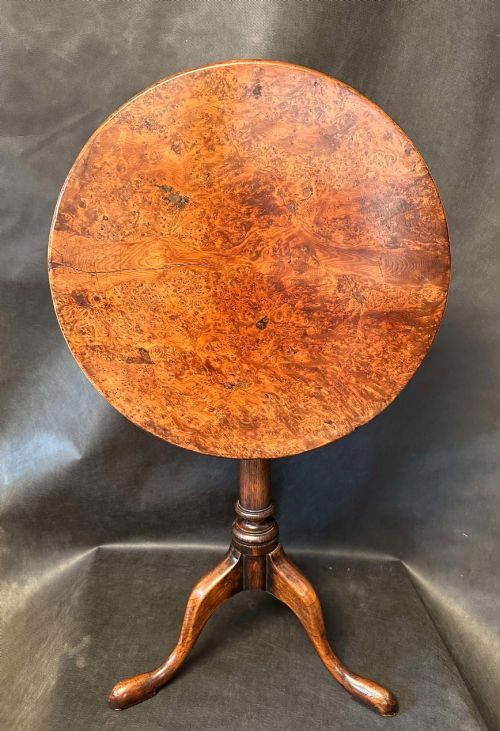
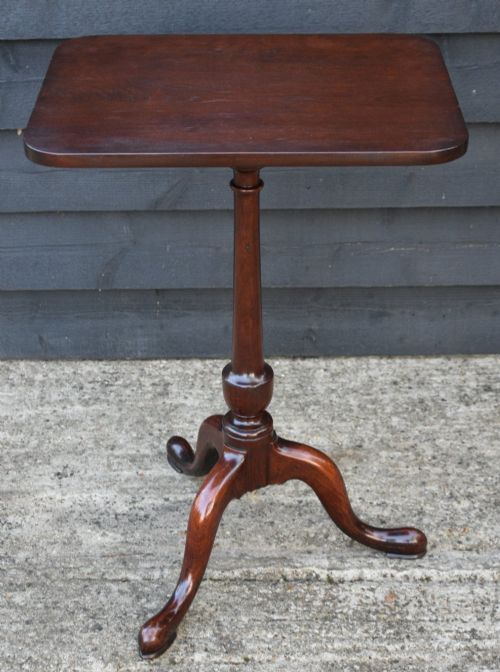
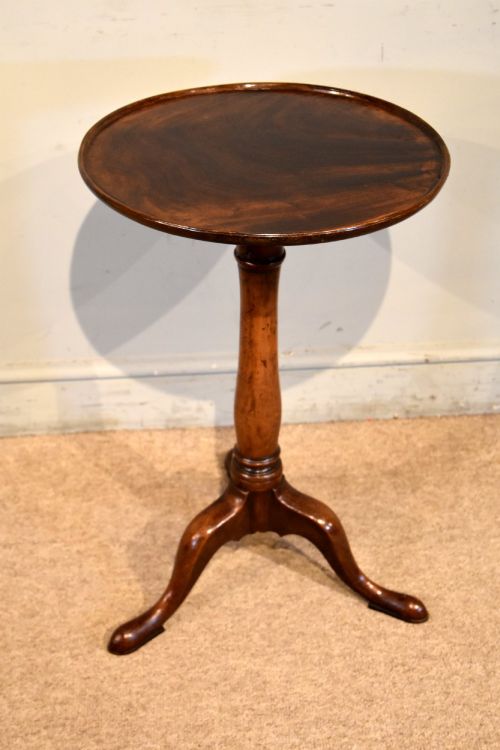
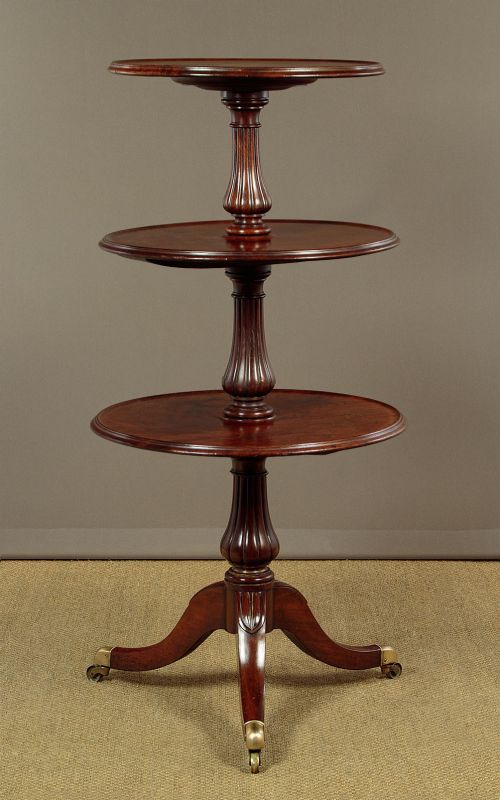
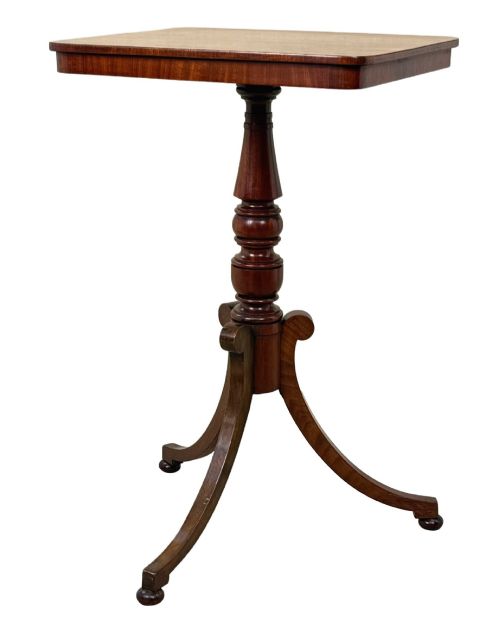
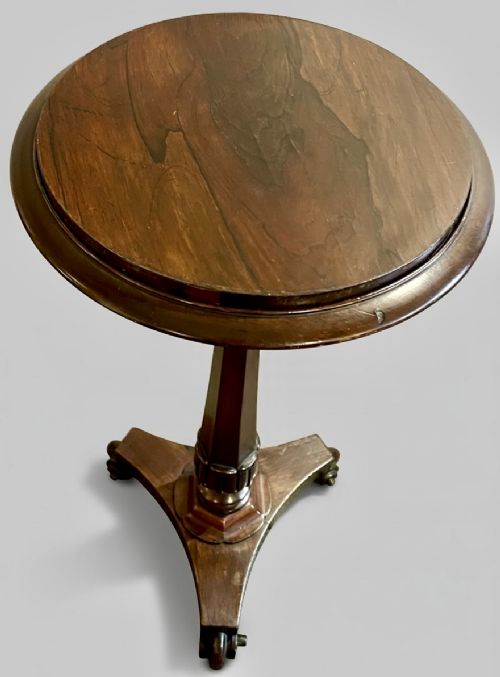
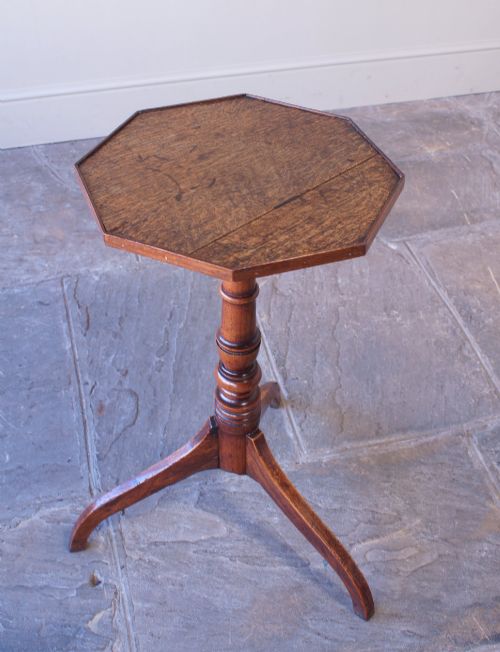
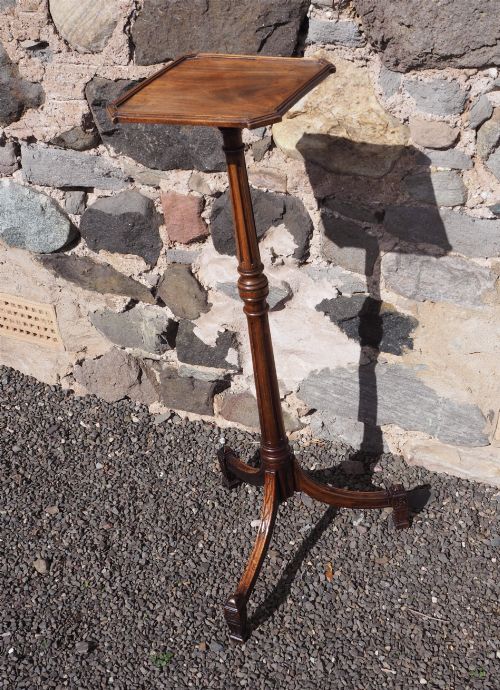
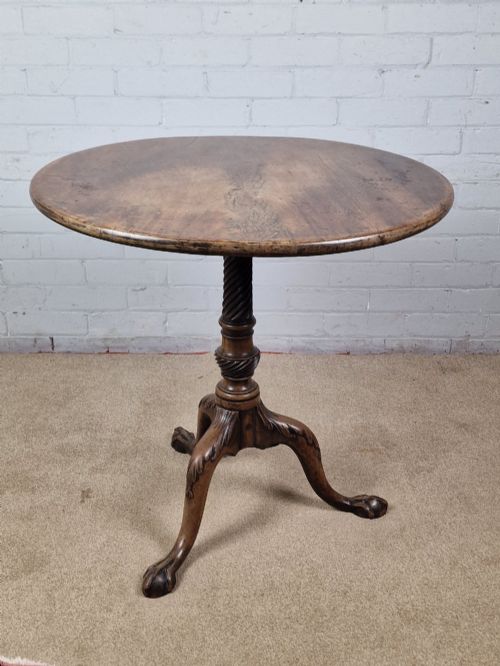
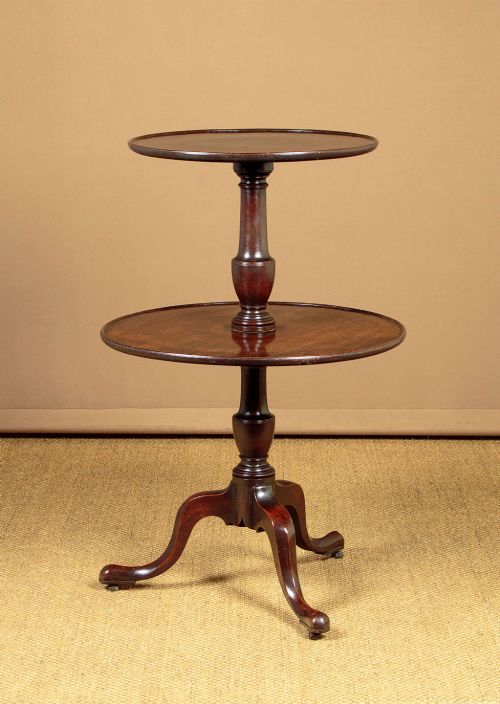
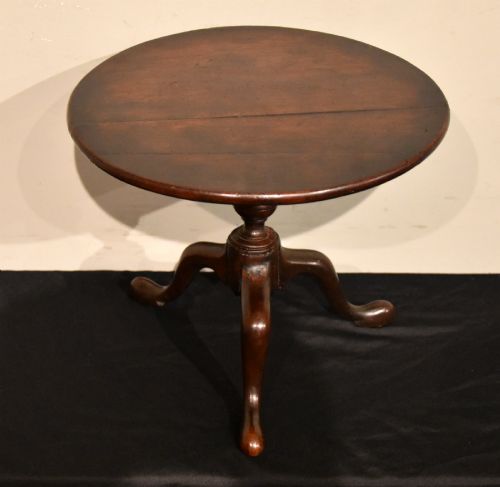
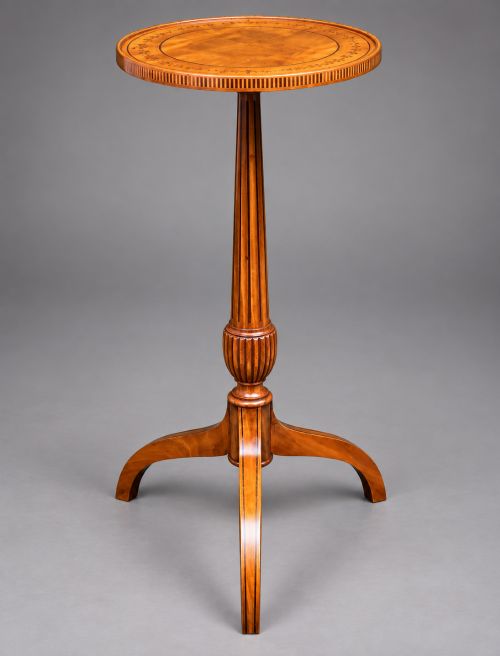
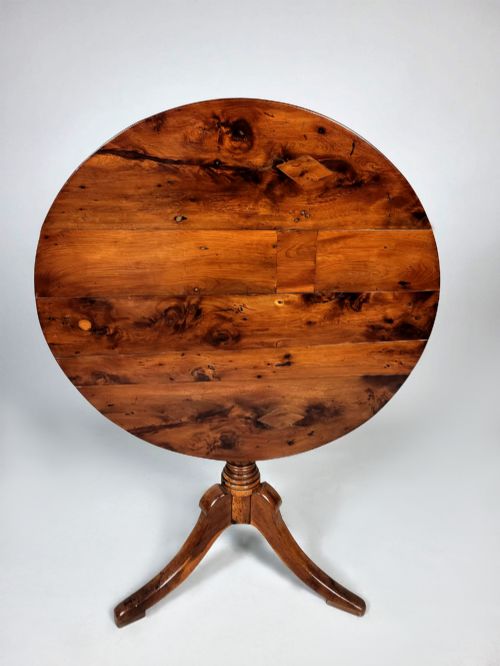
Georgian tripod furniture covers a functional group of small tables and stands supported by three splayed legs beneath a central column. These pieces include wine tables, occasional tables, tilt-top tables, and multi-tiered dumb waiters.
Oak cricket tables and mahogany wine tables appear most frequently on this page, originating across the eighteenth and nineteenth centuries. Makers utilised sturdy timbers like oak, mahogany, and walnut to build pieces for domestic dining and social rooms.
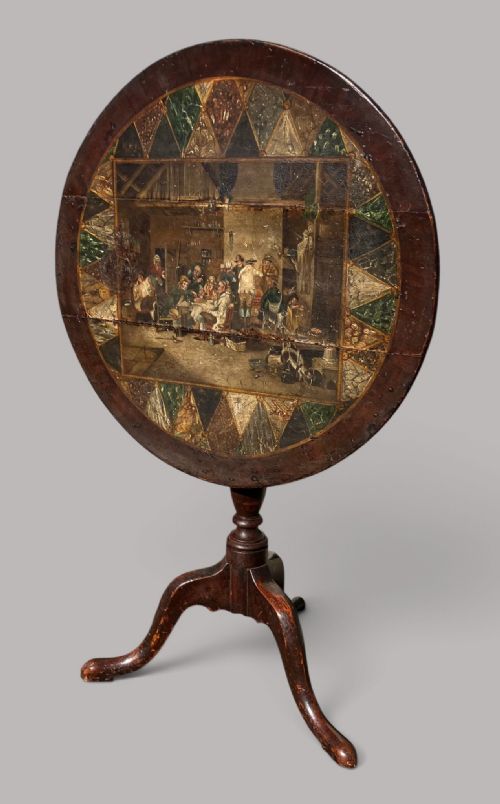
Country vernacular examples show simpler construction using ash, elm, and fruitwood alongside traditional oak. Formal urban pieces employ mahogany, satinwood, and walnut with occasional brass fittings or penwork decoration.
How they were made
Carpenters constructed these tables using solid hardwoods, pairing turned central columns with three splayed legs jointed securely into the base. Tops were frequently mounted on birdcage mechanisms or tilt-top hinges to allow the table to fold flat against a wall when not in use.
Cabinet makers selected dense timbers like mahogany and walnut for formal urban pieces, while regional makers relied on local oak, elm, and ash for robust country tables. Surface treatments ranged from clear wax polishes highlighting natural grain to naïve painted finishes.
Georgian Tripod Furniture Retail Price Guide 2026
Typical asking prices for georgian tripod furniture among the pieces listed under this phrase on Sellingantiques today, from the lower quarter to the upper quarter. They describe what is for sale here now, not the wider market.
Listings feature woods including mahogany, oak, walnut, satinwood, ash, elm, and fruitwood across the eighteenth and nineteenth centuries.
What varies in quality
Quality rests in the proportion of the turning, the stability of the central pillar joint, and the selection of timber figure. Superior examples display balanced splayed legs and refined mouldings rather than heavy or clumsy proportions.
Original mechanisms, such as working tilt-top catches and intact brass fittings, separate finer pieces from those altered or repaired over time.
The Georgian Tripod Furniture Glossary
- Cricket table
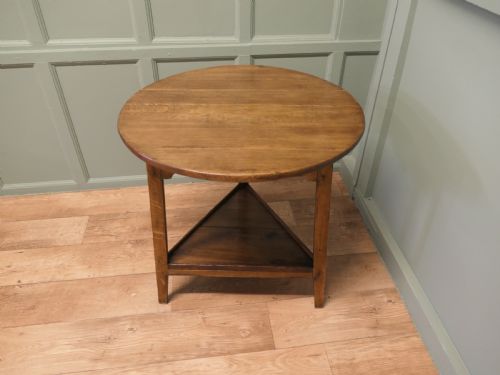
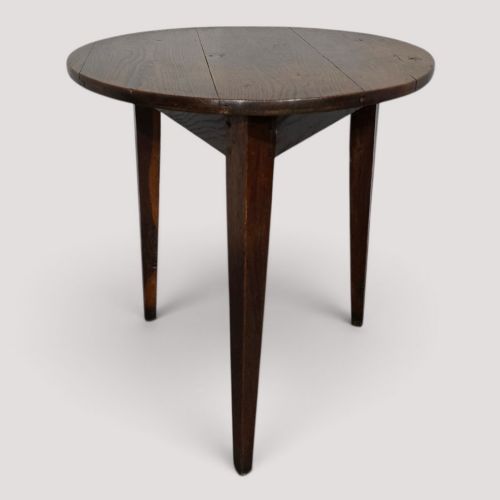
- A small three-legged wooden table, usually built from oak with a round top, designed for domestic use.
- Tilt-top table
- A table featuring a hinge mechanism allowing the top to pivot vertically for storage against a wall.
- Dumb waiter
- A tiered stand with revolving or fixed circular trays used for serving food and wine without servants present.
- Torchere
- A tall decorative stand or pedestal intended to hold a candle, lamp, or plant.
- Birdcage
- A timber framework beneath a table top that allows the surface to both rotate and tilt.
Georgian Tripod Furniture: Frequently Asked Questions
What is a cricket table?
A cricket table is a traditional three-legged round table built from timber, often oak, designed to stand steadily on uneven farmhouse floors.
These pieces served everyday domestic purposes, holding household items or supporting meals beside the hearth.
How do tilt-top tables work?
Tilt-top tables utilise a hinged block beneath the tabletop connected to the central column.
This mechanism allows the surface to pivot flat so the furniture occupies minimal space when pushed against a wall.
What is a dumb waiter?
A dumb waiter is a multi-tiered stand featuring stacked circular trays supported by a central pillar.
Dining rooms utilised these pieces to hold extra plates, glasses, and wine bottles during meals.
Where were tripod tables used?
Tripod tables served as flexible furniture placed around parlours, dining rooms, and bedchambers.
Their three-legged design prevented rocking on irregular floorboards, making them suitable for holding lamps, drinks, or books.