



Georgian Tripod Dumbwaiter
A georgian tripod dumbwaiter serves as a tiered dining companion, bringing useful revolving tiers and folding trays to the table.

Georgian Tripod Dumbwaiter
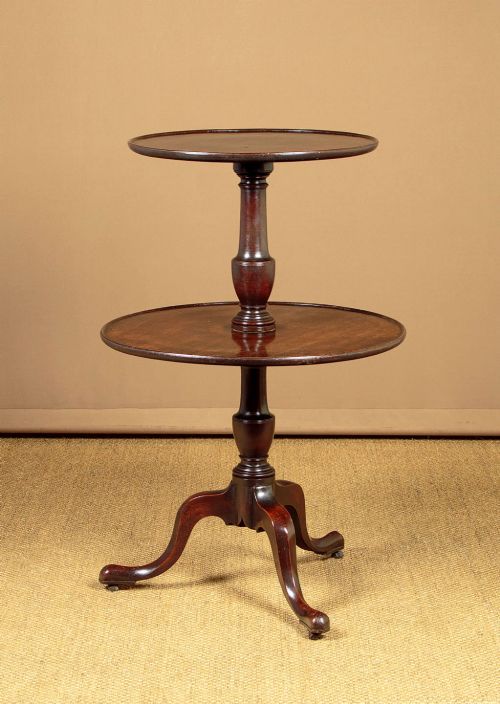
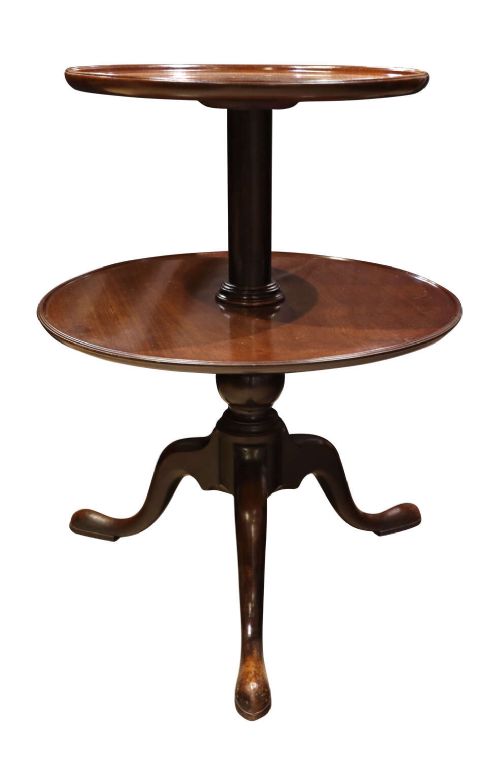
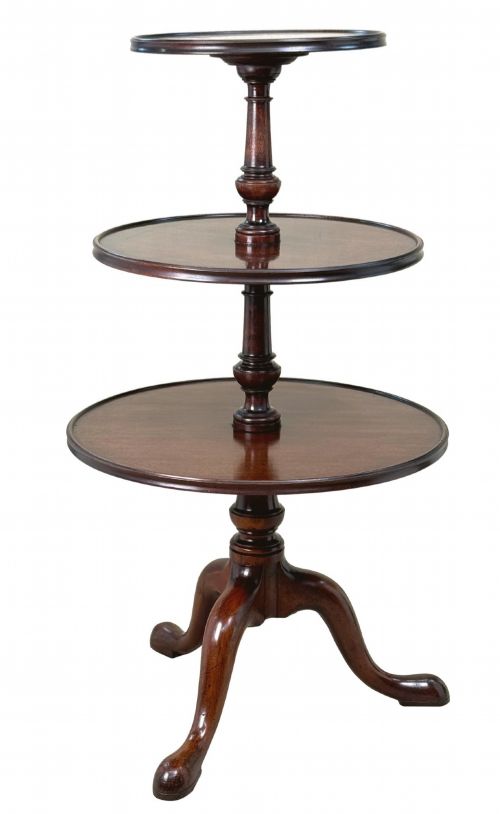
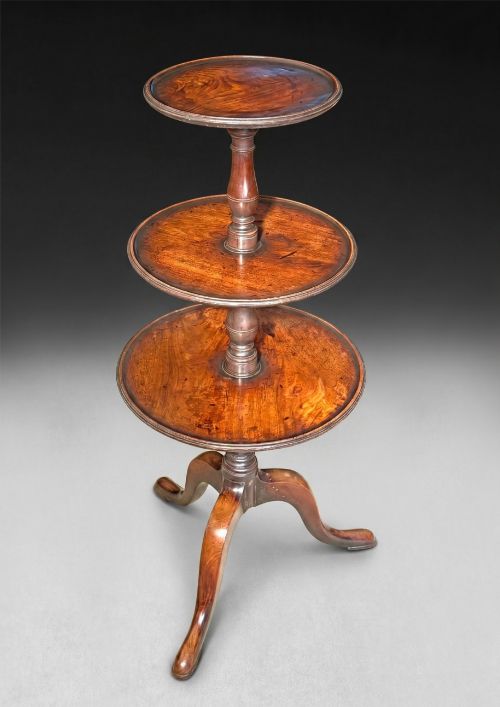
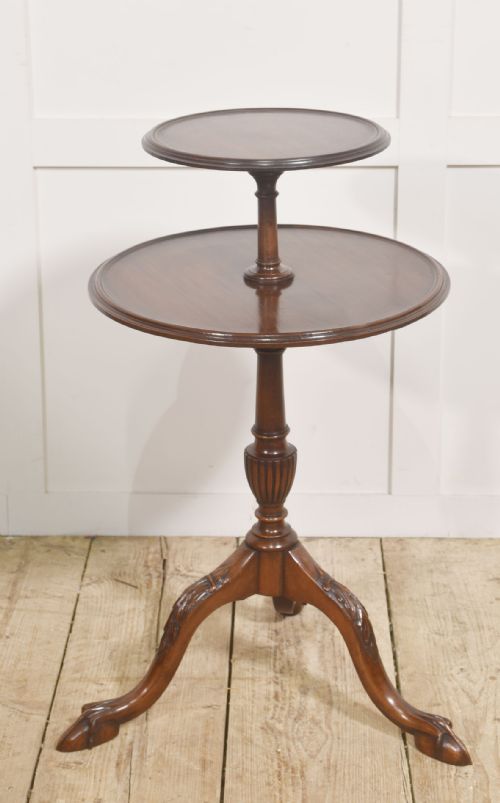
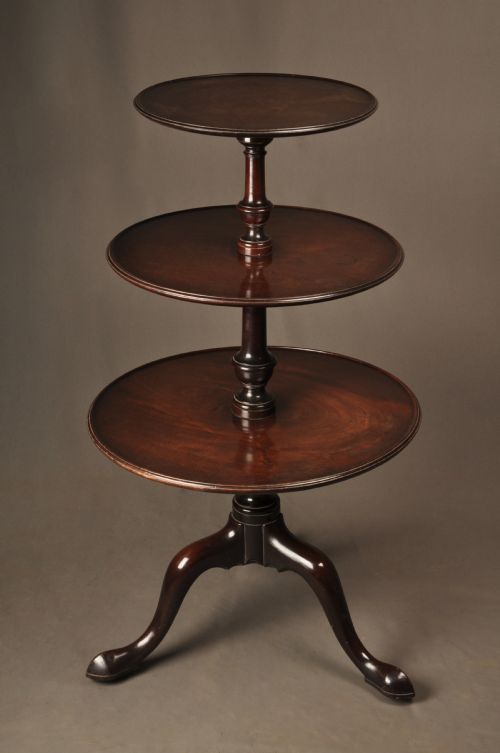
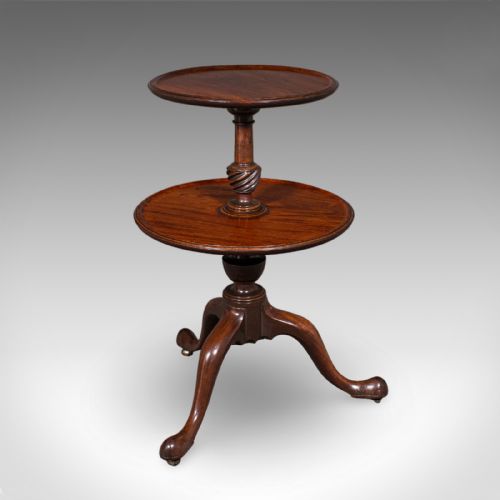
When searching for a georgian tripod dumbwaiter, buyers encounter multi-tiered serving furniture designed primarily in the eighteenth and nineteenth centuries, spanning George III, Regency, and Victorian revivals. These pieces consist of graduated circular or hexagonal trays supported by a central pillar on three legs, often incorporating folding leaves or revolving mechanisms.
The versions most commonly met on this page belong to the George III period, constructed in solid mahogany with two or three revolving graduated tiers. Makers designed these tiered tables to hold bottles, glasses, and plates during extended dining without requiring constant service from staff.
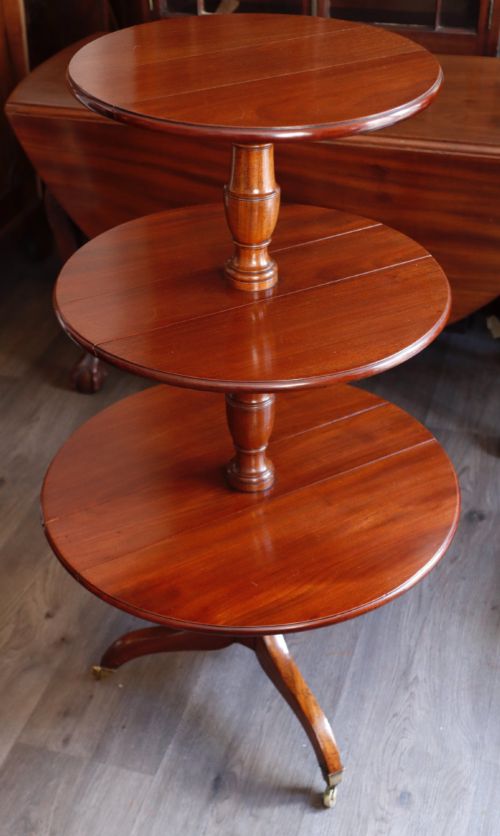
Beyond the standard circular tiers, variations include drop-leaf sections and occasional rectangular tiered tables or etageres. Surviving examples reflect the practical demands of dining rooms across the eighteenth and nineteenth centuries.
Materials and Construction
Cabinetmakers relied on mahogany, solid mahogany, and fiddleback mahogany to build these tiered tables, frequently combining turned central columns with stable tripod base supports. Brass fittings often appear on castors or revolving mechanisms to allow smooth movement.
Joinery techniques included secure pillar-and-claw attachments and hinged brass brackets for folding drop-leaf tiers. Later Victorian and revival pieces sometimes incorporated applied paint or decorative inlay upon the timber surfaces.
Listings feature mahogany, solid mahogany, and fiddleback mahogany alongside brass fittings, paint, and inlay across the eighteenth, nineteenth, and early twentieth centuries.
Judging Quality in Tiered Serving Furniture
Quality rests in the timber selection and the precision of the turning on the central pillar and tripod legs. Better examples employ dense, finely figured mahogany with well-balanced proportions across each graduated tier.
The complexity of the mechanism dictates the standard of the piece, particularly where revolving joints or folding drop-leaves operate cleanly without sag. Superior construction ensures that multiple heavy tiers remain rigid upon the central pedestal.
Gillow Attributed
The Georgian Tripod Dumbwaiter Glossary
- Dumb waiter
- A tiered serving table used to hold dishes and drinks near a dining table without domestic staff present. These pieces typically feature stacked graduating trays on a central column.
- Tripod base
- A three-legged support structure radiating from a central pillar. This configuration provides stability on uneven floors.
- Drop-leaf
- A hinged section of a tabletop that can be lowered or raised as needed. On these serving stands, folding leaves allowed the furniture to be stored compactly against a wall.
- Etagere
- A set of open shelves or tiers used for displaying or serving items. The form shares similarities with multi-level serving stands.
- Fiddleback mahogany
- A figured timber exhibiting wavy, undulating grain patterns resembling the back of a violin. Cabinetmakers utilised this wood for decorative impact on high-status surfaces.
Georgian Tripod Dumbwaiter: Frequently Asked Questions
What is a georgian tripod dumbwaiter used for?
These tiered tables stood beside dining tables to hold plates, glasses, and bottles during meals. They allowed diners to help themselves without relying on servants.
Over time, they transitioned from dining rooms into general serving stands and occasional tables in country houses.
How many tiers do these tables have?
Most examples feature either two or three graduated circular trays stacked vertically upon a single central pillar. The upper tiers are typically smaller in diameter than the lower ones.
Some variants include folding drop-leaf sections or hexagonal shapes rather than simple round trays.
Are the trays meant to revolve?
Many period pieces incorporate a revolving mechanism allowing diners to spin the tiers to reach items easily. Not all examples rotate, as some fixed multi-tiered stands were built for stability.
Revolving versions usually rely on a central pivot secured within the turned wooden column.
How do I date a mahogany dumbwaiter?
Dating relies on timber characteristics, leg profiles, and the style of the central turned pillar. George III pieces often show clean classical turning and solid mahogany construction.
Later Victorian interpretations and twentieth-century revival pieces tend to exhibit heavier proportions or different secondary woods beneath the surface.