



Georgian Timekeeper Clock
A georgian timekeeper clock brings mechanical precision and period timber into a room, offering functional timekeeping rooted in eighteenth and nineteenth century craftsmanship.
Georgian Timekeeper Clock
When you search for a georgian timekeeper clock, you are looking at timepieces spanning mantel, wall, bracket, and longcase formats from the Georgian, Regency, and related periods. These objects served households as both practical instruments for telling the time and as statement furnishings for principal rooms.
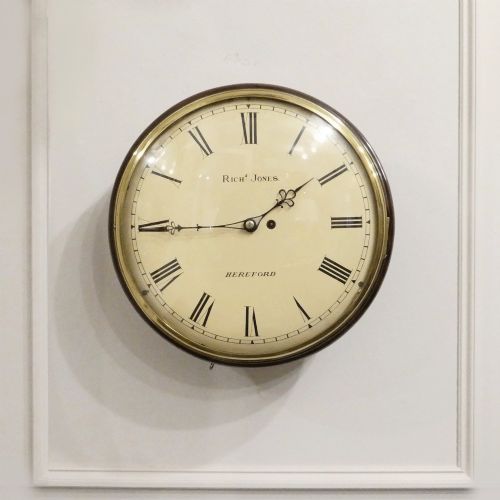
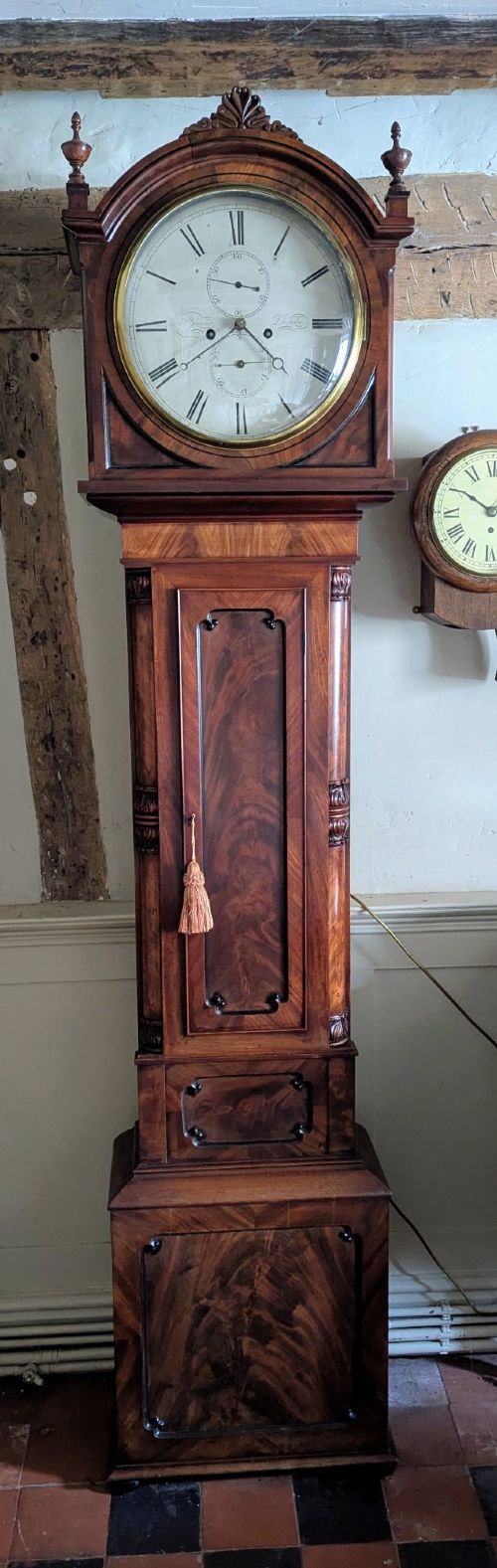
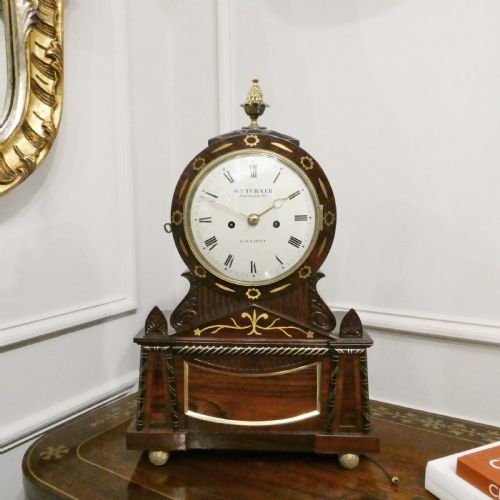
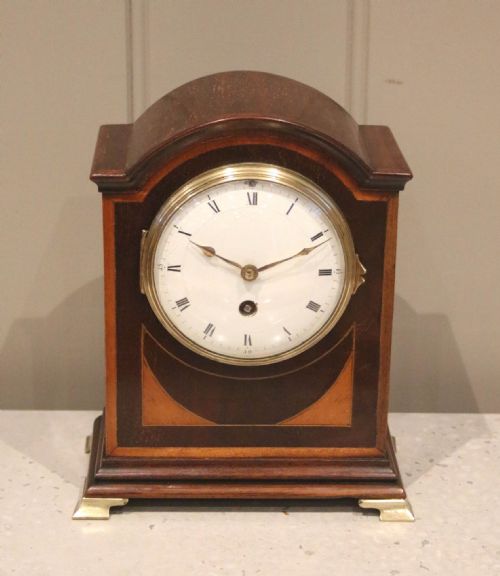
The versions you are most likely to meet on this page include mahogany longcase clocks with arch or moon dials, alongside bracket and mantel clocks finished in rosewood and mahogany. Wall clocks with large dials also appear, representing the domestic and public timekeeping needs of the era.
Originating from London and regional makers such as Hereford and Reading, these pieces demonstrate the widespread production of horology across Britain during the eighteenth and nineteenth centuries. Each form reflects the architectural and decorative tastes of its specific decade, from George III classicism to Regency Gothic Revival.
Materials and Construction
Cabinetmakers utilised rich hardwoods like mahogany and rosewood for the outer cases, frequently incorporating satinwood inlay, mother-of-pearl, and gilt bronze mounts. These timbers were selected for their grain and stability, housing delicate brass, steel, and enamel movements securely.
Dials were constructed from painted iron or enamel, paired with glass covers to protect the hands and escapement mechanisms. Makers employed fusee movements and verge escapements to regulate the power delivered by the springs or weights, ensuring steady operation.
Listings feature mahogany, rosewood, brass, and enamel across wall, mantel, bracket, and longcase formats spanning the eighteenth and nineteenth centuries.
Judging Quality and Execution
The distinction between standard domestic production and superior work lies in the refinement of the movement and the crispness of the case woodwork. Finely executed inlay, well-proportioned architectural details, and signed brass dials indicate workshop output of higher ambition.
The integrity of the timber and the preservation of original mechanical components dictate the standing of an individual piece. Clocks retaining their original fusee movements and unblemished painted iron dials represent the more accomplished end of the surviving range.
Richard Jones of Hereford·Turner of London·Seller of Reading·Windmills and Bennet·FB Adams London
The Georgian Timekeeper Clock Glossary
- Fusee
- A conical pulley used in spring-driven clocks to maintain equal force on the gear train as the mainspring unwinds. This device ensures consistent timekeeping accuracy throughout the power reserve.
- Verge Escapement
- An early type of escapement mechanism that controls the release of the wheel train to give impulses to the pendulum or balance. It is frequently associated with lantern clocks and earlier bracket designs.
- Bracket Clock
- A portable clock designed to sit on a bracket or shelf, typically housed in a wooden case with a carrying handle. These pieces often feature glass panels to display the movement.
- Longcase Clock
- A tall floor-standing pendulum clock enclosed in a wooden case, commonly known as a grandfather clock. They range from simple domestic models to elaborate examples with moon dials.
- Moon Dial
- A specialised clock dial featuring a rotating painted disk that tracks the phases of the moon. This complication appeared on finer longcase clocks of the period.
Georgian Timekeeper Clock: Frequently Asked Questions
What is a fusee movement?
A fusee movement uses a conical drum to equalise the pull of the mainspring as it runs down. This mechanical arrangement helps the clock maintain steady accuracy.
Such movements are a hallmark of better quality British table and bracket clocks from the period.
How do I tell a bracket clock from a mantel clock?
Bracket clocks historically sat upon a matching wall bracket and usually feature a brass carrying handle on top. Mantel clocks are designed to rest directly on a fireplace mantel or shelf.
Both forms utilise timber cases like mahogany or rosewood to house the dial and movement.
Where were these clocks made?
Production occurred across London workshops as well as regional centres such as Reading and Hereford. Makers ranged from prominent city horologists to provincial craftsmen supplying local households.
Signatures on the dial or movement frequently record the origin of the piece.
What timber was used for the cases?
Makers relied heavily on dense tropical hardwoods, primarily mahogany and rosewood. Satinwood inlay and mother-of-pearl accents were added to enhance the visual depth of the woodwork.
These materials provided the structural stability required to protect the delicate internal brass and steel mechanics.