
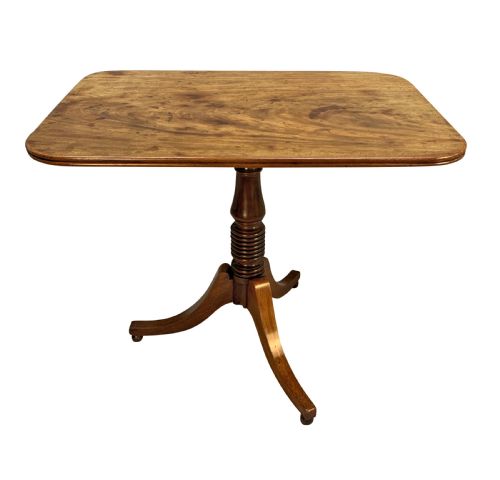
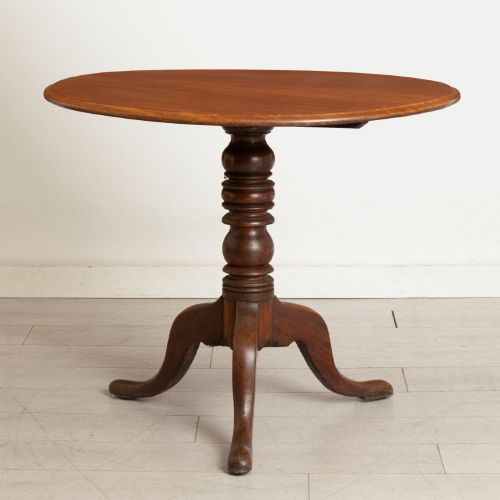
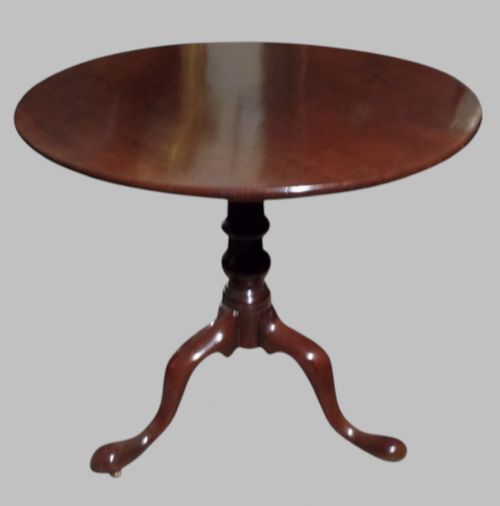
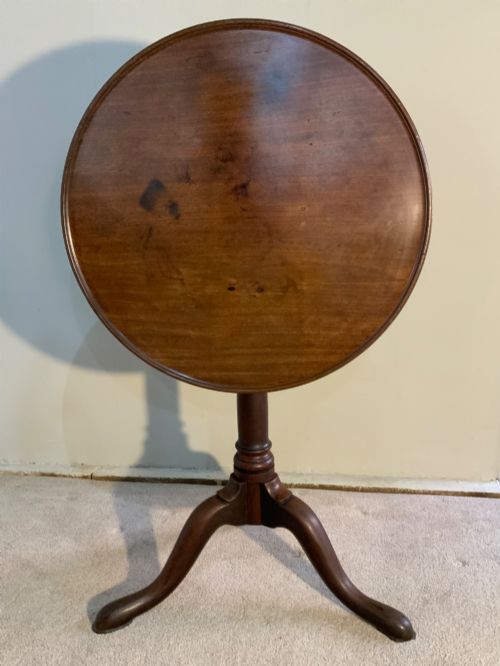

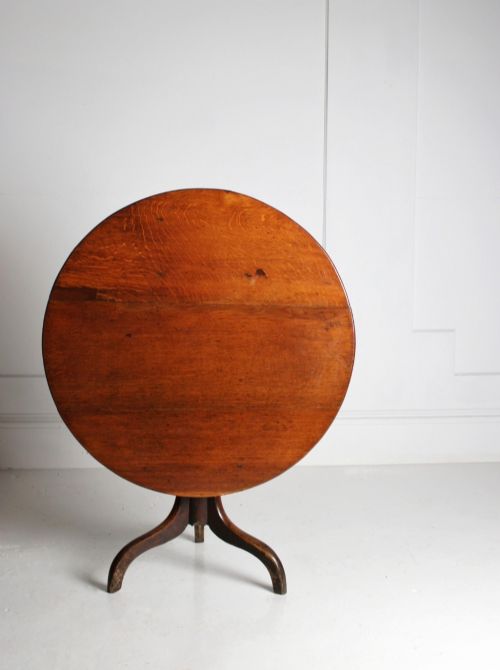


Georgian Tilt Top Supper Table
When you search for a georgian tilt top supper table, you are looking at versatile tripod furniture designed to save space in period homes.
Georgian Tilt Top Supper Table
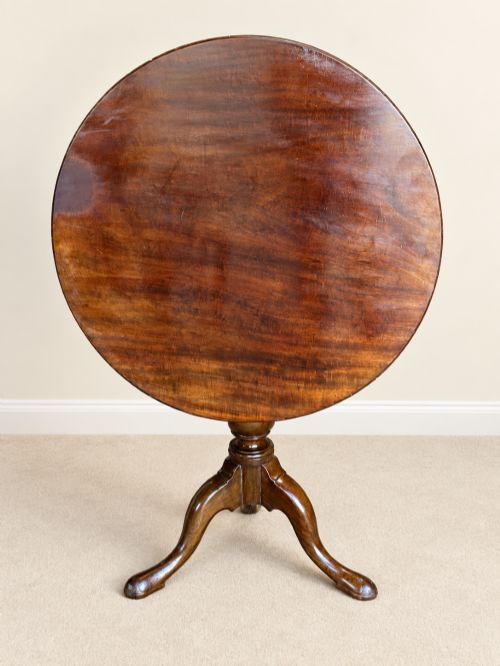
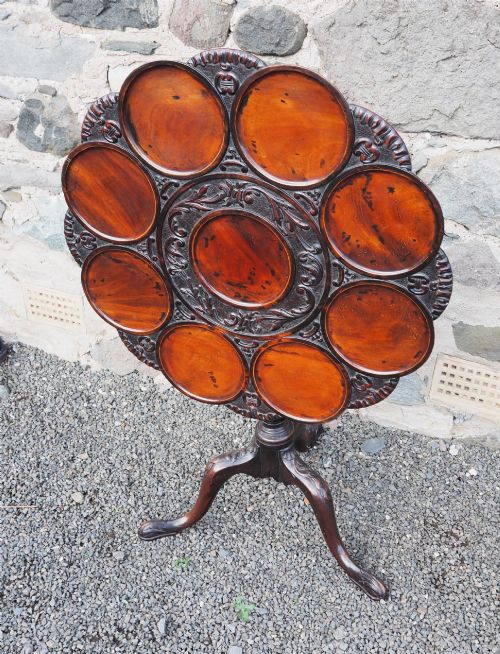
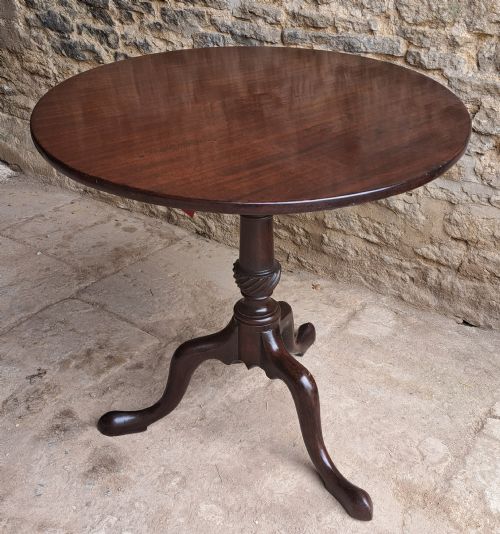
A georgian tilt top supper table is a versatile circular table designed with a mechanism that allows the top to pivot vertically when not in use, traditionally stored against a wall to maximise floor space.
Most examples found on this page date from the eighteenth and nineteenth centuries, spanning the Georgian, Regency, and Victorian periods.
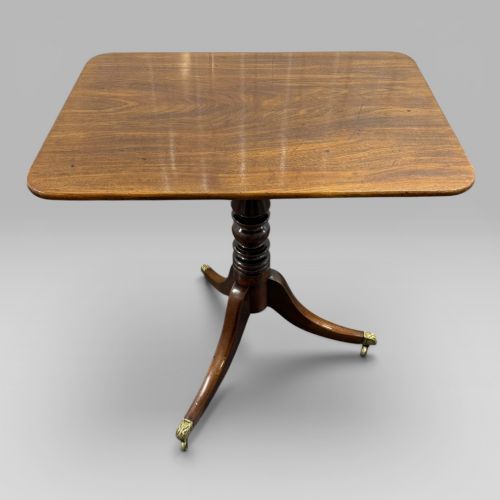
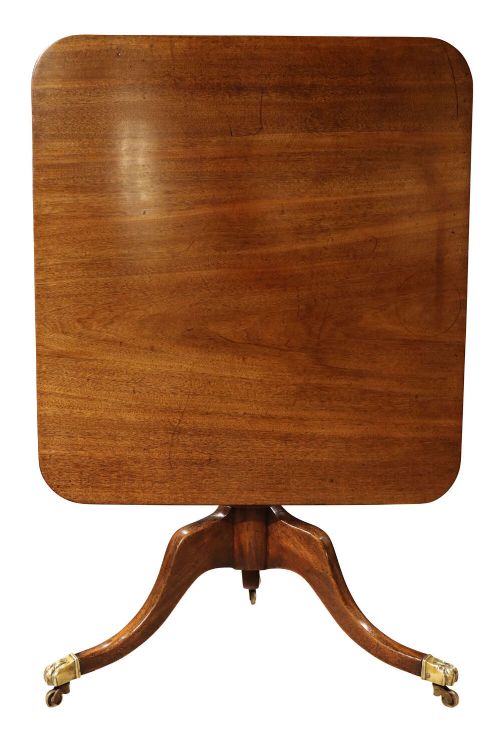
Makers of the era utilised native and imported timbers, producing occasional, dining, and tea tables supported by slender tripod bases or central pedestals.
How they were made
Cabinetmakers constructed these tables primarily using mahogany, Cuban mahogany, and oak, occasionally incorporating walnut, satinwood, and rosewood for decorative banding or secondary elements.
The pivoting mechanism frequently relied on a birdcage action, a wooden framework beneath the top that allowed both tilting and 360-degree rotation.
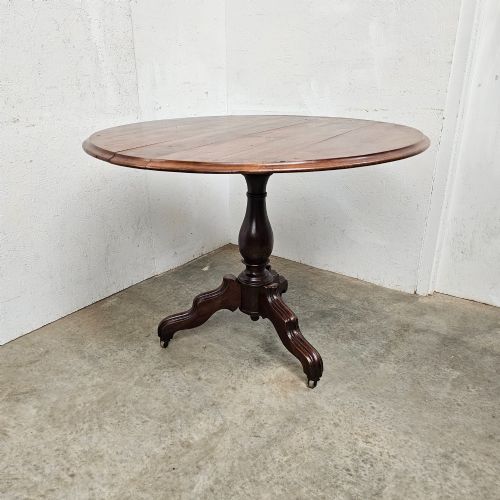
Tripod bases were joined to the central pillar using dovetail or mortise and tenon joints, often terminating in carved pad feet, snake feet, or brass castors.
Listings feature mahogany, oak, and walnut timbers across eighteenth- and nineteenth-century forms.
What varies in quality
The quality of a georgian tilt top supper table is largely determined by the selection of timber, particularly the grain figuration in Cuban mahogany or the choice of a single-piece top rather than multiple joined boards.
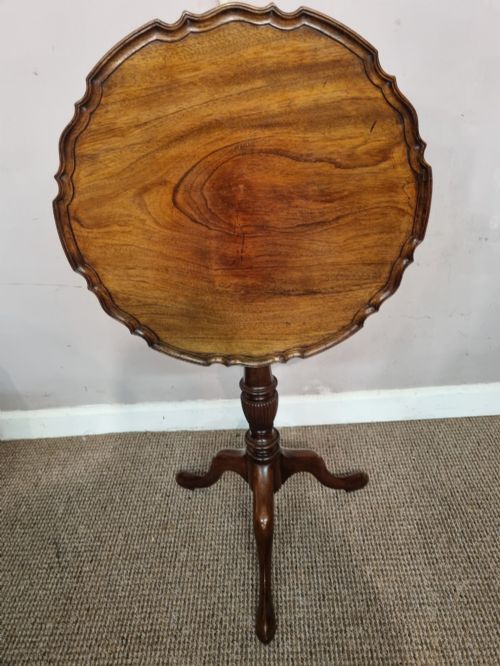
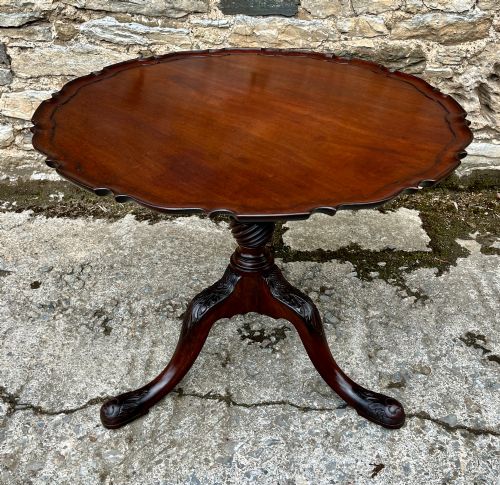
Carving detail on the knees and feet of the tripod base separates standard workshop production from finer pieces, especially where crisp acanthus leaves or pie crust mouldings are shaped directly from the solid wood.
The precision of the birdcage mechanism and the stability of the catch ensure the top locks firmly into a horizontal position without excessive play.
James Mein·John Bivins
The Georgian Tilt Top Supper Table Glossary
- Tilt top
- A table top hinged to the pedestal so it can be turned upright to save space. This mechanism defines the primary function of the furniture.
- Tripod base
- A three-legged support structure common on eighteenth-century occasional tables. It provides stability on uneven floors.
- Birdcage
- A revolving wooden framework beneath the table top that permits the surface to rotate and tilt. It is a sign of superior construction.
- Pie crust edge
- A raised, carved moulding along the perimeter of the circular top resembling pastry work. This decorative feature appears on higher-grade tea and supper tables.
- Cuban mahogany
- A dense, dark timber imported from the Caribbean during the eighteenth century. It was prized for its rich colour and deep lustre.
Georgian Tilt Top Supper Table: Frequently Asked Questions
What was a supper table used for?
These tables served flexible roles in eighteenth-century rooms, holding evening meals, tea, or wine before being tilted out of the way. Their movable tops made them ideal for smaller parlours and multi-use entertaining spaces.
When the meal finished, owners folded the top vertical to clear the floor for dancing or social assembly. This dual function explains their prevalence in period domestic inventories.
How do I identify a birdcage mechanism?
A birdcage action consists of a small wooden box frame sitting between the central pillar and the table top, containing four small turned columns. This assembly lets the top spin horizontally as well as tip vertically.
Simpler tables omit this cage, attaching the tilt hinge directly to a wooden block beneath the top. Finding a birdcage usually points to a more ambitious workshop piece.
Are these tables suitable for modern daily use?
Modern homes accommodate these pieces easily as side tables, lamp stands, or compact dining surfaces. Their modest footprint suits corners and empty wall spaces where a fixed table would crowd the room.
Care should be taken with hot liquids and moisture, using coasters to protect polish and timber surfaces from rings. The tilt function remains as practical today for saving space as it was centuries ago.
How do I tell an 18th-century table from a later copy?
Eighteenth-century examples display hand-cut joinery, timber shrinkage appropriate to age, and hand-turned pillars showing subtle tool marks. Oak framing beneath mahogany tops often reveals the construction methods of the period.
Later Victorian revivals or twentieth-century reproductions tend to use heavier machine-cut components and standardised brass fittings. Examining the underside and the pivot mechanism usually clarifies the actual age of the piece.