


Georgian Teapoy Chest
These georgian teapoy chest pieces are elegant tea storage boxes on stands, offering a glimpse into Regency entertaining and fine cabinet-making.
Georgian Teapoy Chest
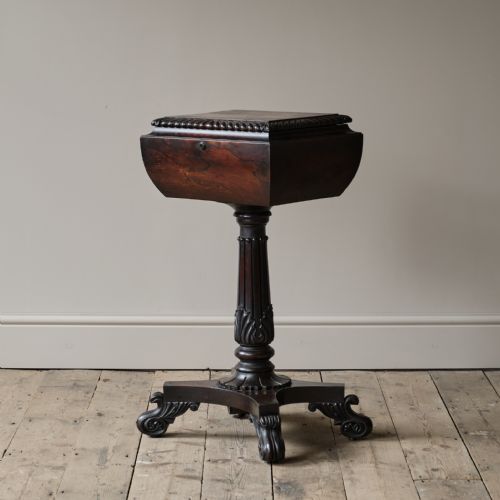
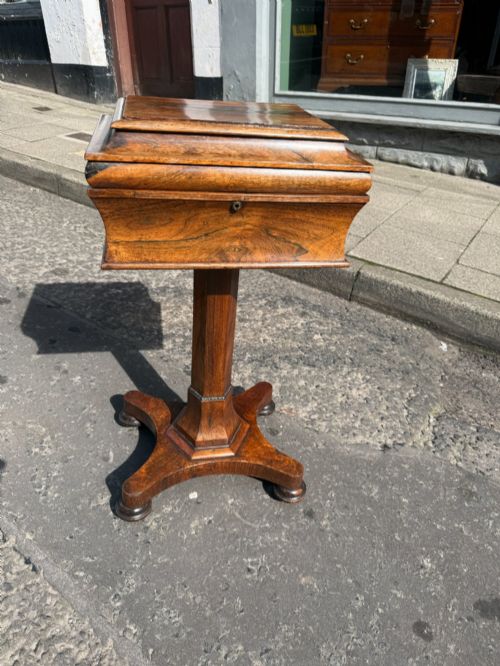
When you search for a georgian teapoy chest, you find boxes designed to hold loose tea leaves securely during the Georgian and Regency periods. Most examples on this page take the form of tea caddies housed on stands, dating from the early nineteenth century.
The assortment includes sarcophagus shaped boxes and freestanding pieces on stands. Materials span mahogany, flame mahogany, solid mahogany, rosewood, satinwood, and burr yew, reflecting the tastes of Regency and William IV makers.
How they were made
Cabinet-makers utilised dense timbers such as mahogany and rosewood, often selecting flame mahogany veneers for rich grain patterns. Brass inlay adds decorative contrast to the dark wood surfaces of Regency pieces.
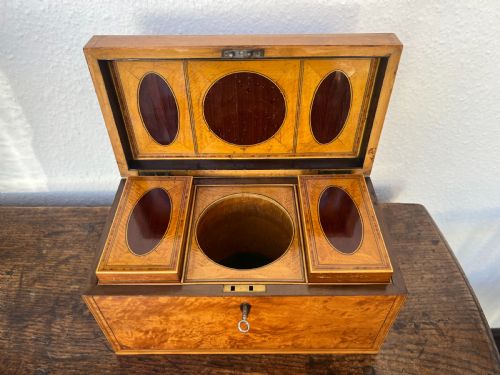
Many examples incorporate glass elements or fabric linings inside the box compartments. Stands feature carved feet to support the weight of the timber chest.
Listings feature pieces from the nineteenth century, Regency, Georgian, and William IV periods, constructed in mahogany, rosewood, satinwood, and brass.
What varies in quality
The choice of timber creates a distinct difference in appearance, with figured rosewood, satinwood, and burr yew marking out more elaborate examples. Precision in brass inlay work also separates standard pieces from finer ones.
The integration of the box with its stand, including carved feet and sturdy supports, dictates the structural refinement of the piece.
Gillows
The Georgian Teapoy Chest Glossary
- Teapoy
- A box for holding tea, usually mounted on a stand or pillar. These containers kept expensive tea leaves secure and dry.
- Sarcophagus
- A box shape with a domed lid and sloping sides reminiscent of ancient stone coffins. This silhouette is typical of early nineteenth century luxury furniture.
- Rosewood
- A dense, dark timber with distinct figuring utilised extensively during the Regency period. It provides a smooth surface for brass inlay.
- Satinwood
- A pale, lustrous wood employed for contrasting details or entire cabinet bodies. It brings brightness to nineteenth century interiors.
- Flame mahogany
- Timber veneer cut to display a flickering grain pattern resembling flames. Cabinet-makers reserved this for the most prominent exterior surfaces.
Georgian Teapoy Chest: Frequently Asked Questions
What is a georgian teapoy chest?
A georgian teapoy chest is a dedicated container for storing loose tea leaves, typically raised on a stand or pillar. These boxes date from the Georgian and Regency eras when tea was an expensive commodity requiring secure storage.
Most examples feature fitted interiors designed to hold smaller caddies or glass mixing bowls. They combine practical function with high-status interior decoration.
How were teapoys used in the home?
Teapoys stood in reception rooms where the host would mix and brew tea for guests. The lockable box kept valuable tea leaves safe from household servants.
Interior compartments held different varieties of tea, while mixing bowls allowed the host to blend leaves before serving.
Which woods are common on these pieces?
Mahogany is the most frequent timber found on these pieces, appearing as solid mahogany or flame mahogany veneer. Rosewood is also common, frequently decorated with brass inlay.
Other examples utilise satinwood or burr yew for distinct grain patterns and lighter colour tones.
How do I identify Regency teapoys?
Regency teapoys often display characteristic details such as brass inlay against dark rosewood or sarcophagus shaped boxes. They frequently incorporate stands with carved feet dating to the early nineteenth century.
Stylistic markers align with the Regency and William IV periods, distinguishing them from later Victorian furniture.