

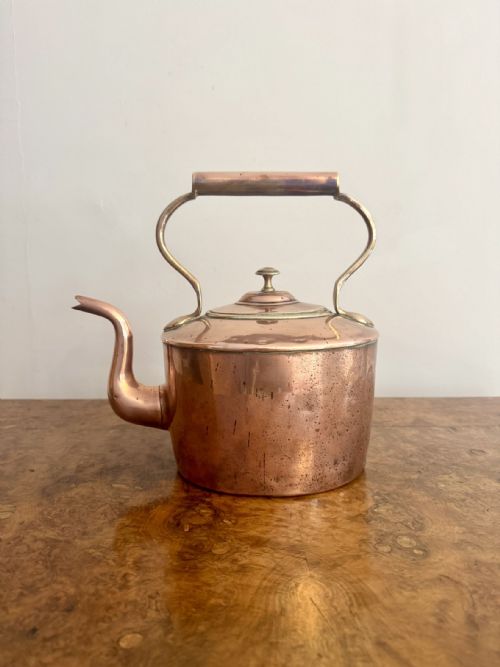
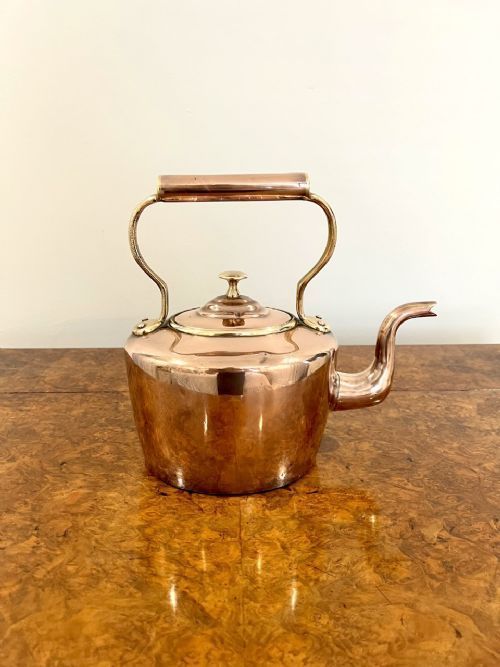


Georgian Tea Kettle
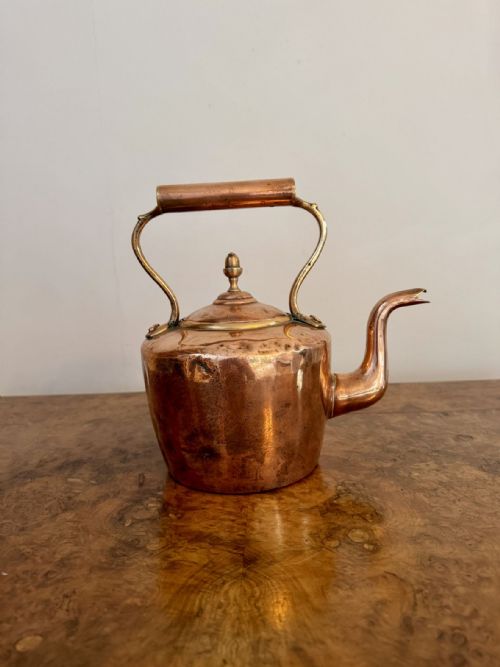
A georgian tea kettle brings the warmth of the fireplace directly to the table, offering a tangible link to the domestic rituals of the eighteenth and nineteenth centuries.
Georgian Tea Kettle
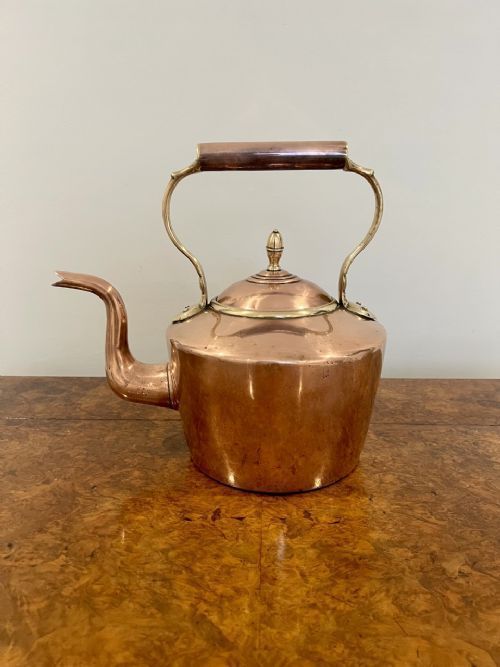
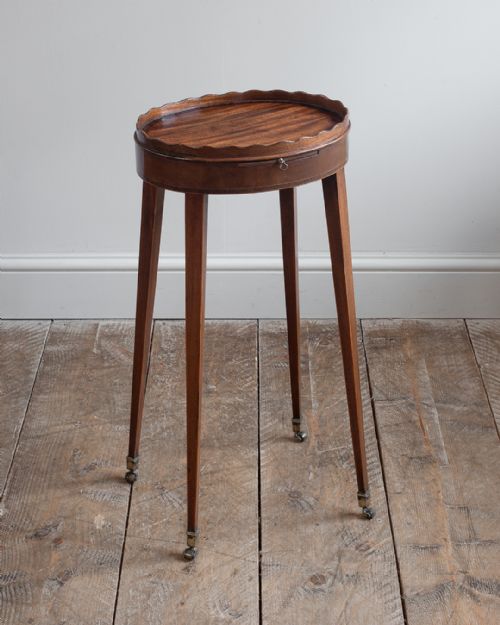
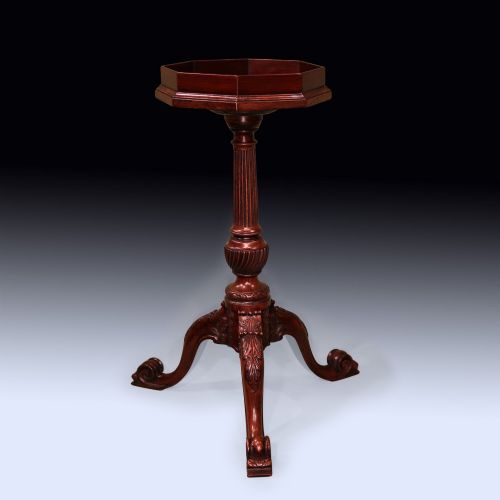
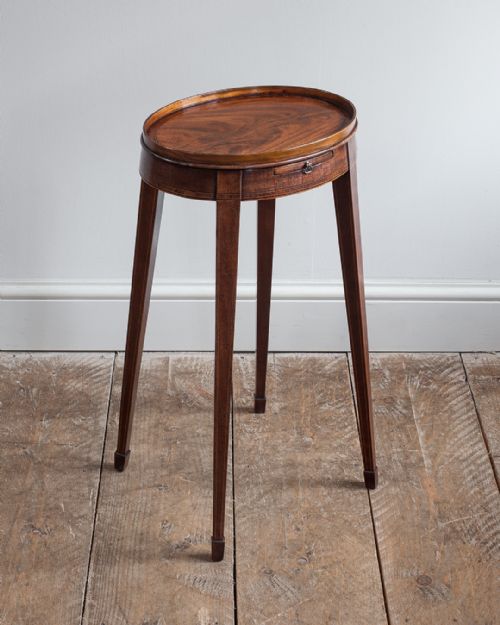
When you search for a georgian tea kettle, you encounter two distinct forms: the metal vessel used for boiling water over heat, and the wooden stand designed to hold it. The evidence shows a strong presence of George III copper kettles alongside mahogany kettle stands and urn stands.
The copper variants range from small vessels to large hanging water urns, often dated around eighteen hundred. Alongside these, you find silver plate and Old Sheffield plate teapots on stands, reflecting the broader social rituals of tea preparation.
The wooden supports span George II, George III, Chippendale, Chinese Chippendale, and Sheraton styles. These tables often feature oval, square, or octagonal tops suited to supporting heavy metal vessels safely.
How they were made
Metal vessels in this category rely primarily on copper, frequently paired with brass handles or spouts, and occasionally finished in silver plate or Old Sheffield plate. These materials provided the necessary thermal conductivity and durability for daily hearth use.
Wooden stands and urn stands employ mahogany and satinwood, often enhanced with carving or painted decoration. Joinery and turning techniques created stable, load-bearing frames capable of supporting heavy water containers.
Georgian Tea Kettle Retail Price Guide 2026
Typical asking prices for georgian tea kettle among the pieces listed under this phrase on Sellingantiques today, from the lower quarter to the upper quarter. They describe what is for sale here now, not the wider market.
The material record for these listings combines copper, brass, iron, mahogany, satinwood, sterling silver, and silver plate.
What varies in quality
The division between standard items and exceptional pieces lies in the crispness of the timber carving and the integrity of the metalwork. Finely turned mahogany stands with proportional legs and subtle mouldings sit above plainer utility pieces.
In copper kettles and samovars, quality reveals itself in the weight of the metal and the precision of the seaming and handles. Original surface patination and uncompromised structural form separate superior examples from heavily restored counterparts.
The Georgian Tea Kettle Glossary
- Kettle stand
- A small occasional table specifically designed to hold a hot water vessel near the tea table. These pieces often feature pull-out slides for cups.
- Old Sheffield plate
- A composite material made by fusing a thin sheet of silver to a thicker copper base. It was widely used for tea equipment before modern electroplating.
- Urn stand
- A specialised small table intended to support a large heated water urn. They frequently share the compact proportions and raised edges of kettle stands.
- Chippendale style
- A decorative style inspired by Thomas Chippendale designs, characterised by rich mahogany carving and sometimes Chinese fretwork motifs. It appears frequently among the wooden stands in the evidence.
- Samovar
- A heated metal urn traditionally used to boil and heat water for tea. Regency examples combine copper and bronze elements.
Georgian Tea Kettle: Frequently Asked Questions
What is a kettle stand used for?
A kettle stand serves as a sturdy auxiliary table placed beside the tea table to hold a heavy, hot water vessel safely off the floor.
By keeping the water source close at hand, the host could replenish teapots without constantly walking back to the fireplace.
How do copper and brass kettles differ?
Copper forms the primary body of the kettle due to its excellent heat distribution and malleability during manufacturing. Brass is typically utilised for structural components such as handles, feet, and spouts to provide greater rigidity.
Together, these metals created vessels that could withstand direct heat while remaining manageable to pour from.
What distinguishes Sheraton furniture?
Sheraton design relies on classical geometry, restrained proportions, and straight lines rather than the heavy curves of earlier periods. Satinwood and mahogany feature prominently, often enhanced by subtle stringing and painted details.
Stands from this period display an airy elegance that suited the lighter interiors of the Regency era.
Can I use an antique kettle today?
Most antique metal kettles and stands function primarily as decorative display items rather than daily kitchen tools. Modern heat sources and historical repairs mean they are best appreciated for their craftsmanship and material patination.
Placing them in a living space allows you to enjoy the warmth of aged copper and mahogany in your interior.