



Georgian Taper Sticks
Georgian taper sticks are small, elegant candle holders designed for lighting pipes and sealing wax, prized for their refined proportions and domestic utility.
Georgian Taper Sticks
Georgian taper sticks sit within the broader category of antique candlesticks, distinguished primarily by their diminutive height and smaller nozzle diameter. These pieces were essential items on writing desks and in parlours during the eighteenth century.
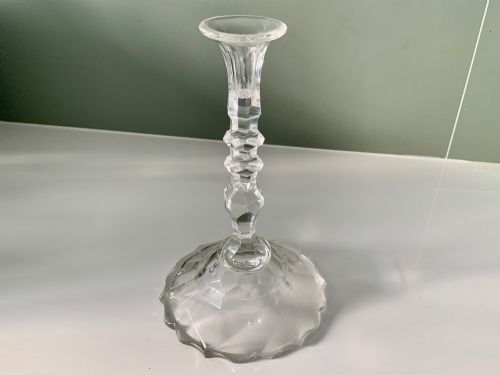
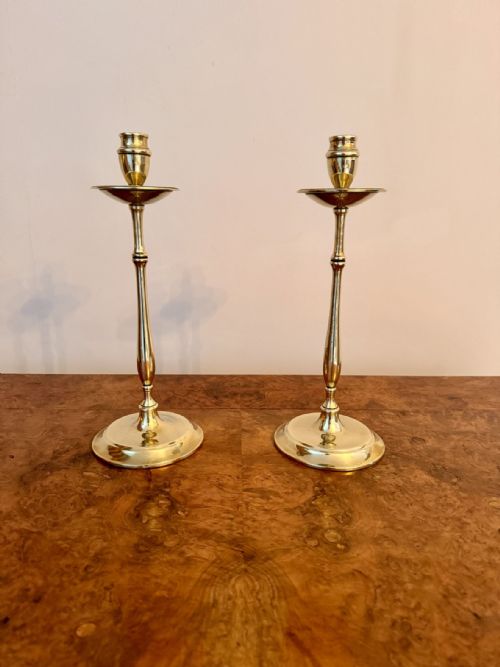
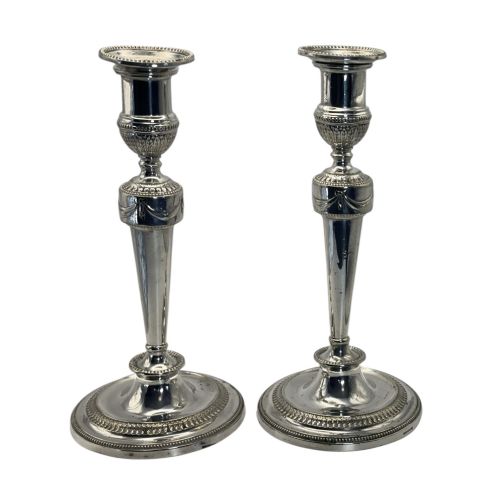
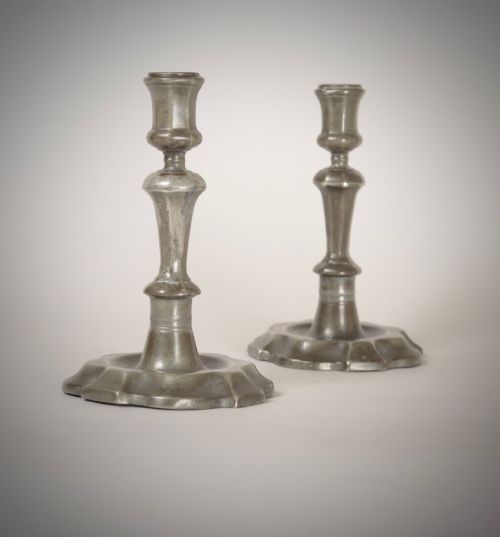
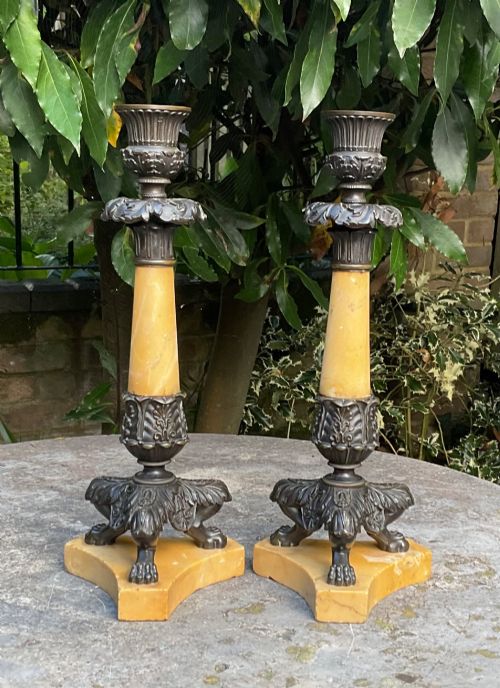
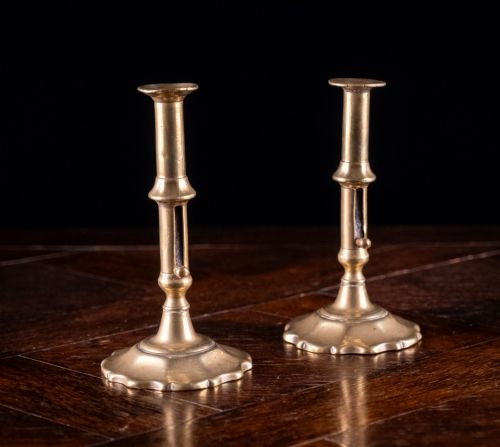
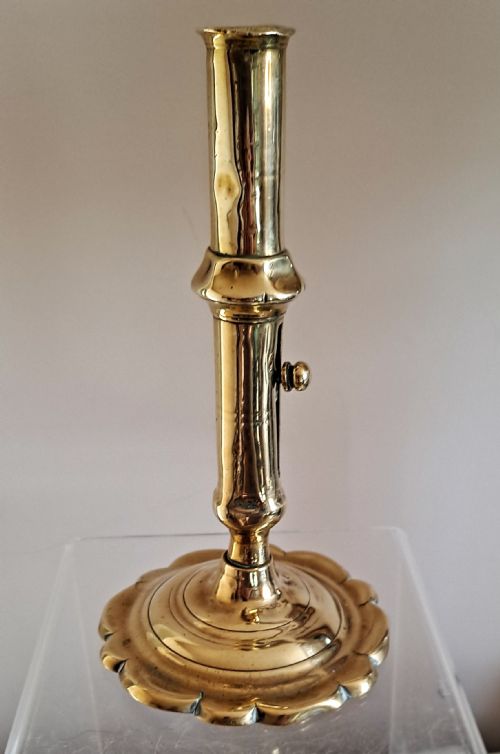
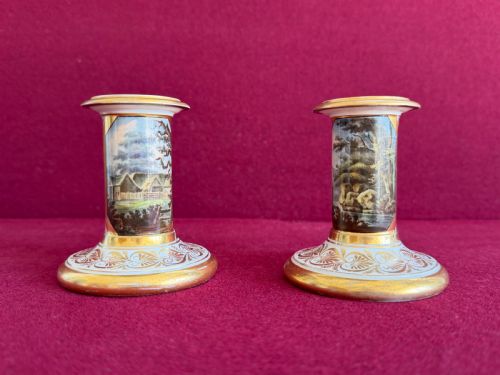
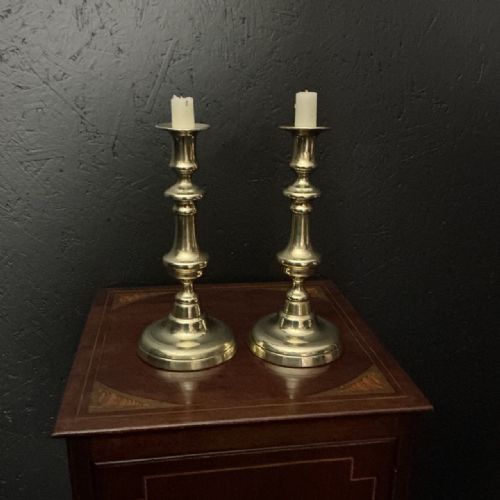
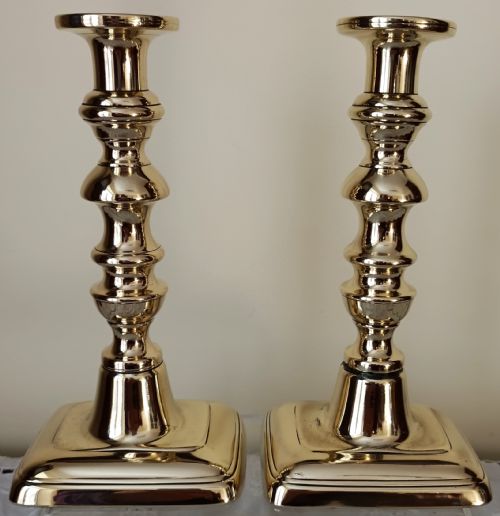
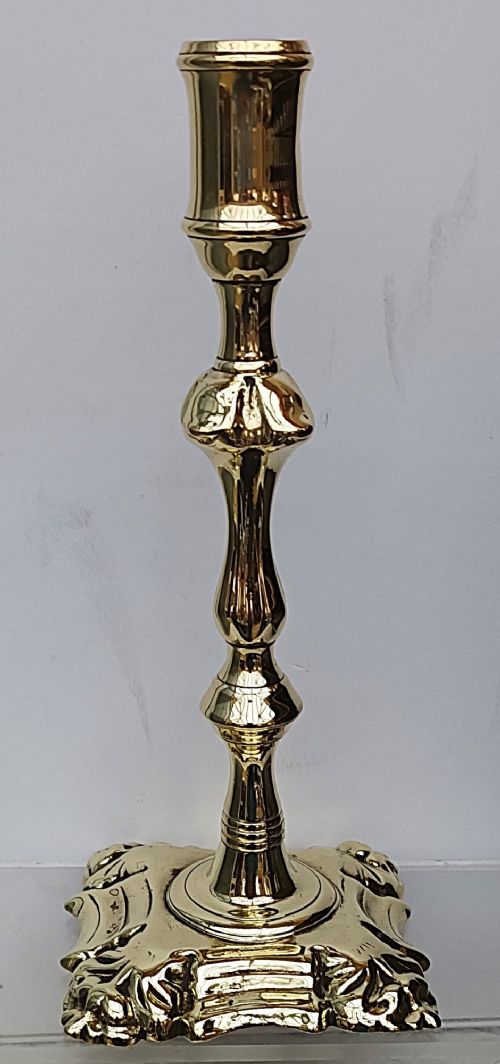
The selections available range from sturdy brass examples featuring petal bases to plated silver and porcelain forms. Many survive as matched pairs, reflecting their original domestic placement on mantelpieces or side tables.
While the search specifies the Georgian era, related examples span from the mid-eighteenth century into the Regency period and later nineteenth-century revivals. Buyers encounter various column designs, from plain shafts to neoclassical fluting.
Materials and construction methods
Metal examples frequently utilise brass, cast in sections and joined, alongside copper and silver plate on copper bases known as Old Sheffield plate. Early brass pieces often employ seamed construction methods visible upon close inspection.
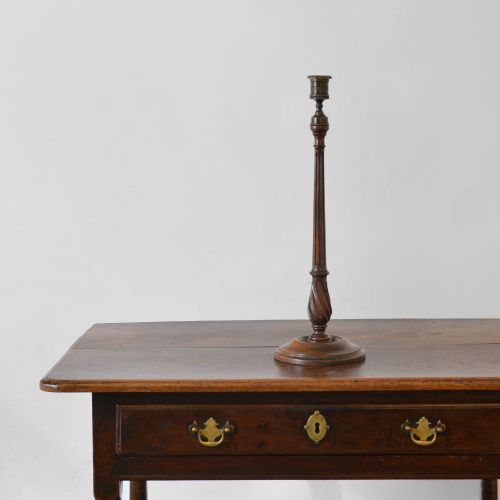
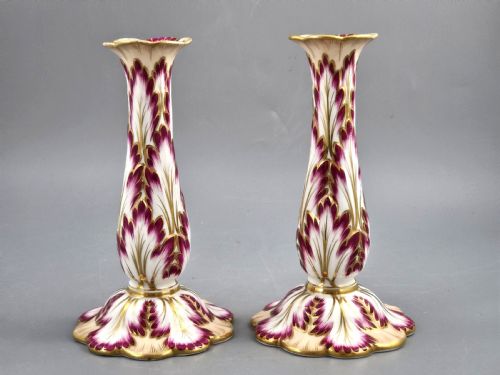
Silver versions incorporate sterling silver or heavy plating techniques, while ceramic variants utilise porcelain bodies decorated with foliage patterns and hand-painted details. Mahogany timber also appears in turned wooden candlesticks from the period.
Georgian Taper Sticks Retail Price Guide 2026
Typical asking prices for georgian taper sticks among the pieces listed under this phrase on Sellingantiques today, from the lower quarter to the upper quarter. They describe what is for sale here now, not the wider market.
Period styles span from George II and neoclassical designs through to Regency and later Victorian interpretations.
Separating finer examples from standard pieces
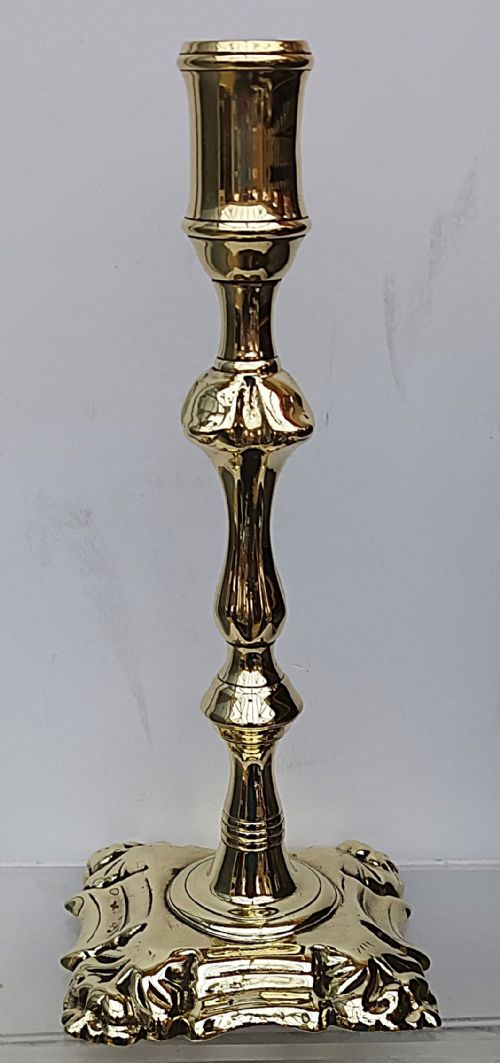
Quality in these domestic objects rests upon the crispness of casting detail and the integrity of proportions. Finer brass and silver pieces display sharp moulding on the bases and drip pans without smoothing from excessive cleaning.
The presence of original removable sconces, or nozzles, elevates a piece significantly. Heavier gauge metalwork and balanced architectural turning also distinguish superior examples from plain utility items.
Mappin & Webb·Ridgway·Barr, Flight & Barr·J. Miller·Barker Ellis
The Georgian Taper Sticks Glossary
- Taper stick
- A miniature candlestick specifically intended to hold a small wax taper rather than a full-sized lighting candle. These were kept ready for sealing correspondence and lighting tobacco pipes.
- Sconce
- The detachable pan or nozzle fitted at the top of a candlestick to catch melting wax. This component is often lost or replaced over centuries of domestic use.
- Old Sheffield plate
- A composite material formed by fusing a thin sheet of silver to a thicker copper core, popular before the invention of electroplating. Pieces show subtle lines of base metal where wear occurs.
- Ejector
- A mechanical feature within the stem allowing the user to push out the remaining stub of wax or candle. This practical addition is frequently found on mid-eighteenth-century brass examples.
- Petal base
- A moulded foot design resembling outward-spreading flower petals, characteristic of early brass candlesticks. This form provides stable weight distribution for a slender column.
Georgian Taper Sticks: Frequently Asked Questions
What is the difference between a taper stick and a candlestick?
Taper sticks are noticeably smaller in height and feature a much narrower nozzle designed solely for thin wax tapers. Standard candlesticks are built taller to support larger candles intended for room illumination.
Because of their specific desk and table use, taper sticks often display more delicate ornamentation and refined proportions than their larger counterparts.
How do I know if my taper stick is eighteenth century?
Eighteenth-century examples often exhibit specific construction traits such as cast brass seaming, heavy weight, and simpler structural components like square or petal bases. Examination of the metal surface reveals tool marks consistent with period manufacturing methods.
Later nineteenth-century pieces and revivals tend to feature machine finishing or different casting proportions that lack the hand-finished quality of earlier work.
Were these pieces always made in pairs?
Many taper sticks were manufactured and sold as pairs to maintain symmetry on mantelpieces, desks, or dining sideboards. However, single examples also survive due to the dispersal of sets over generations.
Matching pairs generally command greater interest from collectors who prefer complete domestic arrangements for display.
How should I clean antique brass taper sticks?
Maintenance requires gentle dusting and occasional cleaning with a non-abrasive metal polish formulated for antiques. Aggressive scrubbing removes the aged patina and softens the crisp cast details.
Preserving the natural oxidation ensures the piece retains its historic character and visual depth.