





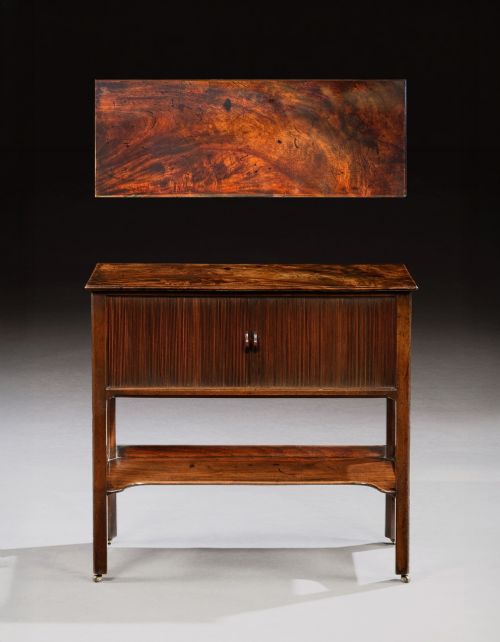

Georgian Tambour Bedside Cabinet
A georgian tambour bedside cabinet brings flexible storage and warm timber grain directly to the bedside.
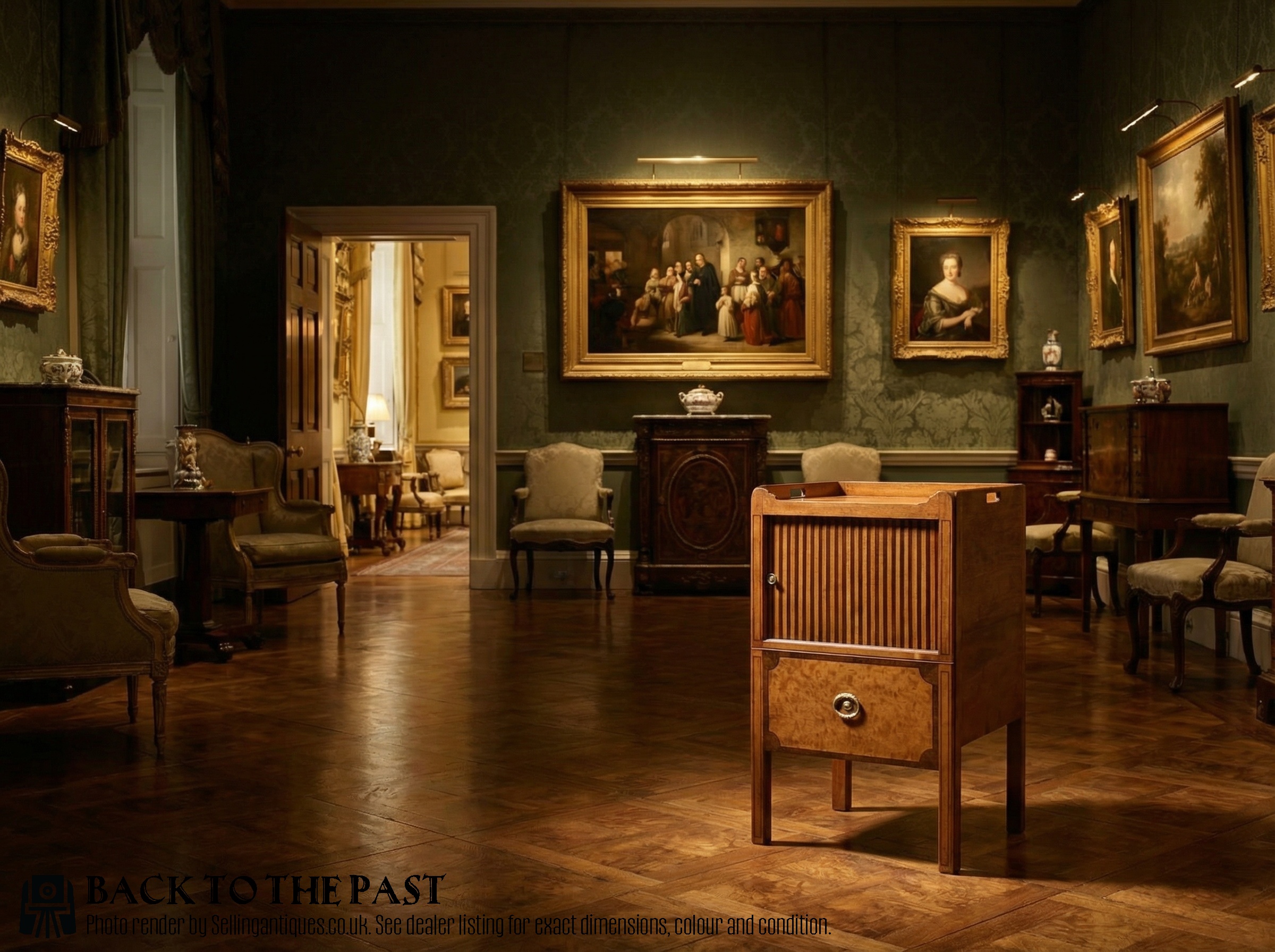
Georgian Tambour Bedside Cabinet
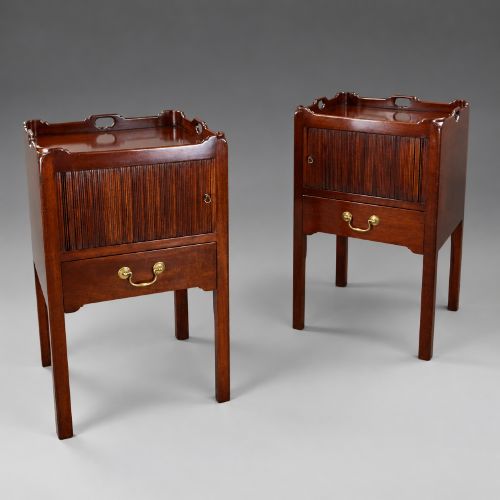
A georgian tambour bedside cabinet is a compact bedroom piece designed for concealed bedside storage, predominantly appearing from the Georgian and Regency periods alongside later revival interpretations.
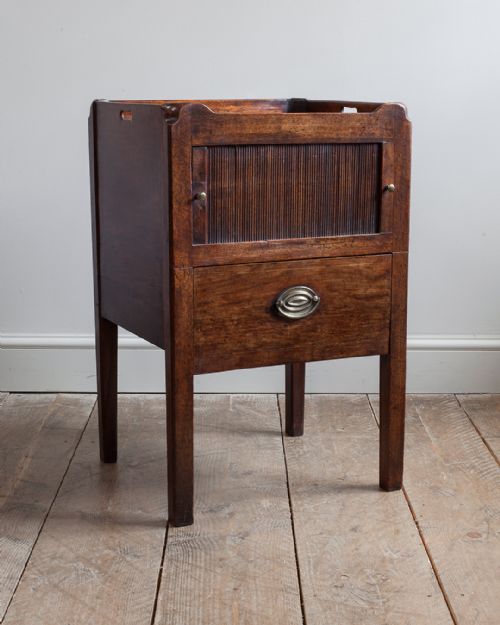
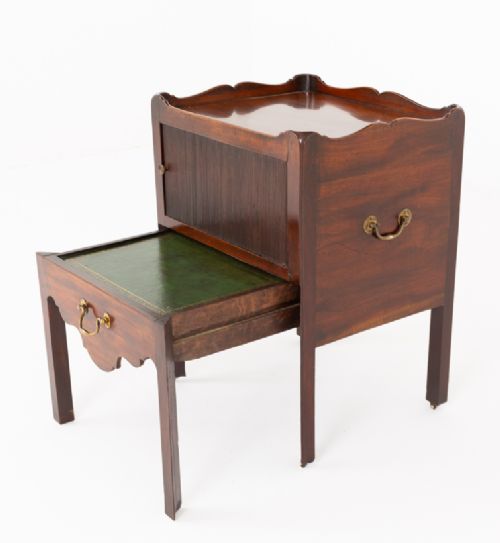
These pieces typically arrive as mahogany cabinets, nightstands, and tray-top commodes featuring a slatted sliding door that conceals the interior space.
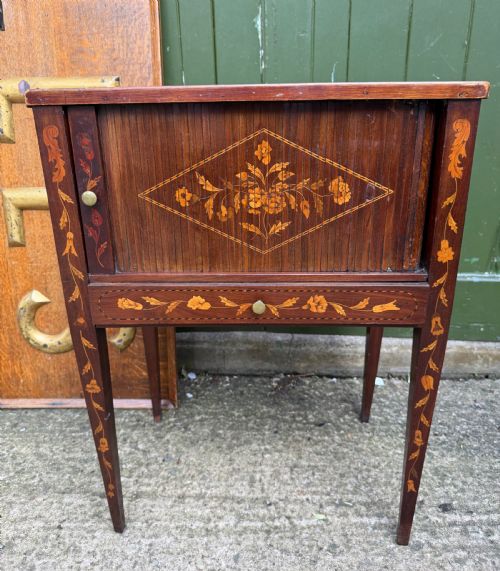
While many examples originate from the eighteenth and early nineteenth centuries, the listings also include twentieth-century iterations and variations incorporating boxwood inlay or marquetry.
Timbers and Construction Methods
Makers relied primarily on solid mahogany and mahogany veneers, occasionally complemented by fruitwood, satinwood, and walnut.
The defining tambour shutter consists of narrow wooden slats glued to a canvas or linen backing, allowing the door to slide smoothly around a curved track.
Cabinetmakers integrated decorative elements such as boxwood inlay, brass handles, and leather surfaces to elevate the finish.
Period origins span from the eighteenth-century George III era through the nineteenth-century Regency and Victorian periods, alongside later twentieth-century styles.
Distinguishing Quality in Construction and Materials
Superior examples display precise joinery in the slatted tambour mechanism, ensuring the sliding door moves freely without binding in its track.
The choice of timber grain and the crispness of secondary woods like boxwood inlay separate standard utility pieces from finer cabinet work.
Original hardware, sound carcass framing, and well-executed tray tops or serpentine fronts determine the standing of an individual piece.
Gillows
The Georgian Tambour Bedside Cabinet Glossary
- Tambour
- A flexible shutter door formed of narrow vertical strips of wood glued to a fabric backing. It slides along a groove to conceal cabinet interiors.
- Commode
- A small cabinet or chest with drawers or doors, frequently used in bedrooms during the Georgian period.
- Tray top
- A raised rim around the upper surface of a bedside table designed to prevent items from rolling off. This feature often incorporates shaped cut-out handles.
- Marquetry
- Decorative veneer work forming pictorial or floral patterns using various coloured woods. Dutch examples frequently utilise this technique.
- Nightstand
- A small bedside table or cabinet built to hold nighttime essentials. These often include a cupboard space below a top surface.
Georgian Tambour Bedside Cabinet: Frequently Asked Questions
What is a tambour door?
A tambour door is made from vertical wooden slats attached to a flexible fabric backing. This allows the door to slide smoothly around a curved cabinet corner.
Cabinetmakers used this technique to conceal storage spaces without needing clearance for swinging doors.
How do I spot a Georgian piece?
Look for timber selection, traditional joinery methods, and period-specific proportions. Mahogany and fruitwood were standard choices during the eighteenth century.
Examine the secondary woods inside the drawers and cabinet carcass to confirm the period construction.
Were these used as commodes?
Many eighteenth-century bedside cabinets functioned as night commodes, containing a concealed space for a chamber pot.
Over time, many of these interiors were converted into standard shelving or left empty for general bedside storage.