

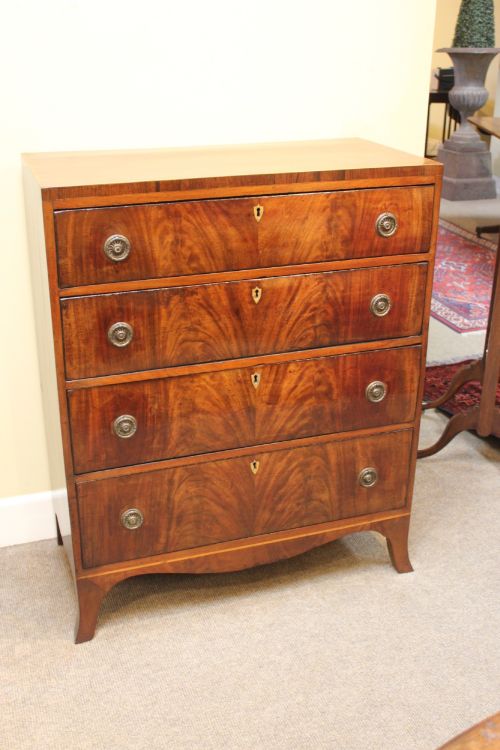
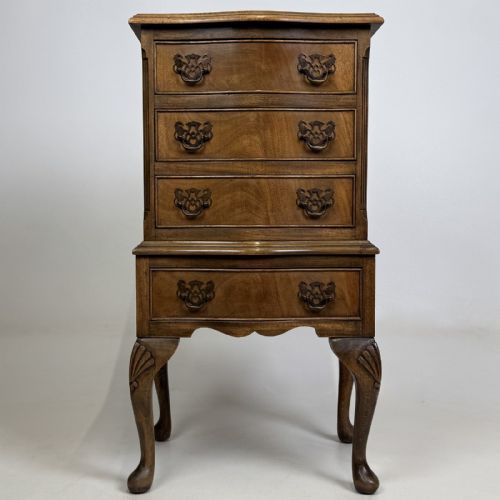
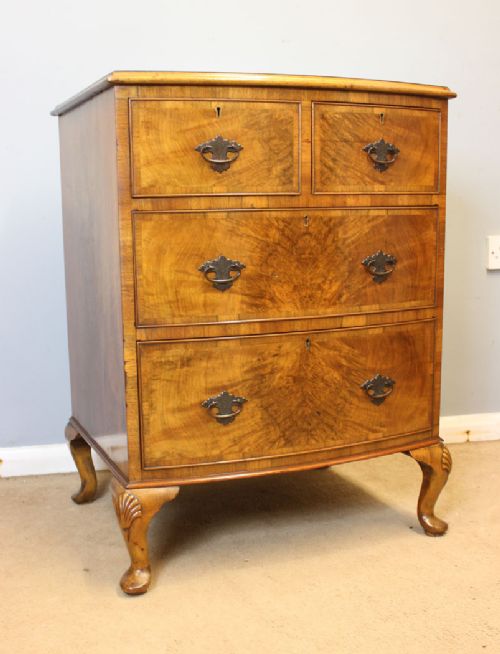
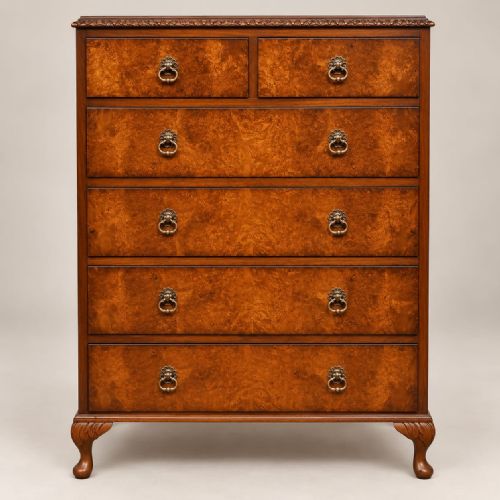


Georgian Tallboy on Legs
A georgian tallboy on legs brings architectural height and deep drawer storage into a room without dominating the floor space.
Georgian Tallboy on Legs
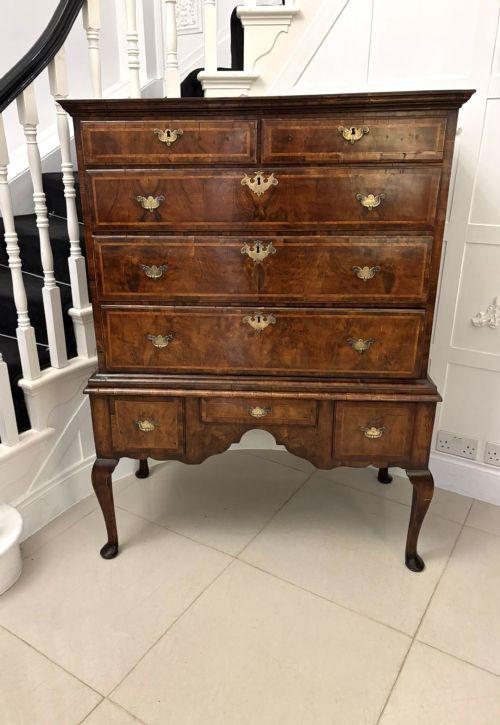
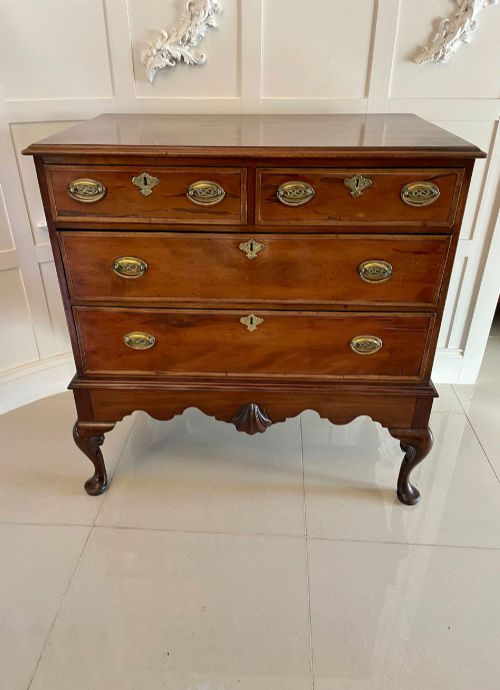
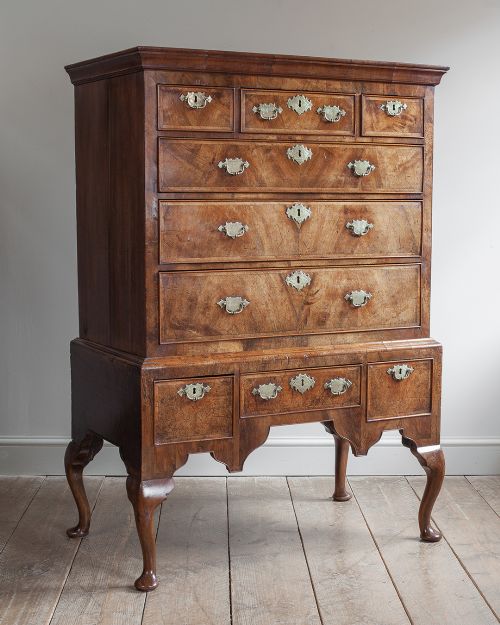
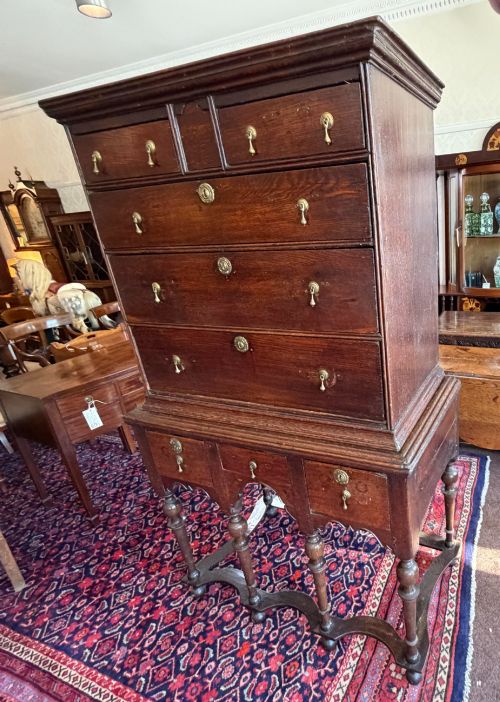
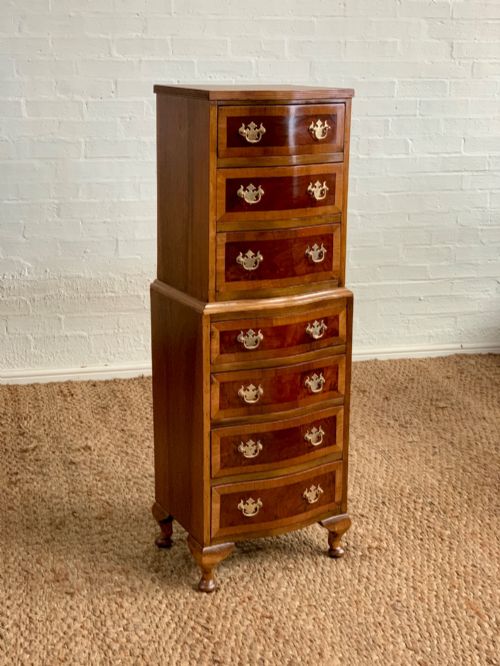
When searching for a georgian tallboy on legs, buyers encounter a specific form combining a tall chest of drawers with a raised stand or bracket feet. The pieces listed span the 18th century as well as later revival periods, bringing distinct vertical proportions to domestic storage.
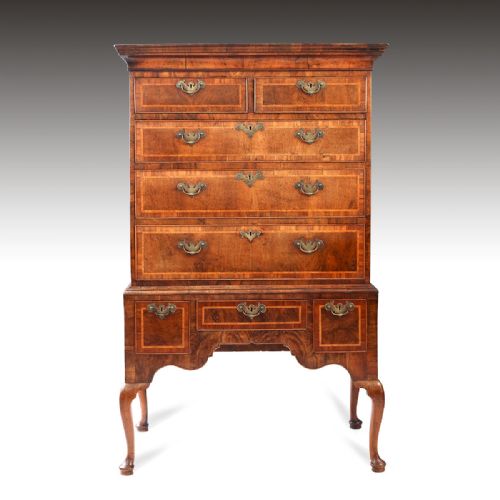
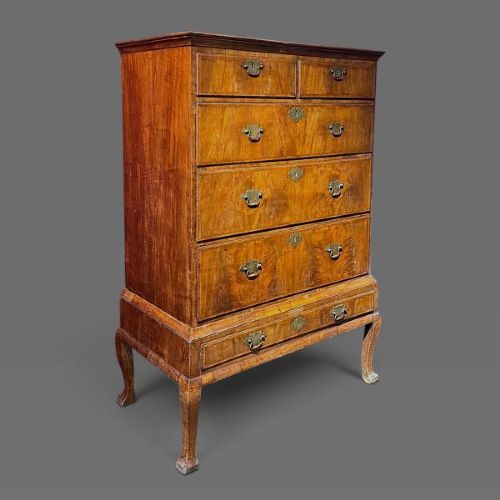
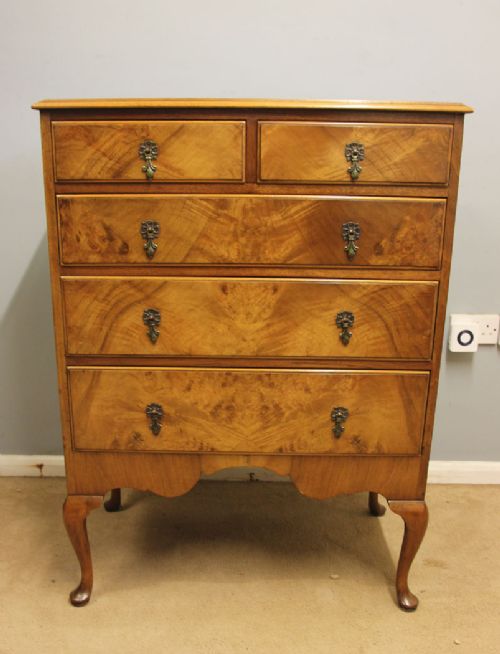
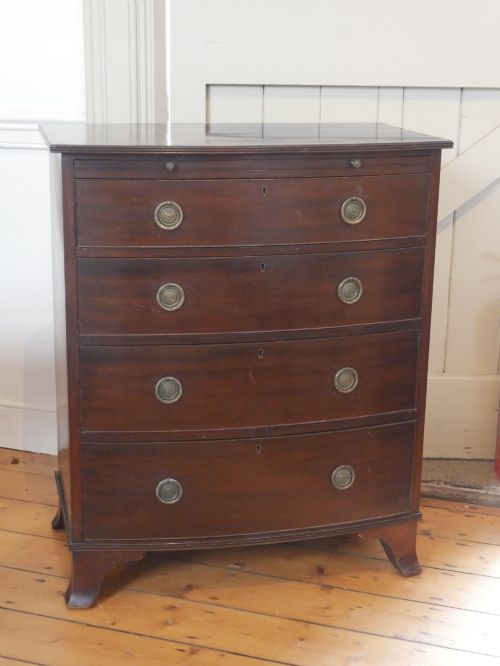
Most examples divide into two distinct parts: a lower support stand fitted with short legs and drawers, and an upper section housing multiple graduated drawers. Oak and walnut dominate the early pieces, while mahogany becomes prominent by the later Georgian eras.
The form functions primarily as a high-capacity chest that uses vertical space efficiently. Makers built these units to hold linens, garments, and personal documents within deep, timber-lined compartments.
How they were made
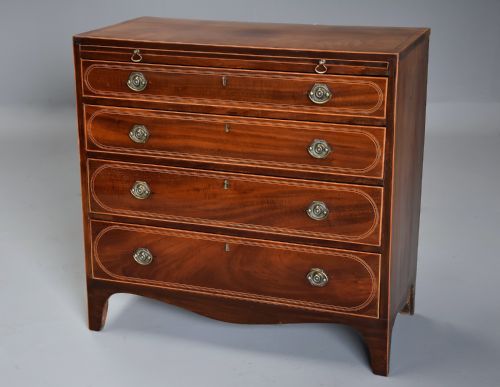
Cabinet makers constructed these carcases using solid native timbers like oak and mahogany, often applying figured walnut or burr walnut veneers to the primary display surfaces. Cross-banding and boxwood stringing frequently border the drawer fronts to create subtle geometric framing.
Makers integrated brass drop handles, escutcheons, and bracket or cabriole legs to support the substantial weight of the timber sections. Drawer construction relies on hand-cut dovetails, securing long-term durability across the multi-tiered interior.
Georgian Tallboy on Legs Retail Price Guide 2026
Typical asking prices for georgian tallboy on legs among the pieces listed under this phrase on Sellingantiques today, from the lower quarter to the upper quarter. They describe what is for sale here now, not the wider market.
Listings feature pieces spanning from the 17th century through the 1930s revival period, constructed in oak, walnut, and mahogany.
What varies in quality
The choice of timber veneer dictates much of the visual depth, with carefully matched burr walnut or figured mahogany representing superior cabinet work. Grain continuity across drawer fronts demonstrates the maker's care in timber selection and arrangement.
Proportion and structural harmony between the upper chest and the supporting stand separate standard production from exceptional examples. Fine pieces maintain delicate leg profiles that balance the heavy storage body above without looking clumsy.
Druce & Co
The Georgian Tallboy on Legs Glossary
- Tallboy
- A tall chest of drawers made in two sections, stacking one cabinet upon another or upon a low stand.
- Chest on stand
- A cabinet or set of drawers elevated on a dedicated frame with legs, raising the storage compartment off the floor.
- Veneer
- A thin layer of finely figured wood applied over a secondary timber carcase to provide decorative grain patterns.
- Dovetail
- An interlocking joint used to connect drawer sides to drawer fronts, characteristic of traditional hand woodworking.
- Cabriole leg
- A furniture leg that curves outward in a convex arc and tapers inward in a concave arc, ending in a pad or foot.
Georgian Tallboy on Legs: Frequently Asked Questions
Where did people put a georgian tallboy on legs?
These cabinets stood principally in bedrooms and dressing rooms to store folded linens, shirts, and personal valuables.
Their vertical design allowed households to maximise storage capacity while occupying minimal floor space in domestic chambers.
How do I clean a walnut tallboy?
Dust the surfaces regularly with a dry, soft cloth to prevent particulate build-up on the delicate wood veneers.
Apply traditional beeswax occasionally to nourish the timber and maintain a soft, protective lustre without sealing the grain.
Can these hold heavy clothing?
The deep, solid wood drawers accommodate heavy garments, knitwear, and linens securely without sagging.
Internal bracing and dovetailed joints provide the structural strength necessary for daily storage requirements.
How do I tell early pieces from later revivals?
Examine the secondary woods inside the drawer linings and the construction methods used on the back panels and joints.
Early 18th-century pieces show hand-cut elements and distinct timber ageing, whereas 1920s or 1930s revivals employ cleaner, uniform secondary timbers.