
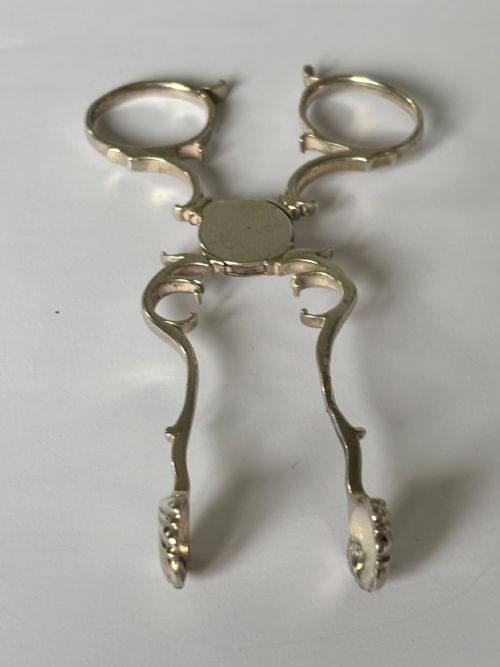


Georgian Sugar Tongs
Georgian sugar tongs are small silver implements designed for the tea table, prized for their delicate piercing and bright-cut engraving.
Georgian Sugar Tongs
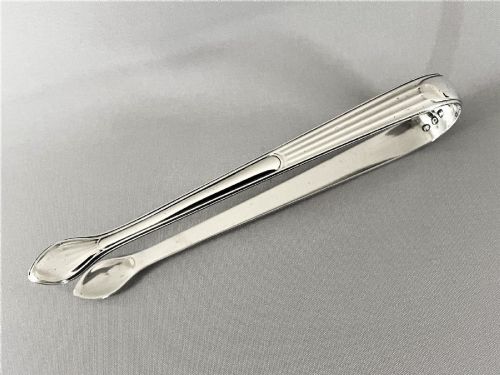
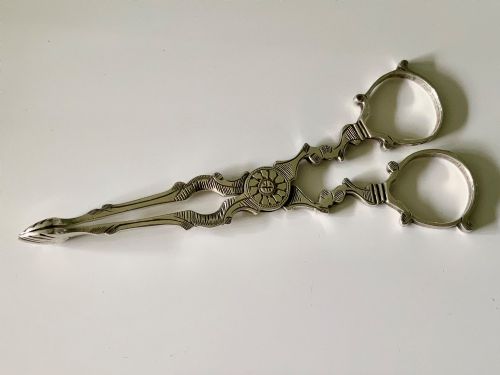
When you search for georgian sugar tongs, you encounter small silver implements designed to lift sugar lumps into tea cups during the eighteenth and nineteenth centuries. The pieces on this page span from the mid-eighteenth century through the Regency period, encompassing both scissor-action nips and spring-action bow tongs.
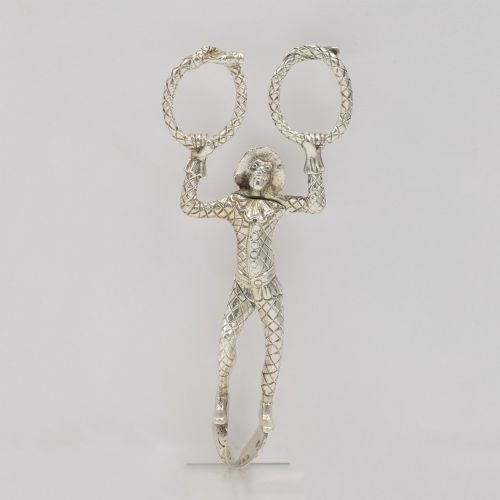
Makers produced these implements in regional assay offices across Britain, including London, Newcastle, Sheffield, and Chester. Alongside authentic period examples, the selection includes later nineteenth-century revival pieces and novelty designs such as harlequin monkey forms.
Materials and construction
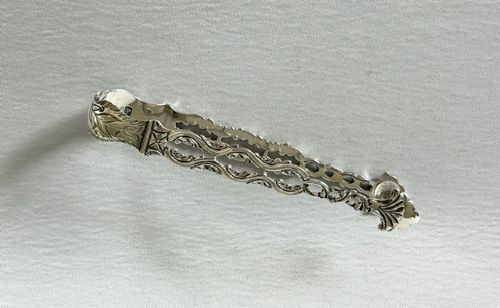
Silversmiths constructed these tongs primarily from sterling silver, utilising techniques such as casting, piercing, and bright-cut engraving to ornament the arms. Early examples often feature cast work with detailed floral or shell motifs, while later pairs frequently display linear engraving and stamped maker marks.
The transition from scissor-type sugar nips with finger loops to the familiar sprung U-shaped bow tongs occurred gradually across the eighteenth century. Makers also incorporated specific motifs directly into the metalwork, such as acorn bowls and naturalistic grapevine designs.
Differentiating quality
The distinction between standard production and superior craftsmanship rests in the crispness of the piercing and the depth of the engraving on the arms. Cast tongs with intricate openwork ornamentation or defined animal and botanical motifs represent a higher tier of workmanship than plain, utilitarian pairs.
Attribution to documented makers such as the Bateman family or prominent provincial silversmiths elevates the standing of a pair. The clarity of the hallmarks stamped on the interior or exterior of the arms provides reliable evidence of origin and standard.
Dee & Fargus·Thomas Tookey·Peter Ann And William Bateman·Hester Bateman·William Eley And William Fearn·Thomas Law·John Bourne·William Sumner I·Philip Batchelor
The Georgian Sugar Tongs Glossary
- Sugar Nips
- Early scissor-action implements with finger rings used for sugar lumps before the widespread adoption of bow tongs. They often feature shell-shaped grips.
- Bright-Cut
- An engraving technique using faceted V-cut channels that reflect light to create a sparkling geometric or floral pattern along the silver arms.
- Bow Tongs
- The predominant spring-action form made from a single strip of silver bent into a U-shape, often featuring acorn or shovel-shaped terminals.
- Hallmarks
- Official stamped symbols indicating the silver standard, assay office, date letter, and maker's mark, crucial for dating Georgian silver.
- Cast Silver
- Molten metal poured into a mould to create three-dimensional decorative elements on sugar tongs, typical of mid-eighteenth-century production.
Georgian Sugar Tongs: Frequently Asked Questions
How do I use sugar tongs?
Hold the bow at the upper curve and squeeze gently to bring the terminals together around a sugar lump. The spring tension allows you to lift and place the lump into a teacup without touching it by hand.
Traditional tea service etiquette requires placing the tongs across the saucer or beside the sugar basin when not in use.
Were nips and tongs used differently?
Sugar nips operate with scissor-style finger loops, resembling small scissors with cup-like bowls at the tips. Tongs rely on a sprung metal bow that requires a simple pinching motion.
Nips are generally found on pieces dating from the earlier part of the eighteenth century, while bow tongs became standard later on.
How can I date my silver tongs?
Locate the hallmarks stamped on the silver, which typically include a date letter indicating the exact year of assay. Maker marks and duty marks also help narrow down the period of manufacture.
Stylistic elements like bright-cut engraving point to the late eighteenth century, while cast openwork is frequently earlier.
Did provincial makers produce these?
Silversmiths working outside London in assay towns like Newcastle and Sheffield produced distinctive sugar tongs. These regional pieces often bear local maker marks and town marks.
Newcastle makers frequently produced cast and bright-cut designs that match the quality of London workshops.