



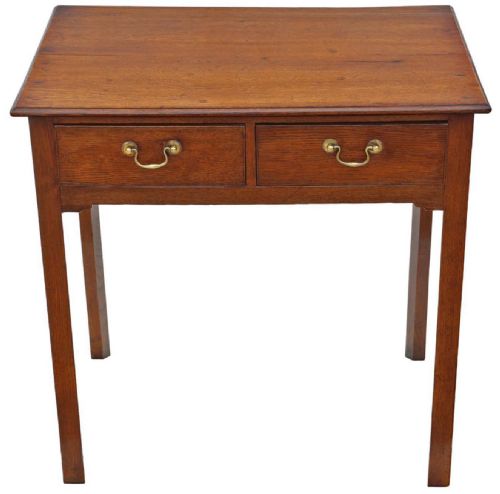
Georgian Style Work Table
A georgian style work table offers elegant small-scale surface space combined with concealed storage for needlework and correspondence.
Georgian Style Work Table
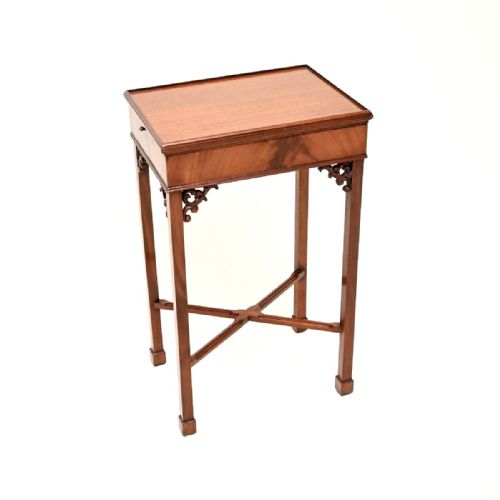
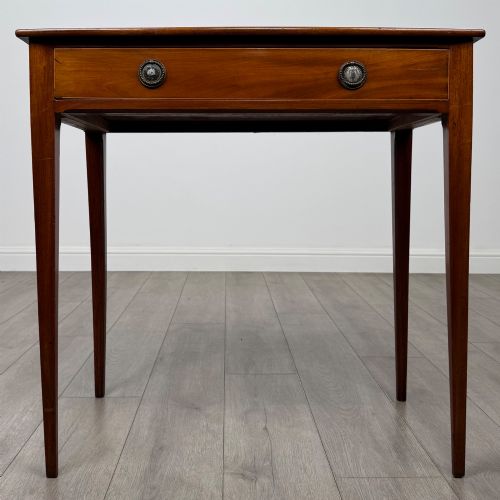
A georgian style work table bridges the gap between a domestic side table and a specialised sewing cabinet, featuring compact proportions suited to intimate residential interiors. The pieces gathered here draw primarily upon Georgian, Regency, and Sheraton design idioms spanning the eighteenth and nineteenth centuries, alongside later revival iterations.
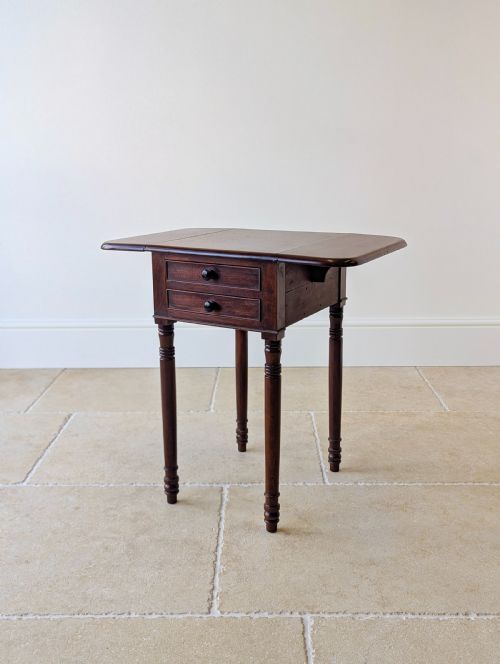
Most examples function as dual-purpose furnishings designed to hold sewing gear, letters, or small writing materials within fitted drawers and hanging fabric bags. The physical forms range from drop-leaf tables and pedestal models to delicate satinwood cabinets on stands.
Makers of the period conceived these tables for the drawing room or boudoir, prioritising mobility and discreet storage over heavy architectural presence. Surviving pieces demonstrate how cabinetmakers adapted classical proportions to practical domestic tasks.
Materials and Construction
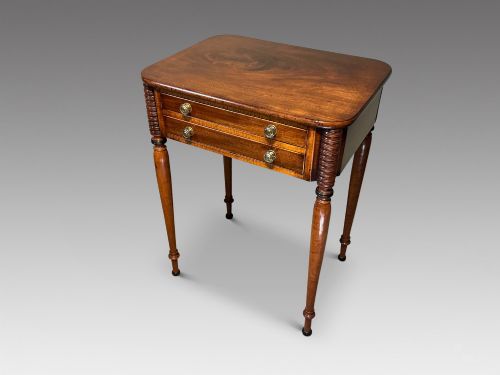
Cabinetmakers constructed these tables using dense timbers such as mahogany and rosewood, frequently incorporating lighter decorative elements like satinwood, boxwood, and maple stringing. Brass hardware, leather inserts, and silk or fabric components complete the traditional construction vocabulary.
Workmanship relies on precise joinery, finely turned pedestals, and intricate veneer work or inlay to articulate drawers and drop leaves. The integration of textile drop bags requires specialised framing beneath the primary work surface.
The listings here feature nineteenth-century and Edwardian pieces constructed from mahogany, rosewood, satinwood, and yew wood.
Design and Execution
Quality rests upon the selection of timber figures, such as figured rosewood or finely grained mahogany, paired with crispness in stringing and inlay. Superior execution appears in the balanced proportions of turned supports and the seamless operation of internal drawers.
Attribution to notable workshops or specific stylistic traditions elevates certain examples above standard domestic pieces. The refinement of brass mounts and the preservation of original fabric linings further distinguish finer specimens.
Gillows of Lancaster·John MaClean·George Smith
The Georgian Style Work Table Glossary
- Dropleaf table
- A table with hinged flaps on either side that fold down to save space when not in use. These flaps are supported by swing legs or brackets.
- Satinwood
- A hard, yellowish wood prized for its lustrous sheen and smooth grain, commonly used for veneers and inlay in late eighteenth and nineteenth-century furniture.
- Stringing
- A narrow strip of contrasting wood inlaid into the surface of a piece to create decorative borders and geometric patterns.
- Pedestal table
- A standalone table supported by a central pillar rising from a weighted base or branching feet.
- Workbox
- A small container or cabinet designed specifically to hold sewing implements, threads, and needlework accessories.
Georgian Style Work Table: Frequently Asked Questions
What is a work table?
A work table is a compact nineteenth-century domestic furnishing designed primarily for needlework, sewing, and correspondence. It typically incorporates drawers, compartments, or a suspended fabric bag.
These pieces provide surface space for lamps or books while concealing sewing implements within the cabinetry. Their modest scale allows them to function easily as side or end tables in modern rooms.
How do I date these tables?
Dating relies on identifying characteristic construction methods, timber choices, and stylistic vocabulary from periods such as the Georgian, Regency, or Edwardian eras. Finer details like brass inlay or specific leg turns offer further clues.
Comparing secondary woods and hardware against known historical periods helps narrow the manufacturing window. Revival pieces often combine earlier decorative motifs with later structural techniques.
Can I use them as side tables?
These tables adapt readily to contemporary living spaces as bedside surfaces, lamp tables, or hallway catchalls. Their original compartments remain useful for storing small modern items.
Placing them away from direct heat sources and sunlight protects fragile veneers and internal fabric linings. Regular dusting preserves the polished finish of mahogany and rosewood surfaces.
What is Sheraton revival?
Sheraton revival describes furniture produced around nineteen hundred that borrows heavily from the neoclassical designs of Thomas Sheraton. These pieces often feature painted satinwood and delicate inlay.
Makers of this era reinterpreted eighteenth-century forms to satisfy contemporary demand for light, decorative furnishings. The style emphasises refined proportions and botanical motifs.