


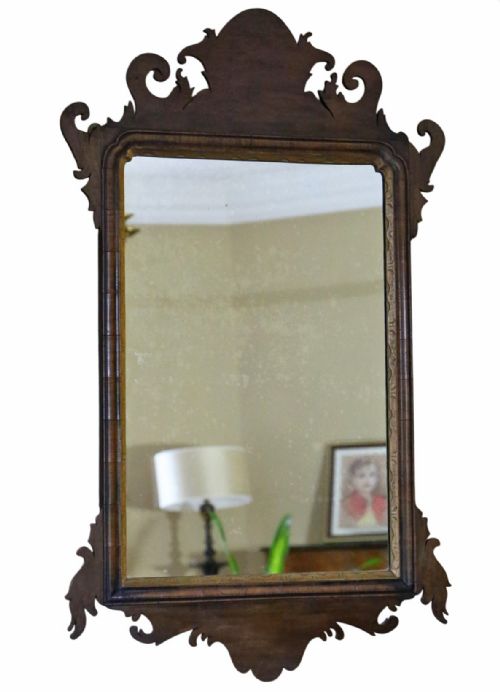


Georgian Style Walnut Mirror
A georgian style walnut mirror brings warmth and historic proportion to an interior, whether via an 18th-century original or a later revival piece.
Georgian Style Walnut Mirror
A georgian style walnut mirror encompasses wall mirrors, pier glasses, overmantels, and cheval mirrors produced across multiple centuries. Buyers encounter period examples from the 18th century alongside later revival pieces made around 1920.
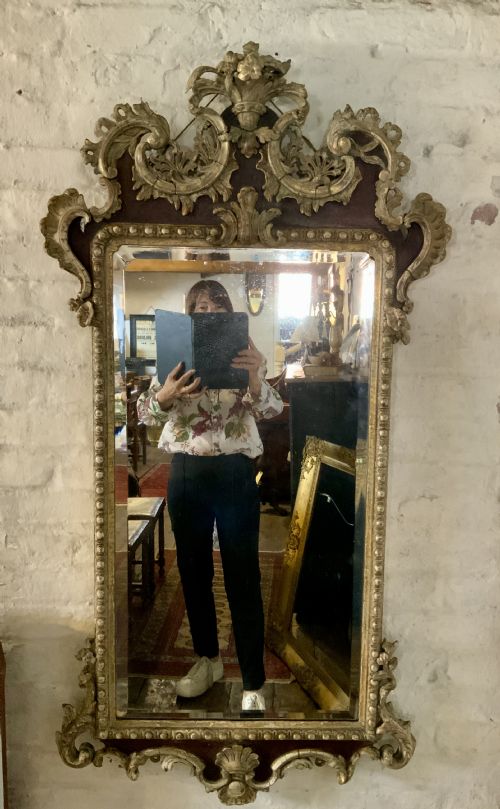
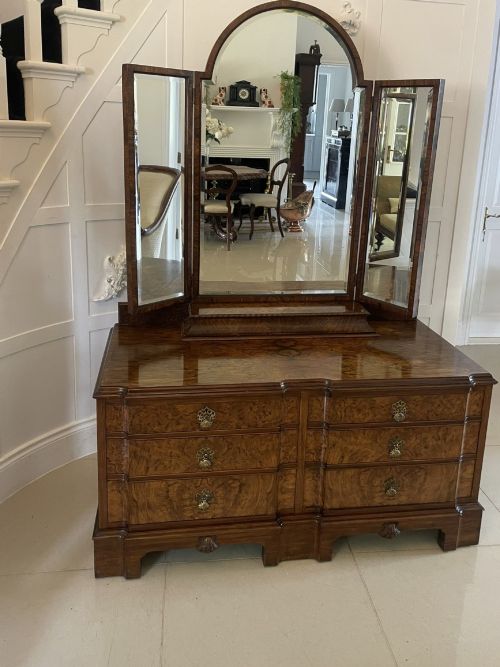
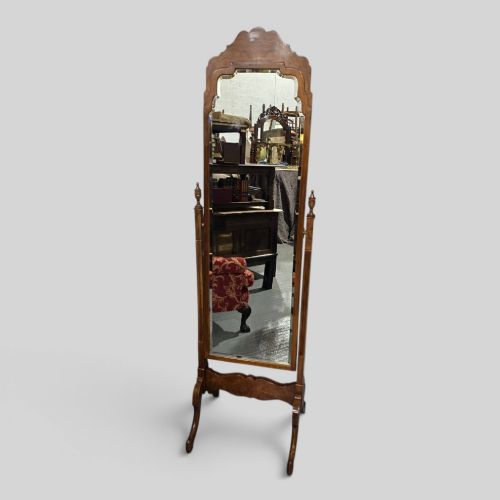
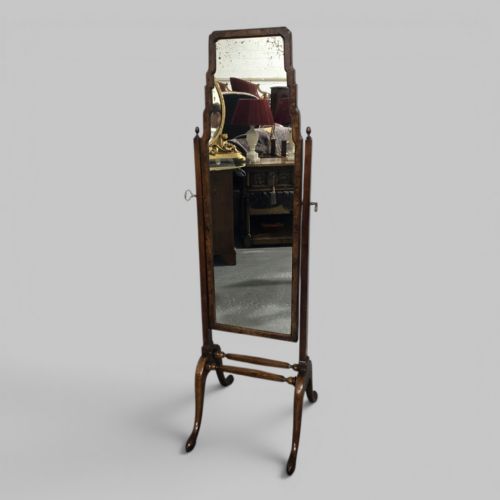
Wall mirrors and fretwork designs dominate the selection, often featuring parcel gilt accents or shaped crests. Smaller dressing table mirrors and large floor-standing cheval mirrors also appear within the records.
How they were made
Cabinetmakers constructed these frames using solid walnut and figured veneers, frequently highlighting the rich grain of burr walnut. Fret-cut silhouettes required precise hand-sawing to achieve characteristic scrollwork and pierced outlines.
Gilding and parcel gilt details applied to carved wooden elements provided contrast against the dark timber. Brass fittings such as candle sconces or hanging hooks completed many of the wall and dressing mirrors.
Listings feature walnut, burr walnut, and giltwood materials across wall mirrors, dressing tables, and cheval mirrors dated from the 18th century to 1920.
What varies in quality
The choice of veneer sets the visual standard, with heavily figured burr walnut commanding attention over plain timber surfaces. Crispness in the fret-cut edges and the depth of hand-carved parcel gilt mouldings separate standard examples from finer works.
Proportion and scale dictate the presence of a piece within a room, where balanced dimensions reflect deliberate design rather than mass production. The integration of original mirror glass or appropriate replacement plates further influences the character of the object.
The Georgian Style Walnut Mirror Glossary
- Parcel gilt
- Partially gilded with gold leaf or powder to highlight specific carved details against a contrasting background. This technique accentuates motifs on the inner mouldings or crests of the frame.
- Pier glass
- A tall mirror designed specifically to hang on the wall between two windows, often placed above a matching pier table. These tall formats visually expand the light within a room.
- Fretwork
- Openwork patterns carved or pierced through thin wood using a fine saw, creating intricate geometric or scroll designs. It defines the scrolling outlines of many wall mirrors.
- Cheval mirror
- A full-length plate glass mirror mounted on a vertical swivel frame between four supporting legs, allowing the glass to tilt. They function as dressing mirrors in bedrooms.
- Vauxhall mirror
- A historic term for a mirror featuring bevelled plate glass or segmented plates separated by moulding strips, originating from early English glassworks.
Georgian Style Walnut Mirror: Frequently Asked Questions
How do I identify a revival piece?
Revival pieces often date from around 1920 or the Victorian era, utilising machine-cut veneers and standardised construction methods while imitating 18th-century forms. Examining the timber backing, fixings, and secondary woods helps determine the actual age.
Differences in the wear patterns on the glass and the oxidation of the frame joints also provide clues to whether a mirror is an 18th-century original or a later homage.
Where should I hang a pier mirror?
Pier mirrors were traditionally designed to hang on narrow wall spaces between windows to reflect natural light back into the room. Placing one above a sideboard or console table follows this historical placement.
Ensuring the wall structure can support the weight of a heavy timber and glass frame is essential for safe installation.
What is burr walnut?
Burr walnut is a specialised wood veneer harvested from the warted growths on walnut trees, yielding complex and swirling grain patterns. Cabinetmakers utilised this highly decorative wood on the primary surfaces of premium mirrors.
Its distinct visual texture makes it a defining feature of high-end Georgian and revival furniture.
Are cheval mirrors free-standing?
Cheval mirrors operate as independent furniture pieces supported by a stable frame with four legs, allowing users to tilt the glass angle. They do not require wall mounting.
This design made them practical dressing accessories in 18th-century and later bedrooms.