
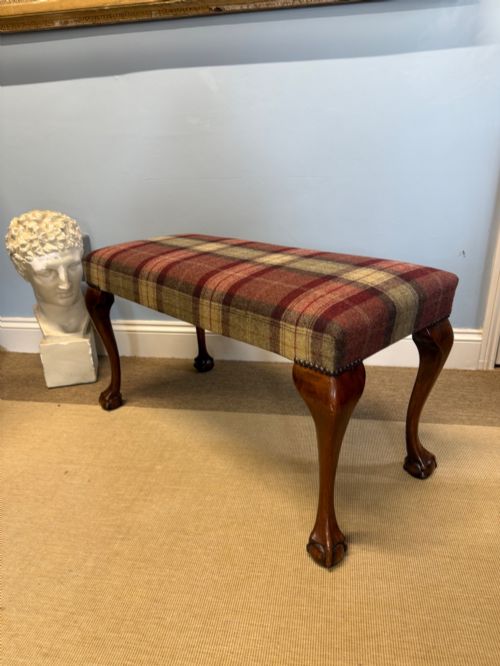
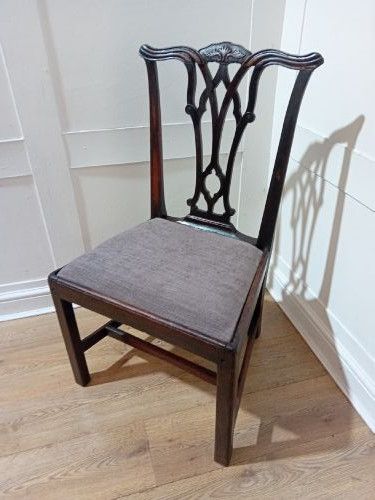

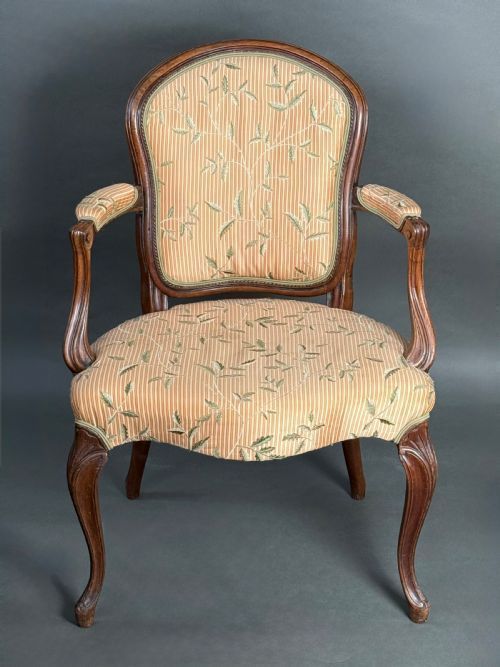
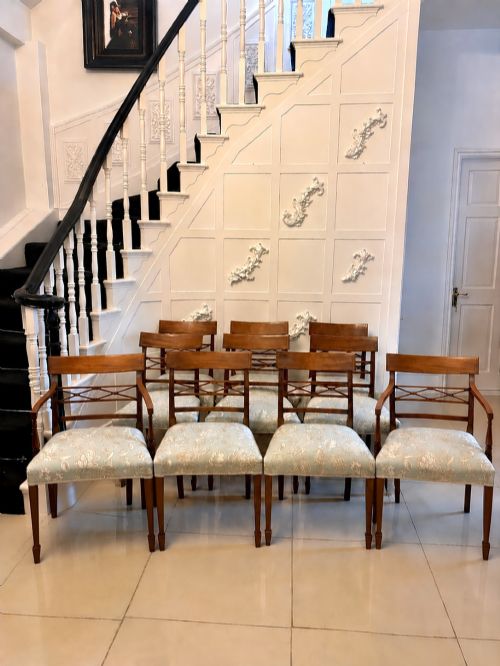
Georgian Style Upholstered Seat
When you search for a georgian style upholstered seat, you are looking at centuries of dining chairs, armchairs, and stools shaped by classic cabinet-making traditions.
Georgian Style Upholstered Seat
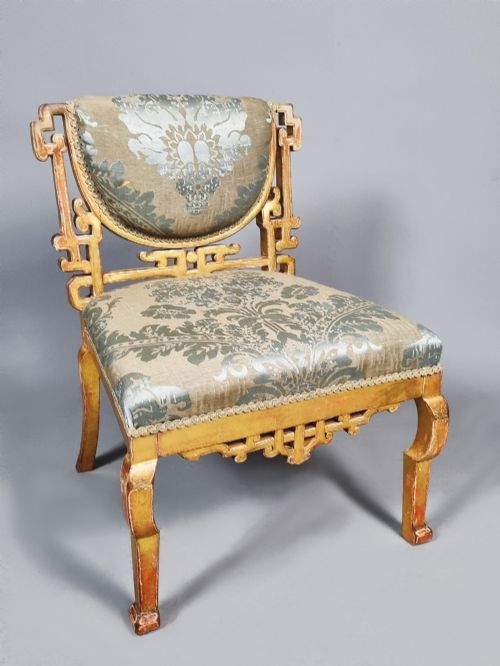
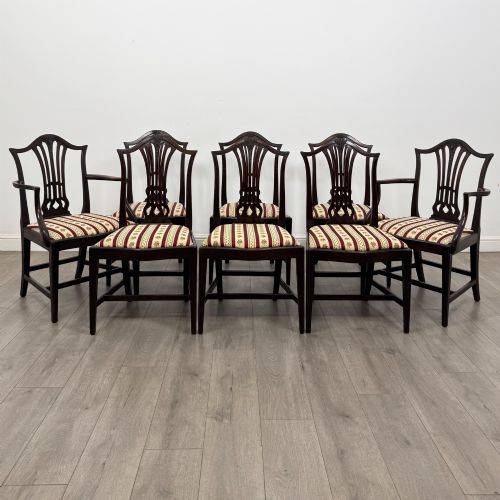
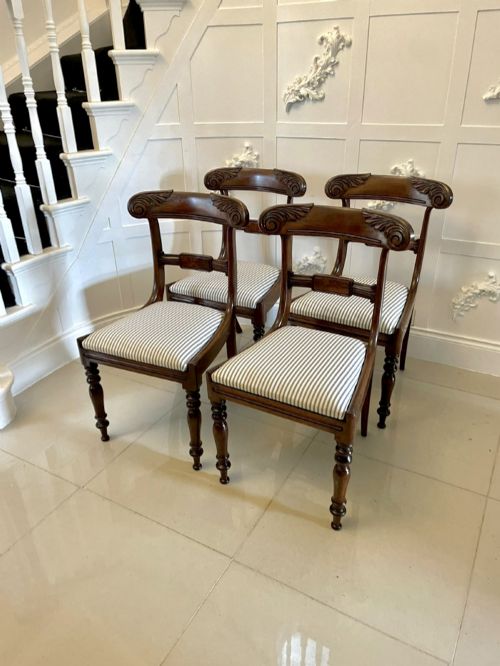
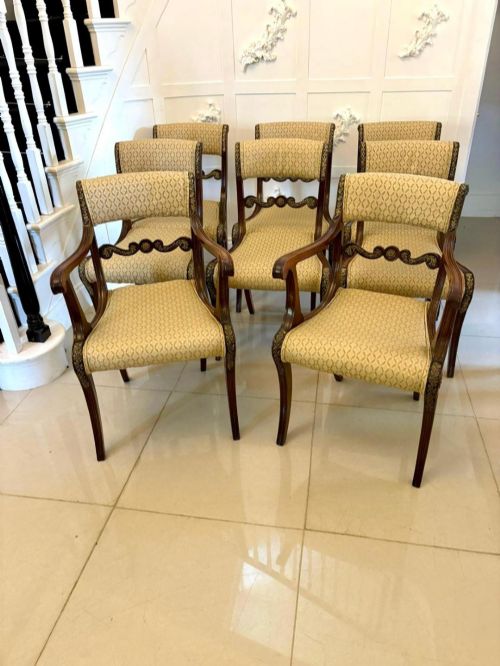
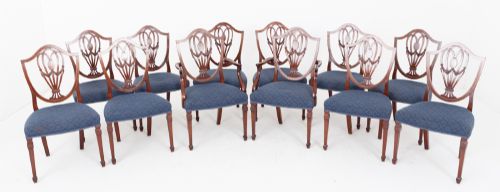
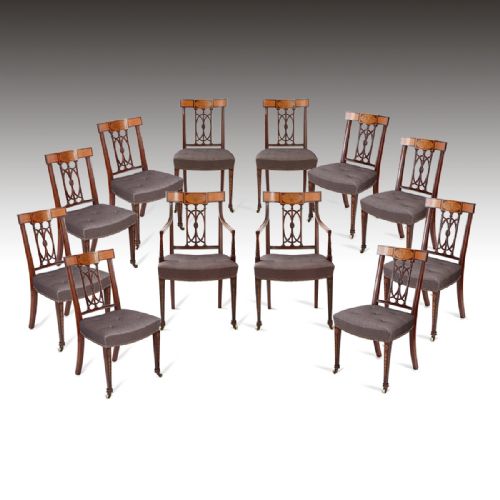
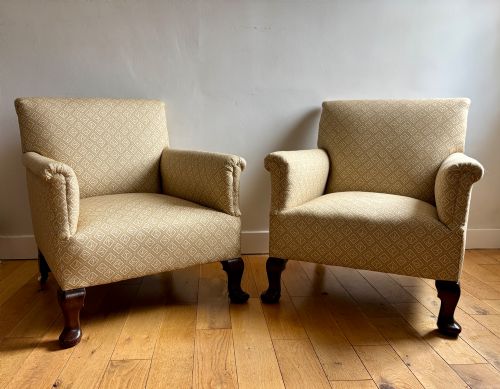
A georgian style upholstered seat encompasses forms ranging from 18th-century originals to later revivals from the 19th and 20th centuries. These pieces appear most frequently as dining chairs, armchairs, footstools, and settees originating from periods such as the Georgian era, Victorian times, and the early 20th century.
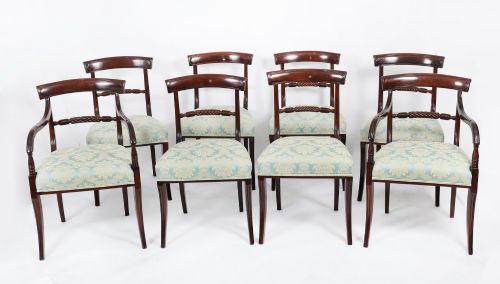
The selection includes specific regional variants and named stylistic revivals, notably Hepplewhite, Chippendale, Queen Anne, and Regency designs. Buyers will encounter single pieces, pairs, and large matching dining sets spanning upwards of twelve chairs.
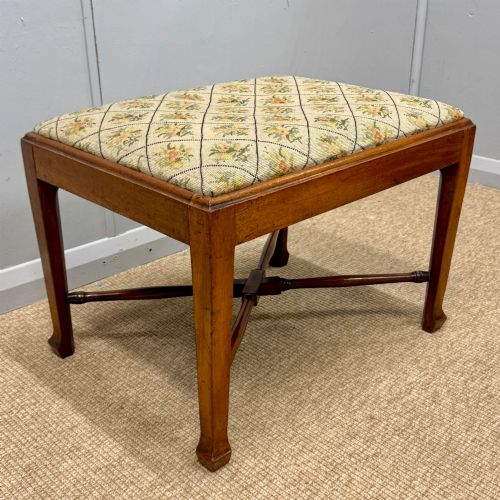
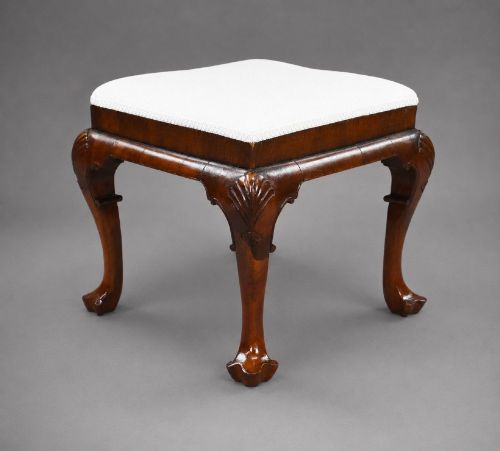
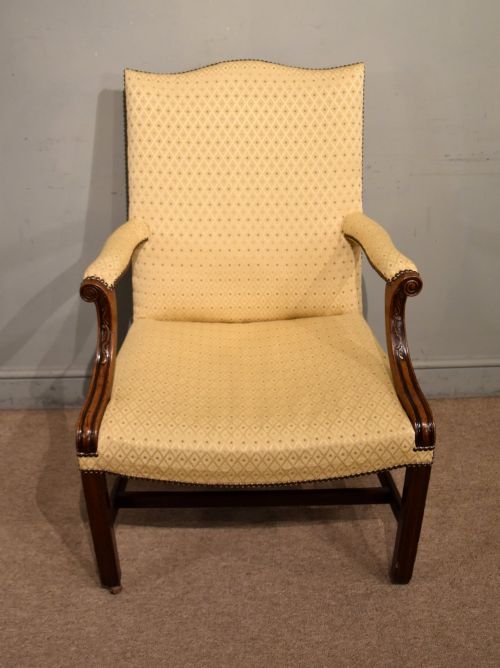
Forms extend beyond standard seating to include specialised library armchairs, Gainsborough chairs, bergères, and dressing table stools with cross stretchers. The overarching character relies on proportion, classical carved details, and supportive textile coverings.
Materials and construction methods
Makers built these pieces primarily using solid timbers, with mahogany dominating the selection alongside walnut, maple, and painted woods. Structural integrity depended on traditional joinery, occasionally enhanced by brass fittings or cane work in lighter library and salon chairs.
Upholstery required layered textile applications, integrating traditional stuffing materials, feather fillings, and visible top fabrics such as velvet, silk, and standard upholstery cloth. Later revivals and restorations often incorporated modern calico foundations beneath decorative outer textiles.
What separates the finest examples
Quality rests upon the crispness of timber carving on the backsplats and frames, alongside the precision of the underlying joinery. Superior examples maintain strict period proportions and timber selection, such as figured mahogany or burr maple, without excessive secondary wood repairs.
The standard of the upholstery work and the choice of textile contribute significantly to the overall integrity of the piece. Well-executed stuffing and high-grade fabrics preserve the correct profile of the arms, seats, and shield backs.
Whytock & Reid·Miles & Edwards
The Georgian Style Upholstered Seat Glossary
- Bergère
- An enclosed upholstered armchair with wooden framing exposed around the sides and back. These seats frequently incorporate cane panels or loose feather cushions.
- Gainsborough Chair
- A wide, open-armed armchair with a padded back and seat, standing on short legs. They date from the mid-18th century and served primarily as library or writing seats.
- Cross Stretcher
- Intersecting stretchers forming an X-shape beneath a stool or chair to reinforce the legs. This structural feature is common on dressing table stools and formal stands.
- Bar Back
- A chair design featuring a horizontal curved top rail resembling a bar above vertical splats. This style was common during the Regency and William IV periods.
Georgian Style Upholstered Seat: Frequently Asked Questions
How do I spot a Georgian original?
Examine the timber ageing, secondary woods underneath, and hand-cut joinery details that distinguish 18th-century production from later revival pieces.
Original pieces show natural wear patterns and construction methods specific to their period rather than machine-tooled uniformity.
Are dining sets matching?
Many larger sets combine original chairs with matched additions assembled later to make up numbers like eight, ten, or twelve.
Check the timber grain, minor carving variations, and frame dimensions to determine if the entire set shares a single workshop origin.
What fabrics are appropriate?
Traditional coverings include historic silks, velvets, damasks, and plain calico foundations depending on whether the piece is a formal salon chair or a library armchair.
Many pieces arrive newly upholstered while others retain older decorative textiles chosen during twentieth-century revivals.
How do I care for mahogany frames?
Keep wooden frames away from direct heat sources and sudden humidity shifts to prevent timber splitting and shrinkage around joints.
Apply gentle beeswax polishes sparingly to maintain the natural sheen of the polished mahogany surfaces.