
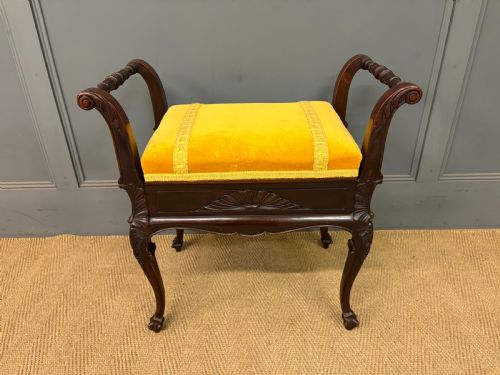
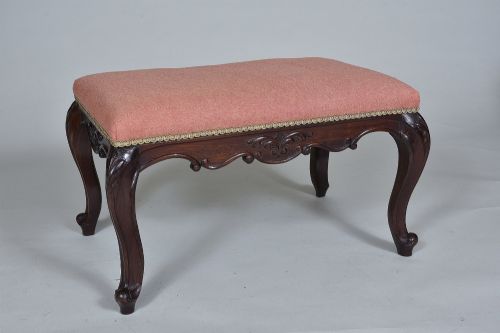
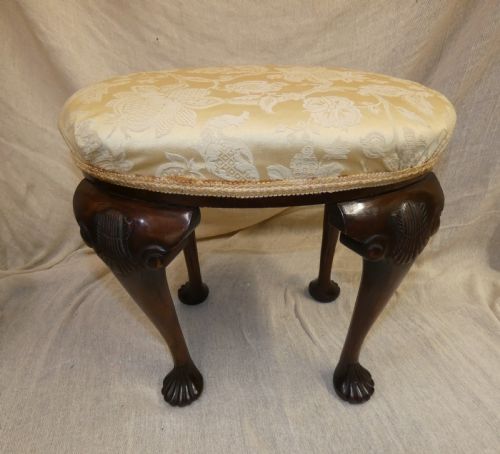
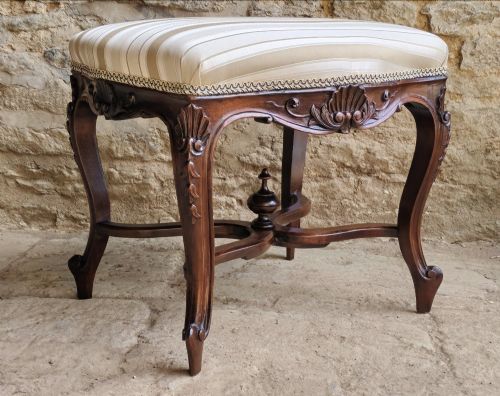



Dark Mahogany Dressing Stool
A dark mahogany dressing stool provides a sturdy, elegant seat for a vanity table, combining rich timber with comfortable upholstery.
Dark Mahogany Dressing Stool
A dark mahogany dressing stool is a practical and decorative seat designed to sit beneath a vanity or dressing table. When exploring this selection, buyers encounter various forms ranging from simple upholstered seats to elaborately carved examples intended for bedrooms and dressing rooms.
The pieces appearing in these listings span several periods, with Victorian and nineteenth century examples forming a significant portion of the available stock. Alongside these, eighteenth century pieces and revival styles such as Chippendale and Queen Anne provide historical variety.
Object types often overlap within these listings, encompassing footstools, piano stools, and window seats alongside dedicated dressing stools. The unifying element across these forms remains the dark mahogany frame paired with various textile coverings.
Materials and construction methods
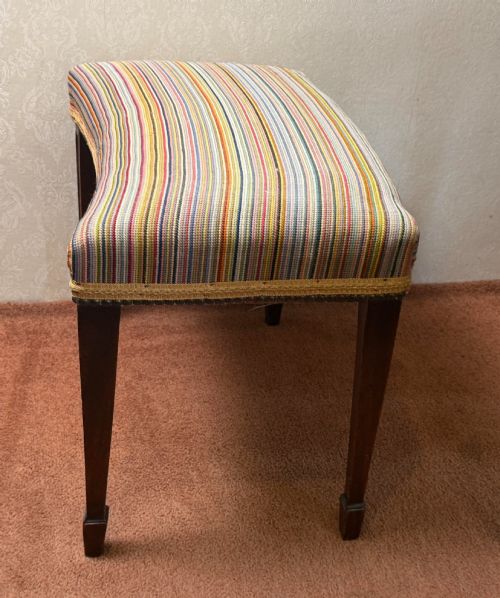
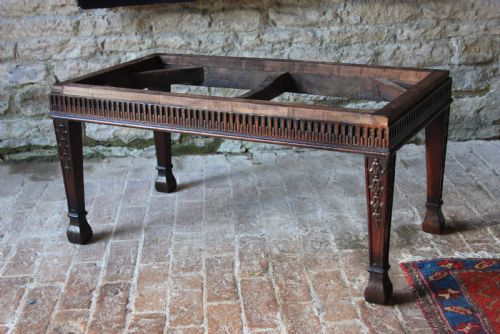
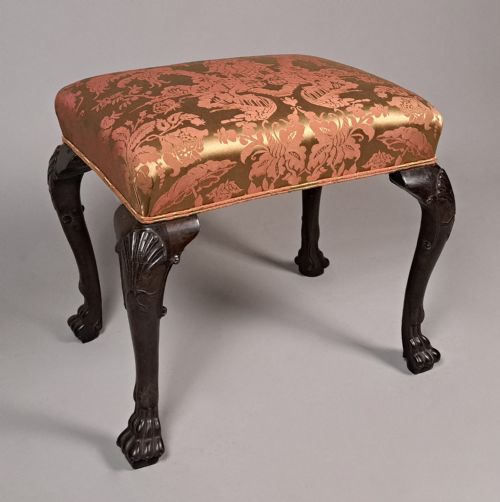
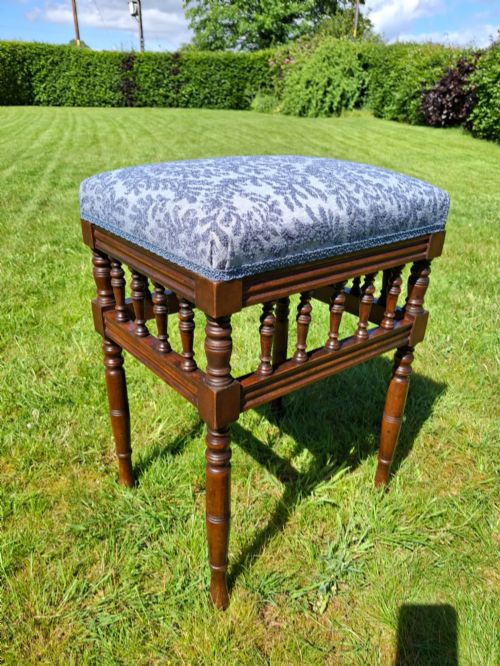
Makers relied primarily on solid mahogany for the frames, prized for its strength, rich colour, and ability to take fine carving. Joinery techniques varied from simple pegged joints to intricate carved cabriole legs and square tapering supports.
Upholstery formed a crucial part of the construction, utilising materials like fabric, leather, velvet, tapestry, and damask. Brass fittings and details occasionally appeared on specific revival and period models to enhance the design.
Listings feature mahogany frames paired with diverse coverings including velvet, leather, and damask across Victorian, Georgian, and Edwardian periods.
Factors of quality and craftsmanship
Quality in these stools rests largely on the depth of carving, the crispness of the timber moulding, and the structural integrity of the mahogany frame. Superior examples display thoughtful proportions and hand-carved details rather than mass-produced uniformity.
The standard of upholstery and the choice of covering material also distinguish finer pieces. Original or sympathetic re-upholstery using traditional textiles like damask or leather elevates the overall finish of the piece.
Jas Shoolbred
The Dark Mahogany Dressing Stool Glossary
- Mahogany
- A durable, reddish-brown tropical hardwood widely used for fine furniture framing. Its stability made it the favoured timber for intricate chair and stool legs.
- Cabriole leg
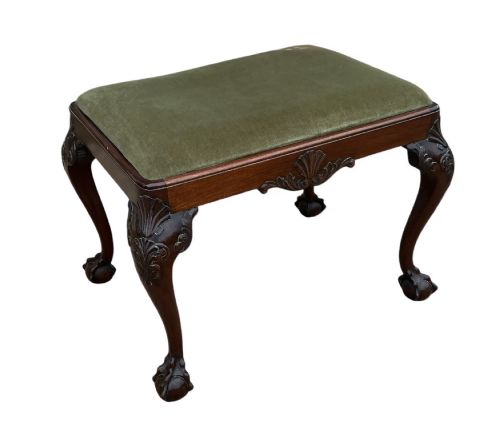
- A furniture leg that curves outward and then tapers inward, mimicking animal legs. This form appears frequently on eighteenth and nineteenth century revival pieces.
- Damask
- A reversible figured fabric traditionally woven on a jacquard loom. It provides a formal, patterned texture suitable for traditional upholstery.
- X-frame
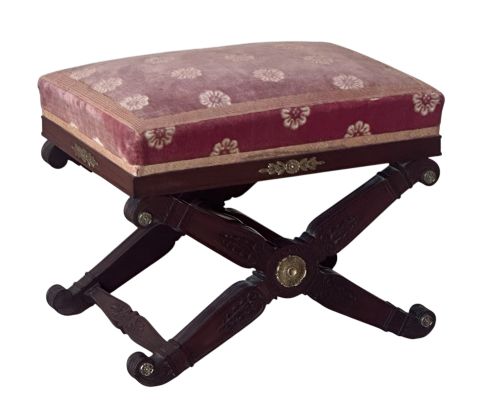
- A structural furniture base formed by intersecting diagonal members. This ancient curule form returned in various nineteenth century revival styles.
- Tapestry
- A heavy hand-woven or machine-woven textile featuring pictorial designs. It often appears as a durable covering on antique seating.
Dark Mahogany Dressing Stool: Frequently Asked Questions
What is a dark mahogany dressing stool used for?
These stools serve primarily as seating before a bedroom dressing table or vanity. Their compact size also allows them to function as occasional seats or piano benches in sitting rooms.
Historically, they provided a portable and comfortable seat for grooming routines. Today, they integrate easily into various rooms as decorative accent pieces.
How do I date a mahogany stool?
Dating relies on examining the leg style, timber grain, and joinery methods. Eighteenth century pieces often feature hand-cut joints and distinct regional carving, while Victorian examples show machine assistance.
Revival pieces from the late nineteenth and early twentieth centuries frequently imitate earlier Georgian or Chippendale forms. Comparing the secondary timbers and wear patterns helps clarify the true age.
Are these stools comfortable for daily use?
Most pieces offer firm support due to traditional padding and heavy timber construction. The comfort level often depends on whether the upholstery has been recently restored.
Revival and nineteenth century models generally provide a stable platform for short periods of sitting. Buyers intending heavy daily use often look for pieces with sound internal webbing.
How do I match a stool to my decor?
Matching involves considering the wood tone and the style of surrounding furniture. Dark mahogany pairs well with traditional period rooms as well as contrasting modern interiors.
Paying attention to the upholstery fabric allows the piece to tie into existing colour schemes. Plain leather or damask covers often bridge different interior styles successfully.