




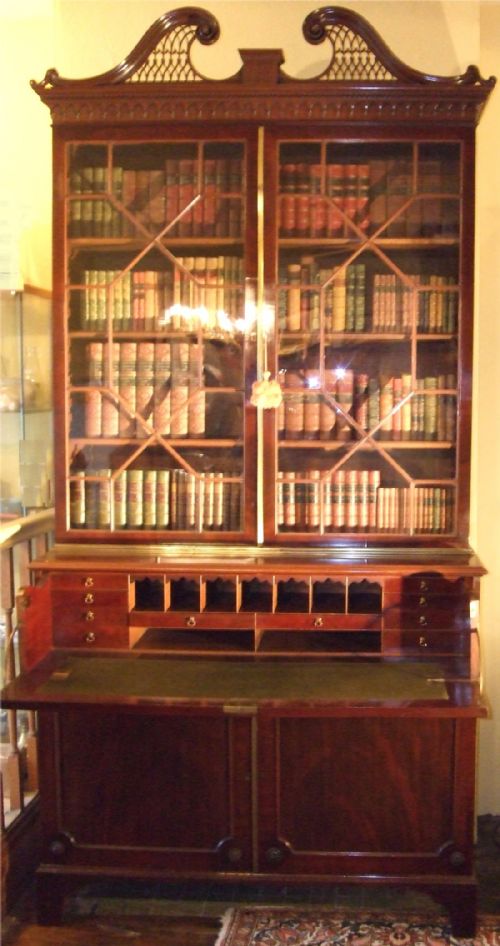


Georgian Style Secretaire Desk
These mahogany and satinwood secretaire pieces combine upper shelving with fitted writing drawers, offering an elegant focal point for any study.
Georgian Style Secretaire Desk
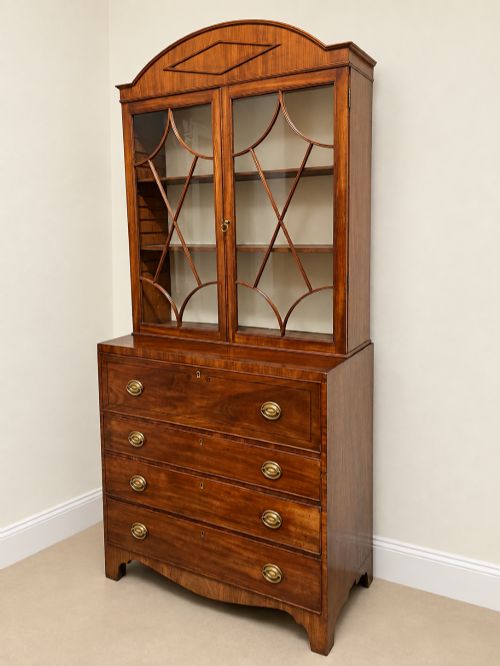
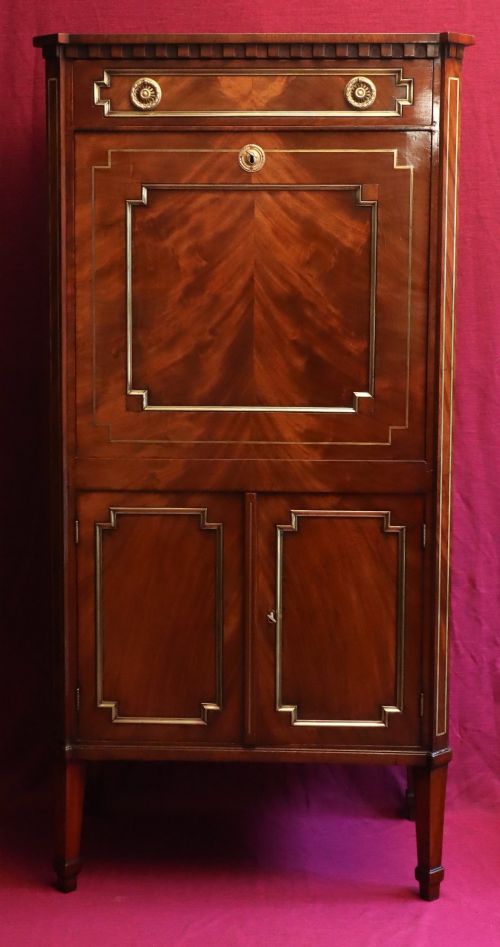
A georgian style secretaire desk encompasses tall bureau bookcases, cabinets, and library writing tables designed with a drop-down writing flap concealing internal compartments. These forms bridge the gap between closed storage furniture and dedicated writing spaces.
The pieces appearing on this page span the 18th century, the Regency period, and later revival eras up to the early 20th century. Mahogany remains the most common primary wood, often paired with satinwood, oak, or padauk.
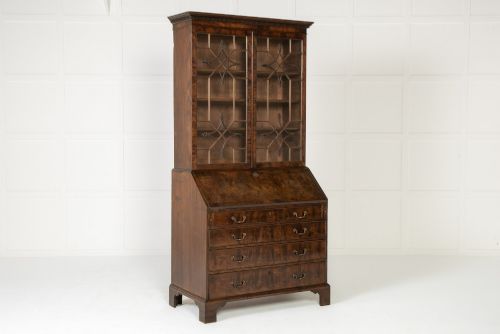
Buyers will encounter grand secretaire bookcases featuring glazed upper doors alongside smaller writing cupboards and chests. Each variation maintains the dual function of displaying books or possessions while providing a concealed writing surface.
What varies in quality
The distinction between standard workshop production and exhibition quality lies in the precision of the cabinetwork and the choice of timbers. Superior pieces display finely figured mahogany grain, intricate marquetry inlay, and sophisticated internal pigeonhole arrangements.
Structural integrity and original hardware significantly influence the standing of an individual piece. Retained period brasses, well-executed swan neck pediments, and branded or attributed designs separate ordinary utility items from distinguished examples.
Georgian Style Secretaire Desk Retail Price Guide 2026
Typical asking prices for georgian style secretaire desk among the pieces listed under this phrase on Sellingantiques today, from the lower quarter to the upper quarter. They describe what is for sale here now, not the wider market.
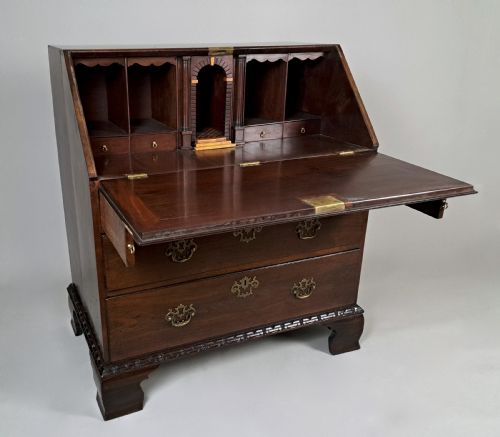
Secret compartments hidden behind miniature drawers within the desk interior provided a private spot for storing love letters and family jewels.
Thomas Hope·Gillows·Edwards and Roberts
The Georgian Style Secretaire Desk Glossary
- Secretaire
- A piece of furniture containing a drawer or compartment that folds down to form a writing desk. It typically conceals a collection of small drawers and pigeonholes.
- Marquetry
- Decorative veneer work formed by fitting pieces of various coloured woods into a design. This technique adorns the surfaces of fine satinwood cabinets.
- Pediment
- The triangular or curved architectural crown above a bookcase or cabinet. Elaborate examples often feature swan neck designs.
- Padauk
- A dense tropical hardwood displaying rich red or brown tones used in select 18th-century pieces. It offers exceptional durability and a striking grain.
- Bramah lock
- A high-security patented lock invented in the late 18th century. Its presence indicates a piece intended for valuable documents.
Georgian Style Secretaire Desk: Frequently Asked Questions
How do I use a secretaire desk?
The fall-front drawer drops down to reveal a writing surface, pigeonholes, and small drawers for stationery.
Once finished, the flap lifts back into place and locks to conceal the contents.
Are these desks good for daily writing?
Many provide a stable leather-lined surface suited to contemporary notebook use or laptop placement.
Ensure the support brackets for the drop-front remain secure before applying heavy pressure.
How can I tell the period?
Examine the timber selection, construction methods, and secondary woods like oak or deal used in drawer linings.
Stylistic cues such as Chippendale blind fretwork or Sheraton satinwood inlay offer further chronological markers.
Where should I place a bookcase model?
These tall pieces require stable wall placement and adequate ceiling clearance, especially versions with swan neck pediments.
Keep them away from direct sunlight to protect mahogany finishes and leather writing surfaces.