



Georgian Style Miniature Drawers
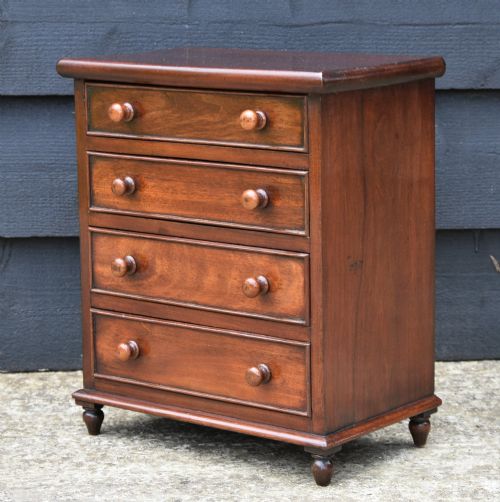
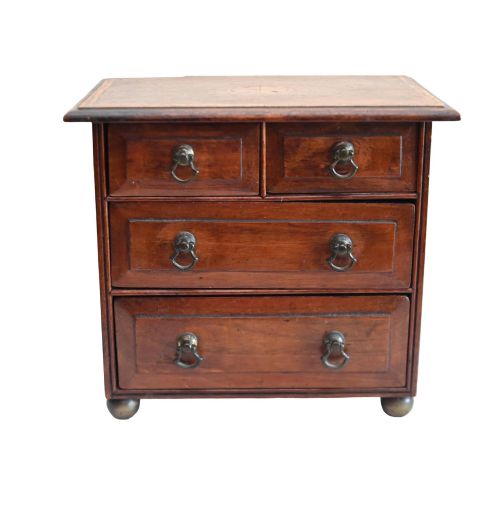
Georgian style miniature drawers are small scale chests and cabinets built to showcase fine cabinetmaking.
Georgian Style Miniature Drawers
When you search for georgian style miniature drawers, you encounter scaled down chests and storage pieces that mimic full size furniture. The pieces on this page span the nineteenth century, the Edwardian era, and the early twentieth century.
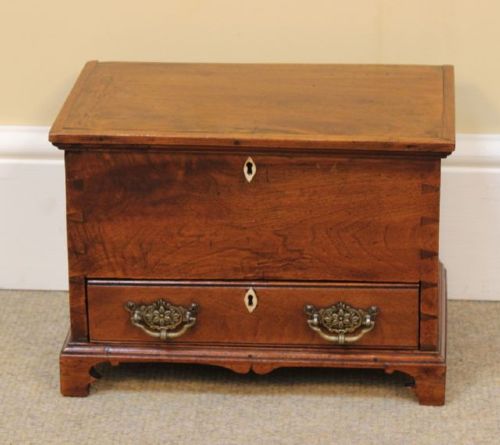
Most examples take the form of miniature chests of drawers, trinket storage chests, or small cabinets constructed in walnut, mahogany, and yew wood. Makers produced these items as apprentice pieces or as decorative tabletop furnishings for period homes.
How they were made
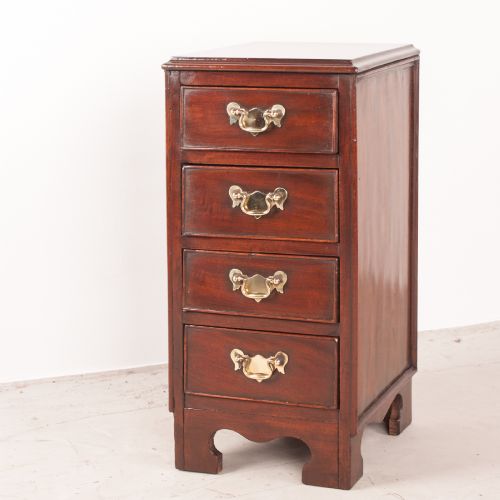
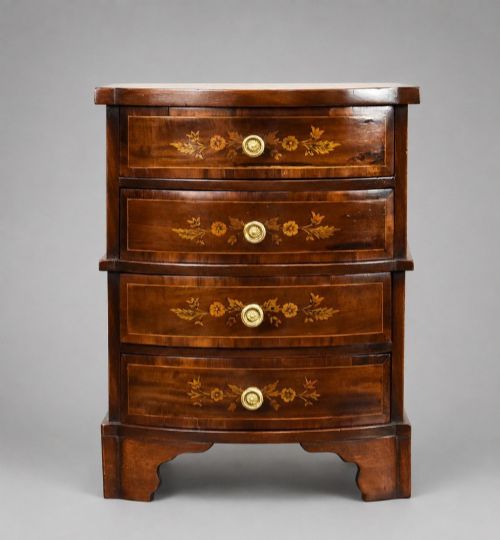
Craftsmen built these miniature items using timbers such as mahogany, walnut, and yew wood, often applying marquetry or inlay for surface decoration. Cabinetmakers also incorporated brass handles and escutcheons to replicate the detailing found on full scale furniture.
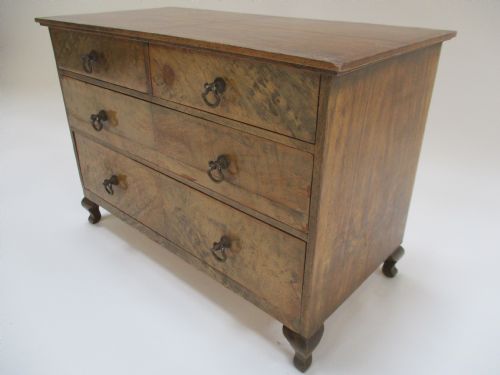
Construction techniques mirror those of standard furniture, utilising small scale dovetail joints for the drawers and fitted panels for the carcases. Selected pieces feature figured walnut veneers or bone accents to enhance the visual depth of the woodwork.
Tiny brass handles on these chests prove that someone once spent an entire afternoon filing metal down to the size of a thumbnail.
What varies in quality
The standard of timber selection and veneer figure largely dictates the distinction between ordinary and superior pieces. Finer examples display carefully matched grain patterns on the drawer fronts and precise execution of inlay or marquetry.
Proportion and attention to historical detail also separate the range, as better makers maintained accurate scale relationships derived from full size Georgian prototypes. The finish of the timber and the quality of the small brass fittings further indicate the maker's skill.
The Georgian Style Miniature Drawers Glossary
- Apprentice piece
- A small scale furniture item created by a trainee craftsman to demonstrate mastery of joinery and woodworking techniques before joining a guild.
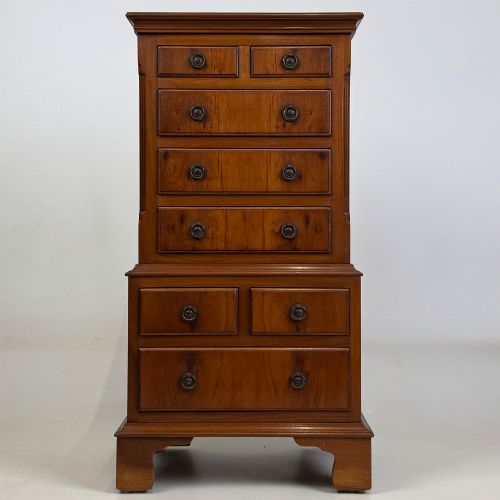
- Chest on chest
- A tall storage unit formed by stacking a smaller chest of drawers directly on top of a larger base chest.
- Marquetry
- Decorative veneer work arranged in geometric or pictorial patterns using various coloured woods and contrasting materials.
- Mule chest
- A storage chest fitted with one or more drawers in the lower section beneath a hinged lid compartment.
- Escutcheon
- A small protective plate surrounding a keyhole, often cast in brass on fine cabinetwork.
Georgian Style Miniature Drawers: Frequently Asked Questions
What were miniature drawers used for?
These small chests served practical purposes as tabletop storage for trinkets, letters, or small valuables in domestic settings.
Cabinetmakers also created them as showcase pieces to demonstrate their technical proficiency to prospective clients or trade guilds.
Are apprentice pieces genuine?
Many small chests historically described as apprentice pieces were actually produced as decorative items or salesman samples for shops.
Genuine training pieces typically show variations in hand cut joinery and timber quality reflecting the work of a learning craftsman.
How do I identify Georgian style?
Georgian style pieces often feature classical proportions, bracket feet, and refined timber veneers such as mahogany or walnut.
Later revivals from the nineteenth and twentieth centuries adapted these proportions while utilising period specific construction methods.
Where should I place them?
Miniature chests suit placement on larger desks, sideboards, or console tables where their fine details can be viewed closely.
They function well as standalone decorative accents in traditional or mixed interior settings without requiring extensive floor space.