


Georgian Style Dining Seats
Georgian style dining seats bring timeless formal structure to a room, offering sturdy mahogany and upholstered comfort for everyday dining.
Georgian Style Dining Seats
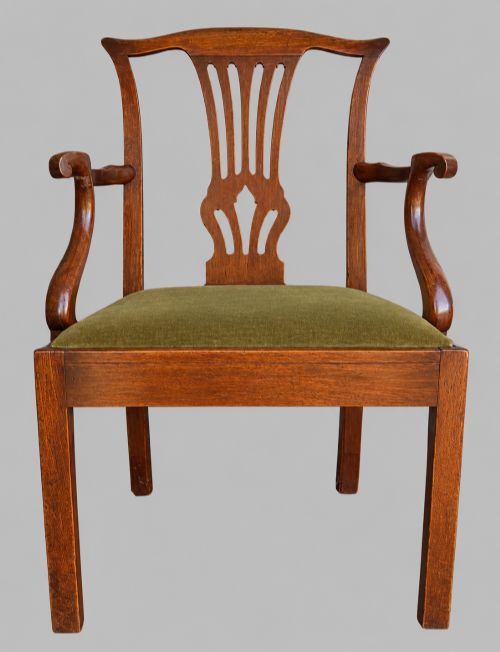
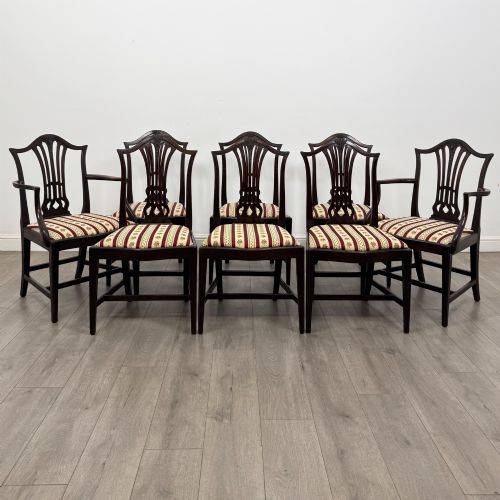
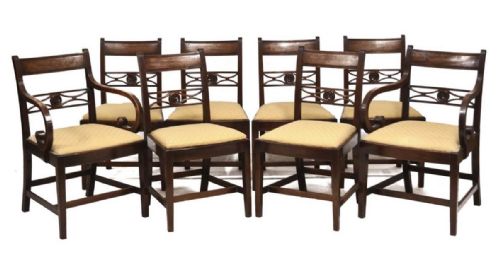
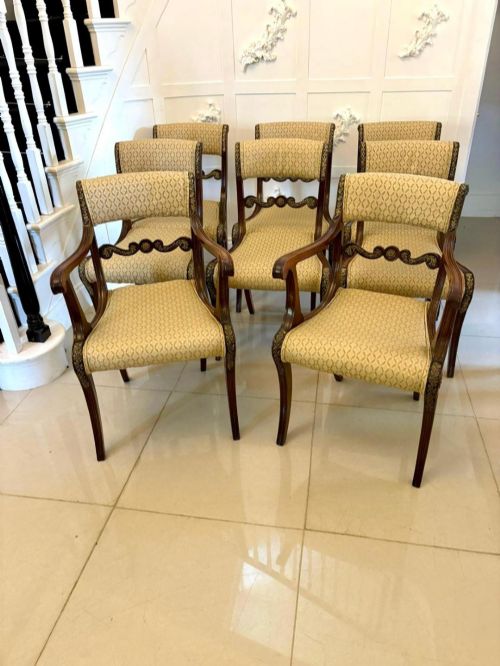
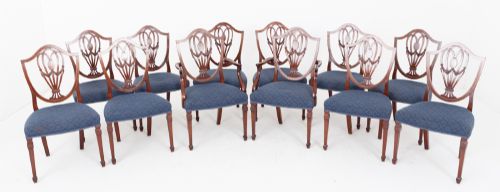
When you search for georgian style dining seats, you are looking at chairs built in the manner of the eighteenth century, alongside pieces actually made during that era and later revivals from the nineteenth and early twentieth centuries. These pieces encompass single chairs, carvers, armchairs, and sets ranging from four to sixteen items.
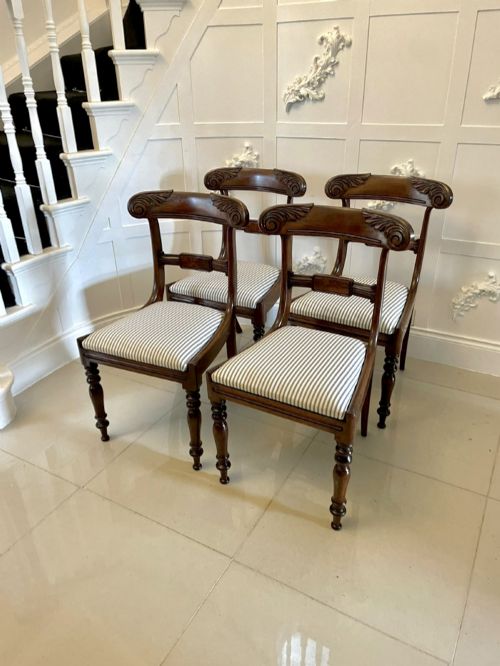
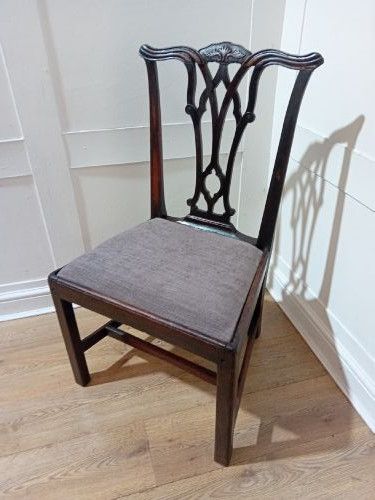
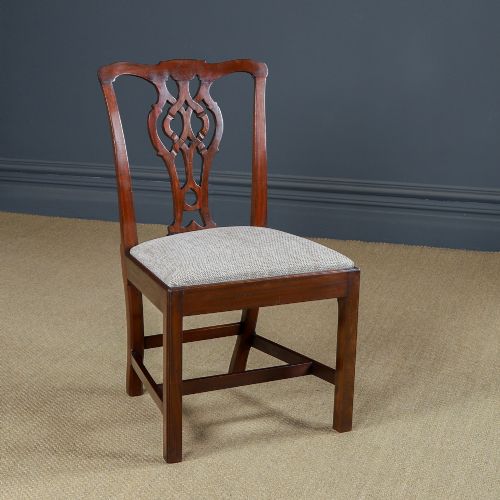
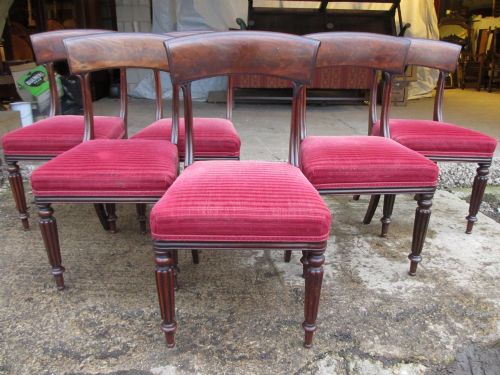
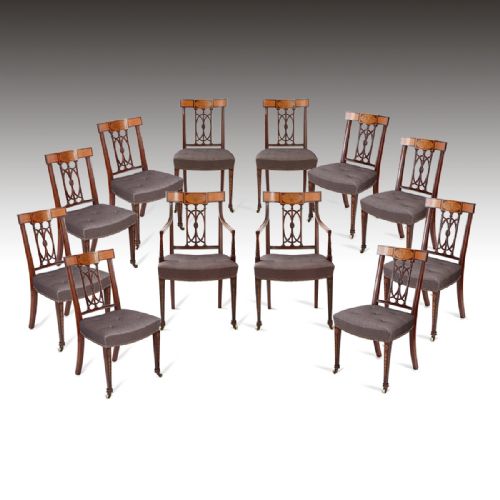
The most common forms on this page include mahogany dining chairs with shield backs, bar backs, and Chippendale style carved splats. You will also find walnut, ash, elm, fruitwood, and painted finishes originating from English, Scottish, and Irish workshops.
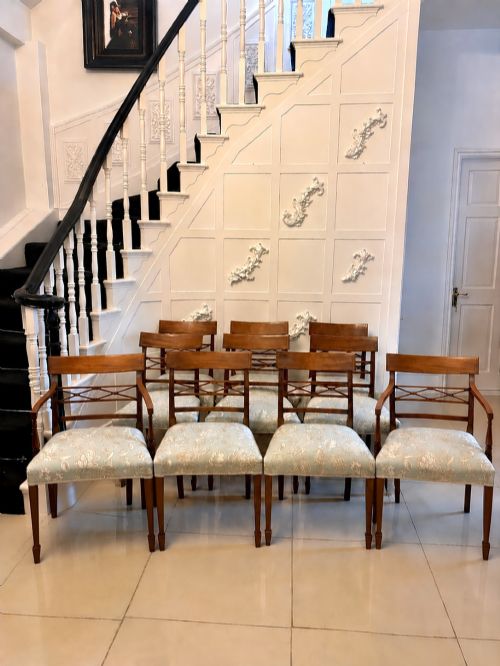
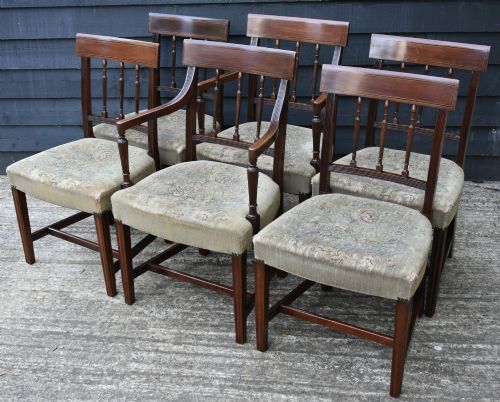
Sets frequently combine side chairs with matching armchairs, often designated as carvers or elbow chairs for the heads of the table. The periods represented stretch from mid eighteenth century originals through Regency and William IV eras up to Edwardian revivals.
How they were made
Cabinetmakers constructed these seats primarily using solid mahogany, walnut, and regional hardwoods like ash and elm for country variants. Timber selection dictated the strength of delicate carved splats and slender legs.
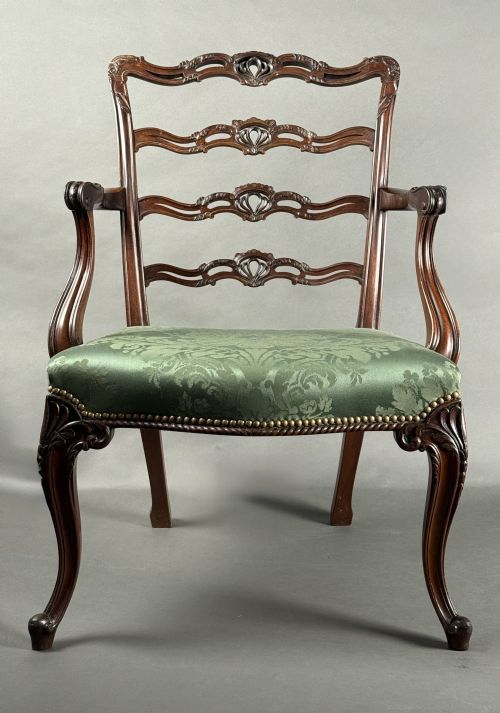
Upholstery involved traditional stuffing techniques applied to drop in seats or fixed pads, covered in leather, velvet, fabric, or textile. Brass studs often secured the edges of the upholstery to the wooden rails.
Georgian Style Dining Seats Retail Price Guide 2026
Typical asking prices for georgian style dining seats among the pieces listed under this phrase on Sellingantiques today, from the lower quarter to the upper quarter. They describe what is for sale here now, not the wider market.
Some chairs retain their original eighteenth century stuffing, holding centuries of dinner table conversations within their pads.
What varies in quality
The crispness of hand carving on the back splats and top rails separates standard production from exhibition pieces. Finer seats show deep relief and clean lines without softening in the detail.
Structural integrity depends on the tightness of the joinery in the frame and legs. Original timber surfaces with good colour and patina command higher regard than heavily stripped or altered examples.
The Georgian Style Dining Seats Glossary
- Carver
- An armchair designed to match a set of single dining chairs, typically placed at the head of a table. These often feature elbow rests.
- Shield back
- A chair back shape resembling a heraldic shield, popularised by Hepplewhite and frequently seen in sets from the eighteenth century and later revivals.
- Splat
- The vertical central strip of wood in the back of a chair, often pierced and carved in Chippendale or George III designs.
- Bar back
- A horizontal wooden rail across the back of a chair, characteristic of William IV and Regency dining seats.
- Drop in seat
- A removable upholstered frame that drops into the wooden seat rails of a dining chair.
Georgian Style Dining Seats: Frequently Asked Questions
What is a carver chair?
A carver is an armchair designed to match a set of single dining chairs, usually positioned at the ends of the dining table.
These chairs give extra arm support and often share the same decorative back design as the rest of the set.
How do I spot an original Georgian chair?
Original eighteenth century pieces show period construction methods, timber shrinkage, and hand tool marks rather than modern machine work.
Examine the underside and joints for signs of age, matching the wood species and wear patterns to the stated period.
Can I mix different chair styles?
Mixing single chairs and carvers within a similar timber and period style is a traditional way to seat guests around a dining table.
Matching wood tones and general proportions helps maintain visual harmony across the seating arrangement.
What wood was used most often?
Mahogany is the predominant timber found across these dining seats, valued for its strength and rich grain.
Other materials include walnut, ash, elm, and fruitwood, particularly in regional country pieces and earlier designs.