
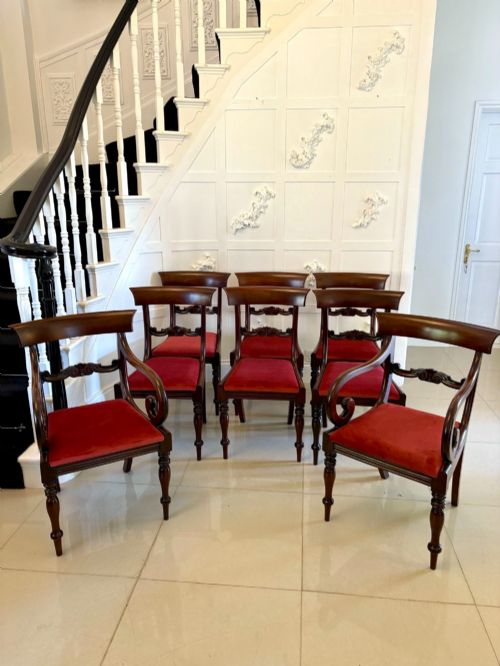
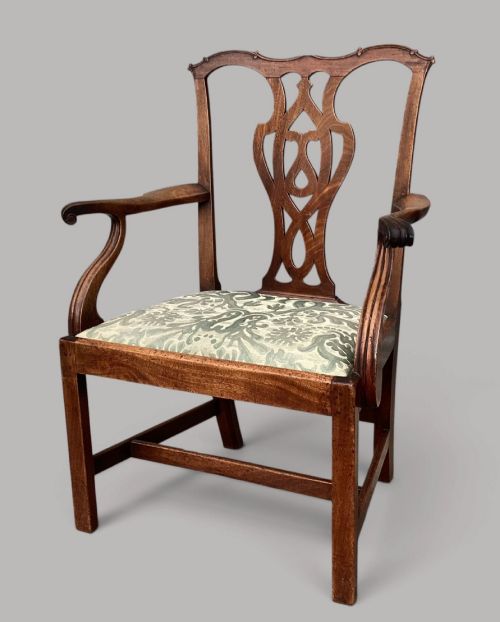
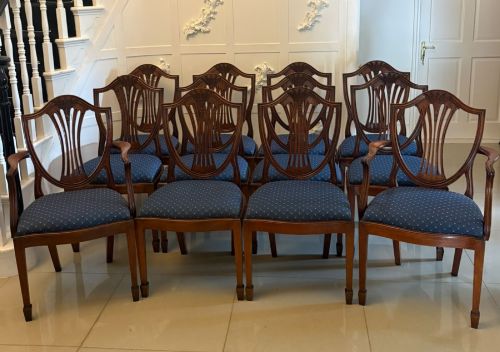
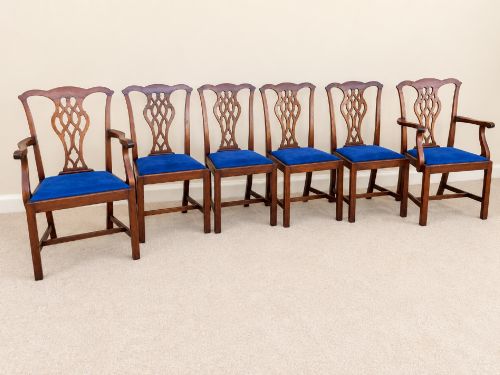
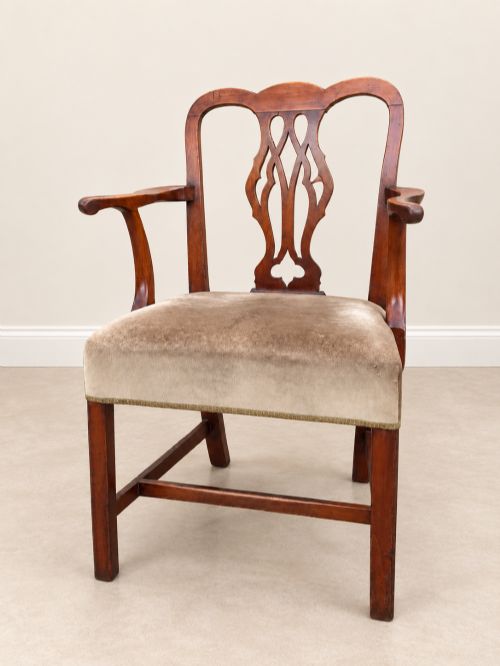
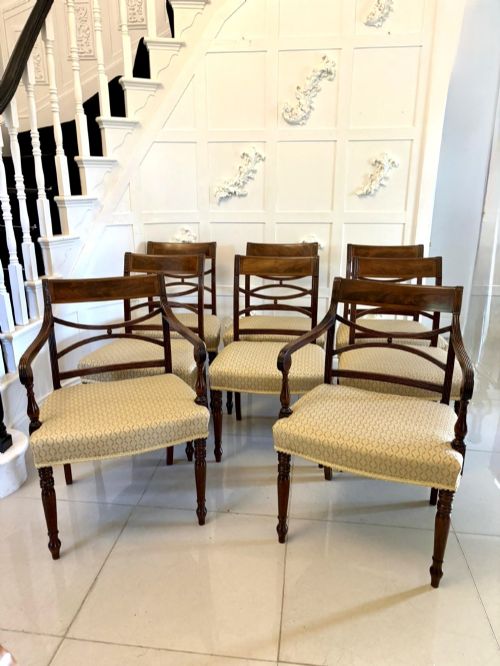
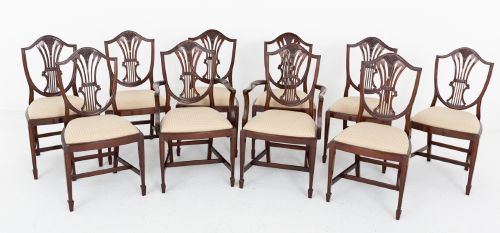
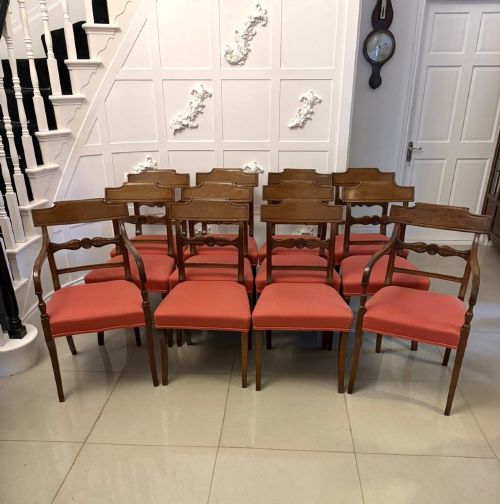
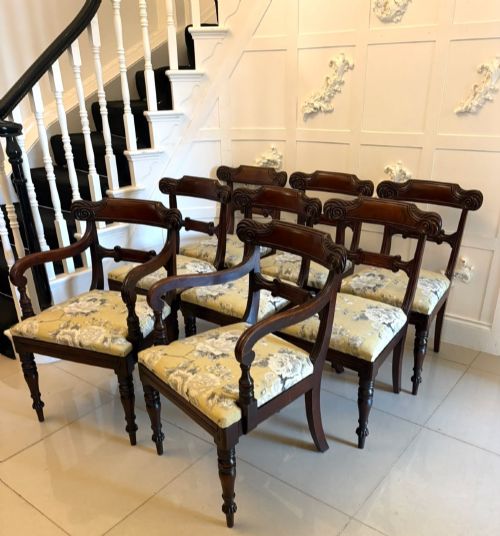
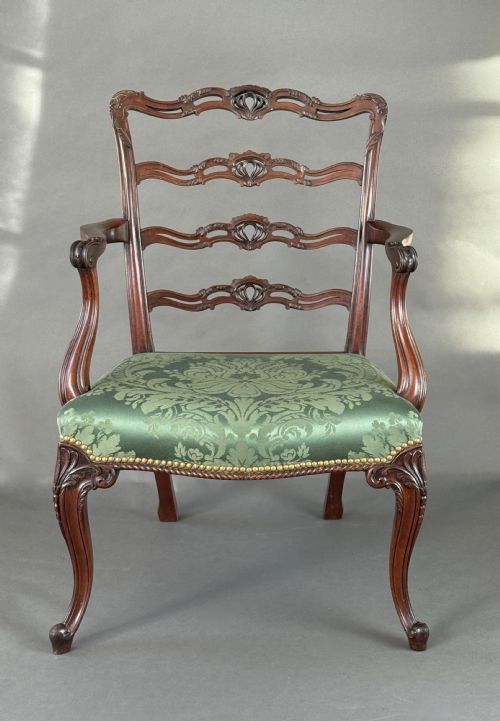
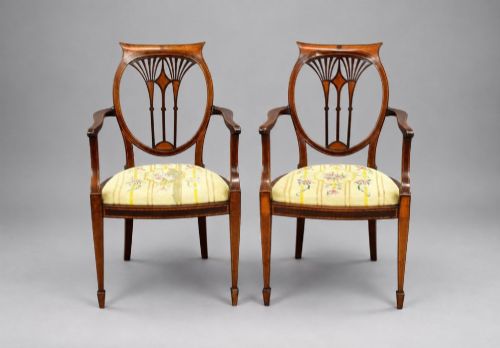
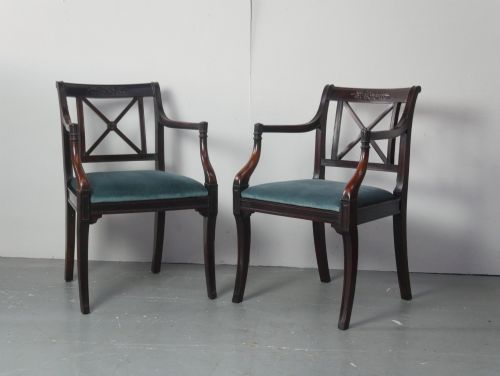
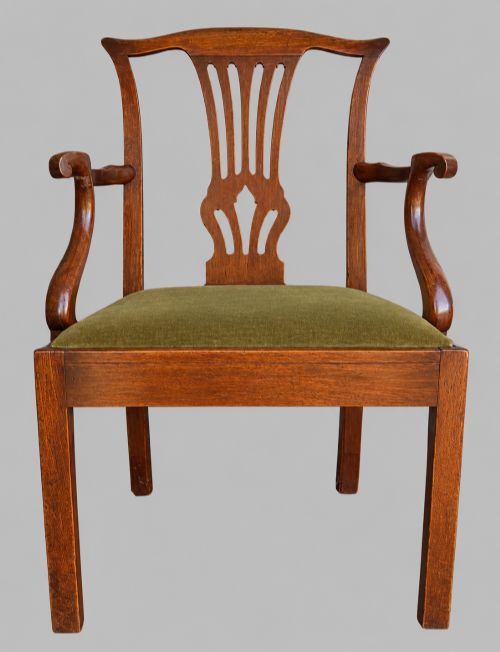
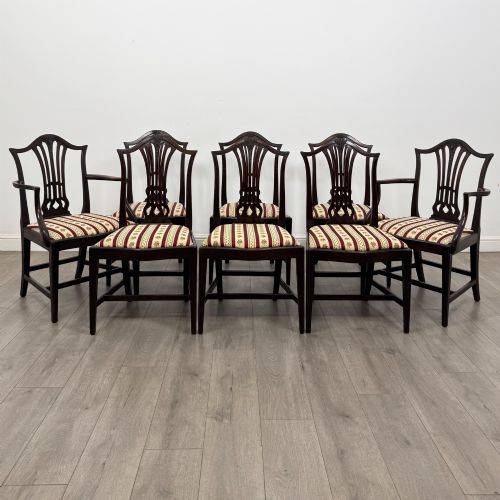
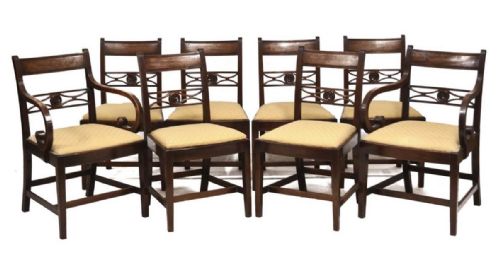
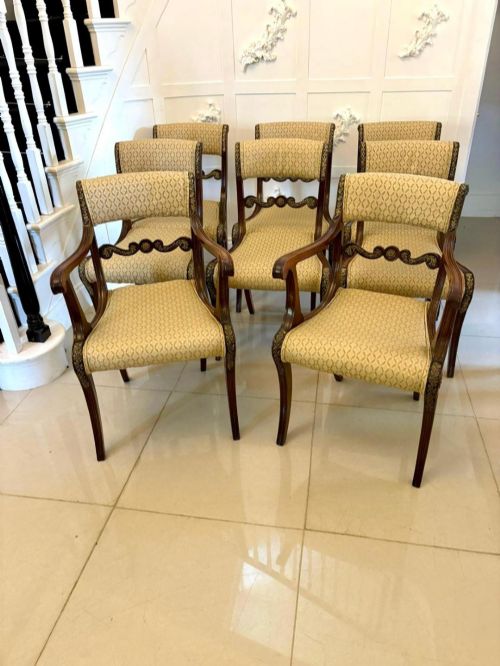
Georgian Style Dining Carvers
Georgian style dining carvers are the commanding armchairs at the head of the table, built for presence and comfort.
Georgian Style Dining Carvers
These armchairs serve as the principal seats at a dining table, featuring supportive armrests designed to flank a matching set of side chairs. When searching for georgian style dining carvers, a buyer encounters pieces spanning actual 18th-century origin to later 19th-century revivals and 20th-century reproductions. The common forms on this page include shield backs, pierced splats, and open arms executed in mahogany, fruitwood, ash, and elm.
Original period examples date from the Georgian, George III, and Regency eras, while revival pieces draw heavily on Chippendale, Hepplewhite, and Sheraton designs. Many listings present these carvers as part of larger dining sets or in matched pairs alongside single chairs. The structural vocabulary relies on classic proportions, sturdy stretchers, and carved details that echo the dominant cabinetmakers of the 18th century.
Materials and Construction
Mahogany dominates the evidence as the principal timber, valued for its strength in slender carved members like pierced splats and curved arm supports. Subsidiary woods such as ash, elm, and fruitwood appear in country-made armchairs, whilst walnut occasionally surfaces in earlier iterations. Joinery relies on traditional mortise and tenon construction, reinforced with corner blocks on higher-grade seat frames.
Upholstery materials range from plain leather and velvet to patterned fabric fixed over drop-in frames or stuffed seat rails. Brass elements appear selectively as decorative nails or castors on Regency period legs. Carving is executed directly into the solid wood of the top rail, splat, or arms, complemented by occasional line inlay.
Listings for georgian style dining carvers span from 18th-century originals through Victorian and Edwardian revivals up to the 1930s.
Judging Quality and Execution
Quality rests primarily on the crispness of the carving and the fidelity of the proportions. Finer carvers exhibit deeply undercut relief work on the splats and stiles, whereas lesser examples rely on shallow stamping or plain profiles. Timber selection also dictates grade, with dense, straight-grained mahogany outlasting softer or patched substitutes.
Structural integrity separates functional antiques from fragile imitations. The rigidity of the arm joints and the tightness of the frame under lateral pressure reveal the underlying joinery. Original finish and surface patination further distinguish pieces that retain their integrity from those heavily sanded or over-restored.
The Georgian Style Dining Carvers Glossary
- Carver
- An armchair designed to match a set of dining chairs, typically placed at the head and foot of the dining table.
- Shield Back
- A chair back shaped in the outline of a heraldic shield, popularized by Hepplewhite and his contemporaries.
- Splat
- The vertical wooden strip down the centre of a chair back, often pierced and carved in Chippendale or Sheraton designs.
- Elbow Chair
- A traditional term for an armchair, frequently used interchangeably with carver in period descriptions.
- Drop-in Seat
- A removable wooden frame upholstered separately and dropped into a ledge rebated into the chair seat rails.
Georgian Style Dining Carvers: Frequently Asked Questions
What is a carver chair?
A carver is an armchair designed specifically to accompany a set of dining chairs at the table. These seats feature armrests and typically sit at the head and foot of the dining arrangement.
In historical dining sets, carvers matched the single chairs in style and timber but provided a larger scale and greater support for the host.
How do I spot a revival piece?
Revival pieces, such as those from the 1900s or 1920s, replicate 18th-century designs like Chippendale or Hepplewhite. Examination of the timber dryness, tool marks, and secondary woods helps determine the true age.
Many late-nineteenth and early-twentieth-century makers adopted Georgian styles with exceptional skill, creating high-quality interpretations that rival the originals.
Can I mix carvers with different chairs?
Mixing carvers with different single chairs is a traditional approach to furnishing a dining room. Historic sets often grew over time rather than being purchased all at once.
Matching the timber species and general period style ensures visual harmony even when the precise carving details vary slightly between the armchairs and side chairs.
Which wood is most common?
Mahogany is the predominant timber found in georgian style dining carvers across both the 18th century and later revival periods. Its density allowed makers to fashion delicate pierced splats and slender legs.
Alternative timbers like fruitwood, ash, and elm appear more frequently in regional or country-made armchairs from the same eras.