


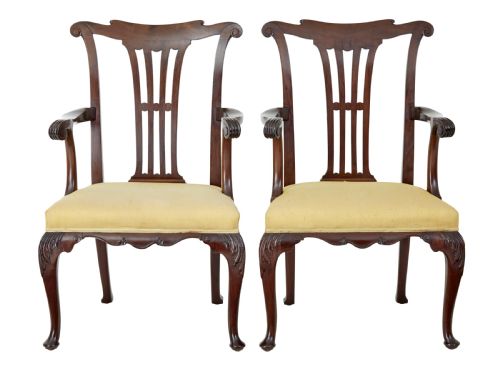


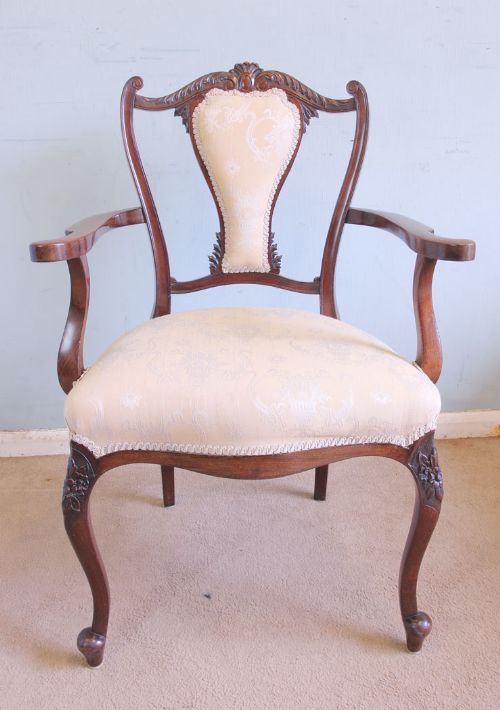
Chippendale Revival Elbow Chairs
These chippendale revival elbow chairs bring eighteenth-century elegance into later interiors, combining sturdy mahogany frames with comfortable upholstered seats for daily study or dining.
Chippendale Revival Elbow Chairs
Chippendale revival elbow chairs represent a sustained nineteenth and early twentieth-century interest in mid-eighteenth-century English furniture designs, taking the form of open armchairs, carvers, and desk chairs. When searching for chippendale revival elbow chairs, buyers encounter mahogany frames produced across the Victorian and Edwardian eras, spanning from eighteen-eighty through to nineteen-twenty.
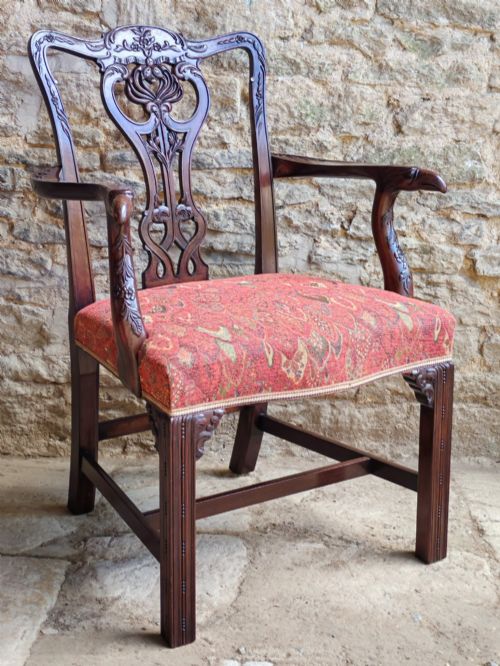
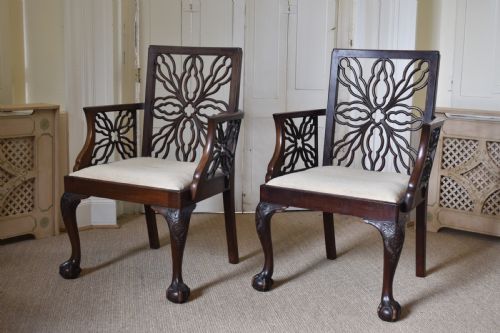
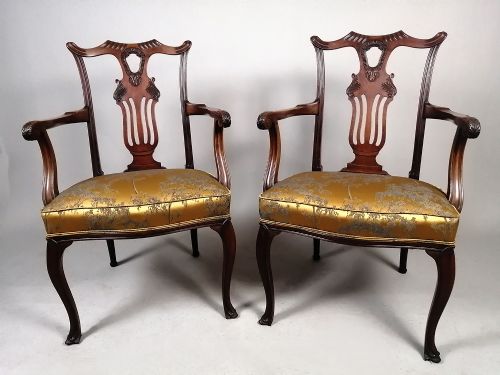
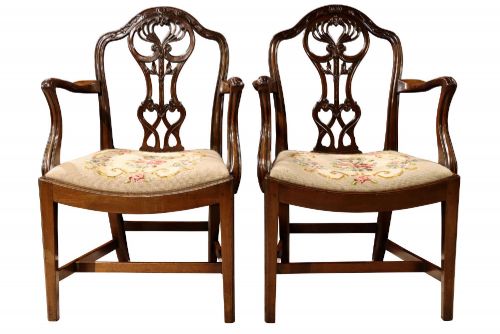
The objects seen here adopt the vocabulary of George the Second and Chinese Chippendale styles, featuring open arms and supportive elbow rests. Workshops of the late nineteenth century produced these pieces alongside pairs and sets, utilising sturdy timbers to mimic earlier forms.
Makers of the period adapted these elbow chairs for drawing rooms, studies, and dining tables, offering variations from lyre-backed configurations to plain mahogany frames. Surviving examples demonstrate how later makers reinterpreted eighteenth-century aesthetics for contemporary homes.
Materials and Construction
Makers relied principally upon solid mahogany to construct the structural frames of these elbow chairs, shaping the wood to form curved top rails and pierced splats. Carved details adorn the arms and legs, reflecting the decorative ambitions of nineteenth-century workshops.
Upholstery forms an integral part of these pieces, utilising materials such as leather, tapestry, wool, and various textile fabrics secured to drop-in or fixed seats. These coverings range from plain leather hides to patterned decorative textiles applied during initial production or subsequent refurbishment.
Listings feature mahogany frames paired with wool, leather, and tapestry upholstery across the Victorian and Edwardian periods.
Quality and Distinction
The refinement of the carved woodwork distinguishes the better examples, where crisp detailing on the splats and arm terminals shows careful hand execution. Timber selection also separates standard production from superior pieces, with dense, well-figured mahogany displaying deeper grain patterns.
Integrity of the frame construction dictates longevity, ensuring joints remain rigid under regular use at a desk or dining table. Original or sympathetic upholstery materials further elevate a piece by maintaining historical harmony with the nineteenth-century wooden framework.
Howard and Sons·Jas Shoolbred
The Chippendale Revival Elbow Chairs Glossary
- Elbow chair
- An armchair designed with supportive rests for the arms, frequently used at a desk or as part of a dining suite carver set. These forms provide greater width than standard side chairs.
- Carver
- A traditional term for an armchair, often matching a set of smaller dining chairs and distinguished by its prominent elbow rests. They stand at the head of a table.
- Lyre back
- A chair back featuring a central splat shaped in the exact contour of a musical lyre instrument. This ornamental motif appears frequently in nineteenth-century revival seating.
- Pierced splat
- The vertical wooden slat positioned in the centre of a chair back, pierced through to create an openwork decorative pattern. It provides both structural support and visual lightness.
- Satinwood
- A pale, fine-grained hardwood utilised for high-end cabinet work and decorative painted furniture. It offers a contrasting golden tone to darker timbers like mahogany.
Chippendale Revival Elbow Chairs: Frequently Asked Questions
How do I date these chairs?
Dating relies upon examining the timber grain, construction methods, and stylistic cues present in the mahogany frame. Most pieces originate from the Victorian and Edwardian periods between eighteen-eighty and nineteen-twenty.
Revival furniture often borrows motifs from earlier reigns, so hardware and upholstery tacking help confirm the actual manufacturing era of the nineteenth or early twentieth century.
Were these chairs used at desks?
Many elbow chairs function effectively as desk chairs due to their supportive armrests and comfortable upholstered seats. Workshop production of the Edwardian era specifically paired these forms with writing tables.
Their sturdy mahogany construction accommodates regular movement and sitting positions required during administrative or literary tasks.
What upholstery materials appear on them?
Original and replacement coverings include leather, tapestry, wool upholstery, and various decorative textile fabrics. These materials are secured over sprung or padded seats to provide comfort.
Selection depends on the intended room setting, ranging from plain leather for a study to patterned woven textiles for a drawing room.