


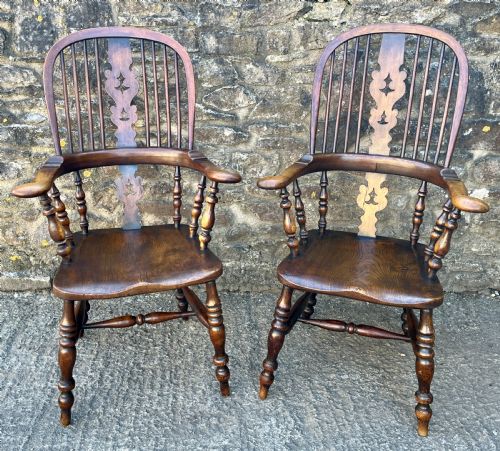
Brown Wood Armchair Pair
A brown wood armchair pair brings matched seating to a room, offering sturdy timber frames and supporting arms.
Brown Wood Armchair Pair
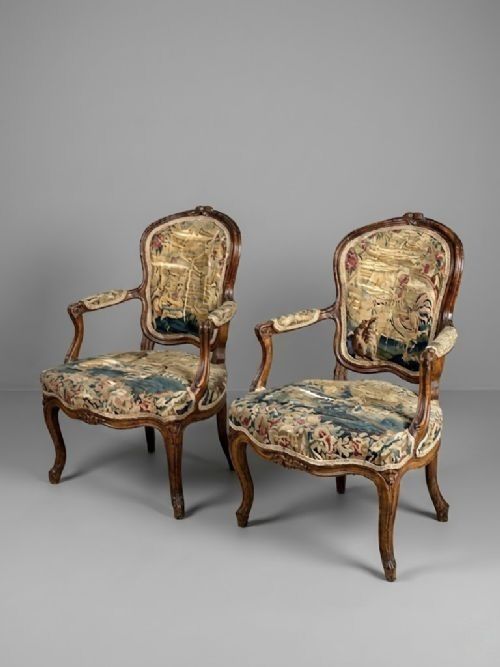
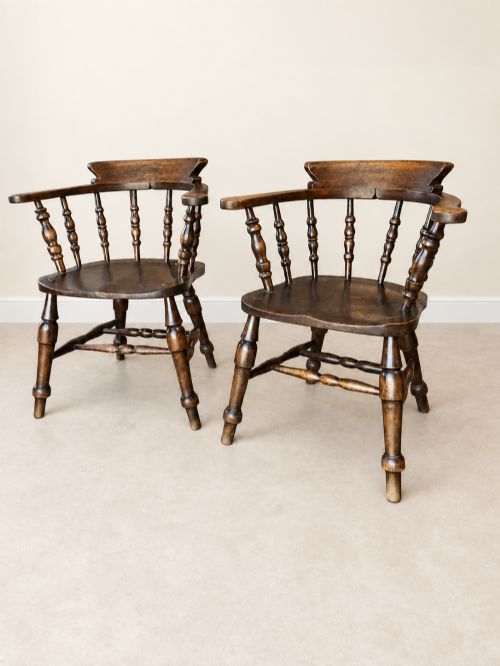
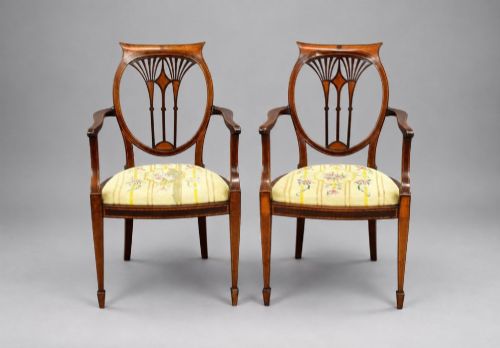
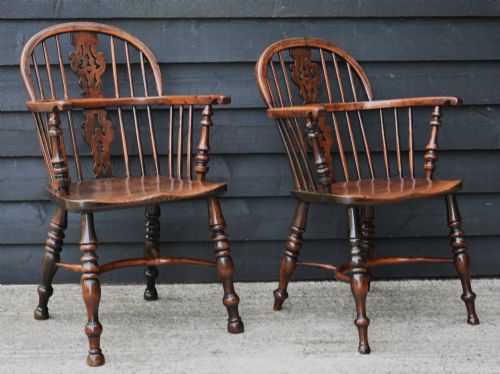
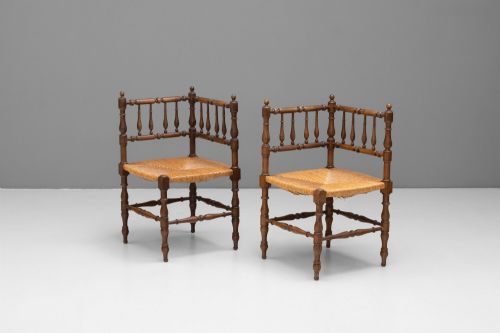
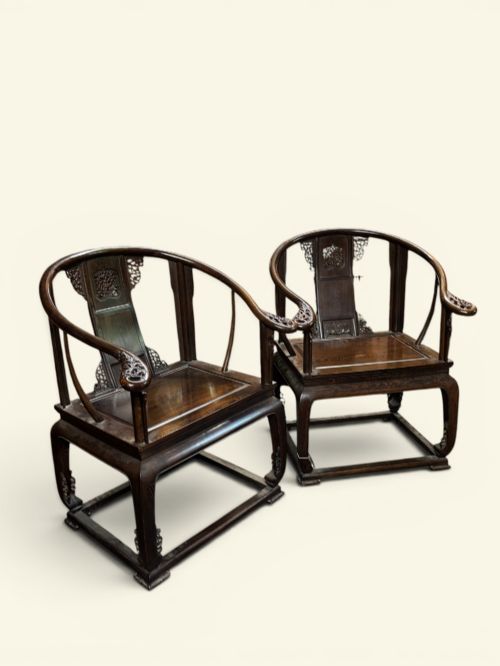
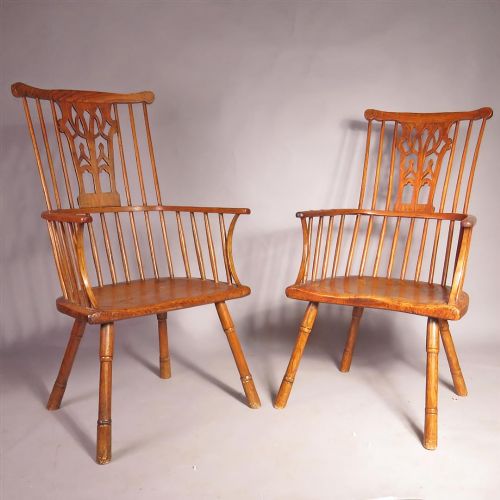
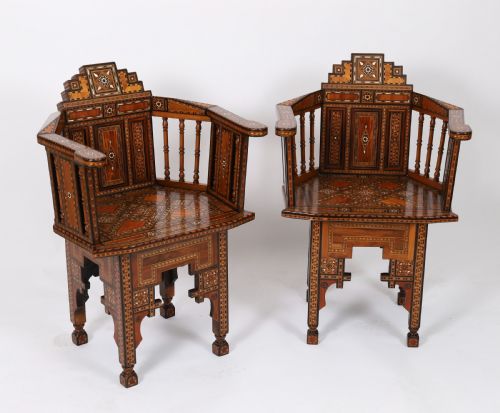
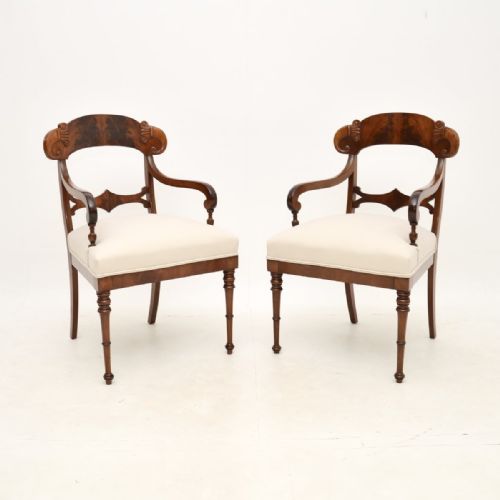
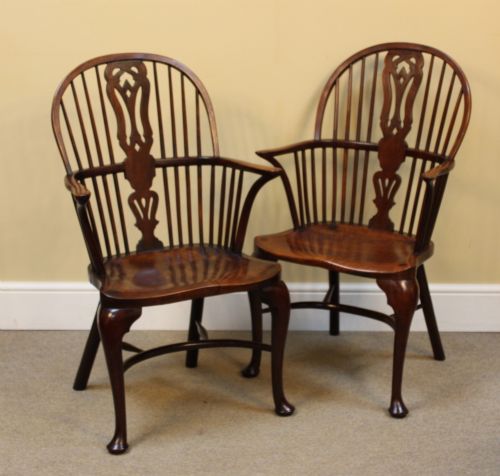
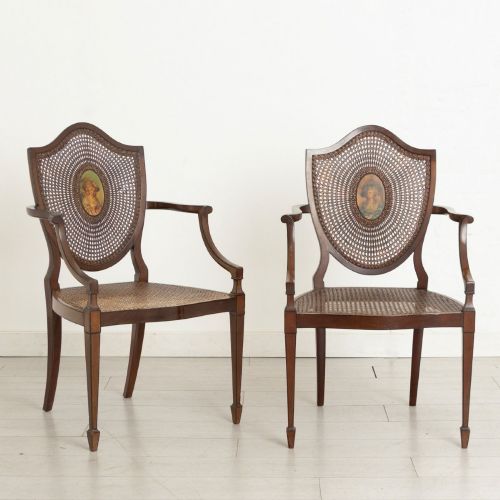
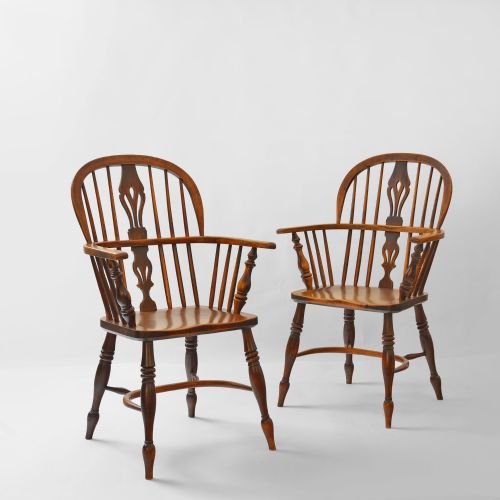
A brown wood armchair pair consists of two matching seats designed with armrests, appearing across periods from the eighteenth century to the twentieth century. These sets include country Windsor designs, formal mahogany carvers, and inlaid Edwardian seating.
Buyers meet various timber tones and regional styles when searching this phrase, ranging from English elm and ash country chairs to mahogany dining carvers. Matching pairs provide balanced placement around a table or beside a fireplace.
Quality and proportion
The standard of a brown wood armchair pair depends upon timber selection, timber figure, and the crispness of any carved or turned elements. Matching timber grain between two chairs indicates careful selection by the maker.
Structural integrity and original joinery influence desirability. Pairs that retain balanced proportions and uncompromised frames represent the upper tier of available seating.
Listings feature timbers including mahogany, elm, yew, oak, ash, and hardwood across eighteenth, nineteenth, and twentieth-century periods.
Thonet
The Brown Wood Armchair Pair Glossary
- Carver chair
- An armchair designed with upright supports, traditionally used at the head of a dining table.
- Windsor chair
- A wooden chair built with a solid saddle-shaped seat into which the back and legs are wedged.
- Yew
- A hard, dense timber with a distinct figured grain utilised in traditional chair making.
- Elm
- A tough, interlocking timber frequently chosen for chair seats due to its resistance to splitting.
- Inlay
- The technique of inserting contrasting pieces of wood or other materials into depressions on the surface to form a pattern.
Brown Wood Armchair Pair: Frequently Asked Questions
What is a brown wood armchair pair used for?
These chairs function as seating around a dining table, at a desk, or paired in a living space.
Matching pairs provide symmetrical placement within a room layout.
How do I tell different periods apart?
Georgian and Regency pieces often feature formal mahogany carving and slender proportions. Later Edwardian and Victorian examples frequently include inlaid decoration and darker polished finishes.
Country pieces like Windsors display turned wooden spindles and elm or ash construction associated with regional workshops.
Are these chairs comfortable for daily use?
Solid wood seats and supportive armrests offer firm upright support. Many models accommodate loose cushions or upholstered pads for additional comfort.
Proper ergonomic angles vary between country low-backs and formal library chairs.
How should I care for wooden frames?
Maintain timber surfaces by applying appropriate wax polish periodically to nourish the grain. Keep chairs away from direct heat sources and strong sunlight to prevent wood movement.
Dust regularly with a dry cloth to protect the historic finish.