
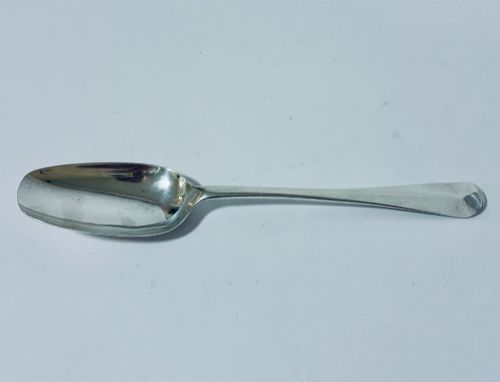
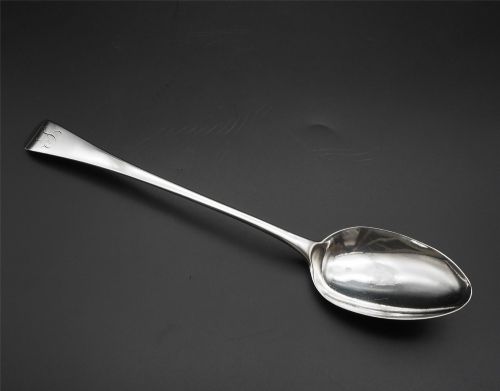
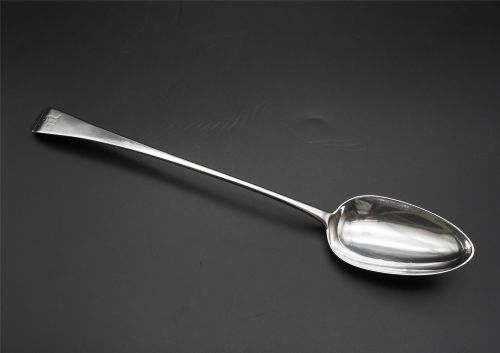
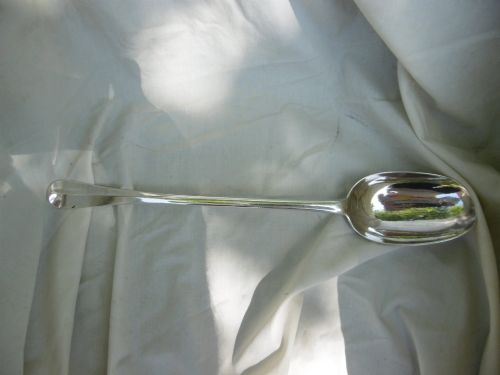


Georgian Stuffing Spoon
A georgian stuffing spoon is a large silver implement designed for serving meat, bringing substance and scale to the table.
Georgian Stuffing Spoon
When you search for a georgian stuffing spoon, you are looking at large serving items created to handle generous portions of meat and fowl at the dining table. These substantial pieces emerge predominantly from the eighteenth century and the early decades of the nineteenth century, reflecting an era of elaborate dining rituals.
The versions you are most likely to meet on this page span the reigns of George I, George II, and George III, alongside provincial and Irish examples. They appear as single pieces or matched pairs, fashioned in sterling silver and measuring significantly longer than standard table cutlery.
Materials and construction
Every example recorded here is fashioned from sterling silver, reflecting the dominant metal used by silversmiths during the Georgian period. The weight of these items is often considerable, reflecting the heavy gauge of metal required to withstand the demands of serving large joints of meat.
Construction relies upon traditional silversmithing techniques, with hand-hammered bowls joined to robust handles. Makers struck their punches directly into the silver, leaving clear hallmarks that record the city of assay, the date letter, and the maker's mark.
One massive Scottish hash spoon scales at a quarter of a kilopound in silver weight alone.
Judging quality in silver serving spoons
Quality in a georgian stuffing spoon rests upon the thickness of the silver gauge and the crispness of the original hallmarks. Heavy metal provides a reassuring balance in the hand, whereas thinner examples lose their structural integrity through centuries of polishing.
The clarity of the maker's mark and assay office stamp dictates much of the interest for collectors. Pieces that retain legible stamps and unpolished bowls demonstrate a superior level of preservation compared to those worn thin by intensive cleaning.
Andrew Archer·John Wilks·Robert Gordon·Alexander Henderson
The Georgian Stuffing Spoon Glossary
- Basting spoon
- A large spoon originally intended for spooning juices over roasting meat, largely synonymous with the stuffing spoon.
- Hash spoon
- An alternative eighteenth-century term for a large serving spoon used for substantial dishes.
- Sterling silver
- An alloy consisting of silver and other metals, traditionally standardised for British plate.
- Assay office
- An official body that tested the purity of precious metals and applied legal hallmarks.
Georgian Stuffing Spoon: Frequently Asked Questions
What is a georgian stuffing spoon used for?
These large implements were designed for serving heavy joints of meat, poultry, and vegetable dishes during formal eighteenth-century dinners. Their extended length kept the server's hands clear of hot serving platters.
Today, they function primarily as decorative serving pieces or collection centerpieces, bringing historical weight and presence to modern dining tables.
How do I identify the date of a spoon?
Dating relies upon the sequence of official hallmarks stamped directly into the silver by the assay office. These marks typically include a date letter, a standard mark, and a maker's mark.
Reference tables match the specific shape of the shield and letter font to exact years of production across London, Dublin, and provincial assay offices.
How should I care for antique silver?
Maintenance requires minimal intervention using specialised silver cloth to remove tarnishing without abrasive pastes that wear down engraved details. Storing pieces in a dry, tarnish-resistant environment protects the metal from atmospheric corrosion.
Frequent washing should be avoided in favour of gentle dusting and occasional cleaning only when tarnish becomes apparent.