




Georgian Stemware Collector
Georgian stemware collector pieces are drinking vessels in lead glass and flint glass that reward close study of twist stems and engraved bowls.
Georgian Stemware Collector
A georgian stemware collector seeks historical drinking glasses spanning the eighteenth century and early nineteenth century, encompassing wine glasses, ale glasses, goblets, rammers, cordial glasses and ratafia glasses. These pieces originate from English production, reflecting the sophisticated drinking culture of the period through varied bowl shapes and specialised stem forms.
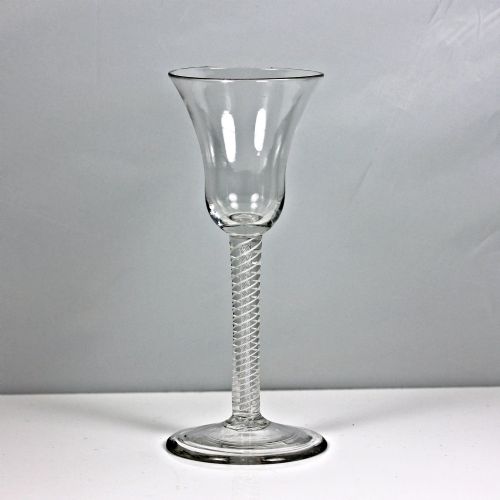
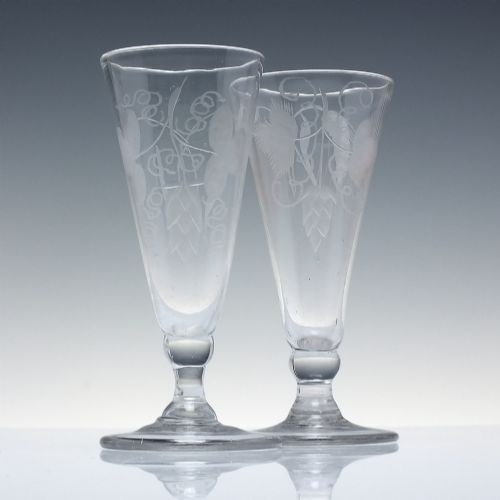
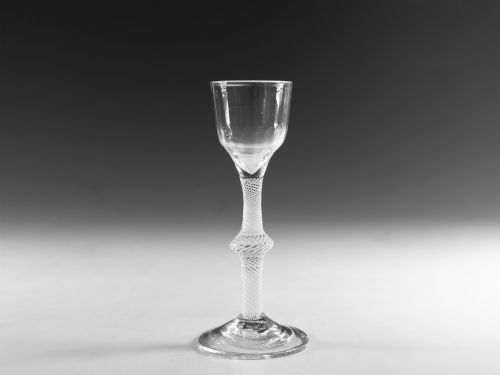
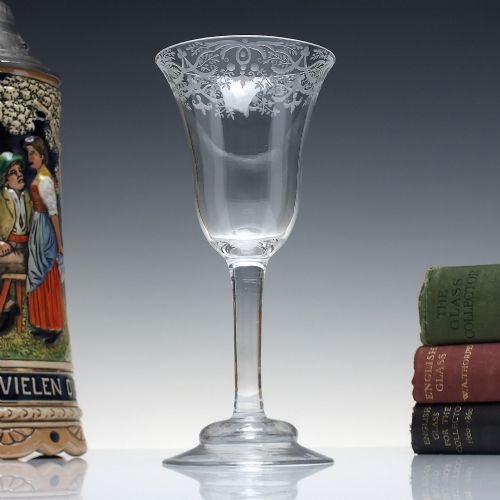
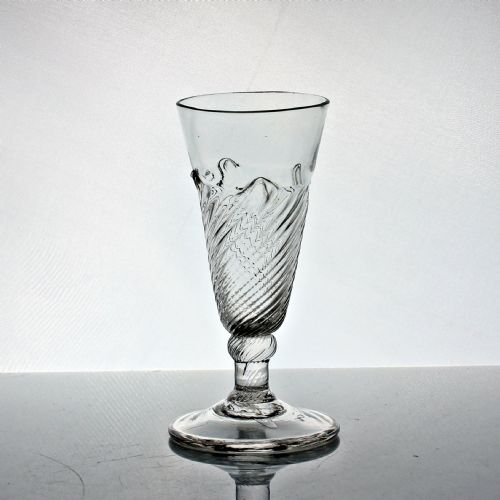
The selection on this page centres on eighteenth-century forms, notably plain stem, baluster, air twist, opaque twist and composite stem variations. Buyers encounter engraved decoration, armorial designs, flute-moulded ogee bowls and nut-moulded details alongside dwarf ale glasses and tall cordial glasses.
How they were made
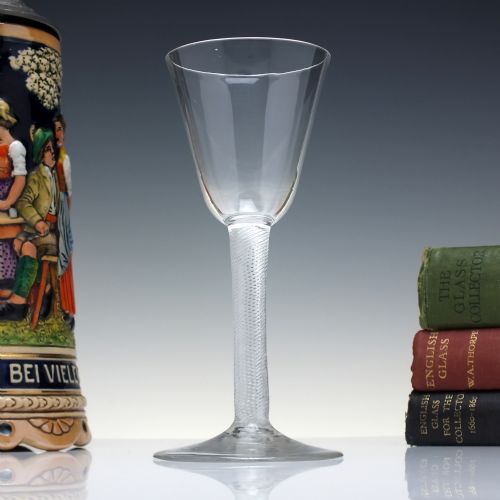
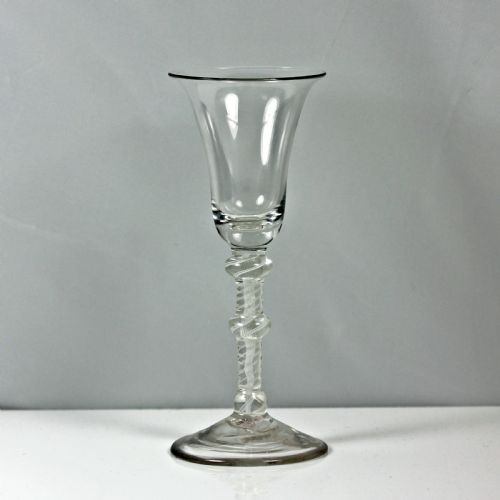
Glassmakers shaped these drinking vessels using lead glass, clear glass, lead crystal and flint glass, achieving clarity and weight suited to decorative cutting and engraving. Techniques such as multi-spiral opaque twists, air twists and corkscrew two-ply twist stems required skilled manipulation of molten metal.
Engraving and moulding further defined the forms, utilising wheel-engraving for floral or armorial motifs and flute or nut-moulding for bowl textures. Triple knops and composite stem structures combined separately formed components into cohesive drinking vessels.
Listings feature lead glass, clear glass, lead crystal, white enamel, enamel, flint glass and standard glass across the eighteenth century.
What varies in quality
Quality rests upon the precision of the stem formation, where complex multi-spiral opaque twists or air twists demonstrate the maker's technical control. Crispness in wheel engraving and the proportional balance between bowl, stem and foot distinguish finer examples from standard production.
The purity and weight of the lead glass or flint glass contribute significantly to the tactile character of the vessel. Refinement in mould-blown details, such as flute-moulded ogee bowls or nut-moulded lower bowls, indicates superior execution.
The Georgian Stemware Collector Glossary
- Lead glass
- A heavy, brilliant glass formulation containing lead oxide that became the dominant medium for English drinking vessels from the late seventeenth century onwards.
- Opaque twist
- A stem form created by incorporating white enamel or opaque white glass threads into the clear metal before twisting and drawing the stem.
- Air twist
- A stem style featuring elongated bubbles or spiral channels of trapped air running through the length of the glass stem.
- Composite stem
- A stem construction combining two or more distinct stem formations, such as a baluster section paired with a twist component.
- Baluster
- A sturdy, heavy stem shape derived from architectural balusters, often featuring knops and swelling profiles typical of earlier eighteenth-century glass.
- Ratafia glass
- A tall, narrow drinking glass specifically designed for consuming ratafia, a sweet fruit-flavoured liqueur popular in the eighteenth century.
Georgian Stemware Collector: Frequently Asked Questions
How do I identify an air twist stem?
Air twist stems display spiral threads of trapped air running through the transparent glass, created by drawing out bubbles formed during manufacture.
These threads appear as silvery channels when viewed under good light, distinguishing them from opaque white twists or solid plain stems.
What is a dwarf ale glass?
Dwarf ale glasses are shorter, sturdier drinking vessels produced in the eighteenth century specifically for serving ales and beers.
They frequently feature narrow bowls and thick stems designed to withstand regular tavern or household use.
How should I display these glasses?
Display these drinking vessels in a well-lit cabinet away from direct sunlight and vibration to protect the fragile lead glass and historical surfaces.
Ensure stable shelving and adequate spacing between pieces to prevent accidental contact.
What is an ogee bowl?
An ogee bowl is an S-shaped vessel profile curving inward at the rim and outward near the base, creating a distinctive double curve.
This form appears frequently on eighteenth-century wine glasses, often paired with opaque twist stems.