
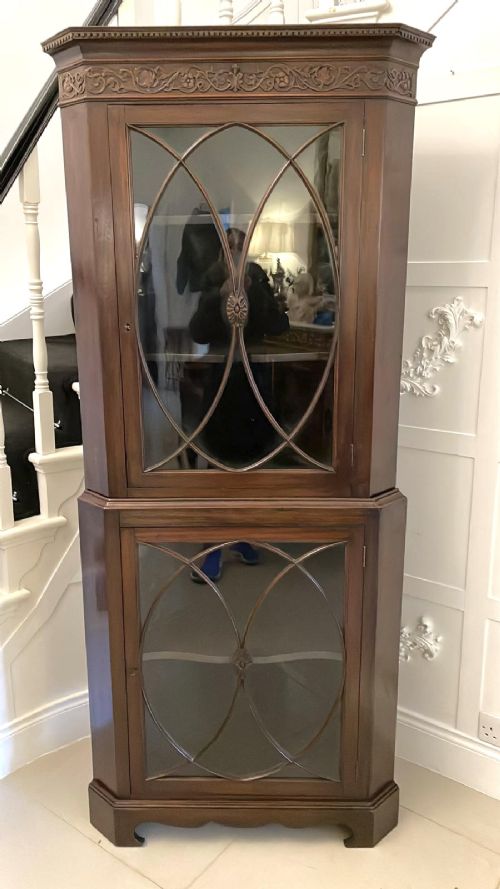
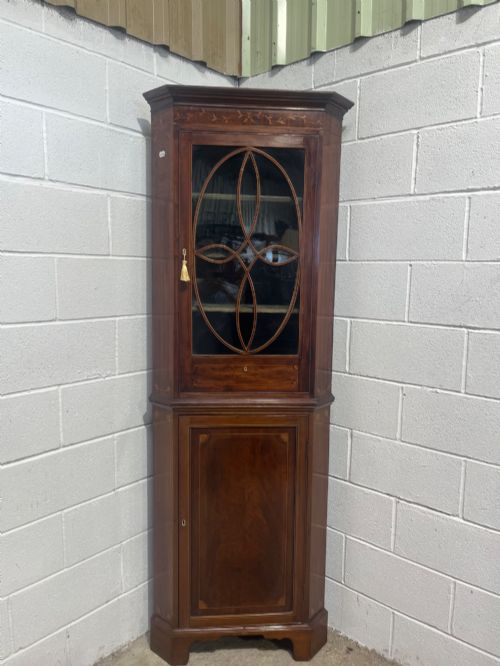
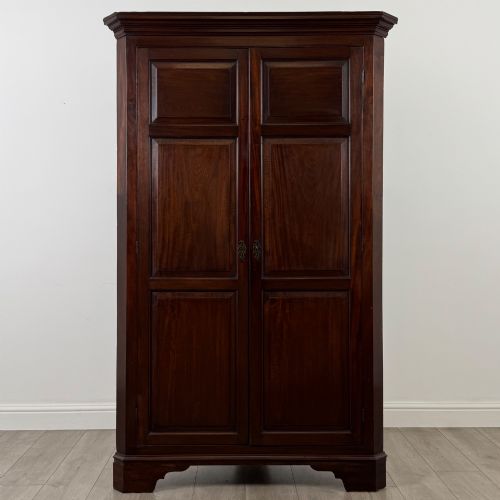
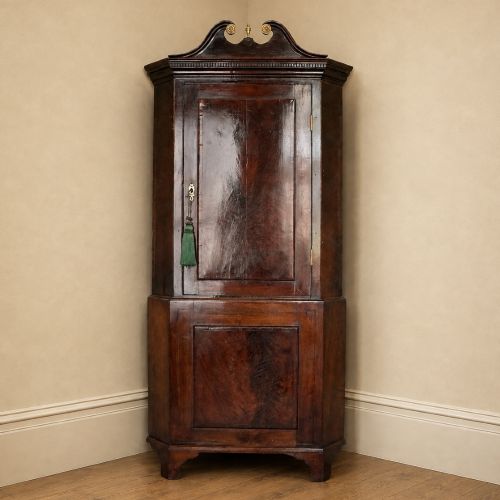






Georgian Standing Corner Unit
A georgian standing corner unit turns a dead room angle into useful architecture, using timbers like mahogany and oak to store or display.

Georgian Standing Corner Unit
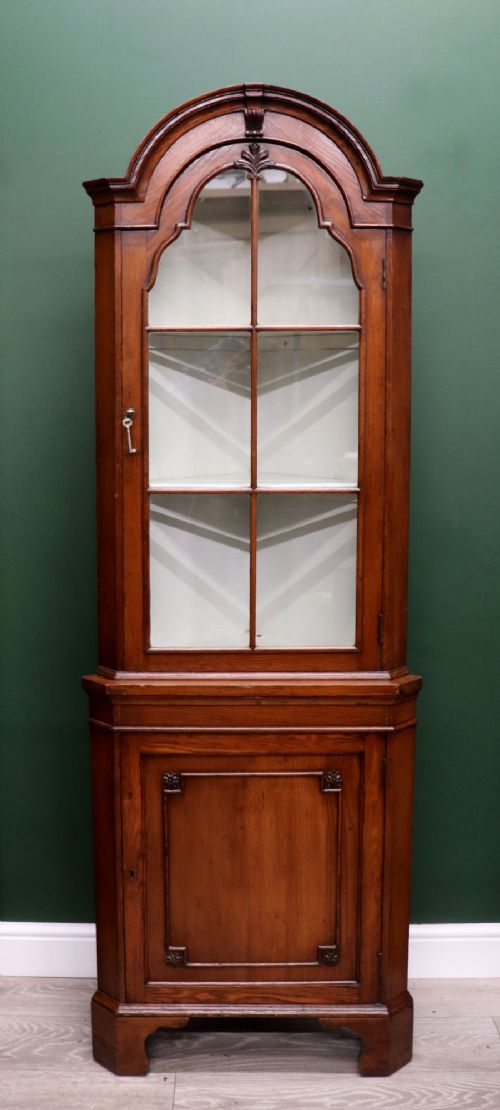
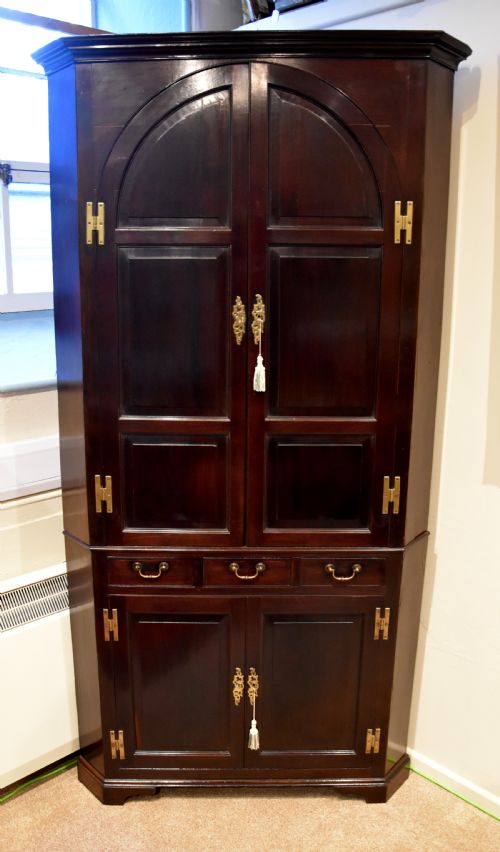
A georgian standing corner unit provides architectural storage that fits neatly into room angles, making efficient use of space that standard rectangular furniture ignores. These pieces arrive in tall floor-standing formats, often constructed in two distinct sections to ease movement.
Mahogany and oak dominate the available selection, appearing alongside pine, walnut, and painted surfaces. Buyers most frequently encounter tall cupboards with panelled or glazed doors designed to stand directly on the floor rather than hang upon a wall.
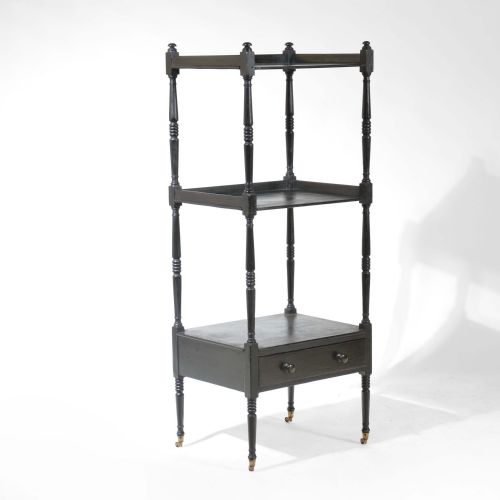
The inventory encompasses formal 18th-century designs alongside later revivals, country workshop pieces, and related corner forms. Alongside traditional cupboards, the selection occasionally includes open display shelves and washstands configured for corner placement.
How they were made
Cabinetmakers built these corner units using solid and veneered timbers, selecting dense hardwoods like mahogany and oak for structural durability. Panels often feature frame-and-panel construction to accommodate the natural seasonal movement of wood without splitting.
Fine detailing relies on brass hardware, inlaid stringing, glass glazing bars, and carved mouldings. Workshops also applied decorative finishes, including red chinoiserie lacquer, ebonising, and simulated grain painted onto pine.
Some corner cupboards hide secret inner drawers behind decorative pigeonholes, built to guard private papers or household cash.
What varies in quality
Quality shows in the choice of timber and the precision of the joinery used to anchor the angled sides to the wall. Superior examples employ dense cuban mahogany or figured oak, while simpler country pieces utilise plain pine or regional hardwoods.
The refinement of the glazing bars, the crispness of any carved ornament, and the integrity of the original brass hinges distinguish standard utility pieces from high-status cabinet work.
The Georgian Standing Corner Unit Glossary
- Astragal glazed
- Glass doors divided into small panes by narrow wooden mouldings. This method secured the glass before large sheet production became common.
- Bow fronted
- A convex curved cabinet front that softens the sharp geometry of the corner. This curved profile requires skilled carpentry to shape accurately.
- Etagere
- An open set of tiered shelves designed for displaying small objects. These freestanding stands share the vertical format of corner furniture.
- Chinoiserie
- European imitation of traditional Chinese decorative arts, often featuring painted lacquer scenes. It appears on select cabinet doors.
- Whatnot
- A piece of furniture consisting of multiple open shelves for books or ornaments. These pieces date across the Georgian and later periods.
Georgian Standing Corner Unit: Frequently Asked Questions
How do I place a corner unit?
A standing corner unit slots directly into a ninety-degree room angle, anchoring itself without requiring wall fixings. Ensure your skirting boards or mouldings allow the back edges to sit flush against both walls.
Because these cabinets extend high into the room, measure your ceiling height before selection. Positioning them away from direct heat sources protects the timber and historic finishes.
Are these units one piece?
Many taller floor-standing examples split into two separate sections, featuring a smaller upper cabinet resting on a deeper base. This two-part construction aids transport through narrow doorways.
Simpler or earlier formats may arrive as a single rigid carcass. Check the construction details if moving the cabinet through tight stairwells.
What is the difference between oak and mahogany versions?
Oak examples generally point towards earlier country workshops or regional Welsh cabinetmaking traditions. They present a heavy, robust grain structure suited to domestic interiors.
Mahogany units often reflect more formal urban commissions, displaying darker red tones and finer decorative inlays. Both timbers offer exceptional longevity when properly maintained.
Can I store heavy items inside?
The internal wooden shelves support standard glassware, books, or tableware with ease. The triangular footprint distributes weight effectively towards the corner angle.
Avoid overloading upper shelves in glazed cabinets to maintain stability. The solid floor-standing base naturally bears the primary load of the contents.