
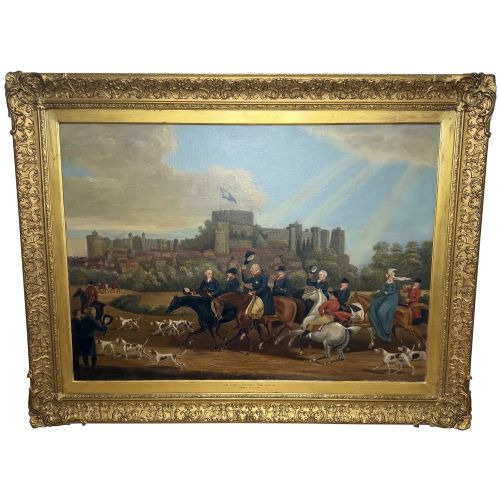


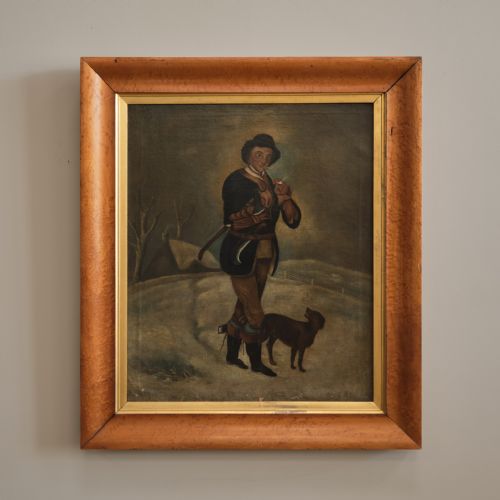


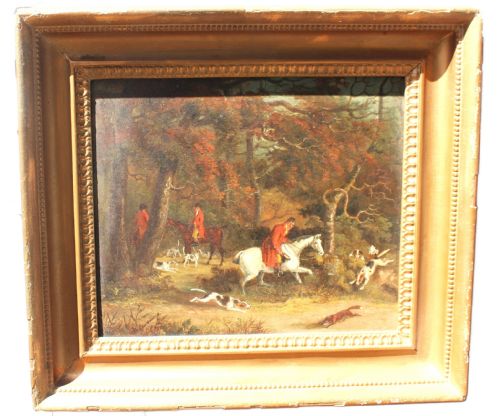


Georgian Sporting Art Oil
Georgian sporting art oil paintings capture horses, hounds and rural pursuits on canvas or wood panels.
Georgian Sporting Art Oil
Georgian sporting art oil works depict horses, hounds, hunting parties, coaches and game in rural landscapes. These paintings record the landed interests of the period through detailed portraits of animals and countryside scenes.
The pieces on this page span the eighteenth and nineteenth centuries, including works from the Regency and Victorian eras. Subjects range from individual horse portraits and dog studies to large hunting scenes and coaching journeys.
Canvas and wood panels serve as the primary supports for these oils, framed in wood, giltwood or gold leaf. Works appear in styles running from formal animal portraiture to naive folk art.
Materials and Construction
Artists painted these works using oil paint applied to woven canvas or prepared pine and wood panels. The ground layers held the pigments while the oil binder allowed for subtle blending in animal coats and landscapes.
Frames utilise wood, giltwood and gold leaf to house the paintings, often showing period mouldings that match the age of the canvas. Panels required careful seasoning of the wood to prevent warping behind the paint layer.
Materials in these listings include oil paint, canvas, wood, giltwood and gold leaf across eighteenth and nineteenth century periods.
Distinctions in Quality
Quality rests upon the artist's command of animal anatomy, perspective and light within the landscape. The most accomplished paintings capture the exact musculature and temperament of horses and hounds rather than stiff generic forms.
The handling of the oil medium distinguishes finer professional works from simpler naive pieces. Brushwork in the depiction of fur, foliage and distance creates depth and atmosphere that elevate a composition.
John Sanderson Wells·William Williams·Samuel Raven·Clifton Tomson·Abraham Cooper·Samuel Henry Alken·James Ward·John Nost Sartorius·John Vine·George Stubbs·James Barenger·John Charles Maggs·Samuel John Egbert Jones·Stephen Elmer·Dean Wolstenholme·Benjamin Marshall·James Pollard
The Georgian Sporting Art Oil Glossary
- Oil on Canvas
- Pigment mixed with an oil medium applied to a stretched woven fabric support. This combination allowed artists to build rich layers of colour and texture.
- Pine Panel
- A rigid wooden support made from pine boards used instead of canvas for certain eighteenth-century paintings. Panels provided a smooth, stable surface for detailed brushwork.
- Giltwood
- Wood carved and coated with a thin layer of gold leaf or metallic gilt. It frames many of these paintings with a bright reflective border.
- Naïve
- A term for art created outside formal academic traditions, often showing flat perspective and charming simplicity. These pieces rely on direct observation rather than strict proportion.
- Regency
- The period from 1811 to 1820, extending into the wider cultural style of the early nineteenth century. Works from this time often feature distinct coaching and equestrian fashions.
Georgian Sporting Art Oil: Frequently Asked Questions
What subjects appear in these paintings?
These works display horses, hunting hounds, game birds, coaching scenes and rural landscapes. Animals often take centre stage as prized hunters, carriage horses or loyal dogs.
Human figures appear alongside them as sportsmen, grooms and coachmen engaged in country pursuits and travel across open terrain.
How do I identify the period of a painting?
Dating relies on costume details, vehicle designs, framing styles and canvas preparation methods. Clothing fashions such as top hats and coats change visibly between the eighteenth and nineteenth centuries.
Signatures, inscriptions on the reverse and attribution to recorded artists help narrow down the exact decade of execution.
Are these paintings on canvas or wood?
Both supports occur frequently across the selection. Many works utilise stretched canvas fastened to wooden stretcher frames.
Others are painted directly onto prepared wood panels, particularly examples dating from the eighteenth century.
Where were these pieces originally displayed?
Original owners hung these artworks in country houses, estate libraries, hunting lodges and coaching inns. They reflected the sporting passions and rural status of the households.
Today they fit well into traditional studies, living rooms and hallways alongside period furniture.