


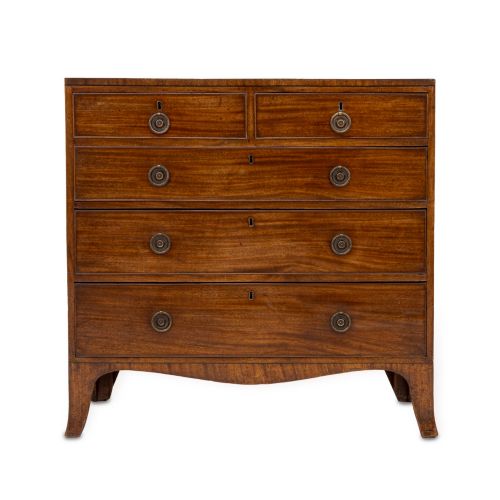
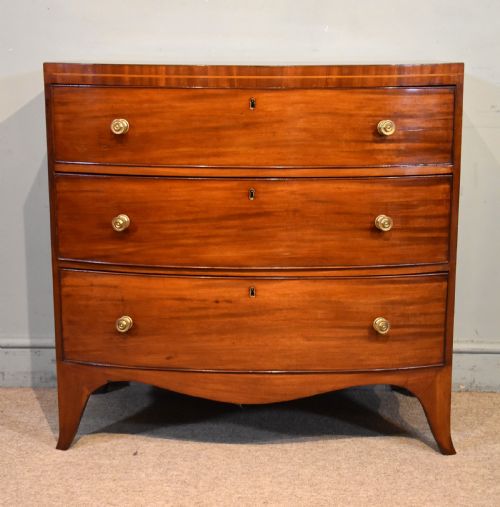

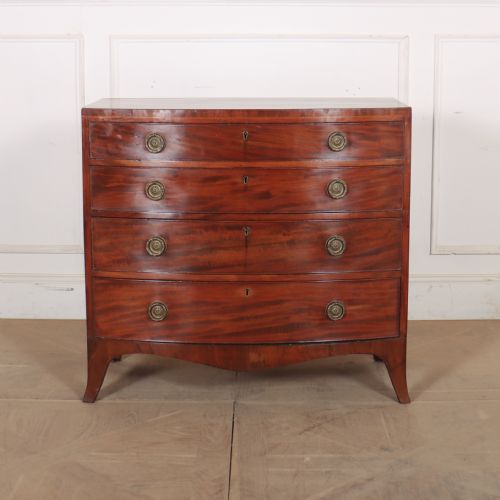


Georgian Splay Leg Chest
A georgian splay leg chest brings understated elegance to a bedroom, combining functional storage with clean, flared lines.
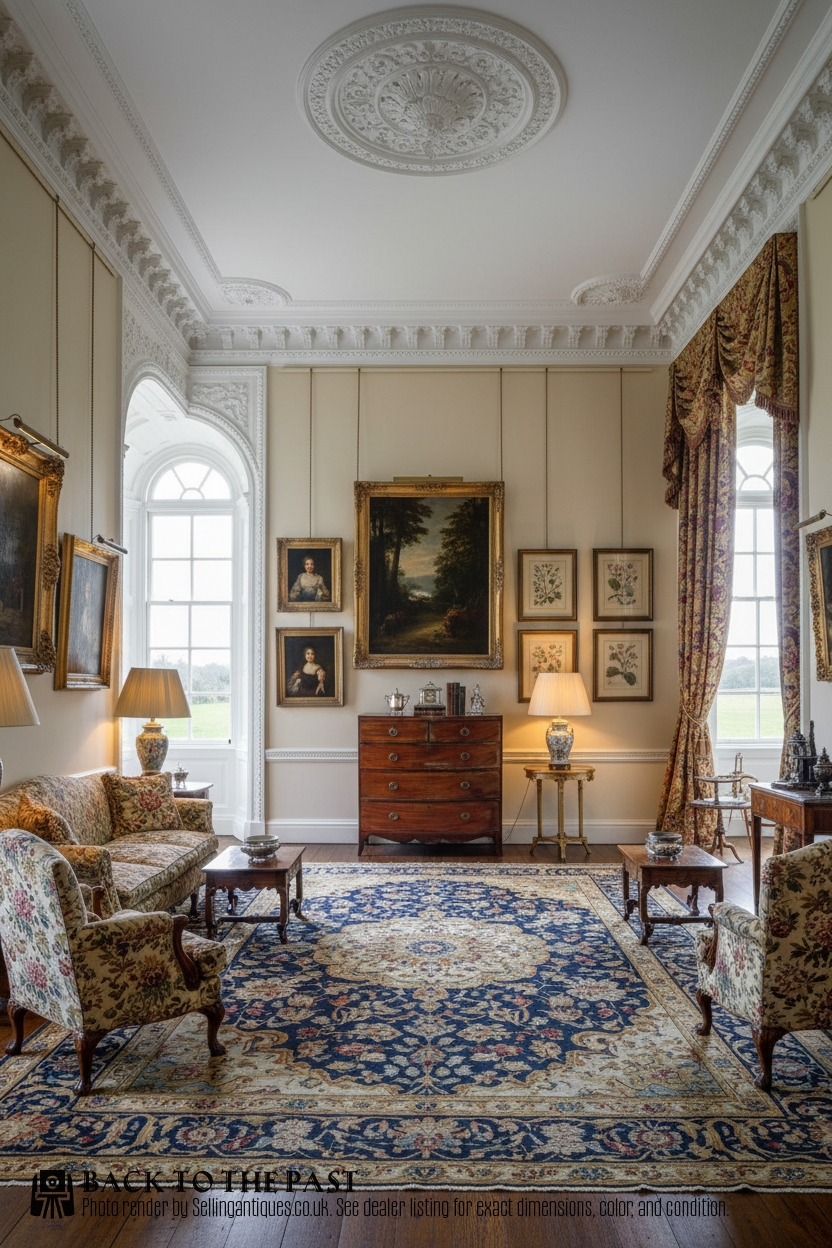
Georgian Splay Leg Chest
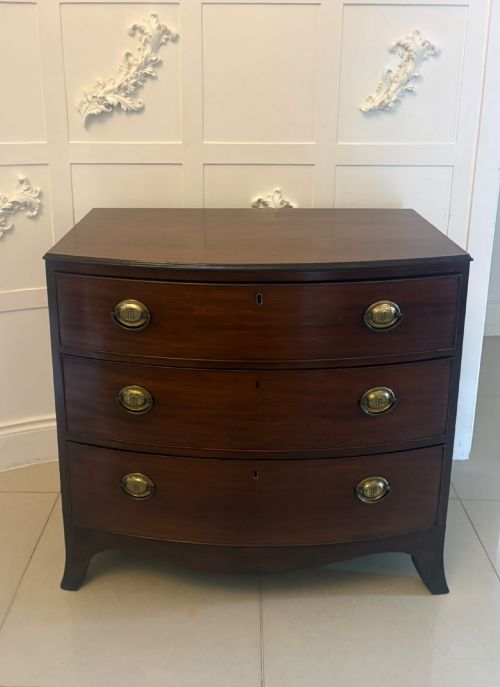
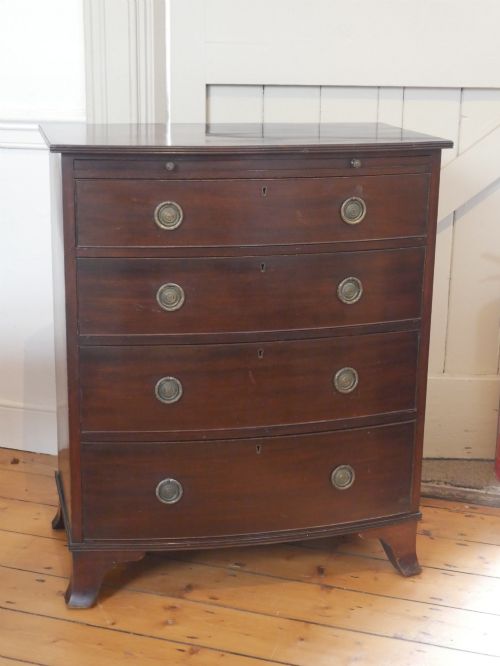
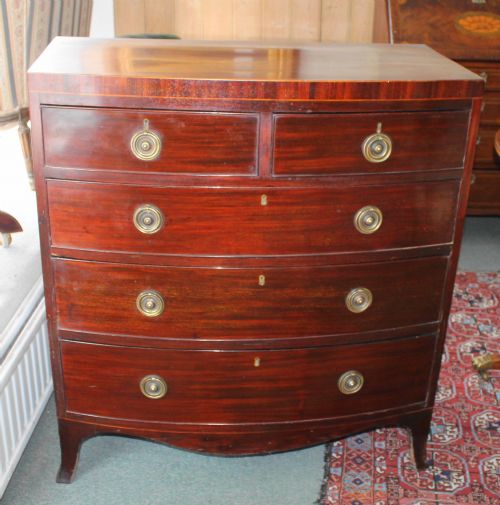
A georgian splay leg chest is a traditional storage piece defined by its characteristic outwardly angled supports, offering both stability and a lighter visual profile than standard bracket feet. These pieces primarily date from the Georgian and Regency periods, though later revivals also appear.
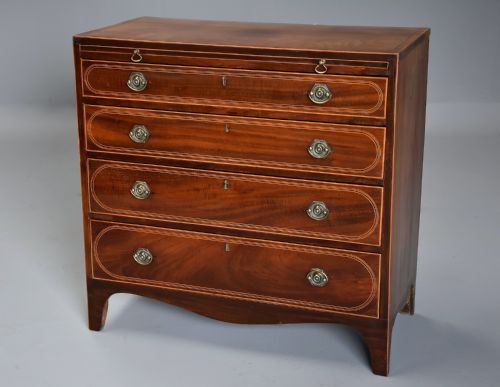
The form typically manifests as a chest of drawers, often featuring bow fronts or serpentine shapes alongside straight drawer configurations. Mahogany dominates the examples found here, frequently enhanced with boxwood or satinwood inlay.
What varies in quality
Quality rests significantly on the selection of timber and the crispness of the cabinet work, particularly around the delicate splayed feet. Pieces displaying highly figured mahogany veneers and precise inlay command greater appreciation among collectors.
Proportion and scale also dictate distinction, with smaller, neat proportions proving especially desirable. The depth of the timber's patina and the originality of the brass fittings further influence the overall standing of an individual chest.
Listings feature mahogany, oak, satinwood, and paint finishes across Georgian and Regency periods.
Druce & Co
The Georgian Splay Leg Chest Glossary
- Splay leg
- A support that angles outward from the vertical centre of the piece. This design lightens the appearance of heavy case furniture.
- Bow front
- A convex curved cabinet front. It softens the hard angles typical of rectangular storage pieces.
- Serpentine
- A furniture front shaped with a convex centre flanked by concave curves. This contour requires advanced woodworking skill.
- Inlay
- A decorative technique inserting contrasting materials into recessed areas of a wooden surface. Boxwood and satinwood are typical choices.
- Patina
- The surface sheen and colour developed by wood over decades of handling and ageing. It signals the authenticity of antique timber.
Georgian Splay Leg Chest: Frequently Asked Questions
How do I date a Georgian chest?
Dating relies on examining the timber species, construction methods, handles, and overall proportions. Georgian and Regency pieces show hand-cut dovetails and timber characteristics consistent with eighteenth and early nineteenth-century cabinet making.
Later nineteenth-century pieces and twentieth-century revivals often utilise different internal secondary woods and machine-assisted joinery techniques. Comparing the hardware fixings and secondary framing helps confirm the period of origin.
Where should I place this chest?
These chests suit bedrooms, hallways, or living spaces where surface area and drawer storage are both required. Their finished backs and refined proportions mean they do not necessarily need to sit flush against a wall.
Keep them away from direct heat sources and strong sunlight to protect the mahogany veneer and delicate inlay from drying out or fading over time.
Are the brass handles original?
Many chests of this age have had their brass drop handles or backplates replaced during their long history of use. Original hardware leaves distinct ghost marks on the drawer fronts if replacements differ in size.
Replacement hardware is common and does not diminish the practical utility of the chest, though collectors often prefer matching period-appropriate brasses.