
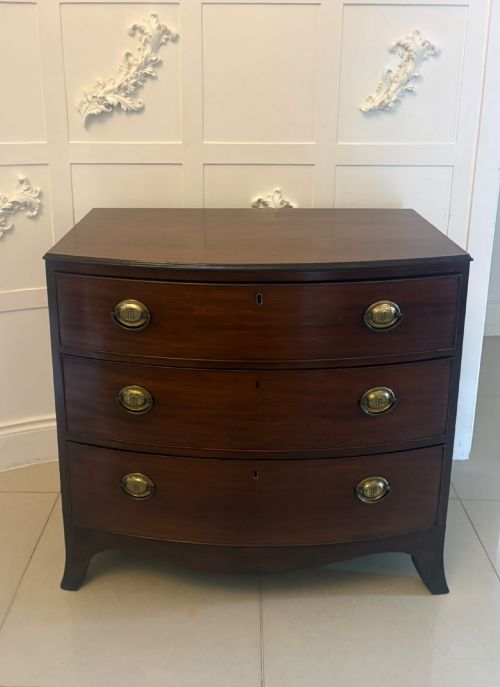
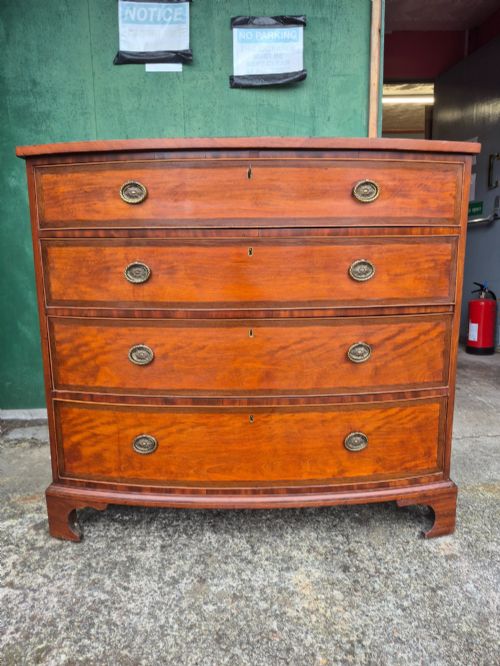
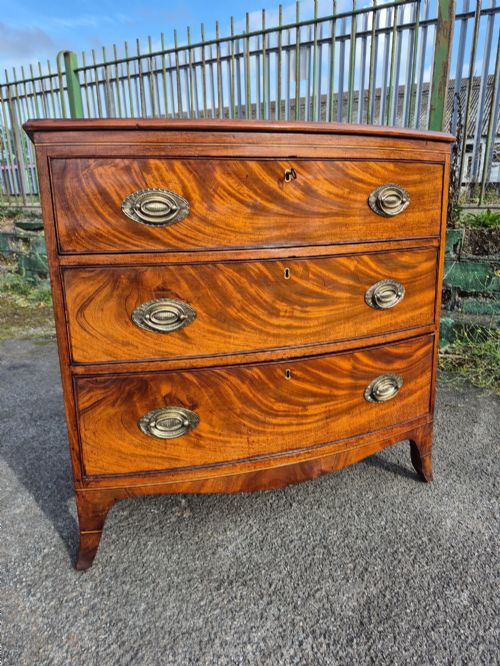
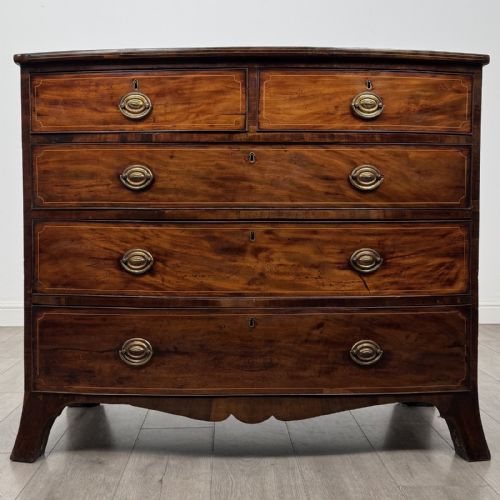
Georgian Curved Front Chest
These pieces unite storage and line, bringing a georgian curved front chest into the room for proportion and warmth.
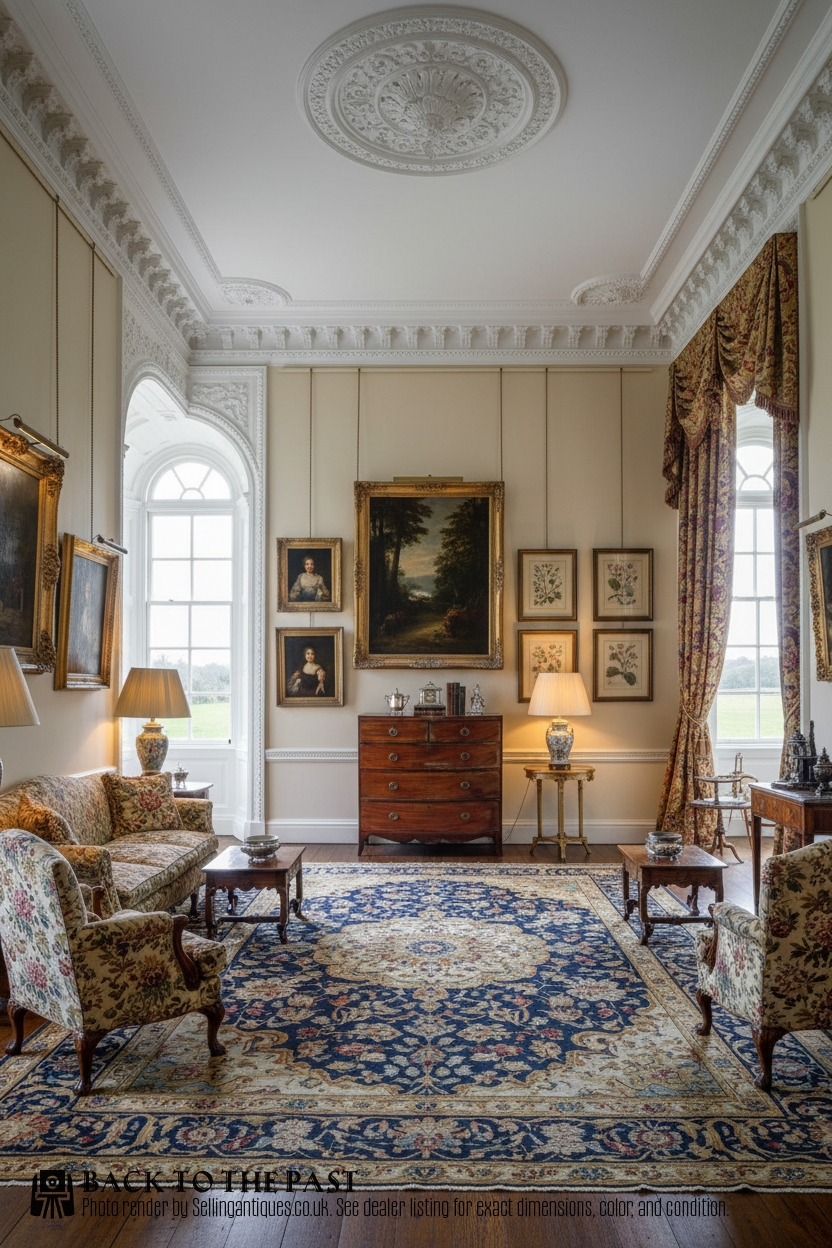
Georgian Curved Front Chest
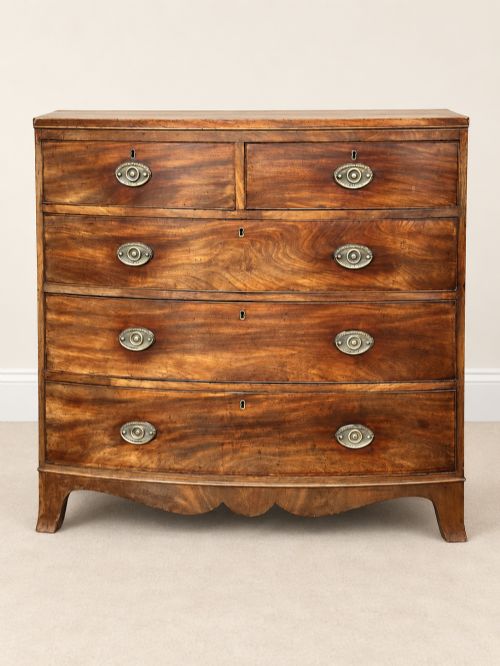
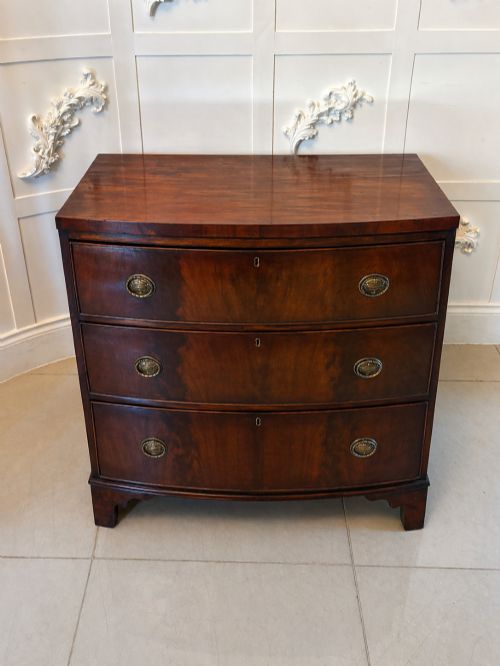
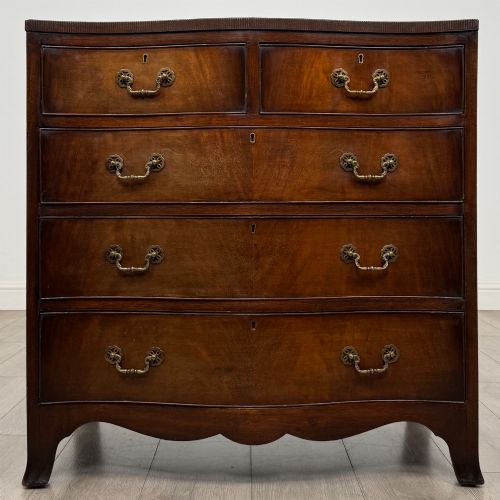
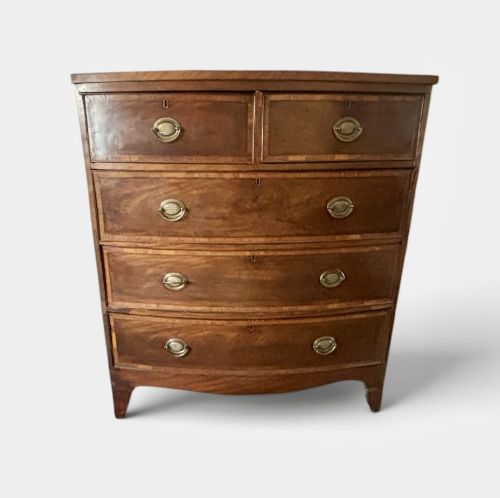
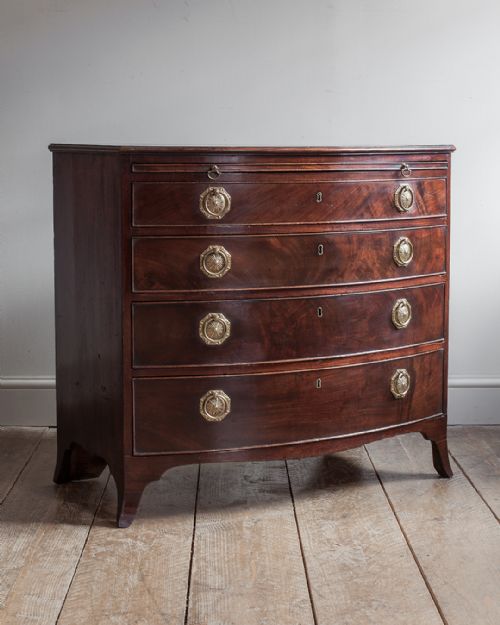
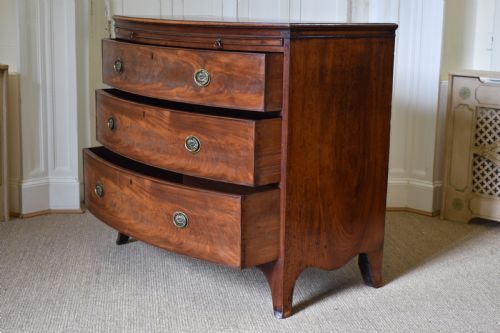
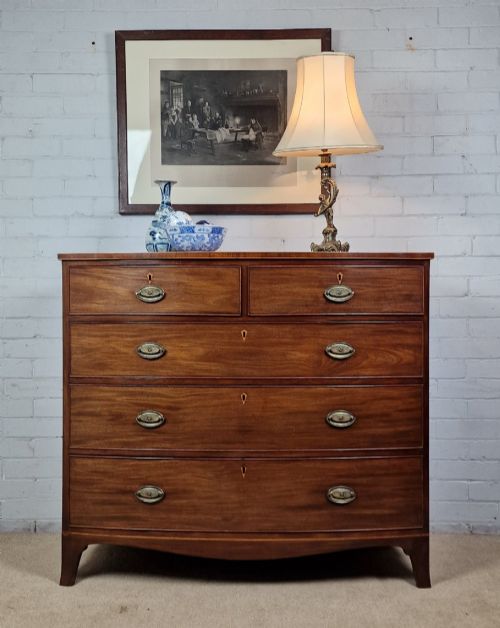
A georgian curved front chest provides deep drawer storage while softening the rigid corners typical of standard case furniture. The search for a georgian curved front chest reveals pieces primarily originating from the Georgian, Regency, and George III periods, alongside later revival interpretations.
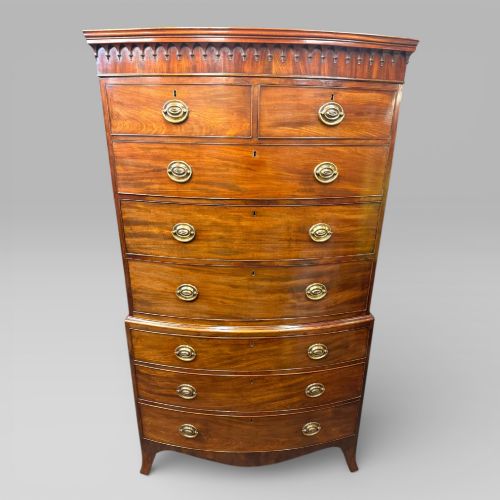
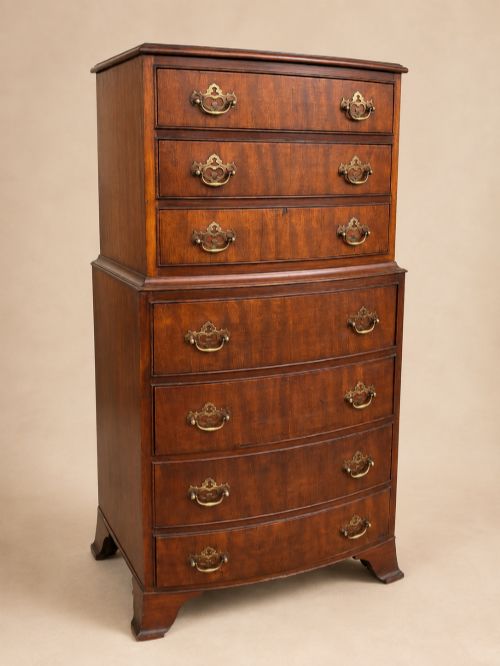
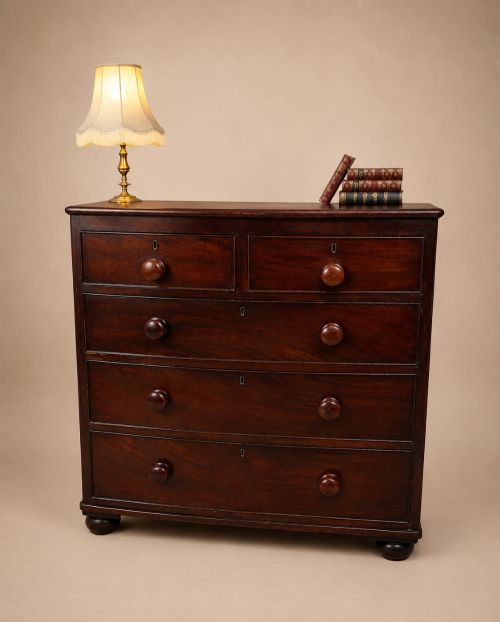
Most examples encountered here are constructed as chests of drawers or chests on chests featuring bow-fronted or curved profiles. The form appears predominantly in mahogany, often paired with contrasting timber banding or secondary woods such as oak.
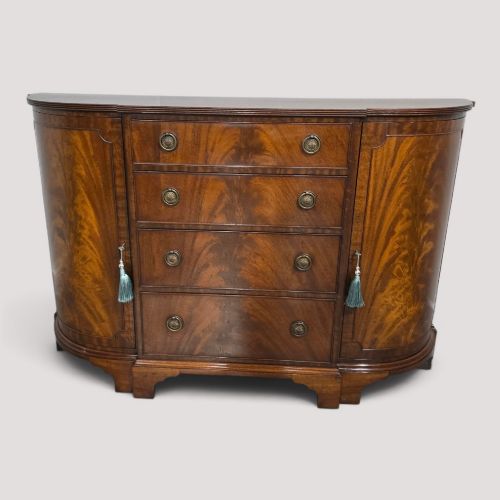
Makers and regional cabinetmakers also produced related sideboard and serpentine forms during the nineteenth and early twentieth centuries. These variations maintain the characteristic rounded facade while adapting internal arrangements for different domestic uses.
Materials and construction methods
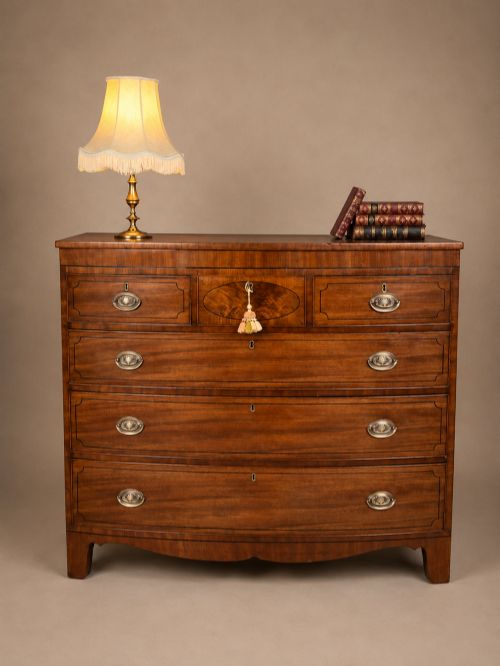
Cabinetmakers relied heavily on solid mahogany and flame mahogany veneer applied to secondary carcase timbers like oak. Surfaces frequently feature detailed boxwood inlay and satinwood banding to define the curved drawer fronts and top edges.
Drawer construction typically employs hand-cut dovetails and solid linings, occasionally incorporating specialised elements such as secret drawers within the frieze. Brass hardware, including drop handles and escutcheons, secures the structural integrity of each drawer front.
Listings feature mahogany, oak, and walnut timbers, paired with decorative satinwood banding and boxwood inlay across multiple centuries.
Evaluating quality and execution
Superior examples demonstrate meticulous grain selection, particularly in flame mahogany veneers that mirror symmetrically across the curved drawers. The crispness of the boxwood inlay and the precision of the mitred banding reveal the maker's hand.
Structural refinement shows in the smooth action of the drawers within their curved apertures and the retention of original brass drawer furniture. Period pieces with uncompromised carcases and tight dovetailing stand apart from later revival iterations.
The Georgian Curved Front Chest Glossary
- Bow front
- A convex curved cabinet front that projects outward in an arc. This profile softens the silhouette of standard rectangular chests.
- Flame mahogany
- A veneer cut from the fork of the mahogany tree where the branch meets the trunk. It creates a distinctive, fiery figure across large drawer surfaces.
- Satinwood
- A durable, yellowish-gold timber used for contrasting stringing and banding. It highlights the primary mahogany panels on finer drawer fronts.
- Boxwood inlay
- Narrow strips of pale wood embedded into recesses in the carcase. This technique defines borders and geometric panels on period pieces.
- Chest on chest
- A tall case furniture form comprising an upper chest stacked directly upon a slightly larger lower chest. It maximises vertical storage capacity.
Georgian Curved Front Chest: Frequently Asked Questions
How do I date a bow front chest?
Dating relies on examining construction methods, timber choice, and hardware styles. Earlier pieces from the George III period utilise hand-cut dovetails and native secondary woods.
Later nineteenth-century and revival examples often display standardised machine-cut elements and different internal framing. Comparing secondary timbers inside the drawers provides reliable clues to the exact decade of manufacture.
How should I care for a mahogany chest?
Keep the wood away from direct heat sources and strong sunlight to prevent the mahogany veneer from drying and splitting. Maintaining stable room humidity preserves the natural oils in the timber.
Apply a traditional wax polish sparingly and buff with a soft cloth to maintain the finish. Avoid silicone-based sprays which can penetrate the grain and damage antique surfaces.
Were these chests used in bedrooms?
These chests originally served as primary bedroom furniture for storing linens and garments. Their generous drawer depths accommodated bulky eighteenth-century textiles and clothing.
Today, their proportions allow them to function equally well in hallways, living rooms, and dining spaces. They provide practical surface display area alongside concealed storage.