


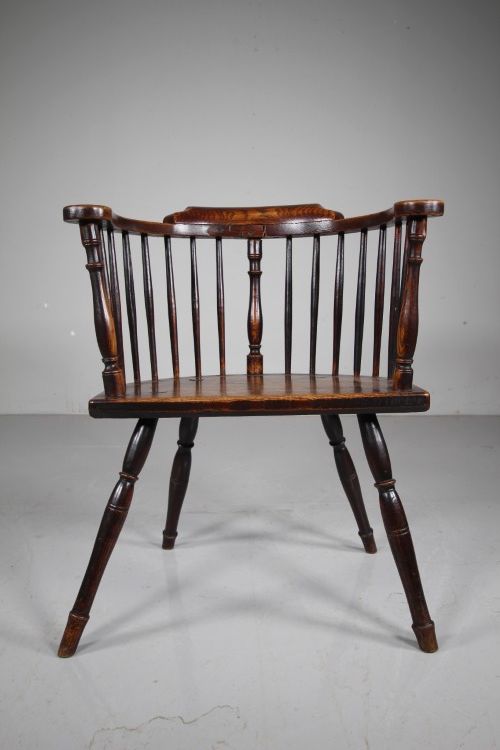


Georgian Solid Wood Chairs
Georgian solid wood chairs bring tactile depth and historic character to a room through dense mahogany, elm, and oak.
Georgian Solid Wood Chairs
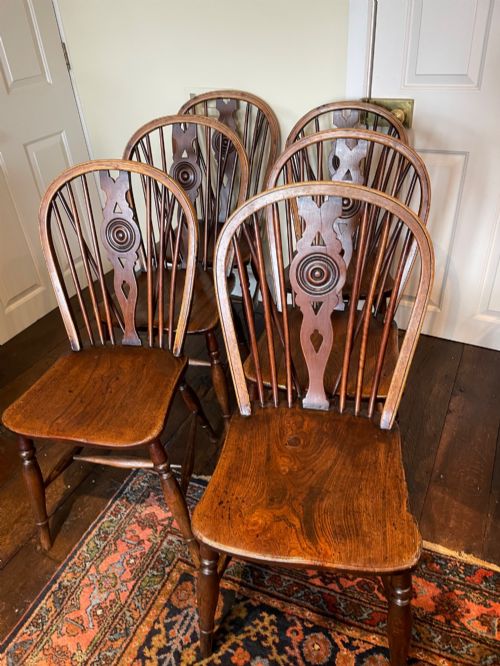
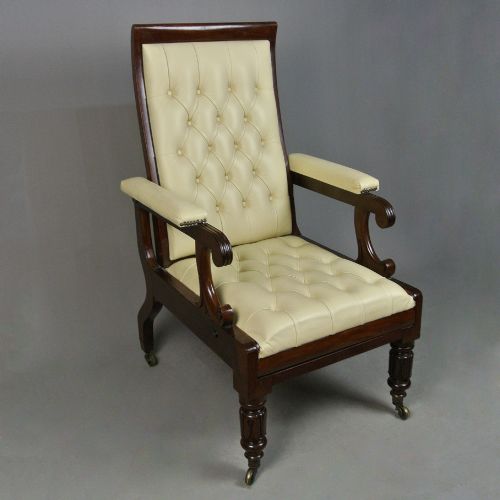
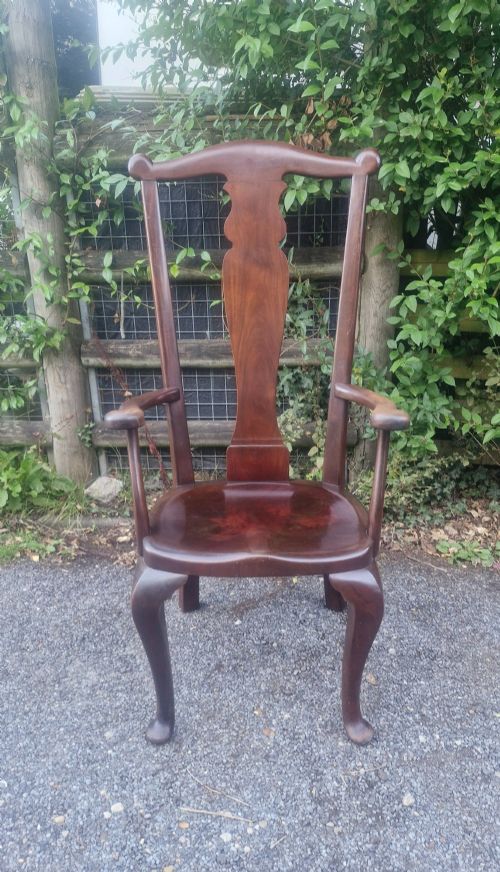
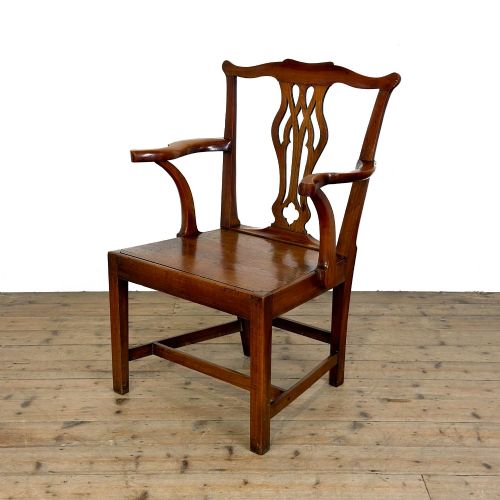
Georgian solid wood chairs encompass formal dining and hall seats alongside robust country armchairs, Windsor forms, and kitchen seating. The selections span the eighteenth and nineteenth centuries, reflecting George III, George IV, and Regency stylistic developments.
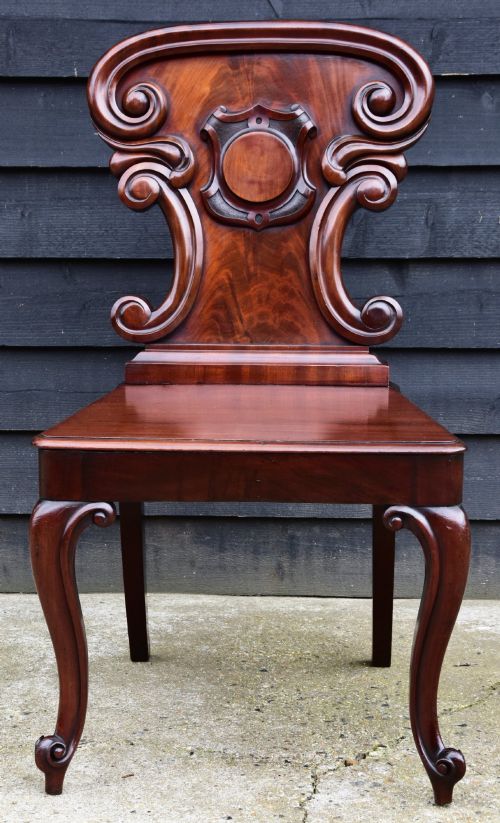
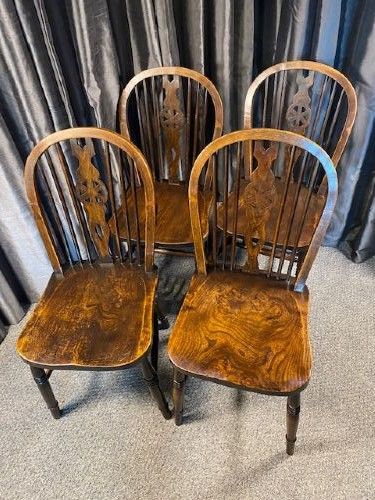
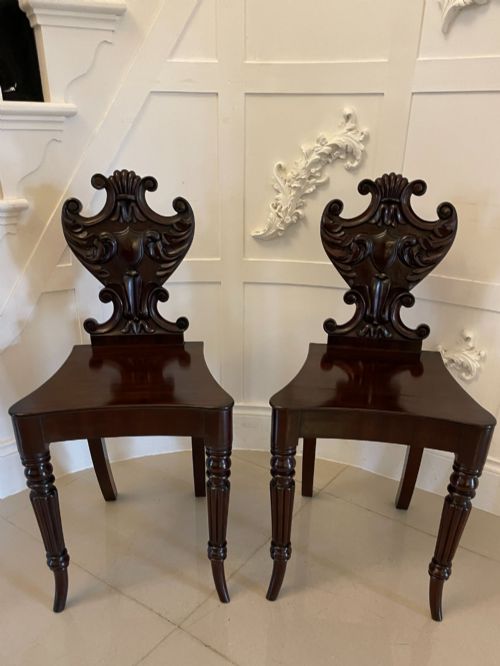
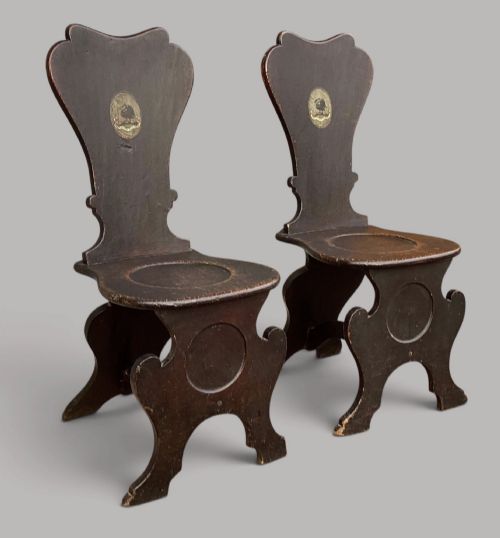
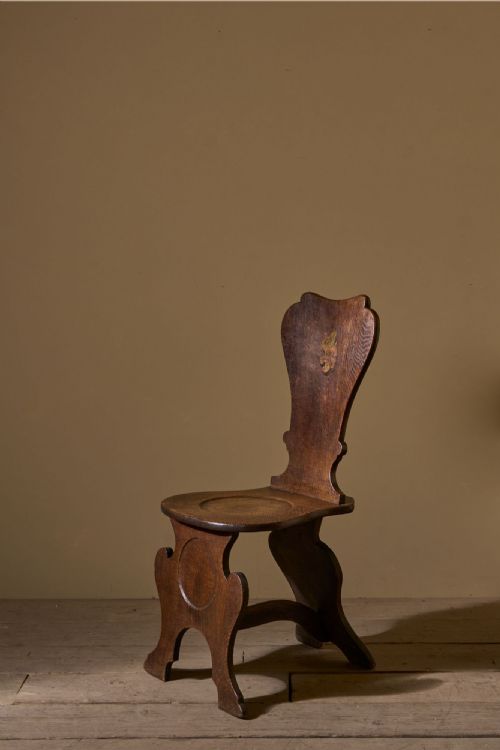
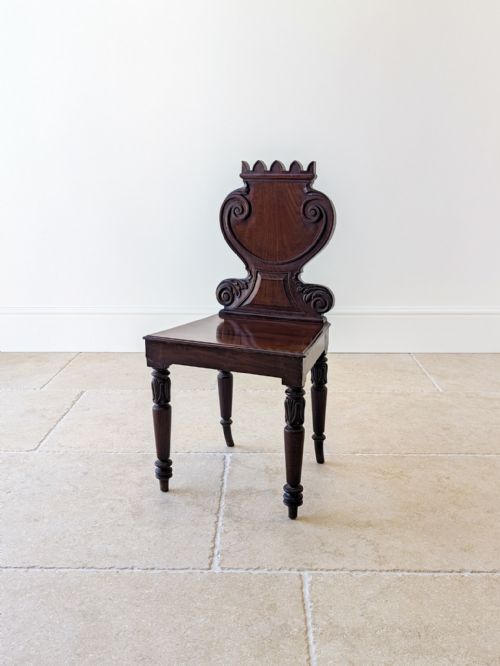
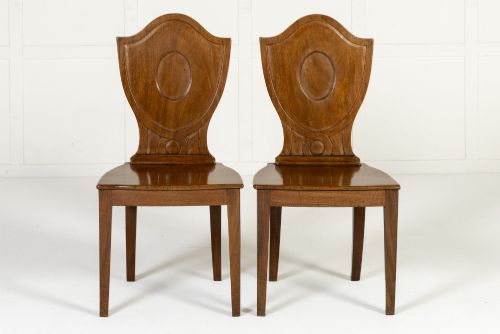
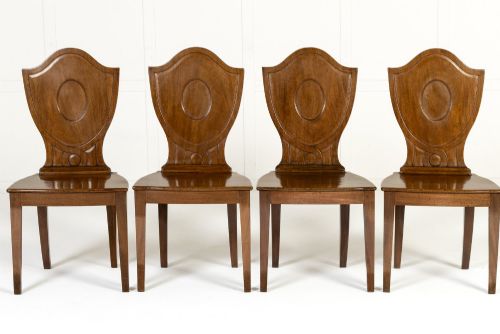
Buyers frequently encounter formal mahogany hall chairs featuring carved shell, shield, or pelta backs alongside vernacular country designs in elm, ash, fruitwood, and yew wood. These pieces range from singular library armchairs to matched sets intended for grand halls and dining spaces.
How they were made
Cabinetmakers and country joiners utilised dense native hardwoods including mahogany, oak, elm, ash, fruitwood, and yew wood to build durable frames. Solid timber construction relied upon traditional joinery techniques, sometimes enhanced with brass inlay or carved armorial details.
Regional vernacular makers shaped Windsor chairs and kitchen seating with solid wood seats and bentwood components, whilst urban workshops produced sculptural hall chairs with intricately carved wooden backs.
Georgian Solid Wood Chairs Retail Price Guide 2026
Typical asking prices for georgian solid wood chairs among the pieces listed under this phrase on Sellingantiques today, from the lower quarter to the upper quarter. They describe what is for sale here now, not the wider market.
Listings feature eighteenth and nineteenth-century periods, utilising materials such as mahogany, elm, oak, ash, yew wood, brass, fruitwood, and beech.
What varies in quality
Quality rests upon the selection and figure of the timber, from highly figured mahogany and rich yew wood to honest local elm and fruitwood. The depth and crispness of carved details, such as armorials, shields, and pelta backs, distinguish standard output from finer workshop productions.
Cohesion within matched sets and pairs dictates value, alongside the survival of original solid wood surfaces and patination developed over centuries of use.
Gillows
The Georgian Solid Wood Chairs Glossary
- Hall Chair
- A rigid wooden seat traditionally placed in an entrance hall or corridor, often featuring a solid carved back displaying an armorial or crest.
- Windsor Chair
- A traditional seating form constructed with a solid wooden seat into which the legs and back spindles are directly inserted.
- Pelta Back
- A chair back shaped in the symmetrical outline of a classical Greek shield or crescent moon.
- Gainsborough Arm Chair
- A wide, upholstered armchair with open padded arms, standing on four legs, popular during the eighteenth century.
- Sgabello
- A light wooden chair originating from the Italian Renaissance, featuring a high carved back and trestle or solid plank supports.
- Armorial
- A heraldic design or coat of arms carved, painted, or engraved onto the wooden back of a formal seat.
Georgian Solid Wood Chairs: Frequently Asked Questions
How do I identify a genuine Georgian chair?
Examine the timber species, construction joints, and surface patination to determine age and authenticity. Genuine pieces display traditional joinery and wood types consistent with eighteenth and nineteenth-century production.
Look for tool marks and wear patterns that correspond to the period, distinguishing hand-shaped solid timber from later reproductions.
Where were hall chairs used in a home?
Hall chairs stood primarily in grand entrance halls, vestibules, and corridors rather than around daily dining tables. Their rigid wooden construction and carved armorials served to impress visitors upon arrival.
Today, these sculptural seats function effectively in hallways or as occasional reception chairs in living spaces.
How do I care for solid wood antique chairs?
Maintain stable indoor humidity levels and keep wooden furniture away from direct heat sources and sunlight. This prevents timber shrinkage, splitting, and fading of the historic finish.
Apply occasional appropriate wax polish to nourish the solid wood and preserve the natural patination built up over generations.