
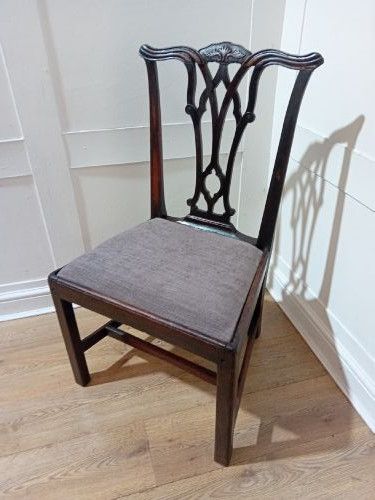
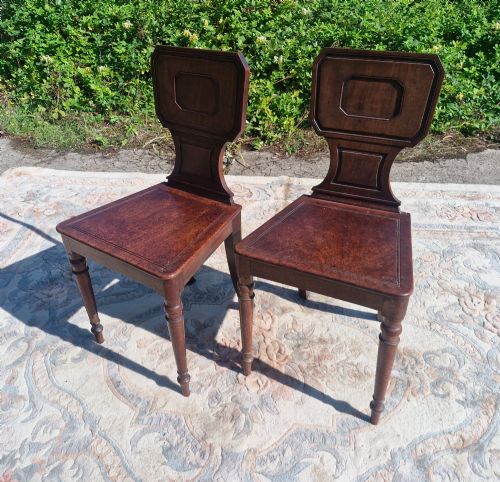
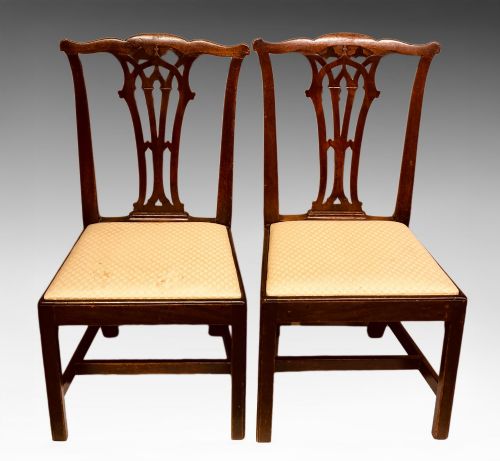
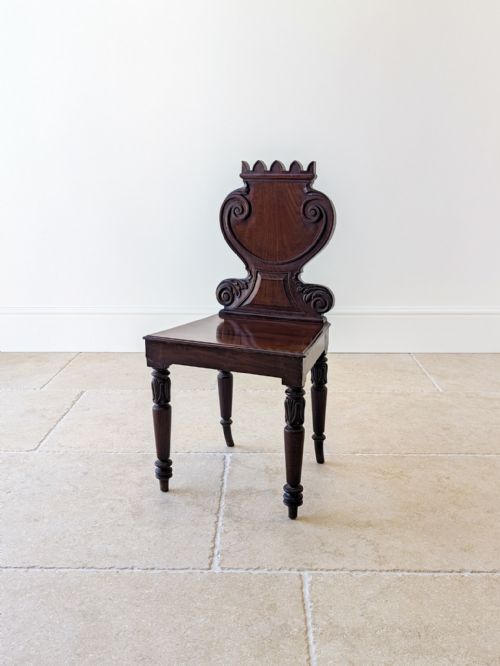
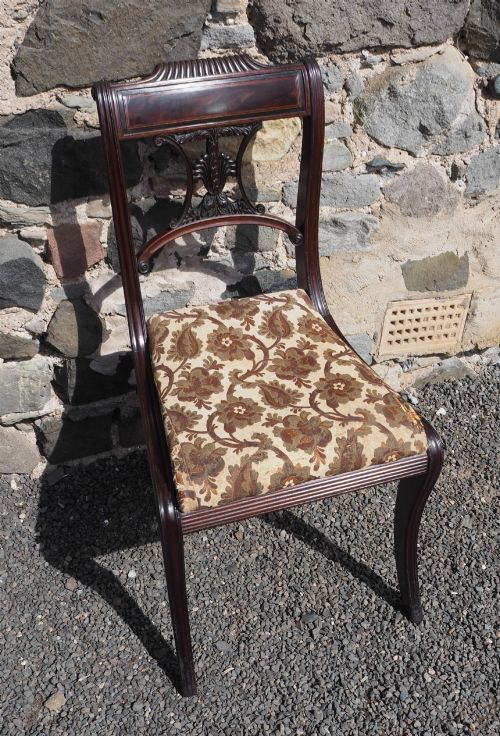
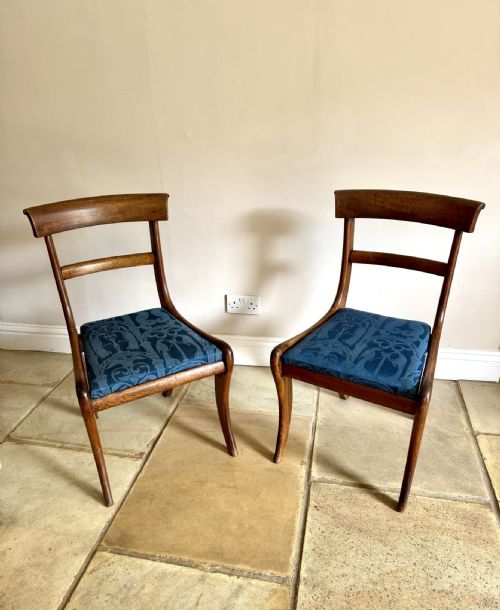
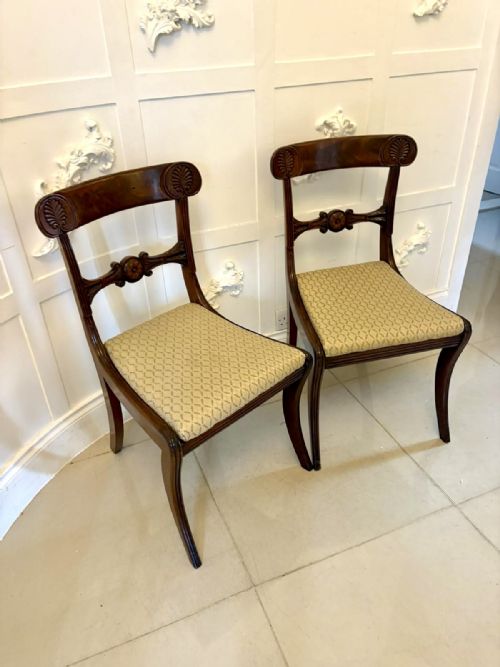


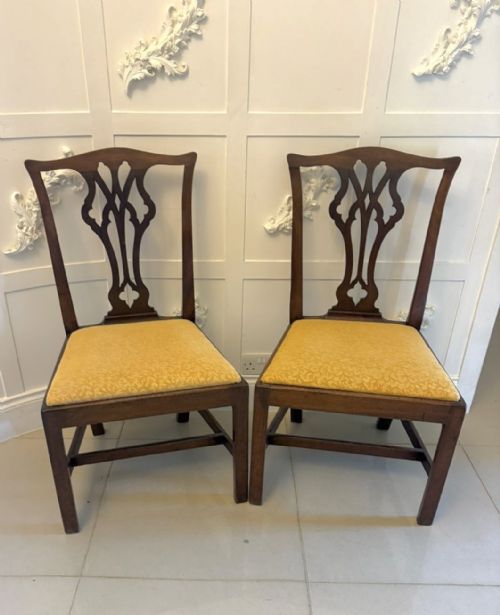


Georgian Mahogany Hall Chairs
When you search for georgian mahogany hall chairs, you enter a world of striking architectural timber designed to make an immediate impression in a grand entrance.
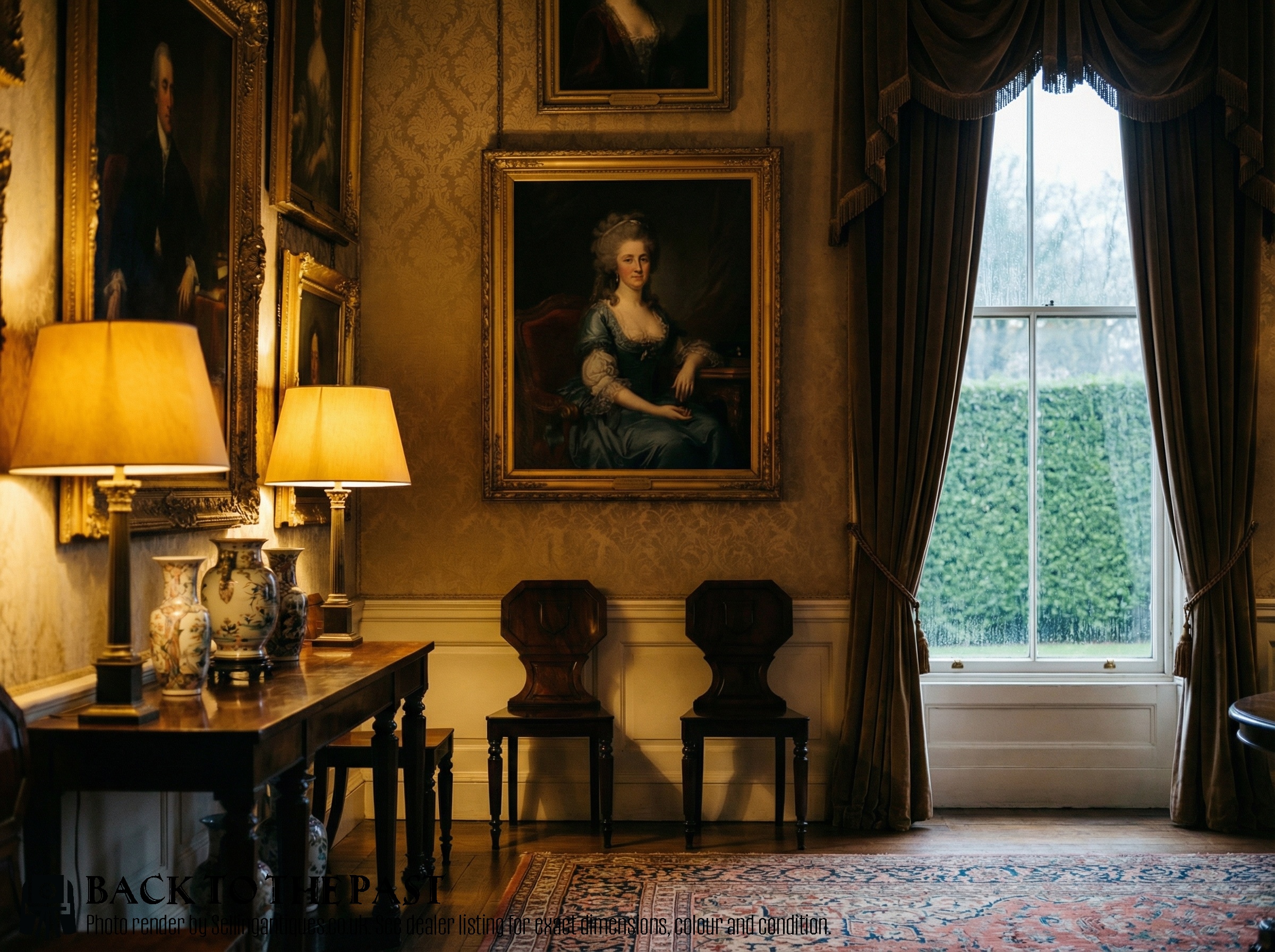
Georgian Mahogany Hall Chairs
Georgian mahogany hall chairs are rigid, high-backed seats traditionally placed in entrance halls rather than utilised for long periods of dining or relaxation.
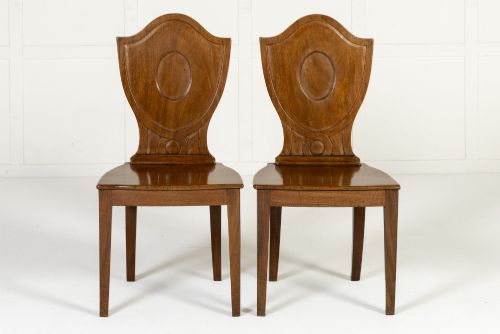
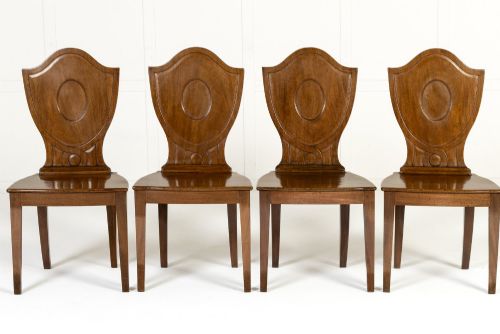
The version you are most likely to meet on this page is a single chair or a matched pair featuring solid timber construction with carved or painted armorial details on the back.
Originating predominantly from the Georgian, George III, and Regency periods, these pieces range from austere shield-back designs to sculptural pelta and shell motifs.
How They Were Made
Makers utilised dense Cuban and standard mahogany, occasionally accented with ebony, brass, or painted heraldic decoration to catch the eye in a hallway.
Joinery methods relied on sturdy solid timber frames, sometimes incorporating carved wooden backrests shaped into scabello, shield, ladderback, or pelta forms.
The listings show pieces spanning from the 18th Century through the Regency period and into William IV and Victorian revivals.
What Varies in Quality
The crispness of the carving on the backrest and the selection of figured mahogany separate ordinary utility seating from pieces commissioned for elite country houses.
Proportion, timber density, and the presence of documented makers or painted armorial crests heavily influence the character and standing of individual chairs.
Gillows·Whytock And Reid·Thomas Chippendale
The Georgian Mahogany Hall Chairs Glossary
- Armorial
- Bearing a heraldic crest or coat of arms, often painted or carved directly into the wooden back panel of a hall chair.
- Pelta back
- A shield-like classical motif shaped like an ancient Greek or Roman infantry shield, frequently seen on Regency examples.
- Shield back
- A chair back contouring to the outline of a heraldic shield, popularised during the late eighteenth century.
- Scabello
- An Italian Renaissance-inspired chair design with a solid upright back and flat panel seat, occasionally referenced in grand hall seating.
Georgian Mahogany Hall Chairs: Frequently Asked Questions
Were these chairs used for daily dining?
These rigid timber seats were meant for brief use in entrances, corridors, or waiting areas rather than comfortable dining.
Their solid wood construction and lack of upholstery discouraged prolonged sitting.
How do I tell Regency from George III styles?
George III pieces often feature classic carved shield backs and restrained lines derived from eighteenth-century design traditions.
Regency examples tend to incorporate bolder classical motifs like brass inlay, painted armorials, and sculptural pelta shapes.
Why do they usually come in pairs?
Hall chairs were traditionally produced as matching sets or pairs to flank the walls of grand entranceways and hallways.
Symmetry was essential for architectural balance in country house interiors.
Can I use them as desk chairs?
While their upright posture suits brief tasks, the absence of padding or armrests makes them less suitable for long hours of work.
Many collectors prefer to display them against a wall where their carved backs remain visible.