




Wooden Corridor Chairs
Wooden corridor chairs are substantial timber reception seats designed for hallways and vestibules, offering architectural presence and sturdy utility.
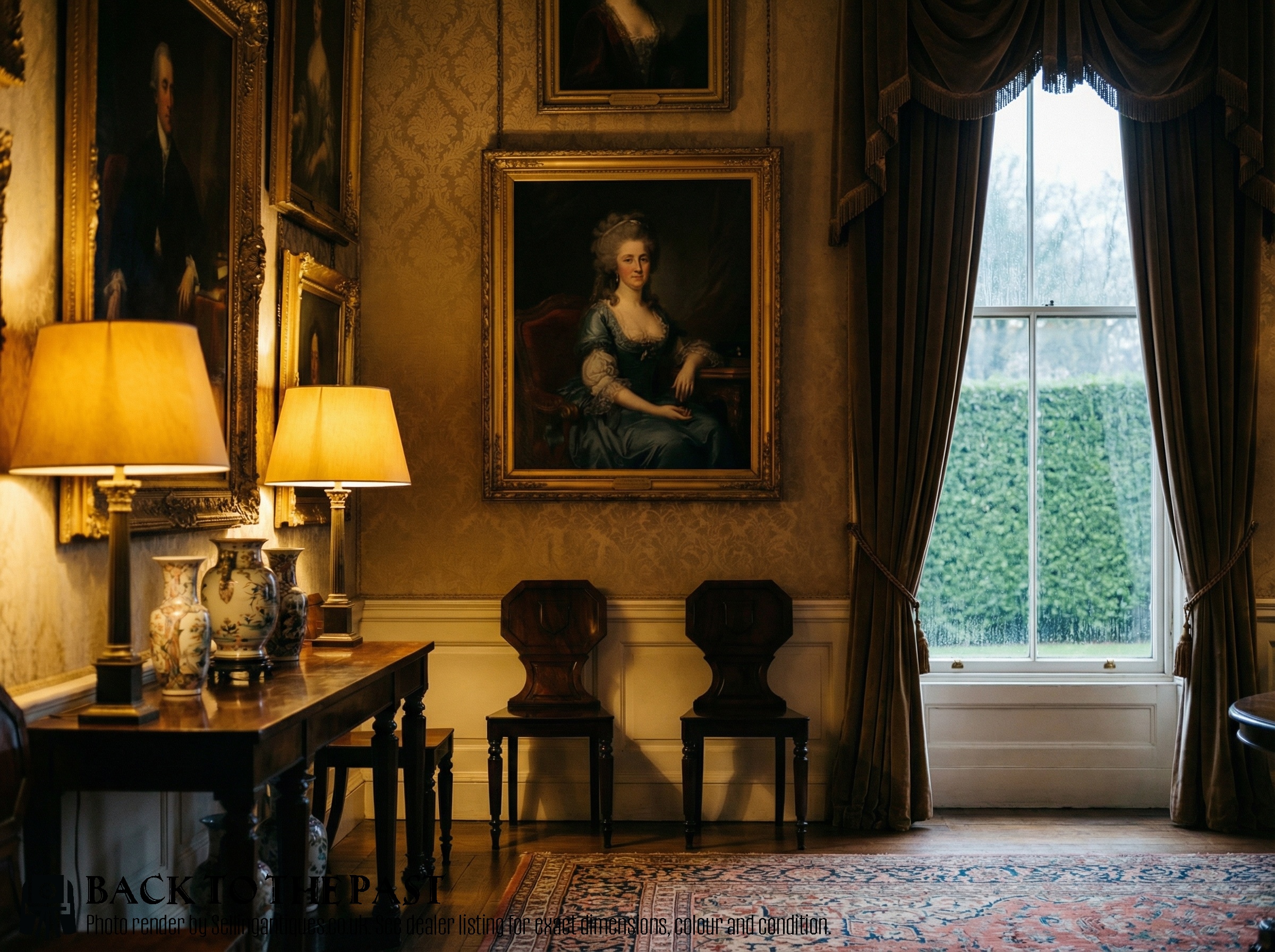
Wooden Corridor Chairs
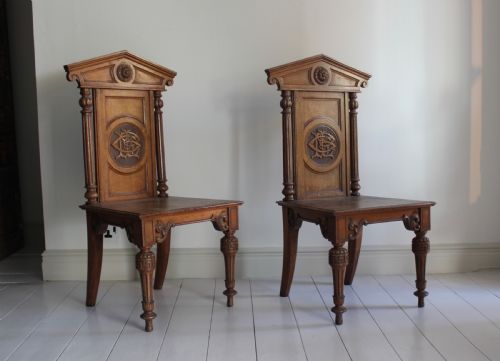
Wooden corridor chairs span several distinct historical periods, including the Georgian, Regency, William IV, and Victorian eras. These seats function primarily as architectural furnishings for grand hallways, entryways, and reception spaces.
The pieces available on this page appear predominantly as matched pairs rather than single items. Most examples emerge from the nineteenth century, featuring robust timber construction suited for transitional spaces.
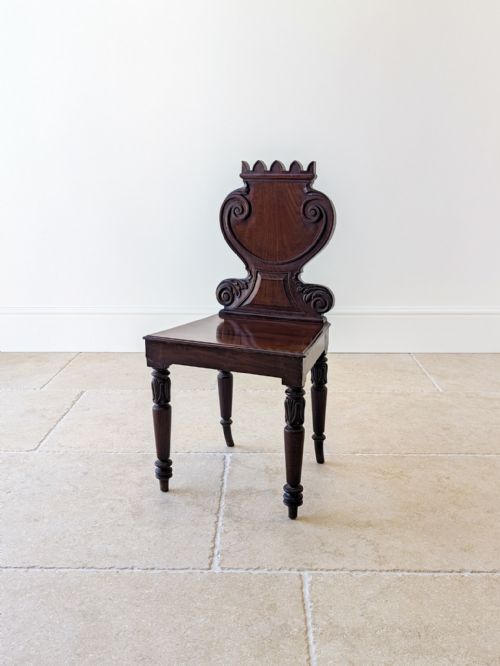
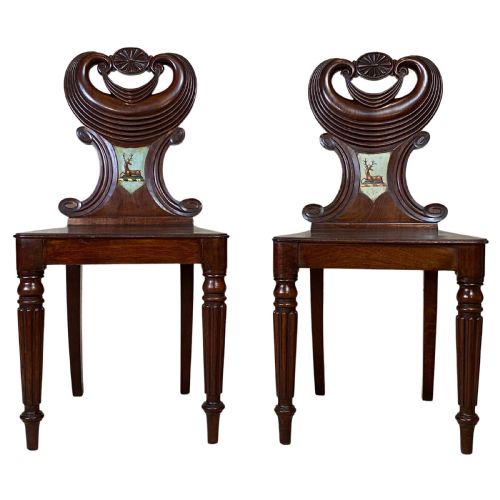
Makers and designers from these periods applied classical motifs, heraldic crests, and carved shield backs to these functional seats. They bridge the gap between utilitarian hallway furniture and formal reception seating.
Materials and construction methods
Cabinet makers utilised dense hardwoods such as mahogany, oak, and walnut to construct these corridor chairs. Solid wood construction ensures the structural integrity required for heavy use in entrance halls.
Workshops employed sophisticated turning, carving, and occasional inlay techniques to adorn the timber frames. Craftsmen shaped solid mahogany and oak into architectural forms, including cabriole legs and solid panelled seats.
Listings feature mahogany, oak, and walnut across Georgian, Regency, William IV, and Victorian periods.
Factors distinguishing quality
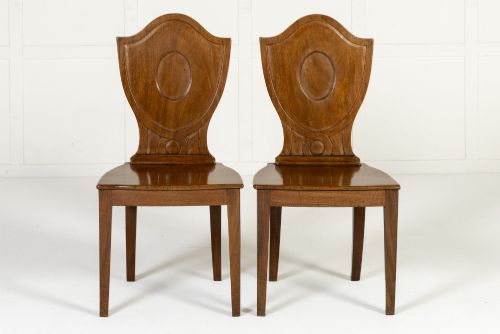
The tier of craftsmanship separates standard utility seating from masterworks designed for prominent estates. Superior pieces exhibit deeply carved shield backs, crisp armorial crests, and refined timber selection.
Attribution to notable workshops like Gillows or designers such as Richard Bridgens elevates the standing of a pair. The depth of the relief carving and the weight of the solid mahogany or oak dictate the upper echelon of these items.
Gillows·Richard Bridgens
The Wooden Corridor Chairs Glossary
- Hall chair
- A rigid wooden seat placed in corridors or entranceways, typically featuring a solid timber seat and a carved back. These pieces often display family crests or armorial bearings.
- Shield back
- A chair back shaped like a heraldic shield, frequently carved from solid mahogany or oak. This design appears extensively across Regency and Victorian corridor seating.
- Armorial
- A design incorporating a coat of arms or family crest carved into the wooden back of the chair. Such motifs denote bespoke commission for country houses and town residences.
- Cabriole leg
- A furniture leg that curves outward and then tapers inward, ending in a pad or foot. This stylistic feature appears on select Victorian examples within the evidence.
Wooden Corridor Chairs: Frequently Asked Questions
Where should I place wooden corridor chairs?
These chairs suit narrow hallways, grand entrance vestibules, and reception rooms where their upright proportions and architectural backs create a strong visual impact.
Because they feature solid timber seats rather than upholstery, they endure heavy traffic and transitional spaces without absorbing wear.
Are these chairs comfortable for long sitting?
Corridor chairs are designed for brief waiting rather than prolonged lounging. Their rigid wooden seats and upright backs served historical visitors in halls and antechambers.
Collectors prize them for their sculptural form and historical presence rather than cushioned ease.
How do I date a wooden corridor chair?
Dating relies on identifying stylistic markers from periods such as the Regency, William IV, or Victorian eras. Elements like shield backs, turned legs, and timber choice indicate the decade of manufacture.
Mahogany dominates the early nineteenth-century pieces, while golden oak and walnut become prominent in later Victorian examples.
Why do these chairs usually come in pairs?
Estate hallways and corridors historically required symmetrical placement of seating against the walls for balanced interior design. Commissioning pairs ensured uniformity for guests arriving at country houses.
Matching pairs remain the standard format for antique corridor seating today.