
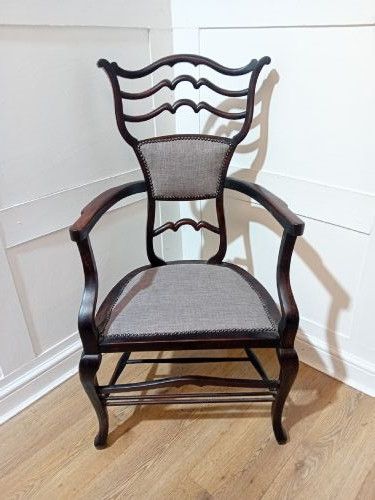
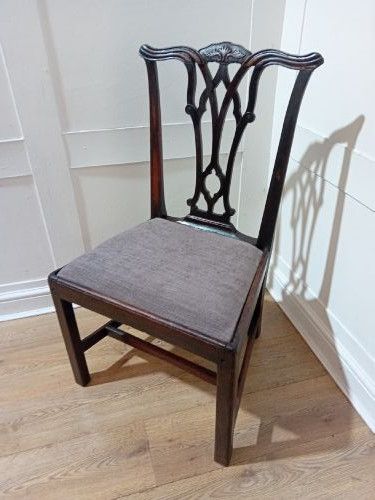
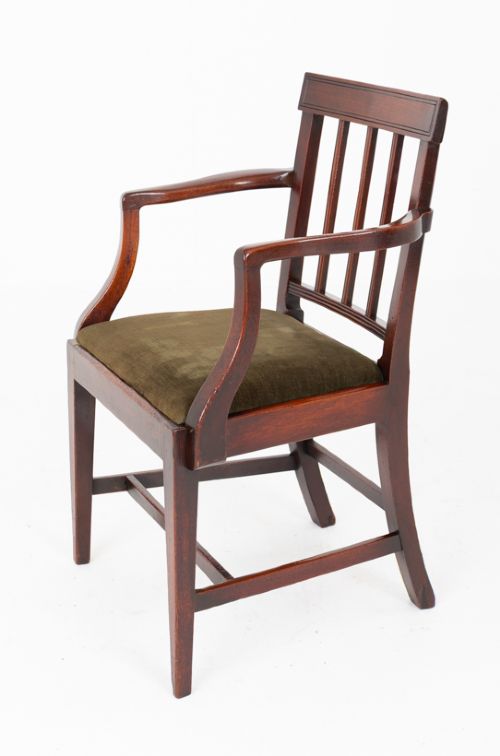
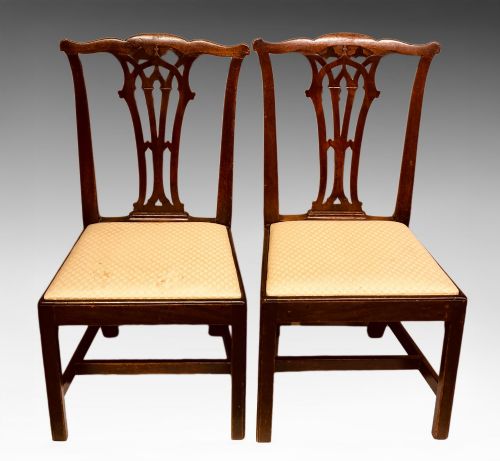
Dark Mahogany Accent Chair
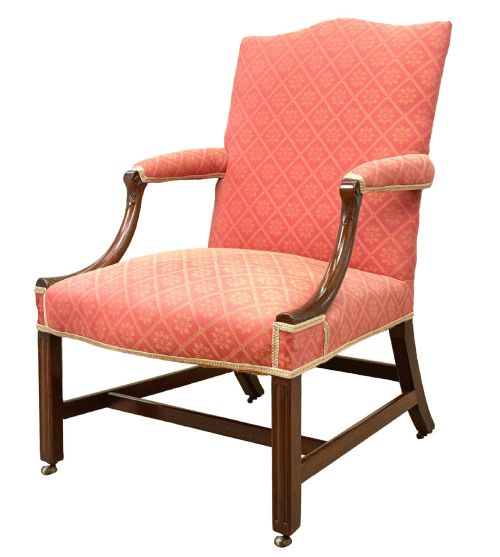
A dark mahogany accent chair brings rich timber tones and period character into a room, offering both seating and a strong focal point.
Dark Mahogany Accent Chair
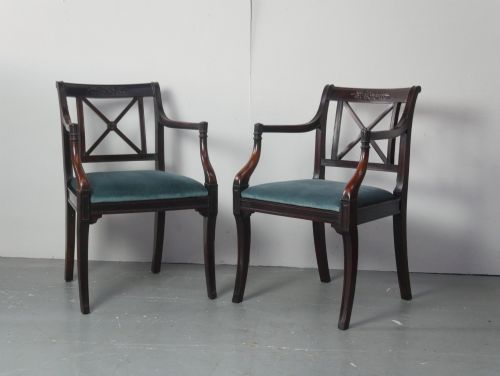
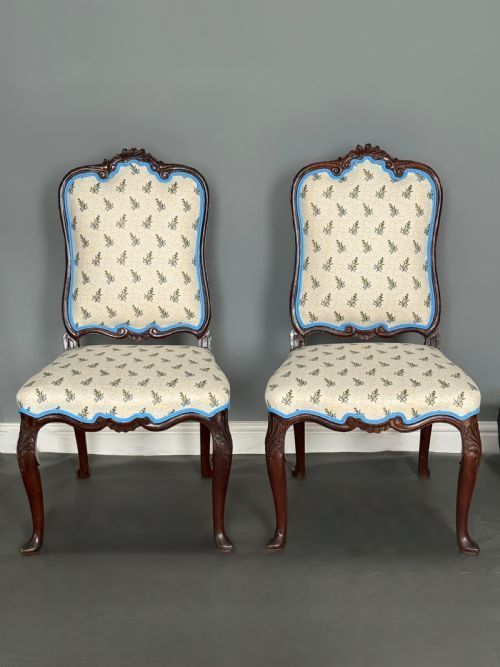
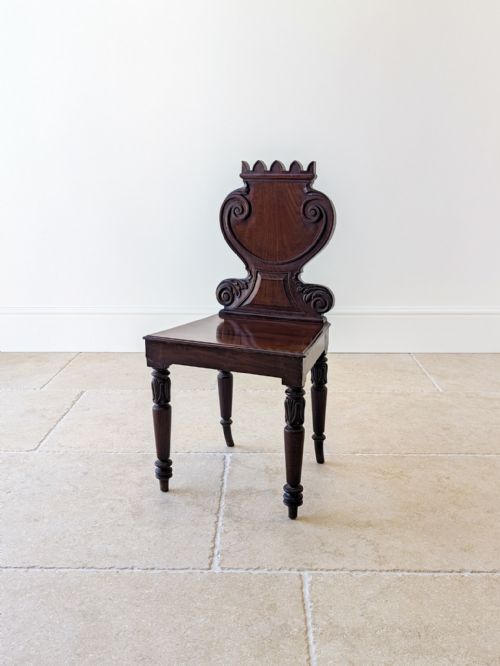
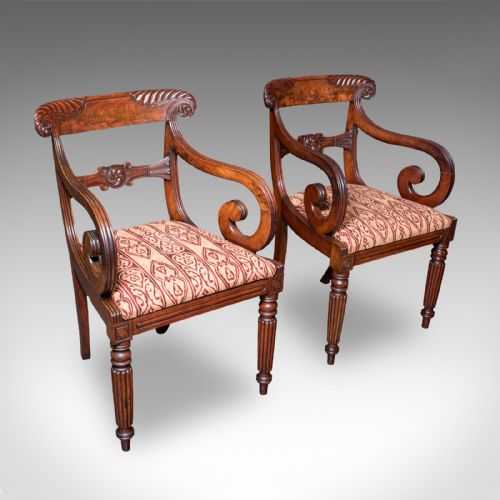
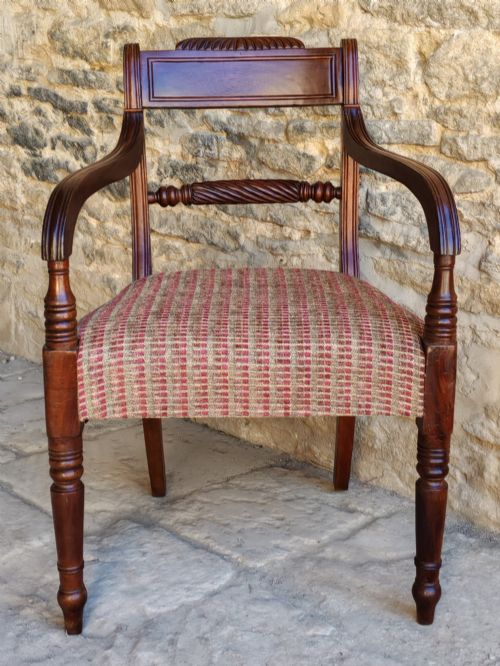
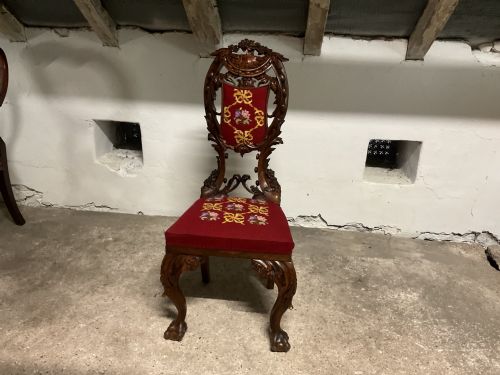
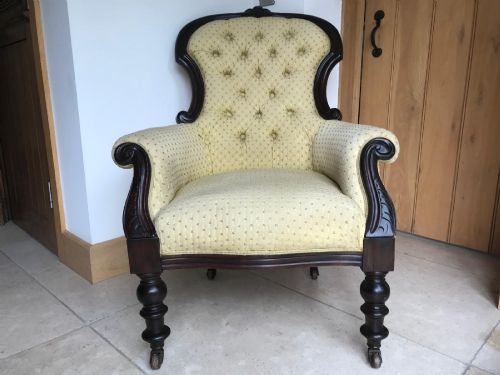
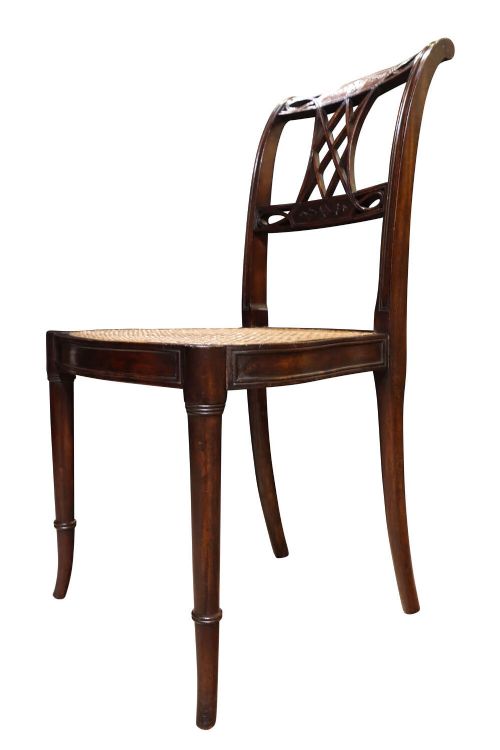
When you search for a dark mahogany accent chair, you encounter seating built primarily from dense, rich timber across several centuries of British and European design. The selection includes armchairs, side chairs, hall chairs, and carvers originating from periods such as the Georgian, Regency, and Victorian eras.
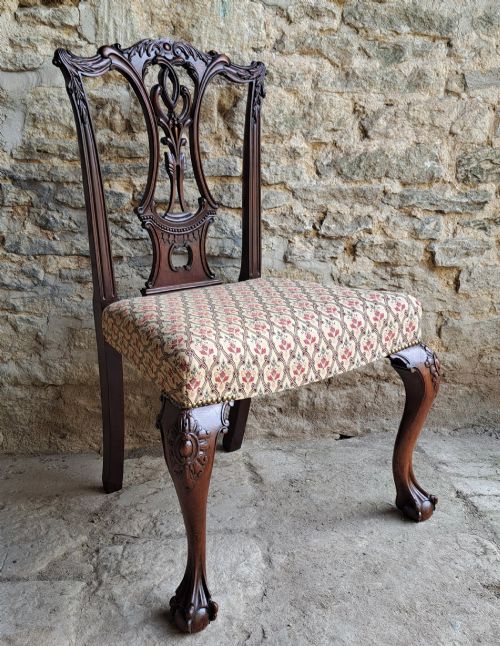
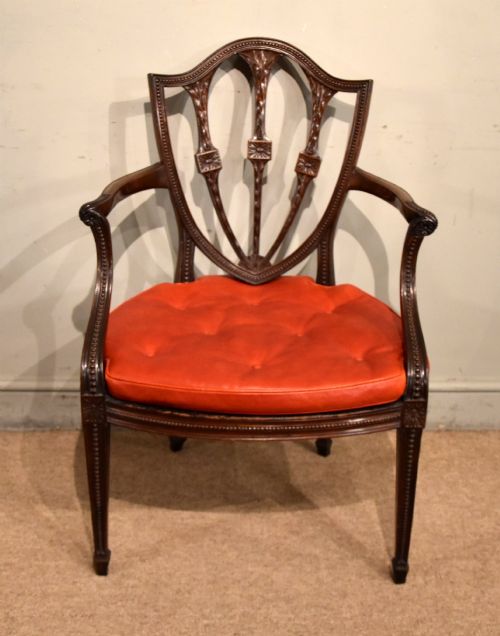
The most common pieces on this page are 19th-century interpretations and revivals, including Chippendale, Hepplewhite, and Sheraton styles, alongside earlier pieces from the 18th century. These chairs serve functional seating roles in libraries, bedrooms, and reception rooms while displaying distinct stylistic eras through carved details and silhouette.
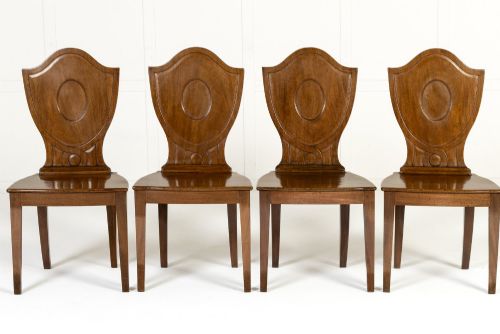
Makers and manufacturers produced these chairs in various forms, from utilitarian hall chairs with solid timber seats to grand library armchairs upholstered in leather or velvet. Buyers select them to anchor a room with deep wood grains and historically informed forms.
What varies in quality
The depth and crispness of the hand-carved ornamentation separate standard production from finer work, particularly in revival styles emulating Chippendale or Hepplewhite. Timbers selected for prominent display show superior grain figure and rich, natural colouration rather than heavy stain.
Structural integrity depends on the tightness of traditional joinery and the condition of the underlying frame rather than surface appearance alone. Original upholstery methods and period-appropriate textiles also distinguish untouched historical examples from later restorations.
Spinning chairs feature low seats designed for domestic textile work by the hearth.
The Dark Mahogany Accent Chair Glossary
- Carver
- An armchair, typically designed with arms to match a set of dining or side chairs. These pieces often sat at the head of a table or served as occasional seating.
- Hall chair
- A rigid wooden seat lacking soft upholstery, usually featuring a solid timber panel back decorated with carved crests or painted family insignia. They stood in grand entrance halls for brief waiting.
- Chippendale style
- A design aesthetic originating from the mid 18th century, characterised by interlaced ribbon backs, carved cabriole legs, and ball-and-claw feet. Revival versions appeared frequently in the 19th and 20th centuries.
- Ropeback
- A chair back featuring carved rails twisted to resemble knotted rope, popular during the Regency period. This decorative motif added texture to the upper rail of a dining or occasional seat.
- Shield back
- A chair back shaped in the outline of a heraldic shield, popularized by designer George Hepplewhite during the late 18th century. These frames often contain delicate pierced splats.
Dark Mahogany Accent Chair: Frequently Asked Questions
What is a dark mahogany accent chair?
A dark mahogany accent chair is a movable seat constructed from dense tropical hardwood, designed to stand out within a room's interior scheme. These pieces span multiple historical periods from the Georgian era through to Edwardian revivals.
They appear in various formats including open armchairs, library chairs, and decorative bedroom seats, all sharing a distinct deep brown timber tone.
Where were these chairs used historically?
Historically, these chairs served specific functions across different rooms of a large house. Hall chairs stood in entranceways for callers, while library armchairs provided comfort for reading.
Smaller side chairs and bedroom chairs were easily relocated around drawing rooms and chambers as needed for entertaining or dressing.
How do I identify a Georgian chair?
Georgian chairs, dating through the 18th century, typically feature solid proportions, hand-carved mahogany frames, and period joinery techniques. They often display classical motifs such as ball-and-claw feet or pierced splat backs.
Later Victorian and Edwardian pieces frequently revived these specific Georgian design elements with machine assistance.
Can I use an antique chair daily?
Many antique mahogany chairs remain robust enough for daily use, provided the frame joints and internal structure stay secure. Checking the stability of the legs and arm attachments ensures the wood can support regular sitting.
Upholstered sections may require modern reinforcement or reupholstering to suit contemporary comfort preferences while retaining the antique exterior.